Blog

  • G10 – The next-generation smart metering platform

    G10 – The next-generation smart metering platform


    Vital Energi and Switch2 Energy collaborate to launch the next-generation smart metering platform

    Vital Energi and Switch2 Energy collaborate to launch the next-generation smart metering platform

    Following on from the launch of the new G10 Smart Metering Hub for residential heat networks, Switch2 Energy has partnered with Vital Energi as its first independent operator that will adopt the G10 technology.

    Collaboration across heat network suppliers and operators is key as the heat network industry navigates its newly regulated landscape. As such, Vital Energi working with Switch2 Energy has deployed the first phase of their integration with the G10 Smart Metering Hub with the goal of enhancing heat network customer experience, data visibility, and compliance and performance monitoring.

    Vital Energi is one of the UK’s largest heat network developers with 422 live and operational sites and offer a full solution from concept development to consumption management.

    The open access features of the G10 smart metering platform, has enabled Vital Energi to adopt and integrate the G10 into their residential heat network billing and pre-payment collection services, and continue to demonstrate their commitment to improving customer experience.

    Our adoption of Switch2’s G10 platform reflects the value of true collaboration across the heat networks market as we navigate the newly regulated environment. By working openly with technology partners, we can deliver smarter, more transparent systems that genuinely benefit residents and operators. The G10’s open access architecture, enhanced data visibility and simple, secure payment options enable us to deliver an improved experience for both residents and landlords. Crucially, this technology supports the industry’s evolving regulatory requirements while keeping customer experience at the heart of every decision we make.

    Glenn Harrison, Business Development, Vital Energi Metering & Billing Services & Solutions

    The G10 includes a UK first for smart metering, introducing the tap and pay feature using near field communications (NFC), allowing customers to pay securely with their smart phones in the comfort of their own homes.

    The G10’s tap-and-pay function, simplifies the payment process even more for residents and enables family members, carers or housing officers to support vulnerable residents with instant top-ups.

    The smart metering hub supports full regulation readiness, giving heat network operators the data, control, and transparency they need to meet evolving compliance requirements with confidence.

    Furthermore, its ideal for retrofit applications allowing operators to upgrade existing networks with minimal disruption, an area where the G10 consistently outperforms alternative solutions on the market.

    Highly reliable, future proofed IoT (Internet-of-Things) based automatic meter readings and real-time monitoring of their heat interface units (the heat network equivalent to a gas combi boiler) enable operators to spot unusually low or high energy use and network control issues, helping landlords meet customer protection regulations and maintain the high performance of their heat networks leading to reliable and low cost heat delivery for their residents.

    By combining up to four utilities (heat, hot and cold water, and electricity) into a single platform, residents can easily manage prepayment options without needing internet access or multiple accounts.

    Vital Energi is leading the way in delivering innovative and customer focused heat network solutions in the newly regulated industry.

    Launching this new partnership with Vital Energi marks an important step for Switch2 and for the wider heat network sector, which continues to grow and increasingly relies on critical innovation to better support residents. Together, we’re driving improvements that make heat networks more transparent and responsive. “The G10 has been built around people to offer a smarter, safer, and more sustainable future for domestic heating. Together with Vital Energi, we can continue to unlock new levels of insight that contribute to better quality housing and happier residents.

    Kirsty Lambert, Business Development Director, Switch2 Energy

    Click here for more information on the G10 Smart Metering Hub.

  • Candid Conversation… Growth and Taking Risks

    Candid Conversation… Growth and Taking Risks


    Candid Conversation… Growth and Taking Risks

    As we mark National Careers Week and Employee Appreciation Day, we are taking time to recognise our people, their growth, and the connections they build at work.

    Today, we are highlighting a unique working relationship built on trust, collaboration, and learning side by side. Harriett Atkinson, Business Executive to Managing Director and Mike Cooke, Managing Director work closely together every day and share their thoughts on the importance of skills development, taking career risks, and how working so closely means pushing each other to become the best versions of themselves.

    If you’re wondering how to build a career you love, check out their video below:

  • Role Spotlight: Caitlin Villanueva

    Role Spotlight: Caitlin Villanueva


    Role Spotlight: Caitlin Villanueva

    Meet Caitlin, one of our Architectural Technologists at Vital Energi. Her journey began during university, when a net zero project sparked her curiosity for the industry. Almost 4 years later, Caitlin has travelled across the UK visiting some of our innovative projects, represented Vital at industry events, and inspired future generations during climate education sessions.

    Hear more about her role here:

    ‘In my role as an Architectural Technologist at Vital Energi, I create the detailed technical drawings that contractors and suppliers rely on to construct complex energy and infrastructure projects safely and accurately. Much of my work focuses on elements that aren’t immediately visible, such as structural connections, material performance, and how different components come together to form buildings that are safe, efficient, and built to last.

    My role helps ensure that buildings supporting renewable energy and heat network infrastructure are not only functional today but also future‑proofed for a low‑carbon world. This work is especially important as the UK accelerates its transition to net zero, creating growing demand for specialists who can translate complex technical and sustainability requirements into deliverable, real‑world buildings. I play a key part in helping turn ambitious energy projects into practical, buildable solutions that are delivered safely, efficiently, and responsibly.

    What I enjoy most is the variety in my work—no two projects are ever the same. I’m constantly learning about new materials, construction methods, and technical solutions, and I enjoy collaborating closely with engineers and contractors to solve problems together. The most rewarding part is seeing something that began as a detailed drawing on a screen become a completed structure. Knowing that my work contributes to buildings that will support critical energy infrastructure for many years gives me a real sense of pride in what I do.’

  • Lancaster University’s 6.5km Heat Network Marks Major Milestone.

    Lancaster University’s 6.5km Heat Network Marks Major Milestone.


    Lancaster University’s 6.5km Heat Network Marks Major Milestone for the Net Zero Project

    Lancaster University are transforming the way they heat their campus with a multimillion decarbonisation project which has just passed a major milestone with the completion of the 6.5km district heating network.

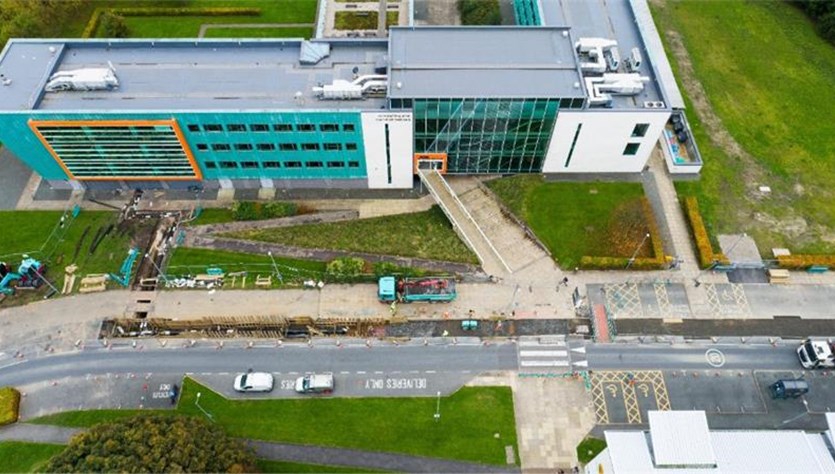
    The heat network is made up of a series of highly insulated, underground pipework which will distribute low-carbon heat across the campus, supplying approximately 250 buildings across the campus. Originally, the network supplied only 65% of the University’s buildings, but the new expansion will see that rise to 95%.

    The University has approximately 15,000 students and we know how important protecting the environment and tackling climate change is to them. This project will allow the University to benefit from low-carbon heating every day.

    Scott Lutton, Regional Director, Vital Energi

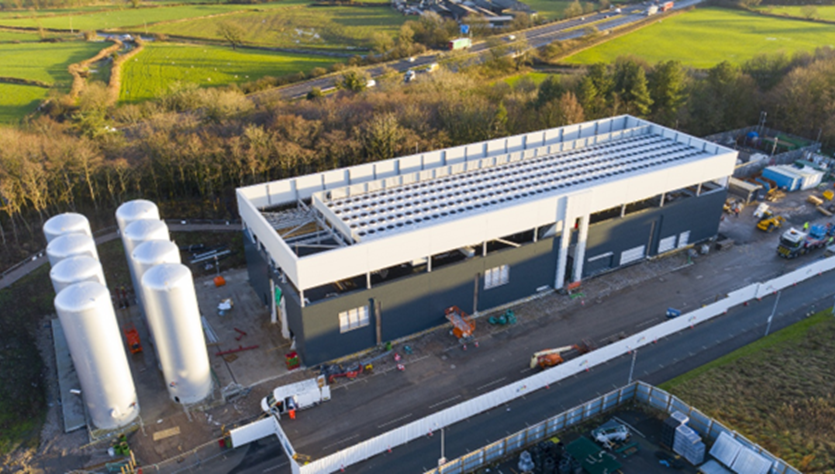
    In addition to the completion of the heat network, the new Energy Centre 2 has seen strong progress with key areas like the external envelope, thermal stores and heat pumps now in place. Once complete, the mixture of water and air source heat pumps will be capable of creating 39-Giggawatt Hours of low-carbon heat and hot water.

    “We’re delighted to have passed the halfway point in the construction phase and completed the installation of the expansion to the district heat network. The next challenge is to complete all the building connections and commission the new energy centre to enable the campus to benefit from the new decarbonised heat network.

    Anna Cockman, Head of Estate Development, Lancaster University

    This project is a core part of the University’s target to achieve net zero for Scope 1 and 2 emissions by 2030. strengthening their position as leaders in sustainability.

  • Liverpool City Region begins £5.4m Decarbonisation Transformation

    Liverpool City Region begins £5.4m Decarbonisation Transformation


    Liverpool City Region begins Phase 3C of £5.4m Decarbonisation Transformation

    The LCR Combined Authority is set to take a big step towards its net zero targets after work begins on the project, funded by the Public Sector Decarbonisation Fund. The scheme will deliver city region-wide energy efficiency improvements including Solar PV, Air Source Heat Pumps, and an extension to the Mersey Heat Network.

    Wirral, Sefton, St Helens, Knowsley, and Liverpool are all set to benefit from a £4.9m series of energy conservation projects at a range of council-owned buildings across the wider Liverpool City Region.

    Once complete, the project will cut carbon emissions by more than 500 tonnes each year, which is the equivalent of 600 average UK homes’ emissions.

    The project is being delivered by renewable energy company Vital Energi, which will install a blend of energy conservation measures, including solar PV panels, heat pumps, pipework insulation, double glazing and LED lighting upgrades. The project will also deliver additional connections to the Mersey Heat Network.

    For over a decade we’ve been working with organisations across the Liverpool region to drive down their emissions but also lower their energy costs, and this is another fantastic addition to Liverpool’s low-carbon landscape. One of the truly exciting things about this project is that we’ll be working in partnership with the councils to benefit the local communities we’re working in, by spending locally, creating local employment and skills development, and promoting health and well-being initiatives to create a strong, long-lasting legacy

    Andrew Wightman, Regional Director, Vital Energi

    Vital Energi and the LCR Combined Authority have worked with Knowsley Council, Wirral Council, and Liverpool City Council to identify which buildings will most benefit from the energy conservation measures, and after an extensive survey and energy audit, chose buildings at:

    • Wirral County Park
    • Wirral – Landican Cemetery
    • Knowsley – Prescott Soccer Centre
    • Sefton – Bootle Library
    • Sefton – Bootle Leisure Centre

    Additionally, George’s Dock and the Cunard Building will be connecting to the Mersey Heat Network.

    In addition to the PSDS scheme, Liverpool City Region Combined Authority is also exploring potential locations for ground and roof-mounted solar installations, to accelerate their journey to Net Zero by 2035.

  • Three iconic buildings are connecting to the Mersey Heat Network

    Three iconic buildings are connecting to the Mersey Heat Network


    Three iconic buildings are connecting to the Mersey Heat Network

    We joined partners Ener-Vate and The Peel Group, in marking the beginning of the Mersey Heat Network £5.2m Phase 1C Extension. This next phase will see 3 landmark buildings connected to the network

    Since the opening of the energy centre last year, the network continues to progress with momentum. Breaking ground on this extension represents the next major milestone, expanding the network to connect to more of Liverpool’s infrastructure, including the Cunard Building, Georges Dock Building and the Museum of Liverpool.

    Representatives from The Peel Group, Ener-Vate, Vital Energi, Liverpool City Council, Liverpool City Region Combined Authority and the National Museums of Liverpool gathered to mark the occasion.

    The network supplies low-carbon heat from the Mersey Heat Energy Centre via a network of underground pipes, with heat generated form a two-stage water source heat pump which harnesses energy from the Leeds / Liverpool canal, transforming the way heat is supplied throughout the city.

    As part of this latest development, Vital Energi will install a further 2km of pipework to further expand the network, the expansion is expected to save up to 8,600 tonnes of carbon.

    Having delivered the Mersey Heat Energy Centre last year, we’re very pleased to be extending the network to serve these landmark buildings on Liverpool’s waterfront. Heat networks are a proven solution for decarbonising existing buildings, and this extension will bring the benefits of the Mersey Heat system to some of the city’s most important public sector sites.

    Andrew Wightman, Regional Director at Vital Energi

    This next phase is being funded through circa £2.2m in from the Heat Networks Investment Project (HNIP), and £3m through the Public Sector Decarbonisation Scheme (PSDS) and will add to the growing list of buildings connected to the innovative scheme.

  • Do air source heat pumps work in cold weather? Our experts tell all

    Do air source heat pumps work in cold weather? Our experts tell all


    Can Heat Pumps Handle Freezing Winters? Our Experts Reveal All

    Air source heat pumps are one of the most effective technologies for reducing carbon. They harness the natural heat energy present in the air to warm up a space. They work by extracting heat from the outside air and transferring it into a building. The pump uses a working fluid (refrigerant) to absorb heat from the outdoor air, which is then compressed to increase its temperature. This refrigerant is then circulated through a heat exchanger to distribute this heat into a building.

    So, if they absorb heat from the air, how are they affected when it’s cold outside?

    You might think that if the temperature outside falls below zero, the heat pump will stop working, however even in cold air, there is still sufficient heat for the heat pump to absorb and convert into useful energy.

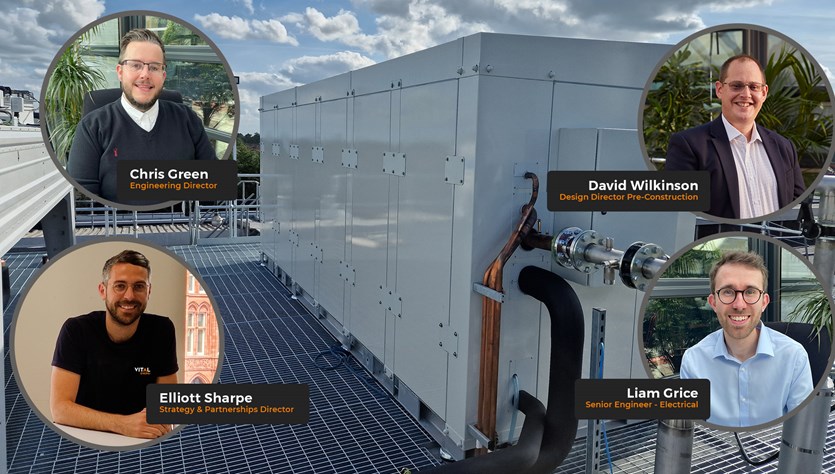
    We had a chat with Vital Energi’s Elliott Sharpe (Strategy & Partnerships Director), Dave Wilkinson (Design Director), Chris Green (Engineering Director), and Liam Grice (Senior Engineer), who advised how you can maximise a heat pump’s efficiency during cold weather, the best location for it, how you can prepare it for cold weather, and more.

    How efficient is an air source heat pump in cold weather?
    When we talk about efficiency of an air source heat pump (ASHP), we often consider how many units of heat we get from an ASHP for each unit of electricity used. Because it gets its energy from the surrounding air, we might get 3 units of heat for every 1 unit of electricity, so an efficiency of 300% in the summer months. As the outdoor temperature drops as we head towards winter, the efficiency of an ASHP does reduce. As this reduces, we could find a situation where the heat pump is producing 1 unit of heat for every 1 unit of electricity, which is 100% efficient, this might not sound all that bad, but heat pumps can deliver much higher efficiencies than this when deployed correctly. 

    How do you maximise efficiency during winter? 
    Generally, during cold weather, the heat pump is operating at its worst efficiency when most heat is required. Careful design of the heat pump and the system it is connected to is important to maximise the efficiency. Understanding that heat pumps may have a reduced capacity at low temperatures is important in correctly sizing the heat pump to cope with this. If you buy a 300kW boiler, that boiler is 300kW all year round. That’s not quite the case for an ASHP, which might provide 300kW in a +10°C ambient temperature, and only 150kW during the coldest of days. The efficiency of heat pumps increases as their supply temperature reduces, so its beneficial to design heat emitters to operate effectively at lower temperature e.g. –underfloor heating can work on a 45C flow. Including buffer vessels or thermal storage can also provide flexibility which can lower the cost of heating from the heat pump. Optimisations of the heat pumps defrost cycle are essential for achieving the best winter performance and should be carefully considered.

    Is there anything you can do to prepare your heat pump for cold spells?
    Absolutely! The main objective should be to ensure that the heat pump is operating as it should. Proactive maintenance will assist with this, where the entire system should be inspected, refrigerant and oil levels checked, and any issues addressed. Consider scheduling maintenance before winter begins to ensure optimal performance.
    In cold ambient temperatures, the heat pump will enter a defrost cycle more often. For optimum efficiency and performance, the air source collector should be unrestricted and free from debris. If you notice any excessive ice build-up on the air source collector it might suggest that the defrost cycle may not be functioning correctly.

    Is there an optimum position or location where an ASHP will perform better during colder months?
    ASHPs use fans to move ambient air over the collector. Any restrictions to the air flow will reduce performance. The air is cooled as it passes over the collector, so it is important to minimise air recirculation. Manufactures guidance should be followed to make sure there is sufficient free space around the heat pump and consider any additions such as acoustic panels and their impact on air circulation. Computational Fluid Dynamics (CFD) modelling is a useful investment to make during the design process to make sure the air source collector position is optimised.

    Are there specific refrigerants or technologies that can improve winter performance?
    When choosing a heat pump, it’s crucial to assess its suitability for various operating conditions over its lifespan. Understand your load profile to determine peak performance needs. If the ambient temperature drops below the design threshold, the system’s heat output and efficiency will decrease. Consider these factors carefully to select the optimal heat pump technology and refrigerant that precisely meets your requirements.

    How can defrost cycles be optimised to reduce energy consumption and output limitations?
    Typically, when ambient temperatures are below 7ᵒC, ASHPs will need to regularly complete a defrost cycle to remove frost which forms on the coil surface as moisture from the air freezes. The process requires energy to melt the frost, and generally the heating output is reduced during this time, so it is critical the process is completed quickly and efficiently. This can be optimised as part of the commissioning and O&M activities, making sure all temperature probes are fitted correctly and the settings are correct so the defrost process is not more frequent and longer than needed. It is a balance though, because not defrosting correctly causes severe performance issues. If all the frost has not melted and drained away, this will refreeze and eventually create ice which blocks the coil. Manual intervention is often then needed to get the system running optimally again.

    Are there any energy conservation measures that can be implemented during the winter months which will help a heat pump run more efficiently?
    There is a term often used which is ‘fabric first’. What this means is, the first port of call for any project should be to try and reduce your energy demands first, before looking into any new technology. This fabric first approach could be improving the performance of your windows, to reduce how much heat you lose. It could mean adding more insultation to walls and ceilings. All of these measures will result in your site/building requiring less energy.

    Click here to discover more about heat pumps, and learn about some of the air source heat pump projects we’ve delivered below.

    Westminster City Council
    Northwick Park Hospital
    Bridlington Hospital

  • Vital Energi Wins Major NHS Contract to Decarbonise South Tees Hospitals

    Vital Energi Wins Major NHS Contract to Decarbonise South Tees Hospitals


    Vital Energi Wins Major NHS Contract to Decarbonise South Tees Hospitals

    Vital Energi has secured a significant contract with South Tees Hospitals NHS Foundation Trust to decarbonise two sites – Friarage Hospital and The James Cook University Hospital.

    The project, funded through the Public Sector Decarbonisation Scheme (PSDS), will see the company design, build, operate and maintain air source heat pumps at both sites.

    The work will deliver significant environmental benefits, with Vital Energi’s proposals set to reduce carbon emissions at the Friarage by over 41% and exceed the required carbon reduction targets by 5% at James Cook.

    The contract encompasses the supply and installation of a 1MW heat pump system at the Friarage and a 3MW system at James Cook, alongside the conversion of existing boiler systems and associated infrastructure upgrades. Work has already commenced on both sites.

    Vital Energi is committed to making a positive and lasting impact on the areas and communities in which it works. As part of this project, the company has committed to significant spending with local suppliers and is donating funds to the Trust. Vital will also engage the Trust about climate change under its Climate Education programme and staff will provide volunteer support on Trust initiatives.

    The project represents a substantial capital investment, with the Friarage element valued at £7.8 million, and James Cook at £7.1 million. These schemes form part of a wider package of energy efficiency measures funded by the PSDS grant.

    Beyond the core heat pump installations, the project includes additional energy conservation measures at both sites, such as a rooftop solar PV installation, hydraulic system optimisation, and building management system enhancements.

    The contract win strengthens Vital Energi’s presence in the North East, complementing the company’s recently opened Newcastle office.

    Our aim is to become the Trust’s long-term energy services partner. We’ll operate and maintain the assets we’ve installed over a 15-year period and are committed to providing continuous improvement. We will help them achieve their net zero objectives whilst delivering guaranteed cost savings and improved energy efficiency. In the past four years alone, we have delivered over £200 million of PSDS-funded projects across eleven hospital sites in the UK.

    John Runniff, Account Development Director

    We are delighted to be working in partnership with Vital Energi, who share our goals for improving sustainability. The introduction of the air source heat pumps at both The James Cook University Hospital and the Friarage Hospital will help us to reduce carbon emissions across our hospital sites to support the future healthcare needs of our population. The project is being delivered under the Carbon and Energy Fund (CEF) for which Vital Energi has preferred bidder status and contracts are expected to be finalised shortly. The company is providing interim services to both hospital sites whilst construction progresses, ensuring continuity of energy supply throughout the transition period. The main contractor on the project is Geoffrey Robinson, the multi-award-winning mechanical, electrical and construction contractor based in Billingham, Teesside. The selection of the company is further evidence of Vital Energi’s ambition to support the supply chain in the North East and grow its presence in the region where it has recently opened a new office.

    Julian Verity, Head of Estates, South Tees Hospitals

    With over 20 years’ experience delivering mechanical, electrical, and construction services directly to the Trust, we’re excited to continue that legacy through our partnership with Vital Energi. As a local business, we feel a great sense of pride in supporting and improving public facilities that many of our own staff rely upon. The NHS faces a significant challenge in meeting decarbonisation goals, and it takes strong partnerships like this—spanning funding, design, and on-the-ground delivery—to make those ambitions a reality

    Andy Talbot, Managing Director of Geoffrey Robinson

  • Improving Ageing Infrastructure Through HNES Funding

    Improving Ageing Infrastructure Through HNES Funding


    FirstPort & Vital Energi to Improve Ageing Infrastructure Through HNES Funding

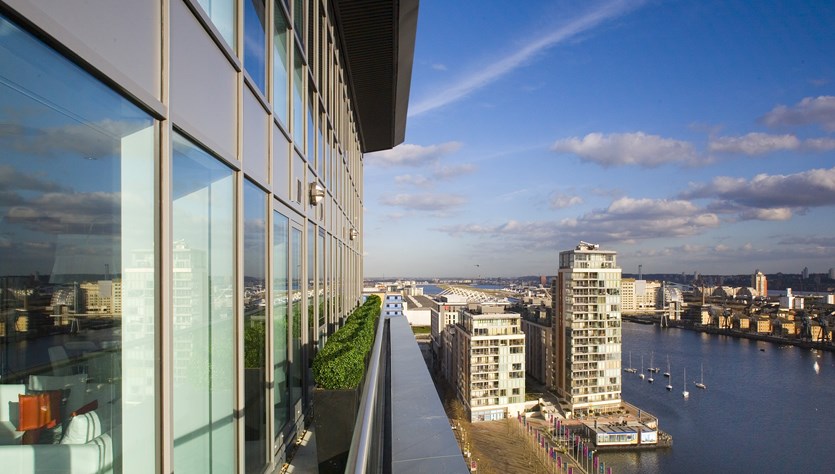
    As part of the ongoing partnership with property managing agent FirstPort, Vital Energi has helped secure £489k in Heat Network Efficiency Scheme (HNES) funding to enhance the experience of residents living in the apartments at the Capital East II development, situated near the Royal Victoria Docks, London.

    Capital East 23

    This partnership builds on a relationship that began in 2018 when Vital Energi commenced the maintenance and data collection services for the heat network at the Capital East II development. Over the years, the hands-on experience gained by the Vital Energi team has provided invaluable insights into the operation of the Capital East II heat network.

    Solution detail

    Ageing heat network infrastructure & HNES funding

    Ageing infrastructure presents a significant challenge across the heat network sector, particularly as regulations and decarbonisation targets drive the need for greater efficiency. Vital Energi, working closely with FirstPort, took a proactive approach at the Capital East II development by conducting optimisation studies and securing HNES funding, which identified heat losses at the individual apartment level. This indicated that the existing heat interface units (HIUs) were inefficient, requiring frequent repairs and negatively impacting residents’ experience.

    The £489,900 HNES funding will support the replacement of 203 HIUs in two blocks of the development, with the highly efficient, electronic BESA-certified vTherm°e heat interface units. Upgrading to the vTherm°e will enhance the system’s temperature differential (dT), allowing for a lower pump flow rate and reducing overall electrical consumption. This improvement will boost system efficiency across the heat network.

    Upgrades to the existing BMS have also been designed to allow for weather compensation. This will change how the heat network controls the flow temperature, with controls adjusting the amount of heat generated depending on outdoor air temperature. In practical terms, this means lower energy consumption, improved efficiency, lower return temperatures, reduced plant cycling and more stable temperatures for residents throughout the year.

    “We are delighted that Capital East Phase II has received funding through the HNES, and we will ensure the knowledge gained from our recent studies is utilised during the improvement of Capital East’s heat network. This investment will improve the efficiency of the heating system, which will directly benefit our residents. The HNES provides opportunities to release capital funding to meet the requirements of the Heat Network Technical Assurance Scheme. Achieving this depends on working with reliable, focused partners. As we progress toward milestone two, our partners’ collaboration is essential to reducing heat network costs and improving transparency for residents.”

    Stuart Wilcox, Head of Critical Infrastructure at FirstPort

    This project marks a significant step forward in improving the efficiency, reliability and sustainability of the Capital East II heat network. Through continued collaboration with First Port, Vital Energi remains committed to optimising the performance of heat networks and improving the experience of residents living on heat networks.

    “We were pleased to support FirstPort throughout the HNES application process. The funding will improve the efficiency and reliability of the network and deliver tangible benefits for residents.”

    Katy Lister, Client Relationship Manager

  • Heat pumps arrive at Royal Shrewsbury Hospital as part of £16.2m project

    Heat pumps arrive at Royal Shrewsbury Hospital as part of £16.2m project


    Heat pumps arrive at Royal Shrewsbury Hospital as part of £16.2m project

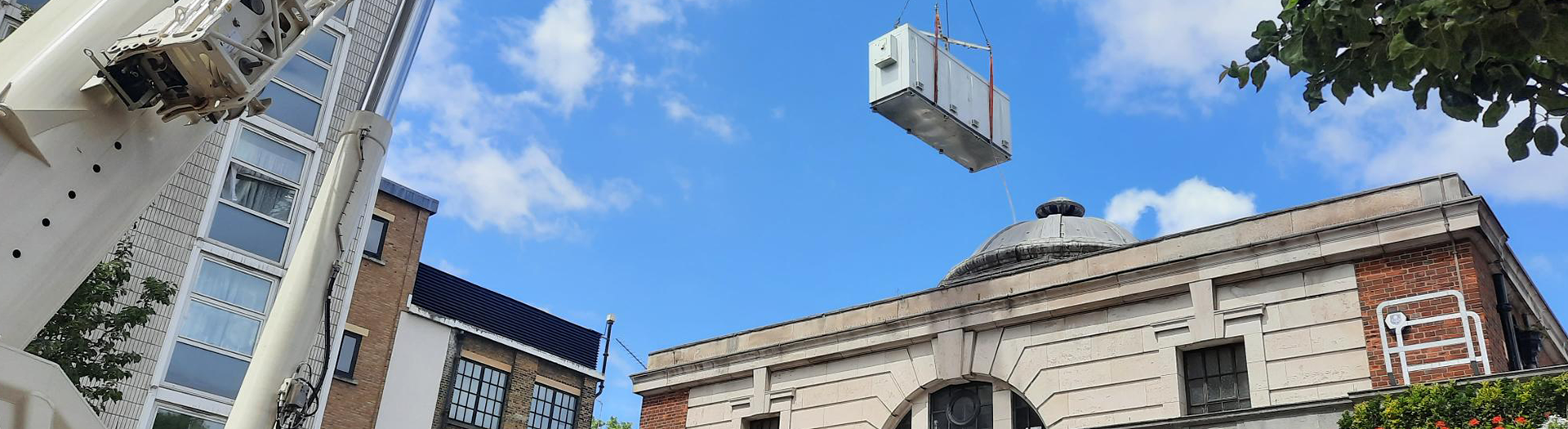
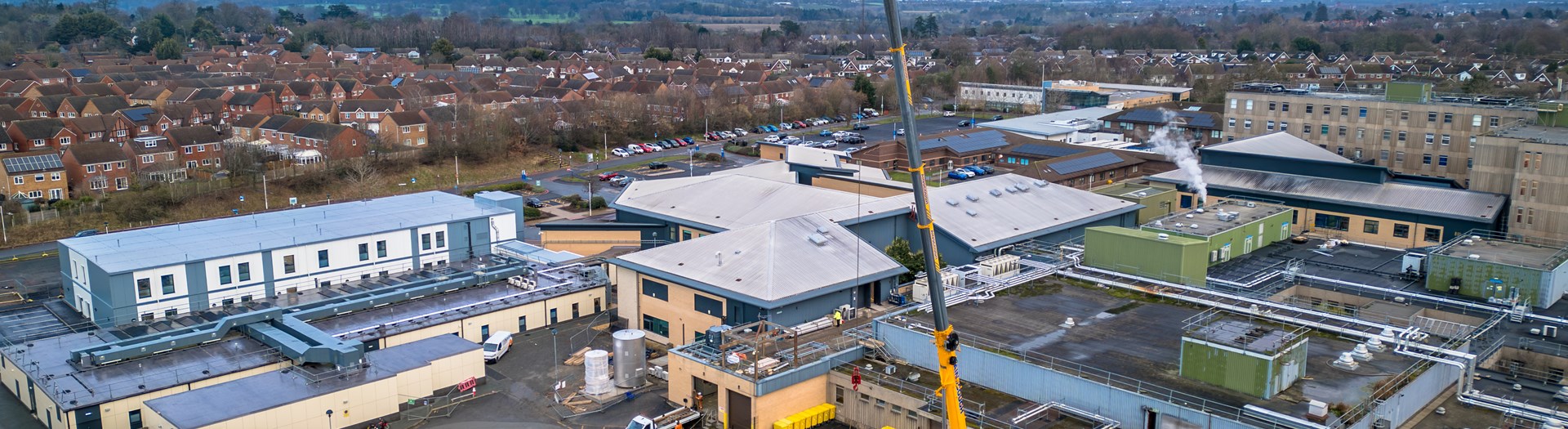
    A crane has lifted heat pumps into position on the roof of the Treatment Centre at Royal Shrewsbury Hospital (RSH) in the next phase of a £16.2m decarbonisation project.

    Rooftop solar panel works have also started with the framework put in place and the first delivery of panels due at the end of the month.

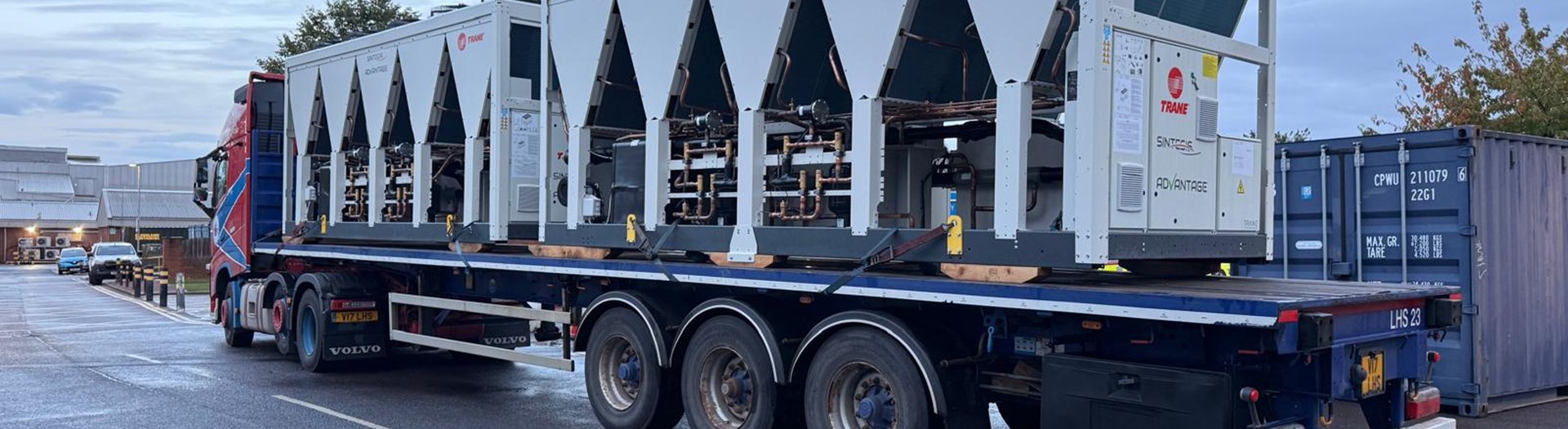
    A water source heat pump and an air source heat pump were recently delivered to the hospital site and crane lifted into position.

    The final two air source heat pumps will be delivered next month.

    The Shrewsbury and Telford Hospital NHS Trust, which runs the RSH, has partnered with Vital Energi to do the work.

    “This fantastic project is really taking shape and brings us closer to our vision of achieving our Net Zero goals. It was great to see this intricate operation to place these pumps on the roof of the Treatment Centre. Our aim is to create more modern facilities and sustainable health services, which will benefit our patients, colleagues and visitors.”

    Inese Robotham, Assistant Chief Exec, and Chair of the Trust’s Climate Group

    “The heat pumps being successfully lifted into position marks an exciting milestone in the project. We’re proud to be working alongside the Trust to deliver an energy solution supported by renewable technologies that will significantly cut carbon emissions while supporting a more energy resilient and efficient estate. This phase brings us one step closer to providing the hospital with low carbon heating, hot water and cooling, helping to create a more comfortable environment for patients, staff and visitors.”

    John Runniff, Account Development Director at Vital Energi

    Funding was secured through the Public Sector Decarbonisation Scheme and the project is being delivered through the Carbon and Energy Fund (CEF) Framework, which has been specifically created to fund complex energy infrastructure upgrades for public sector organisations.

    By replacing the old steam boilers and associated gas-fired equipment with a 1.6MW air and water source heat pump system, buildings across the site will receive low carbon heating, hot water and chilled water. It will mean the hospital estate will be fully de-steamed.

    The solar panels will also be installed along with the upgrade and optimisation of the building energy management systems, upgrades of roof and pipework insultation and the replacement of air handling unit fans units with low-energy fan systems, which will all add up to reduce the site’s energy consumption and improve the patient and staff experience.

    When the work is complete, the investment could save the Trust an estimated £1 million a year in energy costs and will support the Trust’s Estates Decarbonisation Strategies, Green Plan and national NHS ambitions of reaching net zero by 2040.