Blog

  • The Final Countdown – Is the HE Sector Prepared for Net Zero?

    The Final Countdown – Is the HE Sector Prepared for Net Zero?


    How the higher education sector can maximise efforts to net zero

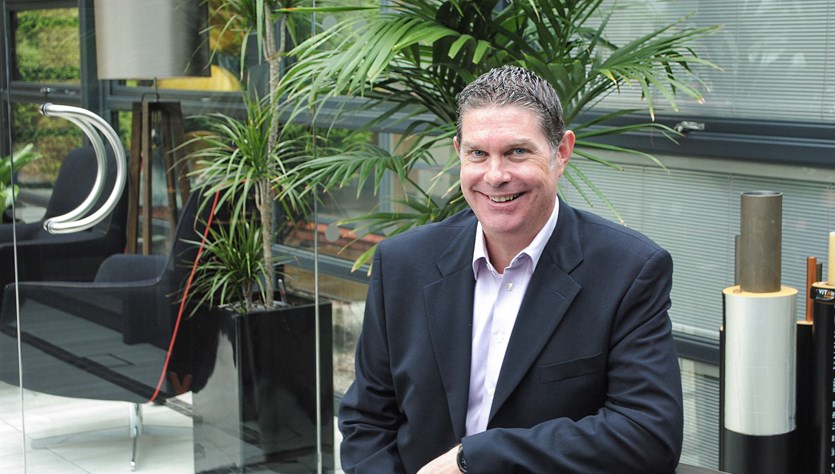
    Vital Energi’s Head of Pre-Construction, Warren Spiers has helped many of the UK’s Universities lower their emissions on the way to their Net Zero Targets. We asked him about the HE sector’s readiness for the task at hand and how they can best maximise the time they have left between now and their decarbonisation deadlines.

    Warren Spiers

    There’s an old saying that the best time to plant a tree is 20 years ago and the second-best time is today.  It could be argued that the same outlook is warranted for the Higher Education sector’s approach to decarbonisation.

    Whilst some Universities have already slashed thousands of tonnes of carbon from their scope 1 and scope 2 emissions, others are still in the early stages of their decarbonisation journey and the pressure will mount as their net zero deadlines approach.

    Slightly complicating the bigger picture is the fact that there are multiple net zero carbon deadlines to be taken into account.  At one end of the spectrum, The Welsh Government have set a target of 2030, leaving little over 6 years for them to achieve their goals.  In The Climate Change Act, however, the British Government has set a less stringent target of 2050.  It should be noted, however, that 2050 is an “at the latest” deadline and some Universities have declared a climate emergency which has seen them set targets from 2030 onwards.

    An impending deadline is a great motivator

    It’s no surprise that the Universities who have the tightest targets are the ones that have made the most progress, as an impending deadline is a great motivator.  Aberystwyth University, for example, has a long-term, multi-phase decarbonisation plan in place already, and they are now delivering phase 3 of their programme.  The first two phases saw them undertake energy conservation measures and create a 2.5MW solar farm, collectively reducing their carbon emissions by nearly 800 tonnes per year.

    Picture1

    Aberystwyth University invested £2.9m to create a solar farm.  It has been supported by the Welsh Government Energy Service and funded by a £2.6m loan from Welsh Government via Salix Finance Ltd and the University, with support from the Higher Education Funding Council for Wales (HEFCW).

    Solution detail

    At the other end of the scale, I meet people from Universities who are struggling to get their decarbonisation journey underway, largely because of other external pressures or limited resources. Whilst some have over 25 years to meet their targets on paper, being slow off the mark means that some institutions have already missed out on tens of millions of pounds in public funding.

    As no one knows what the long-term public sector funding landscape looks like, these are golden opportunities which we encourage Universities to pursue.

    Fail to prepare and you prepare to fail

    The Public Sector Decarbonisation Fund has put hundreds of millions of pounds into the public sector, with tens of millions making its way into Higher Education, which is great news… for some.

    The gap between announcing PSDS is open for entries and the portal closing is generally a matter of weeks.  This period is too short for a “standing start” and many Universities have been left floundering, whilst their better prepared contemporaries have received sizeable amounts of grant funding.

    Picture2

    Swansea Bay UHB may be in the Healthcare Sector, but they have made the most of public sector funding and acted quickly; Higher Education establishments can learn a lot from their example.

    Solution detail

    Swansea Bay UHB Solar PV Farm InstallationFull-scope solar pv farm installation for Swansea Bay UHB that guarantees minimum savings of more than £1.5 million a year.

    The solution to this is to prepare. By developing your decarbonisation plan you will have most of the information you need to apply for pots of funding as they appear. The PSDS fund is a major source of funding, but it is not the only game in town and by having your decarbonisation plan in place, you’ll be agile enough to apply for funding as it’s announced.

    Having a thorough understanding of how you use energy, where your emissions come from, which measures will reduce emissions and how much it will all cost are all essential pieces of information to have. The Universities who have developed their energy models and decarbonisation plans on this basis are the ones best placed to be successful to apply for pots of funding as soon as the opportunities and funding windows are announced.

    The Power of Phasing

    We have yet to meet a University who have achieved net zero in a single bound, and having a thorough understanding of your current energy infrastructure and the improvements you can make allows you to group initiatives into phases which meet the available funding pots.

    By adopting a phased approach, you can begin to deliver the most effective measures, which will make the biggest decarbonisation impact and build on that success with each successive phase.

    Ideally, you’ll have a phased decarbonisation plan which demonstrates how you’ll get to your net zero target by your target date.

    We have worked with many clients, both within and outside the Education sector who have asked us to find maximum decarbonisation for a set amount of money. This allows us to mix “quick wins” such as insulation and draft proofing, with more complicated solutions, such as solar and air source heat pumps.”

    Warren Spiers, Head of Pre-Construction, Vital Energi

    Look Outwards

    Decarbonisation isn’t happening in a vacuum and seizing opportunities when they come along is key to success. This will not be a solution for all Universities, but some may fall into a “goldilocks zone” which allows them to connect into a wider low carbon energy networks.

    These Universities should be contacted early in the development of the energy network and will be courted as potential “anchor customers” in terms of energy demands. This could be a simpler, cost-effective method to decarbonise your campus, but this is a specialist area and will depend entirely on opportunities in the local area.

    You will almost certainly have to make changes to your campus to integrate with external energy networks and may require additional modifications or complementary works programmes to integrate. This may be a “niche” solution which applies only to a few Universities, but it will play a part for those lucky enough to tie into town or city-wide schemes.

    Many Universities, like the University of York have their own established heat networks. Some may find themselves with an opportunity to tie into larger city and town-wide networks as they expand.

    Maximise your resources

    If you have nearby space, such as fields, you may be able to harness solar power.  Proximity to water may open up the possibility of water source heat pumps, and derelict or unused buildings could be repurposed as energy centres. Our advice is to take a look at your existing estate and resources and use them to further your decarbonisation needs.

    The Higher Education sector is renowned for its ingenuity, and we have worked on a number of innovative projects which have slashed hundreds of tonnes of carbon from their scope 1 and 2 emissions.

    A case in point is the University of St Andrews who created a major biomass energy centre at its Eden Campus serving a largescale heat network, which is used to distribute heat several kilometres to its North Haugh Campus.  The £25m project was situated in a formerly derelict paper mill and transported the heat via a 23km heat network.  This project was an ambitious feat of engineering and reduced their emissions by approximately 6,000 tonnes per year.

    Picture3

    The University of St Andrews undertook an ambitious project to convert a derelict site into a state-of-the-art biomass energy centre capable of reducing emissions by 6,000 tonnes per year.

    Solution detail

    Another example of using available resources is Aberystwyth University who created a solar farm on land they owned, utilising a private wire HV connection to distribute solar power onto its campus.

    The University of Liverpool transformed a derelict mortuary into an energy centre, both reducing carbon and safeguarding a Grade 2 listed building in the process.

    One thing all these Universities had in common was that they looked at the resources they already had available, and integrated them into their decarbonisation projects.

    Next Steps On Your Net Zero Journey

    If you haven’t already got a decarbonisation plan in place, then the first step should be developing one; reaching out to an energy specialist and harnessing their experience and knowledge can make the process much more effective. A core part of this will be to look at your energy consumption and existing infrastructure to identify the best ways to decarbonise.

    A good decarbonisation plan will differentiate between short, medium and long-term goals, allowing effective measures such as insulation, lighting and HVAC upgrades to be installed as soon as possible, whilst you can plan for the more complex initiatives in future.

    By doing this, you’re building the foundations of success and will create the best pathway to meeting your net zero targets.

    If you’d like to discuss a decarbonisation project with us, please email [email protected] or call us on +44 (0)12 5429 6000

  • Low-Carbon Revolution Set to Arrive in Woking


    Low-Carbon Revolution Set to Arrive in Woking

    Vital Energi have been awarded a £6.58m contract to deliver ThamesWey Energy’s Woking Power Station project which will create a state-of-the-art Combined Heat & Power energy centre providing low-carbon heating and power to local businesses and residents.

    “This is a fantastic project to be involved in as it will allow Woking to grow and develop in a sustainable way, utilising low-carbon heat to meet the town’s needs. This scheme was designed with long-term growth in mind and will be able to meet Woking’s energy needs well into the future, providing a resilient, low-carbon energy infrastructure.”

    Rob Callaghan, Regional Director for Vital Energi

    When complete, the energy centre will produce enough heat and power to supply the equivalent of 2,500 homes and it’s first customers will be the new Hilton hotel, shops and over 400 apartments currently being delivered as part of the Victoria Square development.  The energy centre has been designed to be both scalable and highly flexible, capable of generating up to 10MW of heat, and adopting progressively lower carbon technologies over the next ten years.

    The energy centre comprises a three-storey building at the junction of Poole Road and Butts Road, with energy plant and equipment based on the ground and first floors and a new headquarters for ThamesWey on the third floor.  The building is being constructed to be capable of upward extension of up to a further 17 stories of co-living space.  When complete the flues from the energy centre will measure 29.3m.

    In addition to initial energy production by Combined Heat & Power engine and generator there will be gas boilers to add resilience and three large thermal stores which will serve the dual purpose of releasing stored heat during peak times of demand and adding an interesting architectural landmark to the development.

    The project is being delivered for ThamesWey by Galliford Try.  The mechanical and engineering consultants on the project are Hulley & Kirkwood and Vital Energi have been working on the project since 2018 and recently won the contract to undertake the mechanical and electrical services installations.

    This energy centre will feed a new low temperature District Heating Network, delivering low-carbon heat to local buildings.  In addition to delivering heat, the energy centre will also provide electricity via an 11kW network within central Woking.

  • Low-Carbon Future of Enfield Moves A Step Closer


    Low-Carbon Future of Enfield Moves A Step Closer

    60MW energy centre & district heating network receives planning permission.

    Waste heat from the nearby North London Waste Authority (NLWA) Energy Recovery Facility is set to be used to heat homes and businesses in the London Borough of Enfield after Enfield Council approved planning permission for a new 60MW low-carbon energy centre and district heating network.

    The scale of this project makes it a hugely important opportunity for Enfield to lower their CO2 emissions. By harnessing waste heat from the nearby waste to energy plant, thousands of homes and businesses will be heated in a sustainable and environmentally friendly way. This is an innovative scheme and we are delighted to have the opportunity to help Energetik with their planning application and look forward to the construction and operation phases of the project.

    Rob Callaghan, Regional Director at Vital Energi

    Energetik employed Vital Energi to submit the planning permission for the Energy Centre, which is located at Advent Way.

    Customers of the new very low carbon energy scheme will include the 82-hectare Meridian Water development which will include 10,000 homes, a new train station, workplaces and open spaces.  The energy centre will connect to the NLWA Energy Recovery Facility once complete in 2026, taking waste heat and distributing it to customers through a highly insulated network of underground district heating pipes.

    The proposed development is located within the Eco Park operated by London Energy Limited (LEL), and in addition to assisting with the planning process, Vital Energi will build the energy centre and heat network. Vital Energi will then provide operation and maintenance on the network and energy centre for a 10-year period.

    In addition to the heat taken from the NLWA, the energy centre will include two 25m high thermal stores, each holding 1,693,000 litres of hot water plus, for resilience and back up, six 10MW boilers installed across three phases. This will provide a highly resilient heating network, ensuring reliable heat and hot water at all times to Energetik’s customers.

    Vital Energi submitted the planning application on behalf of Energetik and employed Stewart Stephenson Architects and structural engineers Buro Happold as part of the professional team.

    Work is scheduled to begin in January 2021 with completion expected in November 2022.

    Related Work

    Vital Energi awarded £6.8m M&E Package on Phase 2 of Royal Warwick Square

    Vital Energi awarded £6.8m M&E Package on Phase 2 of Royal Warwick Square

  • Major crane lift marks decarbonisation milestone at TfL’s Palestra House

    Major crane lift marks decarbonisation milestone at TfL’s Palestra House


    Major crane lift marks decarbonisation milestone at TfL’s Palestra House

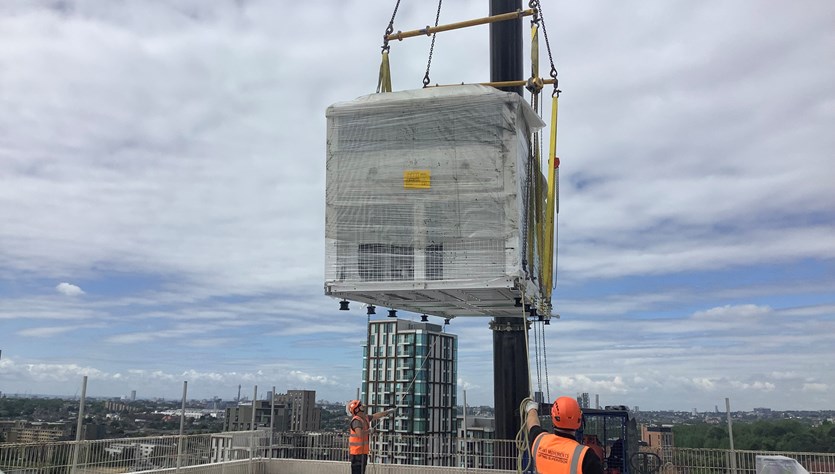
    Vital Energi has successfully delivered a high-profile rooftop crane lift at Palestra House, one of Transport for London’s largest office buildings, supporting their journey to decarbonise their operations and buildings.

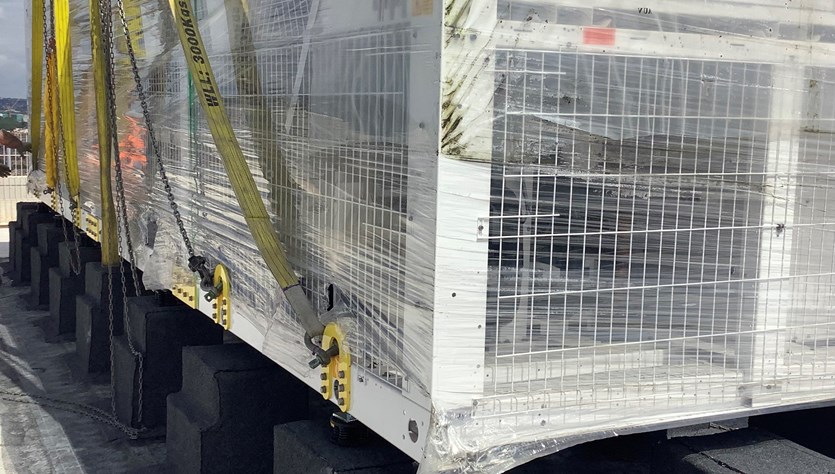
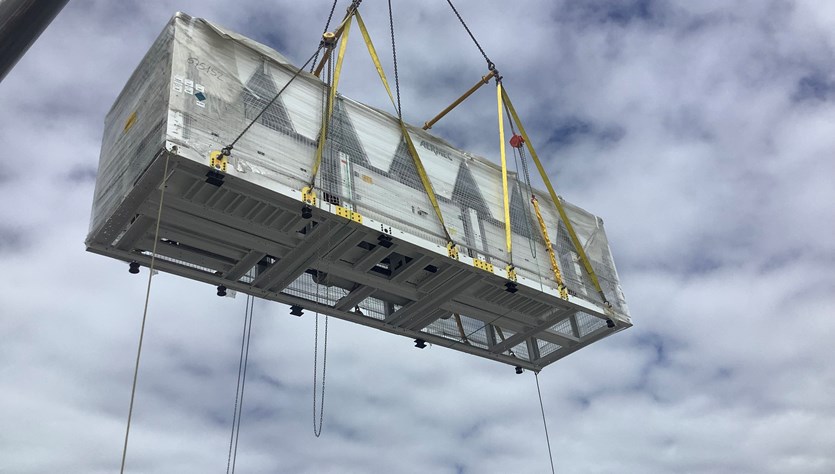
    As part of the wider energy upgrade programme, which is set to save over 1,500 tonnes of carbon a year, the crane operation involved the removal of four redundant air-cooled chillers and the installation of three new air source heat pumps (ASHPs).

    These ASHPs will generate low-temperature hot water (LTHW) and provide supplementary cooling to the retained chillers, helping to transition the building away from fossil fuel reliance.

    The crane lift, which took place at the busy Blackfriars Road and Union Street junction, required meticulous planning and collaboration with multiple stakeholders including TfL, Thames Water, Southwark Council, and Network Rail, along with local residents, and businesses.

    Traffic, cycling, and pedestrian management plans were implemented, including diversions for the super cycle highway and secure fencing around the craneage area to ensure public safety.

    An extensive pre-planning and peer review process ensured the lift was executed smoothly, with minimal disruption to the surrounding area and continued operation of Palestra House.

    “It has been great to be a part of the planning and execution of this meticulously planned lift, working with TfL on their journey towards net zero and decarbonisation. Due to the proximity of the crane location at the junction outside Southwark Station, stakeholder engagement across TfL, Thames Water and Network Rail has been managed to ensure all considerations were taken into account. Seeing the 500-Tonne Crane lifting the new air source heat pumps across the London skyline was fantastic to witness, and is great achievement from the whole team involved.”

    Jon Burgess, Regional Manager at Vital Energi

    As well as replacing gas boilers with heat pumps, Vital Energi are implementing upgrades to existing heating, cooling, and controls systems within the building, and converting over 9,000 light fittings to energy-efficient LEDs, to support TfL’s net zero ambitions.

    To date, around 3,500 lights have been replaced across four of the building’s eleven floors, with phased works carefully coordinated with TfL and building occupiers to minimise disruption.

    Ventilation upgrades have also been completed, further enhancing the building’s energy performance.

    There will be a second crane lift towards the end of the year, where water source heat pumps will be lifted and positioned on the roof.

    TfL was awarded grant funding from the Public Sector Decarbonisation Scheme (PSDS), which is administered by Salix on behalf of the Government’s Department for Energy Security and Net Zero, to enable this phase of works.

    Read more about how Vital Energi is supporting TfL’s decarbonisation journey here.

  • Low-Carbon Future Looks Bright for 4MW Swansea Solar Farm

    Low-Carbon Future Looks Bright for 4MW Swansea Solar Farm


    Low-Carbon Future Looks Bright for 4MW Swansea Solar Farm

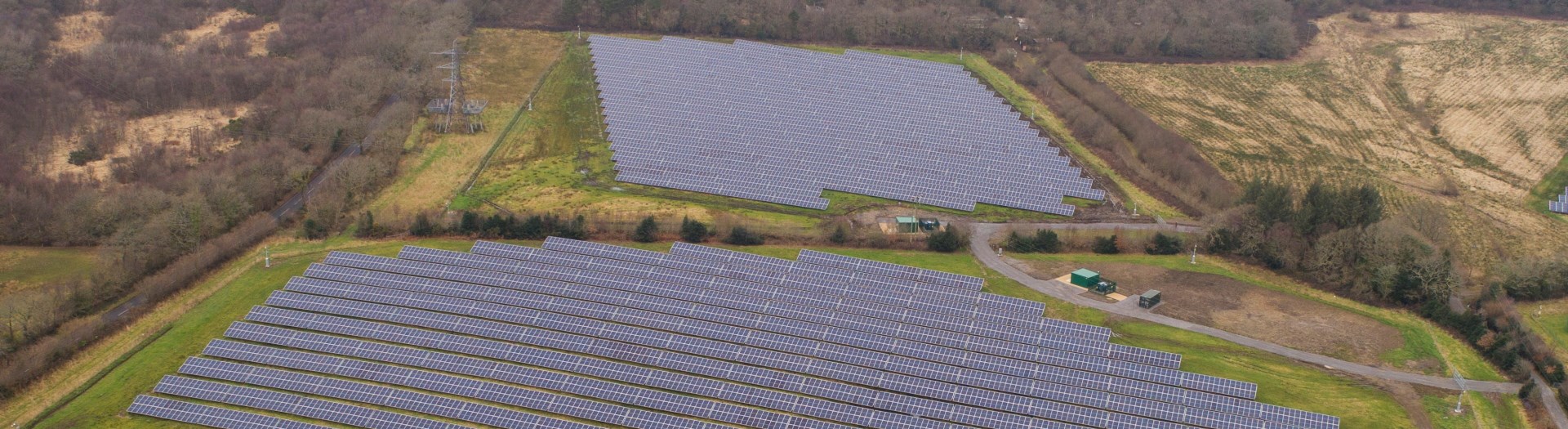
    Vital Energi will be delivering a new 4MW solar PV installation for Swansea Bay University Health Board at Brynwhilach in a partnership which will reduce the Health Board’s carbon emissions by over 20,000 tonnes.

    The solar farm, which is being delivered through the Re:fit framework, will see almost 10,000 PV panels installed over an area of 20,000m² and, when operational, will supply over 3.5 million kWh of zero-carbon electricity to Morriston Hospital via a 3km private wire network. In addition to the carbon reduction the project will save £439,000 per annum in electricity costs.

    Our health board takes seriously our responsibilities to future generations by reducing our environmental impact and in particular cutting our carbon footprint and reducing our costs is a win-win for the Health Board, our patients and taxpayers.

    Emma Woollett, Swansea Bay UHB Chair

    The first phase was a range of energy conservation measures at Morriston and Singleton hospitals, and other Health Board premises. These included changing the majority of light fittings, and improving the insulation, lagging and upgrading building management systems. The second phase is the development of the solar farm, which will enable us to produce our own electricity. This is in line with the Welsh Government’s commitment for the public sector to be carbon neutral by 2030. We will be the first Health Board in Wales to develop its own solar farm. It has been very challenging. However, with a lot of hard work from our project team, which included the Welsh Government and other key partners, we have managed to secure the development.

    Des Keighan, Health board Assistant Director of Operations

    The exciting thing about this project is that it more than pays for itself and the profit it generates can be allocated to delivering front-line clinical services. By offering a long-term energy performance contract on the project we can bring a level of certainty to the Health Board’s budget and decarbonisation plans.

    Phil Mottershead, Project Development Director, Vital Energi

    This marks another significant investment in carbon reduction and the Welsh Government and Swansea Bay University Health Board should be congratulated on their on-going commitment to decarbonisation.

    Scott Lutton, Vital Energi Operations Director, North & Scotland

    The energy conservation measures have been carried out throughout 2020 and will be completed early next year.

    Work on the solar farm development is due to start in the early part of 2021 and should be operational by the end of the summer.

    All financial, carbon and electrical generation targets are guaranteed by Vital Energi under a 20-year energy performance contract which ensures the scheme will perform as designed.  In addition to designing and installing the solar farm, Vital Energi will also undertake long-term operation and maintenance duties on the project.

    The Welsh Government were the first in the UK to pass a Climate Emergency Declaration and have set a target of net-zero carbon emissions by 2050.  Swansea Bay University Health Board have a long-term carbon reduction strategy in place and the solar farm is the second stage of works undertaken through the Re:fit framework.  Phase 1 saw Vital Energi work in partnership with the Health Board to deliver a range of energy conservation measures which reduce carbon emissions by 2,476 tonnes per annum whilst delivering energy cost savings of £870,000 per year.

    The project is being supported by the Welsh Government and Salix funding.  Work will begin on site in February 2021 with completion scheduled for July 2021.

  • London Set For First Large-Scale Heat Pump Retrofit Project

    London Set For First Large-Scale Heat Pump Retrofit Project


    Large-Scale Heat Pump Retrofit Project

    Vital Energi are working with Southwark Council to deliver a £6.95m project which will see 2,175 properties across the Newington, Wyndham and Consort estates receive sustainable, low-carbon heat from pioneering water source heat pump project.

    The project makes use of the existing district heating network, but 3 retrofitted water source heat pumps will replace gas boilers as the primary heat source which will deliver a large carbon reduction across the estates and improve the air quality locally.

    This is a particularly exciting project as it is the first large-scale retrofit of a water source heat pump project in the UK and we believe that this is a technology which will see wide-scale use in the coming years. We are proud to be working on this and other heat pump projects throughout the UK and look forward to helping Southwark Council on their journey to net zero carbon emissions. Importantly, it shows how the latest low-carbon technologies can be plugged into existing heat networks, opening up the opportunity to revolutionise the way we generate and use heat.

    Rob Callaghan, Managing Director, London & South

    Discover more about the project by viewing this animation

    Heat will be taken from locally drilled bore holes where the water is naturally warmer and then run through the heat pumps to further increase temperature, before it is pumped out to customers This is an extremely efficient and reliable way of producing heat.

    Cllr Johnson Situ, Cabinet Member for Climate Emergency, Planning & Transport and Cllr Leo Pollak, Cabinet Member for Housing, said: “In Southwark we’re working with residents, businesses and anyone else who can help, to try and achieve net zero carbon emissions by 2030. Sitting alongside our commitment to plant 10,000 new trees, and our ongoing investment in renewable energy, this is exactly the sort of innovative and ground breaking project that will help us achieve our goal. 

    “We are delighted to be working with Vital Energi, and will be checking in with residents living on the three estates, to see how they are getting along with their new, cleaner, green heating supply.” 

    The project is due for completion in 2021 and when the heat pumps are in operation resident’s energy supply will be transformed over night to a low carbon renewable source.

  • Coed-Ely Solar Farm now powering Royal Glamorgan Hospital

    Coed-Ely Solar Farm now powering Royal Glamorgan Hospital


    Local Power for Local Care: Coed-Ely Solar Farm now powering Royal Glamorgan Hospital (1)

    Mae'r dudalen hon ar gael yn y Gymraeg yma.

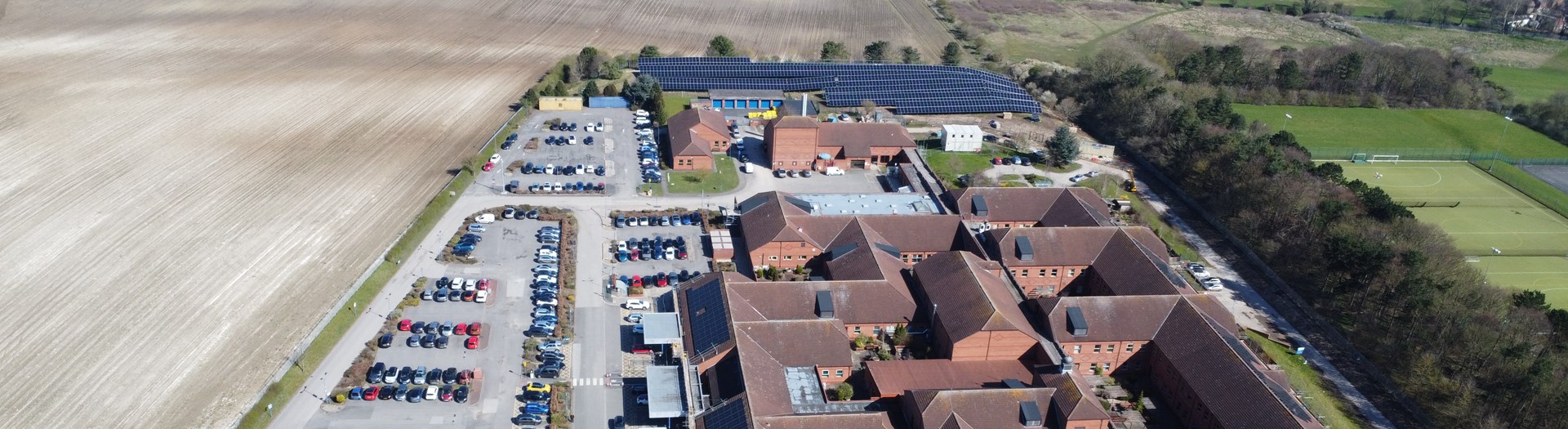
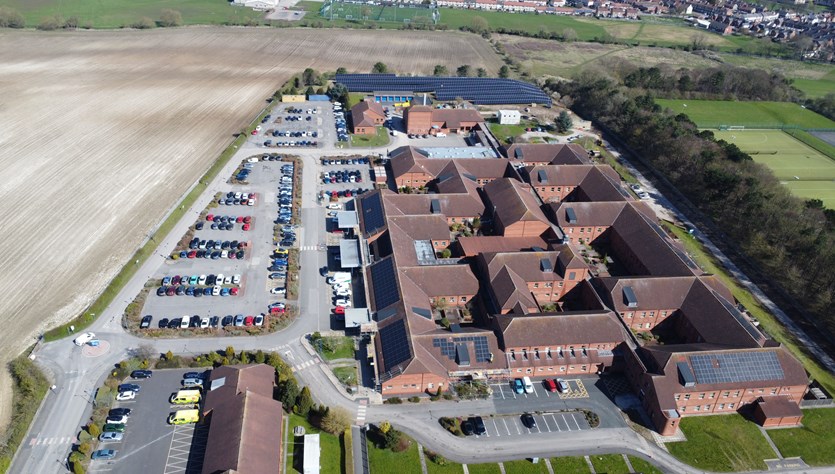
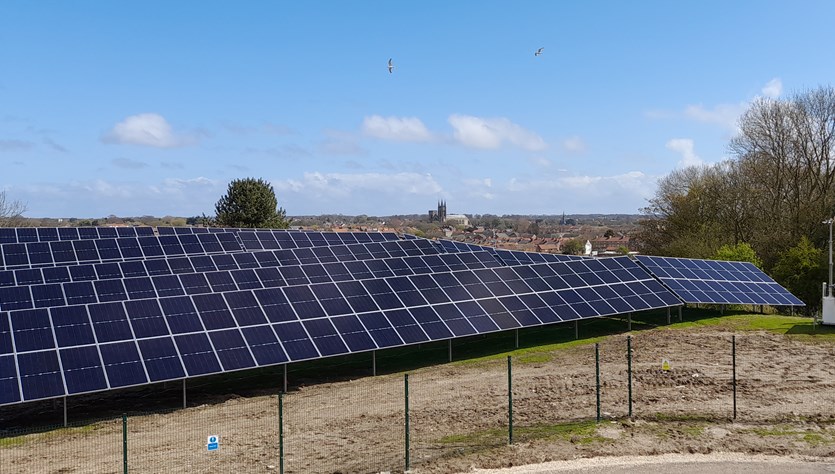
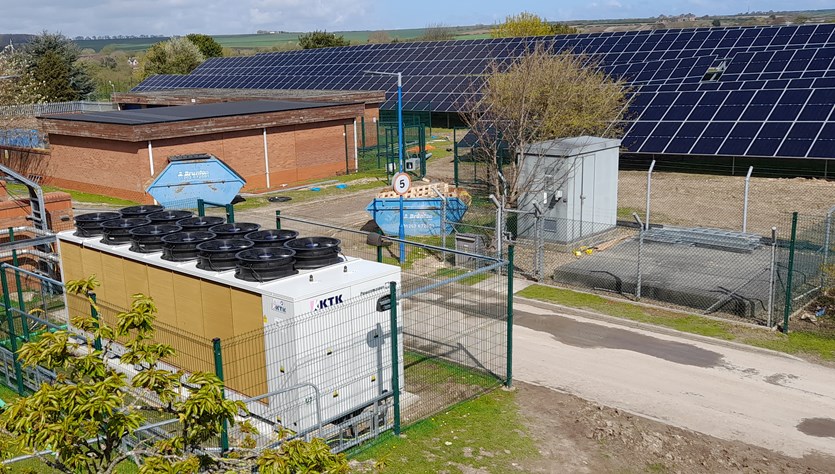
    The Coed-Ely Solar Farm is now officially switched on and supplying electricity directly to the Royal Glamorgan Hospital. This means that one of our most vital public services is being powered by energy generated right here in our community.

    Built on a reclaimed colliery site, the solar farm features 9,000 panels and produces enough electricity to power around 1,800 homes each year, and as well as powering homes, that energy is helping keep the lights on, machines running, and care flowing at the Royal Glamorgan Hospital.

    Further to this, the project has created local jobs and generated over £600,000 in spending with local businesses and suppliers. It’s a major step forward in making vital public services more resilient and less dependent on unpredictable energy markets.

    The Coed-Ely Solar Farm was jointly funded by Rhondda Cynon Taf County Borough Council, the UK Government through the UK Shared Prosperity Fund (UKSPF), and part-funded by the Welsh Government.

    DJI 20250724102427 0695 D Copy

    The solar farm will export electricity to the grid as well as supplying 1MW of electricity to Royal Glamorgan Hospital.

    Solution detail

    This milestone sees all the hard work pay off as the Royal Glamorgan Hospital receives its first boost of power from the Coed-Ely Solar Farm. This ambitious project is providing a unique opportunity to deliver energy for the benefit of our communities. Any electricity generated that is not used by the hospital is fed into the National Grid, helping strengthen the UK’s overall energy security. But ‘local’ is at the heart of this project, local power and local impact.

    Councillor Ros Davis, Cabinet Member , Rhondda Cynon Taf County Borough Council

    Mark Williams, Vital Energi’s Partnerships Director, said:  “Seeing clean, low-carbon energy transmitted to Royal Glamorgan Hospital is more than just a technical achievement, it’s a demonstration of how the public sector can collaborate to achieve its net zero goals.  This is another fantastic addition to Wales’s low-carbon energy infrastructure and one which will contribute to a cleaner, more sustainable future for everyone.

    “We’d like to congratulate Rhondda Cynon Taf County Borough Council on a visionary scheme which created a template for collaboration which can be replicated throughout Wales and beyond.”

    The Coed Ely Solar Farm was constructed on a reclaimed colliery site, turning 84 acres of former industrial land into a renewable energy asset for the region. As one of the largest local-authority solar projects in Wales, it generates enough clean energy to power around 8,000 homes annually while contributing 5MW to the grid.

    Claire Thompson, Executive Director of Strategy and Transformation, said, “This is a landmark moment for our health board and for the Royal Glamorgan Hospital. The switch-on of solar energy is more than just a technical achievement – it’s a symbol of our commitment to delivering healthcare in a sustainable, forward-thinking way.

    “We’re proud to be part of a project that not only reduces our carbon footprint but also strengthens our partnership with Rhondda Cynon Taf Council and Vital Energi. This is just the beginning of our journey toward a greener future.

    “A heartfelt thank you to all our colleagues whose dedication and hard work made this milestone possible.”

  • Local school children visit Hebburn Heat Network

    Local school children visit Hebburn Heat Network


    Local school children visit Hebburn Heating Network

    Local school children visit Hebburn Renewable Energy Scheme

    Children from St Aloysius Primary School got the opportunity to visit the local Vital Energi project at Hebburn, and see their artwork which is now displayed on the site hoardings surrounding the site.

    In 2022, Vital Energi’s Pre -Construction Engineer, Victoria Wallbank visited their school and delivered an engaging Climate Education session. As part of this, the class drew inspiring pictures to represent low carbon energy. A selection of these have now been displayed on the boards around the construction site, based in the heart of the town centre, where works are beginning on the steel framework of the Paul Younger Energy Centre.

    The nine children had a tour of the site in March 2023 and walked round to Durham Court and Hebburn Central Library and Leisure Centre, two of the buildings that will be connected to benefit from the Hebburn Renewable Energy scheme being developed by South Tyneside Council. After learning more about the project and the works so far, they enjoyed playing two of our new Climate Education games, Top Trumps and Higher or Lower. Both games sparked excitement amongst the children, learning more about the different energy technologies available in a fun and interactive way.

    Each child was also given a goody bag which included various Vital branded items, sweet treats and seeds to plant at home or at school. The children are looking forward to driving past the site on their daily commute to school and seeing the progress of the construction of the energy centre over the coming months.

    It was a wonderful opportunity for the pupils from St. Aloysius to visit and explore the site with the Vital Energi team. The children were able to learn about the benefits the project will have for their own local area and community. They were overjoyed to see their artwork displayed to encourage others to recycle and care for the environment.

    Georgia Lawrence, St. Aloysius teacher

    Victoria Wallbank said “It was great to see the children again and show them progress on the project so far, and their artwork displayed around the site. This second visit allowed us to re-engage with the children to further educate them on the wide range of solutions to reduce our carbon emissions. I look forward to welcoming them back to the site at the end of the year to see the energy centre in action.”

  • Liverpool City Region begins £5.4m Decarbonisation Transformation

    Liverpool City Region begins £5.4m Decarbonisation Transformation


    Liverpool City Region begins Phase 3C of £5.4m Decarbonisation Transformation

    The LCR Combined Authority is set to take a big step towards its net zero targets after work begins on the project, funded by the Public Sector Decarbonisation Fund. The scheme will deliver city region-wide energy efficiency improvements including Solar PV, Air Source Heat Pumps, and an extension to the Mersey Heat Network.

    Wirral, Sefton, St Helens, Knowsley, and Liverpool are all set to benefit from a £4.9m series of energy conservation projects at a range of council-owned buildings across the wider Liverpool City Region.

    Once complete, the project will cut carbon emissions by more than 500 tonnes each year, which is the equivalent of 600 average UK homes’ emissions.

    The project is being delivered by renewable energy company Vital Energi, which will install a blend of energy conservation measures, including solar PV panels, heat pumps, pipework insulation, double glazing and LED lighting upgrades. The project will also deliver additional connections to the Mersey Heat Network.

    For over a decade we’ve been working with organisations across the Liverpool region to drive down their emissions but also lower their energy costs, and this is another fantastic addition to Liverpool’s low-carbon landscape. One of the truly exciting things about this project is that we’ll be working in partnership with the councils to benefit the local communities we’re working in, by spending locally, creating local employment and skills development, and promoting health and well-being initiatives to create a strong, long-lasting legacy

    Andrew Wightman, Regional Director, Vital Energi

    Vital Energi and the LCR Combined Authority have worked with Knowsley Council, Wirral Council, and Liverpool City Council to identify which buildings will most benefit from the energy conservation measures, and after an extensive survey and energy audit, chose buildings at:

    • Wirral County Park
    • Wirral – Landican Cemetery
    • Knowsley – Prescott Soccer Centre
    • Sefton – Bootle Library
    • Sefton – Bootle Leisure Centre

    Additionally, George’s Dock and the Cunard Building will be connecting to the Mersey Heat Network.

    In addition to the PSDS scheme, Liverpool City Region Combined Authority is also exploring potential locations for ground and roof-mounted solar installations, to accelerate their journey to Net Zero by 2035.

  • Leeds PIPES wins international acclaim as leading heat network

    Leeds PIPES wins international acclaim as leading heat network


    Leeds PIPES wins international acclaim as leading heat network

    The Leeds PIPES heat network has been recognised as an international exemplar of a city-wide heating solution, following a visit by the Canadian-based Boltzmann Institute. The delegation attended as part of a pan-European “study tour”, to gain crucial insights to aid in the expansion of Canada’s low carbon energy infrastructure.

    Leeds PIPES, one of the UK’s fastest growing, major heat networks provides homes, businesses and public buildings with affordable, reliable, low carbon heat and hot water through the use of recovered heat from a nearby Recycling and Energy Recovery Facility.
    Being delivered by Vital Energi, in partnership with Leeds City Council and Ener-Vate, the scheme was responsible for a near 6,000 tonnes of carbon reduction in 2023 alone, and has delivered over 430 green jobs across the Leeds city region.
    Its current customers include some of the city’s most notable organisations, including Leeds Playhouse, Leeds Beckett University and St James’s University Hospital.

    “We had an incredibly worthwhile visit with Vital Energi to learn more about Leeds PIPES as part of our Europe-wide study tour, gaining invaluable insight to input into our wider plans for district energy expansion in Canada. “We were particularly impressed by our tour of the Recycling and Energy recovery facility, which really demonstrated the brilliant innovation happening both in the city of Leeds, and in our sector.”

    Richard Gilbert , Director – Boltzmann Institute

    “We have seen great progress for the Leeds PIPES network since the project began in 2018. We are proud of our collaboration with Leeds City Council and Ener-Vate and the impact it has on the international effort to achieving Net Zero. “The recognition for the scheme is a real reflection of the team’s dedication to innovation in the green transition, and to providing flexible, resilient and future-proofed energy schemes for our clients. “We are incredibly proud to see the real impact that Leeds PIPES is having on so many people within the city, and we will continue our work to support as many local businesses, and local lives, as we can.”

    Mike Cooke, Managing Director – Vital Energi

    “It has been fantastic to see the considerable growth of this local initiative, with it now receiving recognition on national and international stages. Leeds PIPES has helped us make significant strides towards our net zero goals for the city, in addition to generating considerable apprenticeship and employment opportunities for local people. “We have already seen key organisations in the region connecting to the network, and local people feeling the impact of the scheme in the reduction of their energy bills. The impact it has had to-date has been phenomenal, and we hope it continues to act as an exemplar scheme as we work on further expansion.”

    Cllr Mohammed Rafique , Leeds City Cllr climate energy environment & green

    Connecting over 2,300 homes and 28 key buildings across the city centre, the city-wide heating network has attracted national recognition, having recently won the “Energy Project of the Year – Residential” category at the prestigious Energy Awards in London.
    The project is also making significant local impact through inspiring the next generation of heating and electric engineers, as well as aspiring design and construction professionals. 40 students from the Urban Energy Systems course at the University of Leeds also had the opportunity to tour the network in action and gain unique insights from senior staff at the organisation.
    Representatives from The Boltzmann Institute visited energy facilities across eight countries in Europe in advance of their ambitious plans for district energy expansion across Canada, helping the country reach its goals for net zero emissions by 2050.

    To find out more about the Leeds PIPES network, visit: https://www.leeds-pipes.co.uk/.