Blog

  • Duffryn Heat Network Project Team Welcome DESNZ

    Duffryn Heat Network Project Team Welcome DESNZ


    Duffryn Heat Network Project Team Welcome the Department for Energy Security and Net Zero

    Newport City Homes’ Duffryn Heat Network Replacement Project is one of the largest district heating pipe upgrade projects currently being delivered in the UK. It involves replacing 7.5km of ageing pipes with a modern and highly insulated network. The project received a £3.7m grant from the Heat Network Efficiency Scheme (HNES), and this work will secure the future of the district heating system and deliver a better experience for customers.

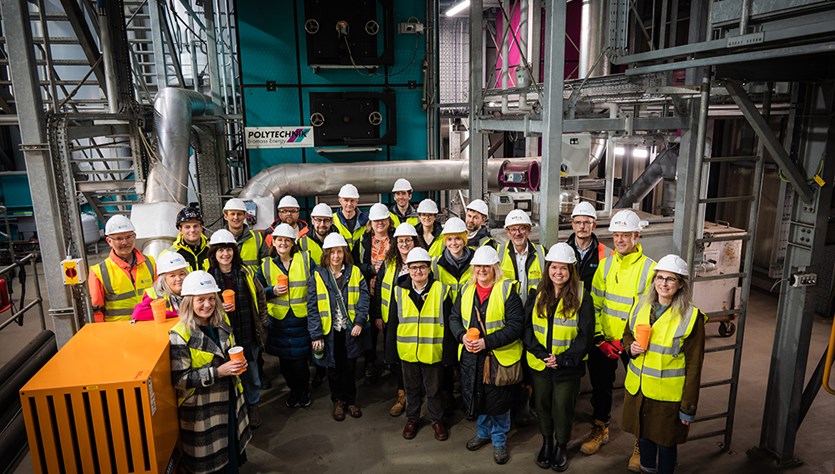
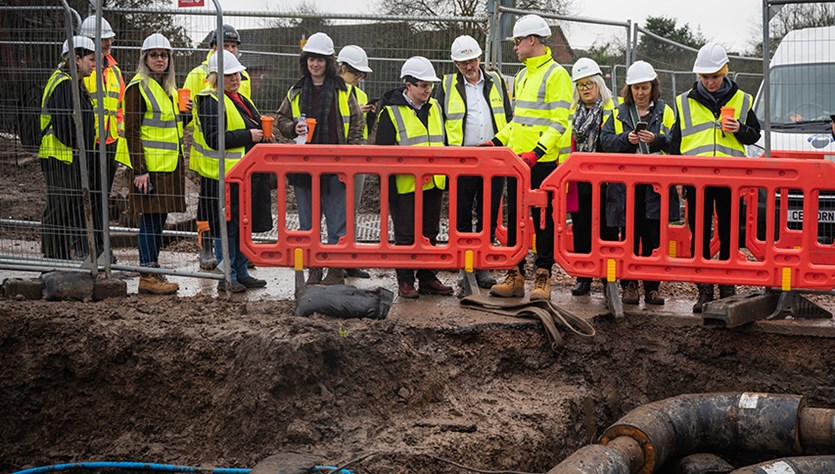
    We were delighted to welcome a delegation from the Department for Energy Security and Net Zero on Wednesday 14 February to find out more about the district heating system, see the pipework being installed, meet the team behind the project and tour the biomass energy centre.

    We’re thrilled with the project’s progress and incredibly grateful for the engagement and support of our customers and the wider community. “These works are a significant investment in sustainable energy and we are very grateful to have received some of the funding for these vital works from the Heat Network Efficiency Scheme, funded by the Department for Energy Security and Net Zero. The improvements we are delivering will ensure Duffryn heat network will continue to deliver affordable, environmentally friendly heating and hot water for our customers and wider community for many years to come.

    Sonia Furzland, Executive Director of Operations-Newport City Home

    Duffryn 1

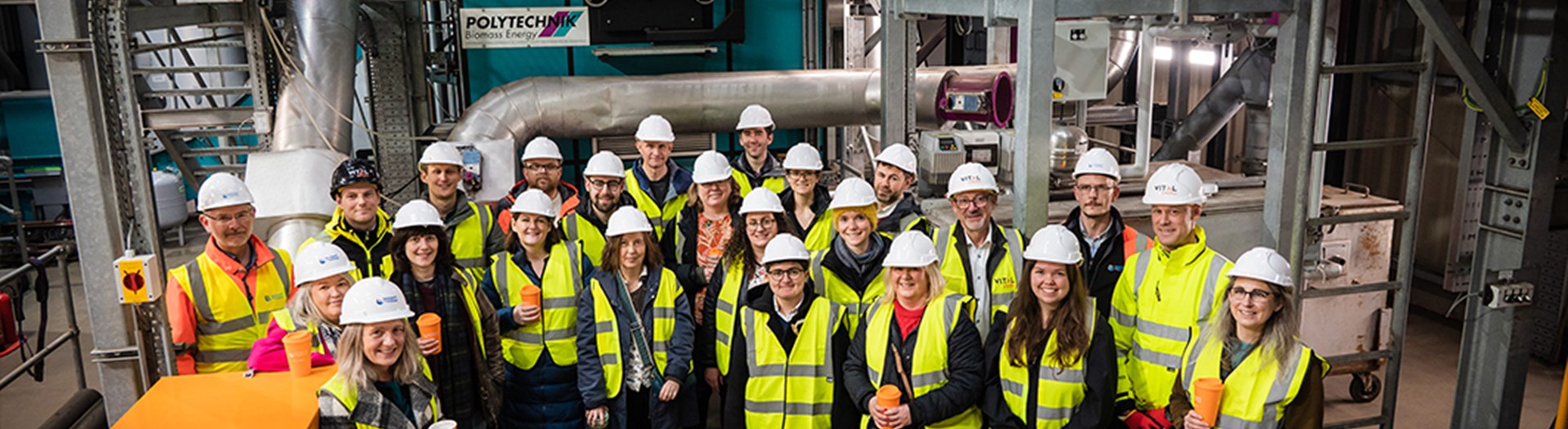
    The delegation taking a tour of the biomass energy centre which provides heat for the network

    Solution detail

    The Duffryn heat network provides heating and hot water to over 970 homes, local schools and businesses. Since installation in the 1970s, it remains an example of innovative sustainability. It uses locally sourced woodchip instead of fossil fuels, which reduces carbon emissions and contributes to better local air quality. Any waste product is given to local farmers to use as fertiliser. The new pipework will ensure the local community and future generations benefit from sustainable and reliable heating and hot water.

    Pic With DH In It.

    Vital Energi’s Managing Director of Heat Networks, Ashley Walsh explaining the installation process for district heating pipework.

    Solution detail

    This is an important project for the local community, taking the district heating system which has come to the end of its life and upgrade it into a sustainable and efficient system which will serve the community for decades to come and we’re delighted to welcome the delegation from DESNZ to tour the installation. “This is an extremely rewarding project, due to the positive impact it will have on people’s day-to-day lives and one of the highlights for us is that we’ve been able to work with the council on some social value projects which will make a genuine difference in the lives of the people of Duffryn.

    Ashley Walsh , Vital Energi – Managing Director for Heat Networks

    The heat network is being delivered in phases to minimise disruption, with completion scheduled for Spring 2024.

  • Dundee City Council Energy Project Over Performs By 17%

    Dundee City Council Energy Project Over Performs By 17%


    Dundee City Council Energy Project Celebrates Anniversary with Almost 700 Tonnes in Carbon Savings

    We’ve been working with Dundee City Council for 7 years and have delivered three major energy conservation projects across their estate in that time, implementing technologies such as solar PV lighting, heating and ventilation upgrades and improvements to their Building Energy Management Systems.

    Vital Energi delivered an energy performance contract on all three phases of the project which guarantees certain levels of performance, such as reduced energy costs and carbon savings and we are delighted to say that all three phases of the project are outperforming their original guarantees.

    Phase 3 of the project has celebrated its anniversary and, after having the data verified by an independent third party, has outperformed its guaranteed targets by 17%.  This has seen the council reduce its carbon emissions by 693 tonnes, whilst saving over £262,000 in energy costs.

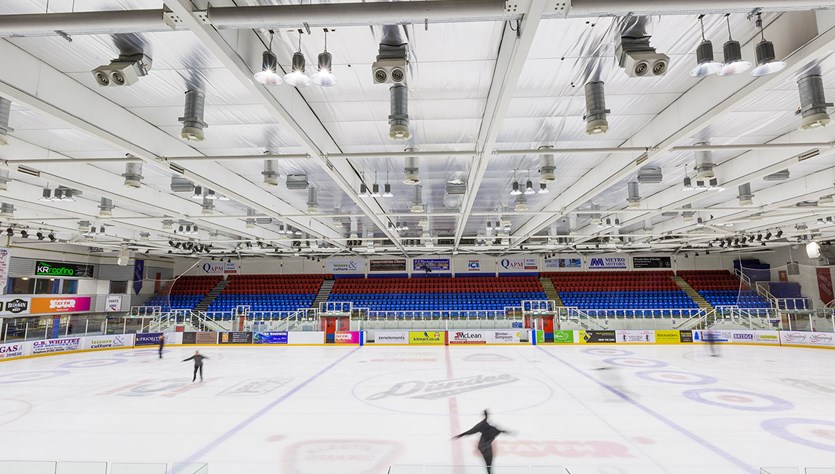
    Previous phases had seen Vital Energi deliver energy upgrades to some of Dundee’s most-used community buildings such as Dundee Ice Arena and Central Library.  Phase 3 built on this success to add improvements to another 20 buildings.

    NDEE projects are fantastic for the public sector, because contractors have to guarantee certain areas of performance. This gives the client both budget certainty, and ensures they are getting the carbon reduction promised.

    Chris Yeo, Director of Low Carbon Solutions – Vital Energi

    Dundee Case Study 023 Copy

    Lighting upgrades to Dundee Ice Arena, delivered as part of Phase 1.

    Solution detail

    Chris continues, “This was a great project by Dundee City Council which has not only saved them money, which can be better spent on essential services, but it has allowed them to make big strides towards their net zero goals.  We’re delighted that the installations are performing so well and are sure they’ll stand as an example of how city councils can reduce their emissions by hundreds of tonnes and make significant progress on their net zero journey.”

    With all three phases now independently verified, the council are saving over £700,000 in energy costs per year and have reduced their carbon by 2,200 tonnes per annum.

    The results are great news for Dundee City council who have pledged to reach net zero by 2038.


  • Energy modeller Veronica strengthens the Vital team

    Energy modeller Veronica strengthens the Vital team


    Energy Modeller Veronica to Strengthen Sustainable Solutions Team

    We are delighted to welcome Veronica Hamilton as our new Lead Development Manager who will further strengthen our ESCo offering, and develop energy models of Energy Performance Contract (EPC) projects such as Re:fit.

    With almost 15 years’ industry experience working for ESCo providers within the energy market and for engineering consultancies, Veronica brings substantial experience to her new role at Vital where she will further strengthen our ESCo offering. She has worked on some of the largest schemes across the UK, considering a wide range of technologies from energy from waste to heat pumps, and everything in between!

    ESCo modelling is Veronica’s main area of expertise and she’s working on various kinds of modelling work focused substantially on ESCo development, thereby supporting Vital’s strategic growth in this area. She’s also developing EPC models based on her sound understanding of the energy systems and their interaction with other fixed building-services and fabric.

    “I’m passionate about shaping projects to find the best balance between the technical, commercial and environmental,” said Veronica. “Working with the range of people with expertise in whole life cycle of projects, including business development, design, operations, energy markets, commercial and policy – is what I find really interesting when working on these projects. This is a really exciting time to join the team, and I’m looking forward to developing ESCo opportunities in support of Vital and contributing to the UK’s net zero transition.”

    Veronica Hamilton, Lead Development Manager

    Welcome to the team Veronica!

  • Construction work now underway on roof top solar farm on UKBIC

    Construction work now underway on roof top solar farm on UKBIC


    UKBIC Initiates Rooftop Solar Farm Construction for Sustainable Energy Future

    The UK Battery Industrialisation Centre (UKBIC), the national battery manufacturing development facility, is set to revolutionise the way it generates energy with an innovative project which will transform its roof into a solar farm capable of generating a peak output of 2.8MW of clean, renewable electricity.

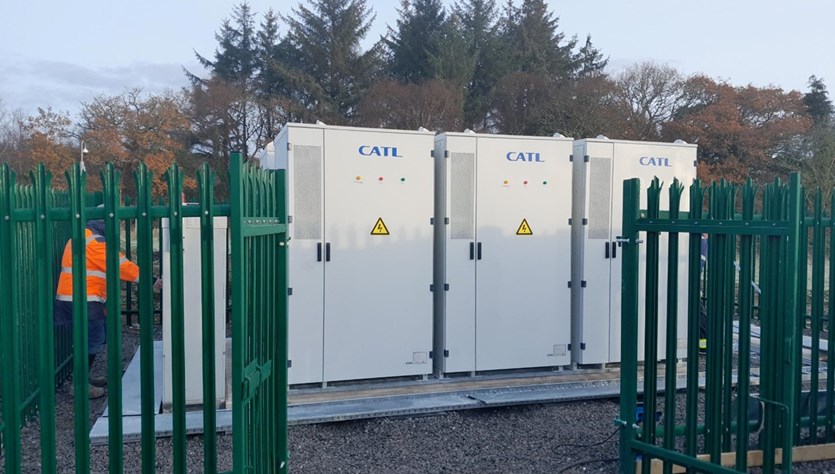
    In addition to the solar farm, the project will see the creation of two 2MWh Battery Energy Storage Systems (BESS) which will give the facility greater flexibility over when it uses energy, allowing solar energy generated throughout the day to be used overnight. Construction work on the BESS is set to commence in March 2024.

    Once fully operational, the new Vital Energi installation will significantly help to reduce the facility’s carbon footprint by 555,000kg per year.

    Funding for the solar farm is being provided by UK Research and Innovation, via the Faraday Battery Challenge, delivered by Innovate UK. The FBC is a £610m investment programme which supports world-class scientific technology development and manufacturing scale-up capability for batteries in the UK.

    “The installation of a solar farm on our roof will be fantastic for UKBIC. This latest investment from UKRI will help us to reduce our carbon intensity and demonstrate good industry practice by making the battery industry greener. The initiative will help to reduce our energy bills and help towards the UK’s goal of achieving net zero by 2050.”

    Sean Gilgunn, UKBIC’s Managing Director

    “It’s only right that a world leader in battery development should harness the latest technology and UKBIC are making a significant investment in their green energy future. This project will not only substantially drive down their carbon emissions but will also deliver long-term energy savings and bring stability to their energy costs. “UKBIC’s size means that their roof is a fantastic resource which can be used to house almost 5,000 solar panels across the roof space of its 18,500m2 facility, generating a peak output of 2.8MW, and will be a fantastic technical achievement once completed.”

    Simon Jones, Vital Energi’s Regional Manager for Solar

    Work is already underway on the solar farm with completion scheduled for the fourth quarter of 2024.

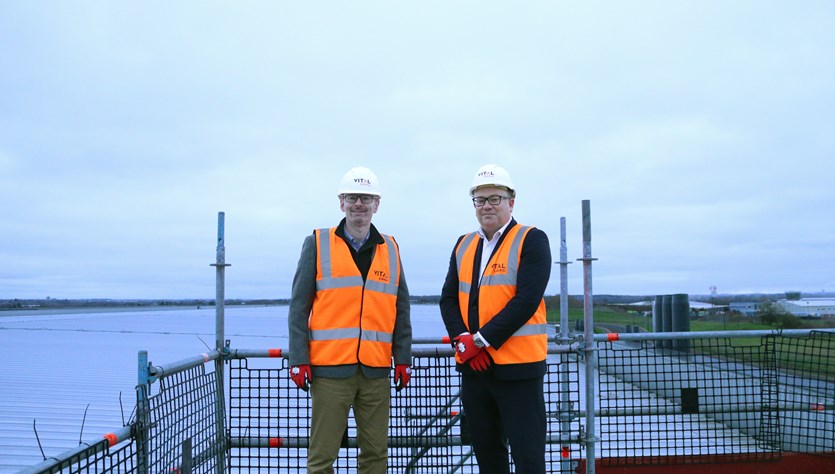
    Sean Gilgunn, UKBIC’s Managing Director, and Simon Jones, Vital Energi’s Regional Manager for Solar.

    Solar 1

    Solution detail

  • Hundreds of households in Leeds to benefit from low carbon heat network

    Hundreds of households in Leeds to benefit from low carbon heat network


    Hundreds more households in Leeds to benefit from low carbon heat network

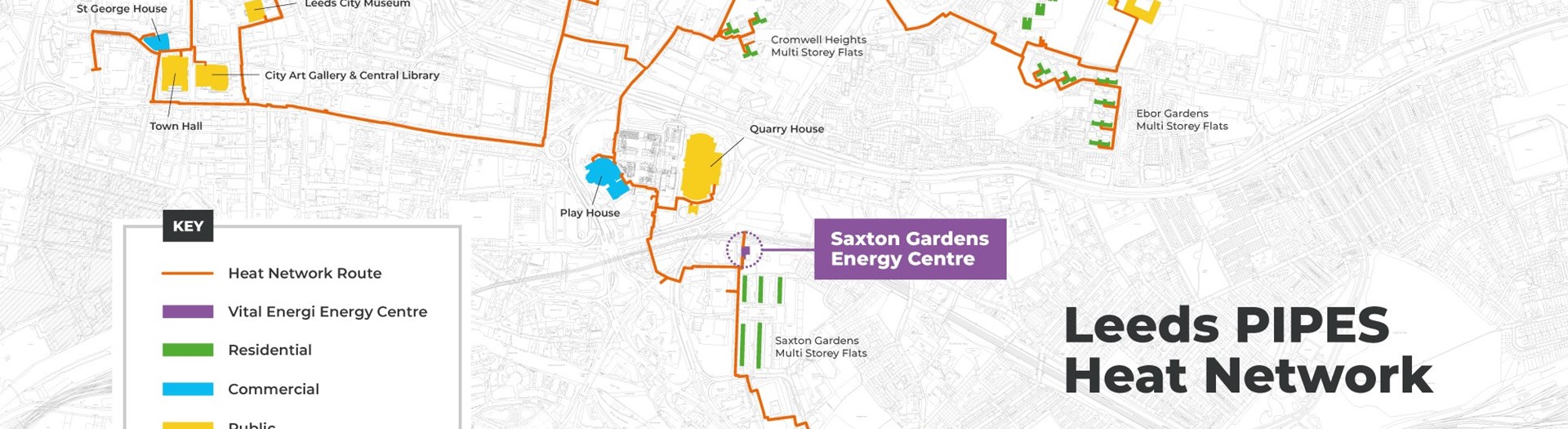
    Hundreds more households will soon enjoy more affordable, reliable, and lower carbon heating with three tower blocks set to become the latest to connect to the city’s flagship Leeds PIPES district heating network.

    259 council properties in Lovell Park Heights, Lovell Park Grange, and Lovell Park Towers will be set up to receive heat from the network within the next six months.

    Private leaseholders of properties in the Little London tower blocks will also be able to benefit from the network if they opt to connect their homes to the system.

    Households that are benefiting from the upgrade can expect to see the cost of heating their home reduce using Leeds PIPES, compared to their existing heating systems, and will also enjoy better reliability and control.

    Meanwhile, Leeds Conservatoire (formerly Leeds College of Music) has become the thirteenth non-residential customer to have signed a contract to connect.

    The new connections are expected to reduce the city’s annual carbon footprint by 279 tonnes, supporting efforts to end the city’s contribution to climate change by transitioning to ‘net zero’ emissions.

    By using heat and energy recovered from non-recyclable waste at the Recycling and Energy Recovery Facility (RERF) to provide warmth and hot water to buildings in the city, the Leeds PIPES district heating project is helping businesses and residents to move away from costly fossil-fuel powered heating systems.

    The council estimates that the network, delivered in partnership with Vital Energi, is helping existing customers to collectively save nearly half a million pounds (£490,000) in reduced energy costs this year alone.

    The £62 million network continues to expand and is regularly connecting to new buildings. Leonardo & Thoresby student accommodation buildings and St James’s Hospital are the latest buildings to have begun taking heat from the scheme.

    Leeds City Council is currently in discussions with dozens of potential customers. Buildings and developments located near the underground pipes can choose to connect at any time and can register their interest here.

    Last year, the network of insulated underground pipes supplied 22,029 megawatt-hours of heating in total and helped reduce the city’s carbon footprint by 3,975 tonnes.

    Councillor Mohammed Rafique, Executive Member for Climate, Energy, Environment & Green Space and Councillor Jessica Lennox, Executive Member for Housing, said:

    “We are both delighted that hundreds more residents will soon be paying significantly less to heat their homes thanks to this latest expansion of the Leeds PIPES network.

    “Residents in the Lovell Park estate will join the thousands of council tenants and hundreds of private sector renters already benefiting.

    “Too many families in our city struggle to pay their energy bills—in part because the UK’s homes are some of the least efficient and most reliant on costly fossil fuel gas in Europe.

    “Whether it’s by connecting homes to affordable low carbon heating like Leeds PIPES, or investing in energy-saving measures like insulation, this council is committed to helping households by making our homes greener and fit for the future.”

    Mike Cooke, Vital Energi’s Managing Director (North and Scotland), said:

    “Leeds PIPES continues to be the UK’s landmark heat network and we’re delighted to announce these new connections, which means more people will benefit from low-carbon, cheaper heat to businesses and residents, making a real difference in their day-to-day lives.

    “We look forward to welcoming another 259 homes and Leeds Conservatoire to the fastest growing heat network and will work closely with the council to ensure they have the best possible customer experience.” 
  • Supporting Dragons Community at Duffryn

    Supporting Dragons Community at Duffryn


    Salford Solar Power… Coming Soon

    As part of the Duffryn heat network replacement for Newport City Homes, Vital have been supporting the Dragons Community initiative which is a partnership between Newport City Homes and Dragons RFC, and we’re delighted to have the opportunity to fund a series of events for the local 55  community which will culminate in a trip to Rodney Parade, home of the Duffryn Dragons.

    Newport City Homes have a strong commitment to health and wellbeing, and we’re delighted to support the fantastic work they do with the Dragon’s Community. We’ll be working to connect lots of buildings, such as schools and retirement homes and we’re delighted to meet the local community, discuss the project, and support them with some fantastic initiatives.”

    Ashley Walsh , Managing Director for Heat Networks – Vital Energi

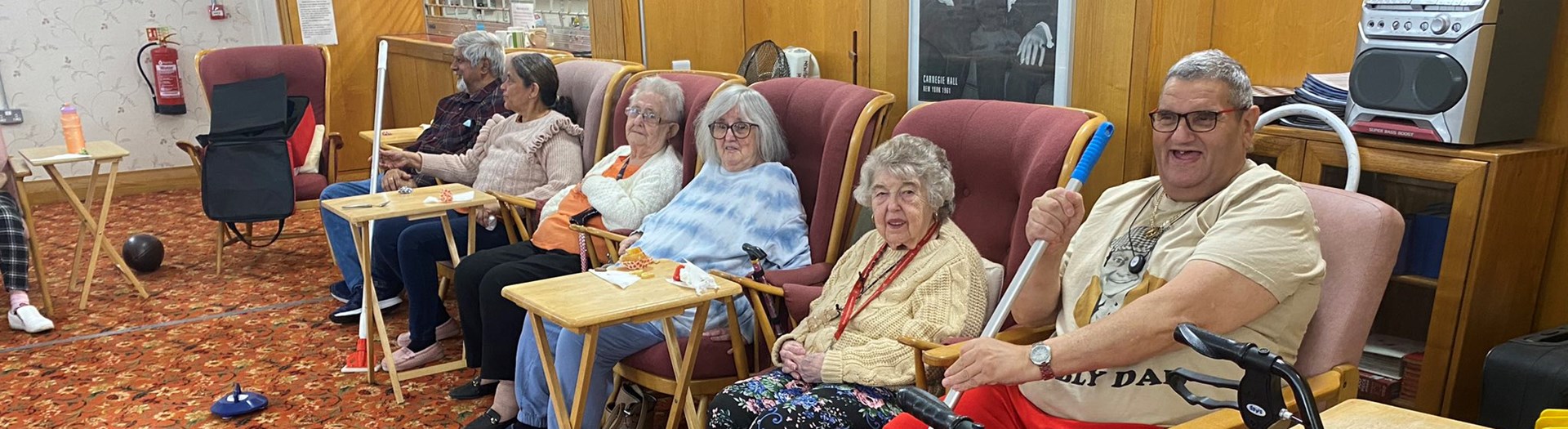
    The initiative will see Vital Energi fund 16 events across Aneurin Bevan Court and Nightingale Court retirement homes. These events will combine refreshments with a range of activities including a quiz, spot the ball, reminiscence session and in indoor curling tournament.

    We’re looking forward to attending some of these sessions and working with many other areas of the community as the project continues.

  • Vital’s Net Zero Apprenticeship Named Training Initiative of the Year

    Vital’s Net Zero Apprenticeship Named Training Initiative of the Year


    Vital’s Net Zero Apprenticeship Programme Named Training Initiative of the Year

    Our Net Zero Apprenticeship programme has taken top honours at this year’s H&V Awards. The programme, which is now in its third year, scooped the Training Initiative of the Year category at the London-based awards ceremony.

    Jenny Jackson, Vital Energi’s Resources Manager explained, “The main way to assess the success of a training programme is to look at its graduates and we are so proud of the young men and women who have taken part in our Net Zero apprenticeships programme. We are delighted that our training initiative was recognised at the awards ceremony, but more importantly, we are thrilled with the impact our apprentices are making on the business and are sure we have uncovered several future leaders of the net zero sector.”

    We created the programme in response to the skills gap in the low-carbon energy sector, which is a potential hurdle to the UK meeting its Net Zero Targets.   The Net Zero Apprenticeship Programme, which included a £2m investment in a new Training Academy, sees apprentices work across a range of departments, such as commercial, design and work winning, as well as undertaking on-site placement at some of our projects throughout the UK.  The scheme has been successful and Vital now employ 27 apprentices throughout the business.

    Vital articulated a vison for the future and have invested in it. Taking a view on not just technical and trade skills but also social impact and value. The benefits to Vital are longer term but clearly articulated and provides a good model for broader industry.”

    Judges’ Comments, H&V Awards

    Alongside their time at Vital, apprentices take a level three apprenticeship with City of Liverpool College, with some graduates continuing to take a degree-level apprenticeship. The programme offers two pathways; craft and technical, and we also appoint apprentices in a range of support services such as Marketing and Finance.

    Building Services Engineering Apprentice, Stacey Brindle attended the awards and said, “I’ve loved the opportunities the Net Zero apprenticeship have given me and it’s definitely brought me to a place where I think my long-term future will be spent in the industry.  I know how hard my colleagues, tutors and mentors work to support me and I’m really pleased that their work has been recognised with an award.”

    If you’d like to know more about our training initiative, or you’re interested in applying, then click here.

  • Solar Panels Complete 2,000+KM Journey to Ostoya Roztocze Orphanage

    Solar Panels Complete 2,000+KM Journey to Ostoya Roztocze Orphanage


    Solar Panels Complete 2,000+KM Journey to Ostoya Roztocze Orphanage

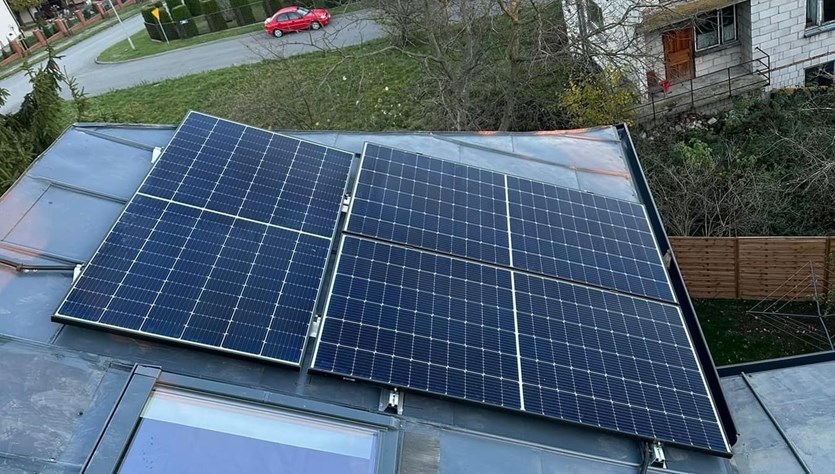
    We often get the chance to support great causes whilst working on projects, so we were delighted to be able to donate 32 Solar PV panels to the Ostoya Roztocze Orphanage in Poland, which houses Ukrainian children who have been orphaned in the war.

    We recently delivered the 5MW Chamber house solar farm for Rochdale Borough Council, who made us aware that the orphanage needed solar panels and that the “Giving to Ukraine” charity was sending a convoy to Poland which could transport them.

    Solar Panels About To Begin Their Journey

    The Solar PV panels begin their journey from Heywood in Lancashire

    Solution detail

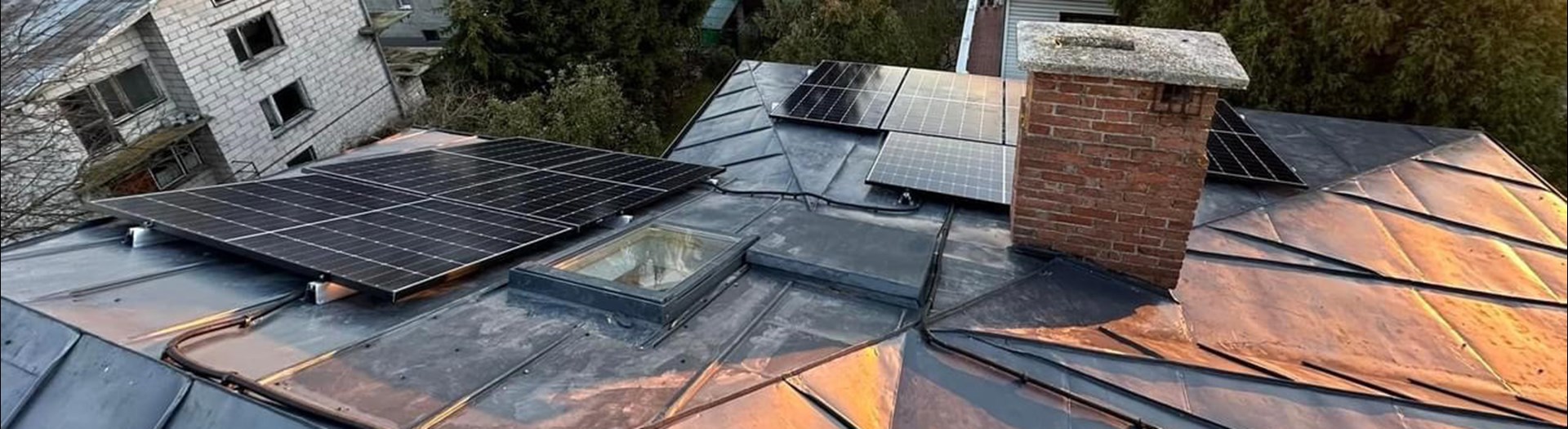
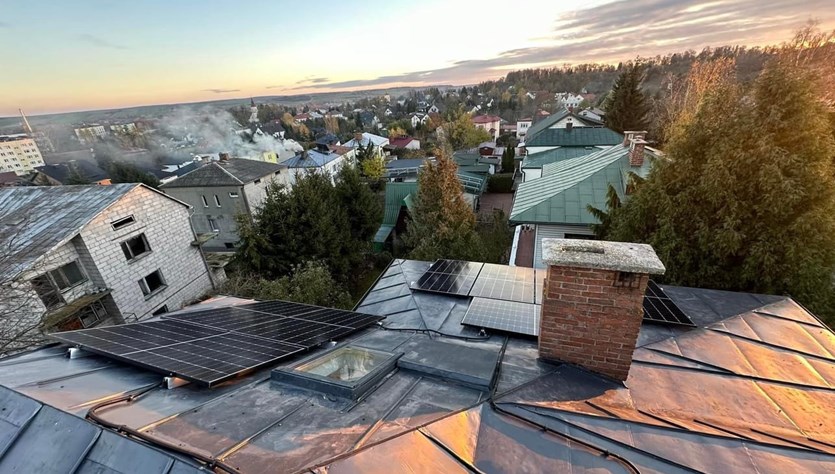
    We were delighted to donate the panels, which have completed their 2,000+km journey from Lancashire to Szczebrzeszyn in Poland and are now installed on the roof of the orphanage, delivering approximately 16kW of low-carbon electricity.

    We’d like to thank Rochdale Council for bringing such a great opportunity to our attention and Ostoya Roztocze Orphanage for the fantastic work they are doing.

    Solution detail

    Microsoftteams Image (12)

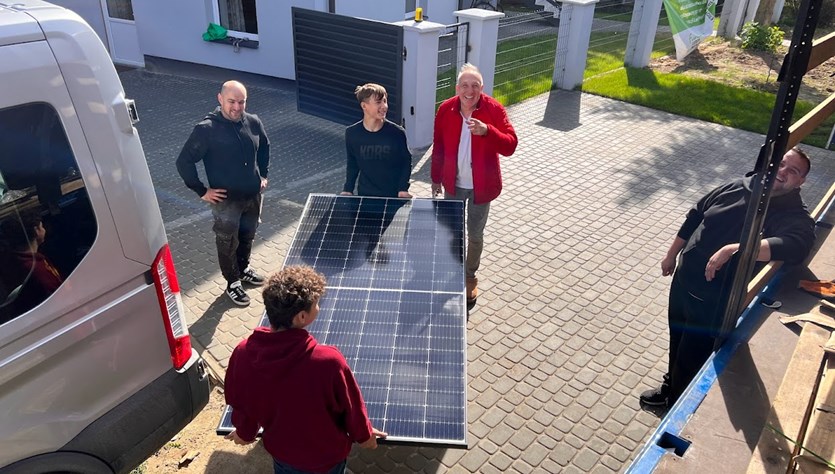
    The solar panels arrive at the orphanage and are unloaded by volunteers

    Solution detail

    Microsoftteams Image (16)

    The solar PV panels in-situ on the roof of the orphanage

    Solution detail

    Microsoftteams Image (15)

    The 32 panels are now producing clean electricity for use by the orphanage

    Solution detail

  • The Final Countdown – Is the HE Sector Prepared for Net Zero?

    The Final Countdown – Is the HE Sector Prepared for Net Zero?


    How the higher education sector can maximise efforts to net zero

    Vital Energi’s Head of Pre-Construction, Warren Spiers has helped many of the UK’s Universities lower their emissions on the way to their Net Zero Targets. We asked him about the HE sector’s readiness for the task at hand and how they can best maximise the time they have left between now and their decarbonisation deadlines.

    Warren Spiers

    There’s an old saying that the best time to plant a tree is 20 years ago and the second-best time is today.  It could be argued that the same outlook is warranted for the Higher Education sector’s approach to decarbonisation.

    Whilst some Universities have already slashed thousands of tonnes of carbon from their scope 1 and scope 2 emissions, others are still in the early stages of their decarbonisation journey and the pressure will mount as their net zero deadlines approach.

    Slightly complicating the bigger picture is the fact that there are multiple net zero carbon deadlines to be taken into account.  At one end of the spectrum, The Welsh Government have set a target of 2030, leaving little over 6 years for them to achieve their goals.  In The Climate Change Act, however, the British Government has set a less stringent target of 2050.  It should be noted, however, that 2050 is an “at the latest” deadline and some Universities have declared a climate emergency which has seen them set targets from 2030 onwards.

    An impending deadline is a great motivator

    It’s no surprise that the Universities who have the tightest targets are the ones that have made the most progress, as an impending deadline is a great motivator.  Aberystwyth University, for example, has a long-term, multi-phase decarbonisation plan in place already, and they are now delivering phase 3 of their programme.  The first two phases saw them undertake energy conservation measures and create a 2.5MW solar farm, collectively reducing their carbon emissions by nearly 800 tonnes per year.

    Picture1

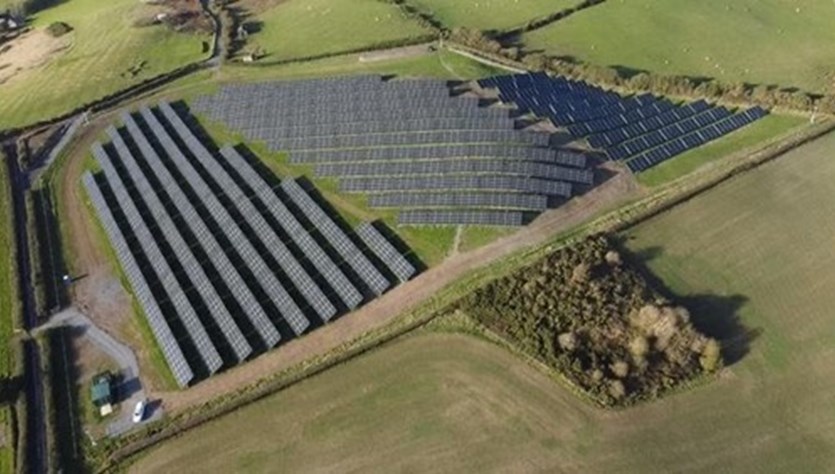
    Aberystwyth University invested £2.9m to create a solar farm.  It has been supported by the Welsh Government Energy Service and funded by a £2.6m loan from Welsh Government via Salix Finance Ltd and the University, with support from the Higher Education Funding Council for Wales (HEFCW).

    Solution detail

    At the other end of the scale, I meet people from Universities who are struggling to get their decarbonisation journey underway, largely because of other external pressures or limited resources. Whilst some have over 25 years to meet their targets on paper, being slow off the mark means that some institutions have already missed out on tens of millions of pounds in public funding.

    As no one knows what the long-term public sector funding landscape looks like, these are golden opportunities which we encourage Universities to pursue.

    Fail to prepare and you prepare to fail

    The Public Sector Decarbonisation Fund has put hundreds of millions of pounds into the public sector, with tens of millions making its way into Higher Education, which is great news… for some.

    The gap between announcing PSDS is open for entries and the portal closing is generally a matter of weeks.  This period is too short for a “standing start” and many Universities have been left floundering, whilst their better prepared contemporaries have received sizeable amounts of grant funding.

    Picture2

    Swansea Bay UHB may be in the Healthcare Sector, but they have made the most of public sector funding and acted quickly; Higher Education establishments can learn a lot from their example.

    Solution detail

    Swansea Bay UHB Solar PV Farm InstallationFull-scope solar pv farm installation for Swansea Bay UHB that guarantees minimum savings of more than £1.5 million a year.

    The solution to this is to prepare. By developing your decarbonisation plan you will have most of the information you need to apply for pots of funding as they appear. The PSDS fund is a major source of funding, but it is not the only game in town and by having your decarbonisation plan in place, you’ll be agile enough to apply for funding as it’s announced.

    Having a thorough understanding of how you use energy, where your emissions come from, which measures will reduce emissions and how much it will all cost are all essential pieces of information to have. The Universities who have developed their energy models and decarbonisation plans on this basis are the ones best placed to be successful to apply for pots of funding as soon as the opportunities and funding windows are announced.

    The Power of Phasing

    We have yet to meet a University who have achieved net zero in a single bound, and having a thorough understanding of your current energy infrastructure and the improvements you can make allows you to group initiatives into phases which meet the available funding pots.

    By adopting a phased approach, you can begin to deliver the most effective measures, which will make the biggest decarbonisation impact and build on that success with each successive phase.

    Ideally, you’ll have a phased decarbonisation plan which demonstrates how you’ll get to your net zero target by your target date.

    We have worked with many clients, both within and outside the Education sector who have asked us to find maximum decarbonisation for a set amount of money. This allows us to mix “quick wins” such as insulation and draft proofing, with more complicated solutions, such as solar and air source heat pumps.”

    Warren Spiers, Head of Pre-Construction, Vital Energi

    Look Outwards

    Decarbonisation isn’t happening in a vacuum and seizing opportunities when they come along is key to success. This will not be a solution for all Universities, but some may fall into a “goldilocks zone” which allows them to connect into a wider low carbon energy networks.

    These Universities should be contacted early in the development of the energy network and will be courted as potential “anchor customers” in terms of energy demands. This could be a simpler, cost-effective method to decarbonise your campus, but this is a specialist area and will depend entirely on opportunities in the local area.

    You will almost certainly have to make changes to your campus to integrate with external energy networks and may require additional modifications or complementary works programmes to integrate. This may be a “niche” solution which applies only to a few Universities, but it will play a part for those lucky enough to tie into town or city-wide schemes.

    Many Universities, like the University of York have their own established heat networks. Some may find themselves with an opportunity to tie into larger city and town-wide networks as they expand.

    Maximise your resources

    If you have nearby space, such as fields, you may be able to harness solar power.  Proximity to water may open up the possibility of water source heat pumps, and derelict or unused buildings could be repurposed as energy centres. Our advice is to take a look at your existing estate and resources and use them to further your decarbonisation needs.

    The Higher Education sector is renowned for its ingenuity, and we have worked on a number of innovative projects which have slashed hundreds of tonnes of carbon from their scope 1 and 2 emissions.

    A case in point is the University of St Andrews who created a major biomass energy centre at its Eden Campus serving a largescale heat network, which is used to distribute heat several kilometres to its North Haugh Campus.  The £25m project was situated in a formerly derelict paper mill and transported the heat via a 23km heat network.  This project was an ambitious feat of engineering and reduced their emissions by approximately 6,000 tonnes per year.

    Picture3

    The University of St Andrews undertook an ambitious project to convert a derelict site into a state-of-the-art biomass energy centre capable of reducing emissions by 6,000 tonnes per year.

    Solution detail

    Another example of using available resources is Aberystwyth University who created a solar farm on land they owned, utilising a private wire HV connection to distribute solar power onto its campus.

    The University of Liverpool transformed a derelict mortuary into an energy centre, both reducing carbon and safeguarding a Grade 2 listed building in the process.

    One thing all these Universities had in common was that they looked at the resources they already had available, and integrated them into their decarbonisation projects.

    Next Steps On Your Net Zero Journey

    If you haven’t already got a decarbonisation plan in place, then the first step should be developing one; reaching out to an energy specialist and harnessing their experience and knowledge can make the process much more effective. A core part of this will be to look at your energy consumption and existing infrastructure to identify the best ways to decarbonise.

    A good decarbonisation plan will differentiate between short, medium and long-term goals, allowing effective measures such as insulation, lighting and HVAC upgrades to be installed as soon as possible, whilst you can plan for the more complex initiatives in future.

    By doing this, you’re building the foundations of success and will create the best pathway to meeting your net zero targets.

    If you’d like to discuss a decarbonisation project with us, please email [email protected] or call us on +44 (0)12 5429 6000

  • Paul Younger Energy Centre Begins Delivering Low Carbon Heat

    Paul Younger Energy Centre Begins Delivering Low Carbon Heat


    Paul Younger Energy Centre Begins Delivering Low Carbon Heat

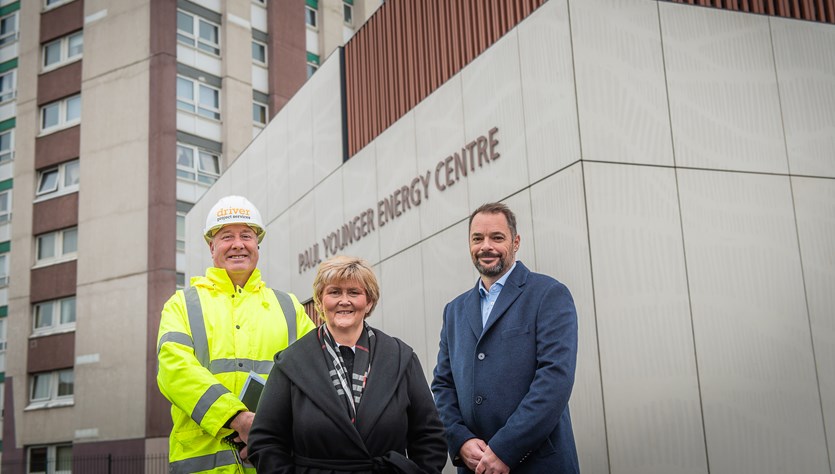
    Work is now complete on the build of the Paul Younger Centre, Hebburn’s Renewable Energy Centre, which will now provide renewable heat to buildings and residents in the town.

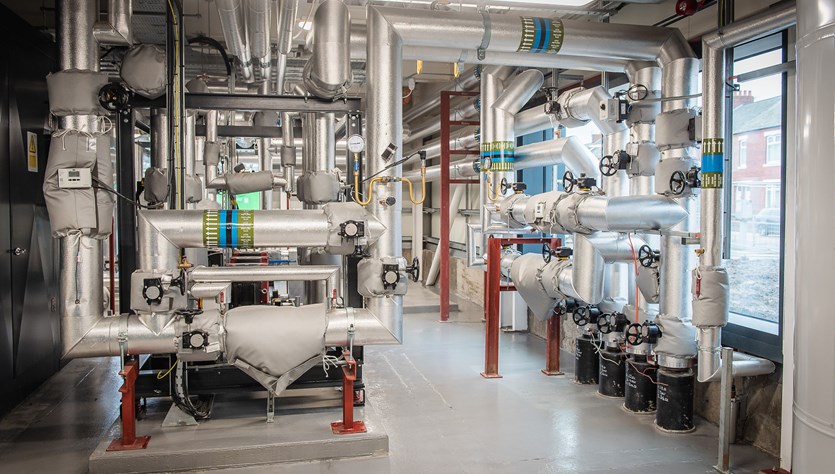
    The new modern building, located in the heart of the town on land off Victoria Road West, houses a two stage 450kw air to water source heat pump solution which takes ambient heat from the air and converts it into low-temperature-hot-water to provide reliable, low carbon heating.

    The project has been delivered by South Tyneside Council in partnership with Vital Energi and Driver Group.

    Paul Younger EC Opens

    Stephen Kelleher of Driver Group, Councillor Tracey Dixon the Leader of South Tyneside Council, Scott Lutton of Vital Energi

    Solution detail

    The air source heat pumps have allowed the council to reduce its reliance on traditional, gas-fired boilers, help to cut carbon emissions by approximately 320 tonnes per year and significantly contributed to the Council’s climate change aspirations of becoming carbon neutral by 2030.

    It’s fantastic to see the innovative new Paul Younger centre and the wider system complete and operational, and only weeks after the opening of our Viking Energy Network in Jarrow – the first of its kind in the UK. In 2019, we declared a climate emergency and set ourselves an ambitious target to become carbon neutral by 2030. Our renewable energy centres are just one of the ways we are using modern technology to meet our energy demands in a more sustainable way and creating a cleaner, greener Borough for our residents.”

    Councillor Tracey Dixon, Leader of South Tyneside Council

    Alongside the design and build of the energy centre, Vital Energi has also installed a district heating network which distributes heat to the customers including the residents of Durham Court and Hebburn Central Leisure Centre, with potential for further connections to be added in the future.

    Electricity generated locally using solar panels and a Combined Heat and Power unit is helping to power the system.

    By harnessing renewable technology to decarbonise their heat, South Tyneside Council has been able to significantly lower its carbon emissions and take a significant step towards its net zero goals. One of the most exciting aspects of this scheme is that it has been designed with expansion in mind and the network can now grow across further phases, connecting more people and buildings and deliver greater carbon savings.”

    Scott Lutton, Operations Director North & Scotland, Vital Energi

    LP2 7512

    Inside the new Paul Younger Energy Centre

    Solution detail

    The building is named after Hebburn-born Professor Paul Younger, one of the region’s pioneering scientists, who played a key role in the bid to make Newcastle a City of Science and Technology.

    The scheme, which secured over £4.8million in funding from the European Regional Development Fund, has been developed in collaboration with the Coal Authority and Durham University.