Category: Uncategorized

  • Leeds PIPES wins international acclaim as leading heat network

    Leeds PIPES wins international acclaim as leading heat network


    Leeds PIPES wins international acclaim as leading heat network

    The Leeds PIPES heat network has been recognised as an international exemplar of a city-wide heating solution, following a visit by the Canadian-based Boltzmann Institute. The delegation attended as part of a pan-European “study tour”, to gain crucial insights to aid in the expansion of Canada’s low carbon energy infrastructure.

    Leeds PIPES, one of the UK’s fastest growing, major heat networks provides homes, businesses and public buildings with affordable, reliable, low carbon heat and hot water through the use of recovered heat from a nearby Recycling and Energy Recovery Facility.
    Being delivered by Vital Energi, in partnership with Leeds City Council and Ener-Vate, the scheme was responsible for a near 6,000 tonnes of carbon reduction in 2023 alone, and has delivered over 430 green jobs across the Leeds city region.
    Its current customers include some of the city’s most notable organisations, including Leeds Playhouse, Leeds Beckett University and St James’s University Hospital.

    “We had an incredibly worthwhile visit with Vital Energi to learn more about Leeds PIPES as part of our Europe-wide study tour, gaining invaluable insight to input into our wider plans for district energy expansion in Canada. “We were particularly impressed by our tour of the Recycling and Energy recovery facility, which really demonstrated the brilliant innovation happening both in the city of Leeds, and in our sector.”

    Richard Gilbert , Director – Boltzmann Institute

    “We have seen great progress for the Leeds PIPES network since the project began in 2018. We are proud of our collaboration with Leeds City Council and Ener-Vate and the impact it has on the international effort to achieving Net Zero. “The recognition for the scheme is a real reflection of the team’s dedication to innovation in the green transition, and to providing flexible, resilient and future-proofed energy schemes for our clients. “We are incredibly proud to see the real impact that Leeds PIPES is having on so many people within the city, and we will continue our work to support as many local businesses, and local lives, as we can.”

    Mike Cooke, Managing Director – Vital Energi

    “It has been fantastic to see the considerable growth of this local initiative, with it now receiving recognition on national and international stages. Leeds PIPES has helped us make significant strides towards our net zero goals for the city, in addition to generating considerable apprenticeship and employment opportunities for local people. “We have already seen key organisations in the region connecting to the network, and local people feeling the impact of the scheme in the reduction of their energy bills. The impact it has had to-date has been phenomenal, and we hope it continues to act as an exemplar scheme as we work on further expansion.”

    Cllr Mohammed Rafique , Leeds City Cllr climate energy environment & green

    Connecting over 2,300 homes and 28 key buildings across the city centre, the city-wide heating network has attracted national recognition, having recently won the “Energy Project of the Year – Residential” category at the prestigious Energy Awards in London.
    The project is also making significant local impact through inspiring the next generation of heating and electric engineers, as well as aspiring design and construction professionals. 40 students from the Urban Energy Systems course at the University of Leeds also had the opportunity to tour the network in action and gain unique insights from senior staff at the organisation.
    Representatives from The Boltzmann Institute visited energy facilities across eight countries in Europe in advance of their ambitious plans for district energy expansion across Canada, helping the country reach its goals for net zero emissions by 2050.

    To find out more about the Leeds PIPES network, visit: https://www.leeds-pipes.co.uk/.

  • Coed-Ely Solar Farm now powering Royal Glamorgan Hospital

    Coed-Ely Solar Farm now powering Royal Glamorgan Hospital


    Local Power for Local Care: Coed-Ely Solar Farm now powering Royal Glamorgan Hospital (1)

    Mae'r dudalen hon ar gael yn y Gymraeg yma.

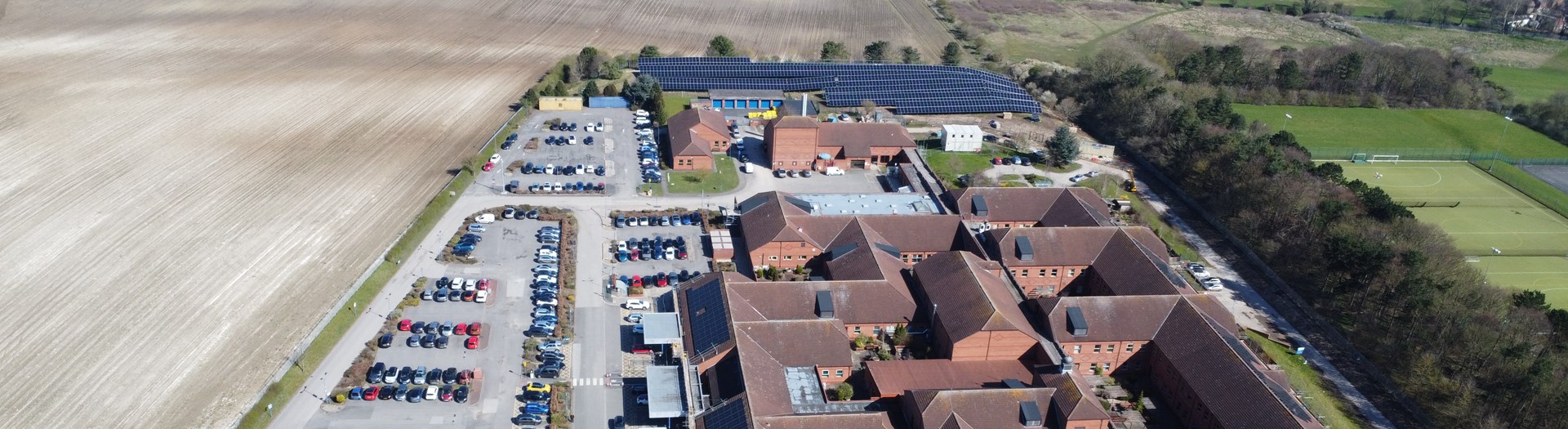
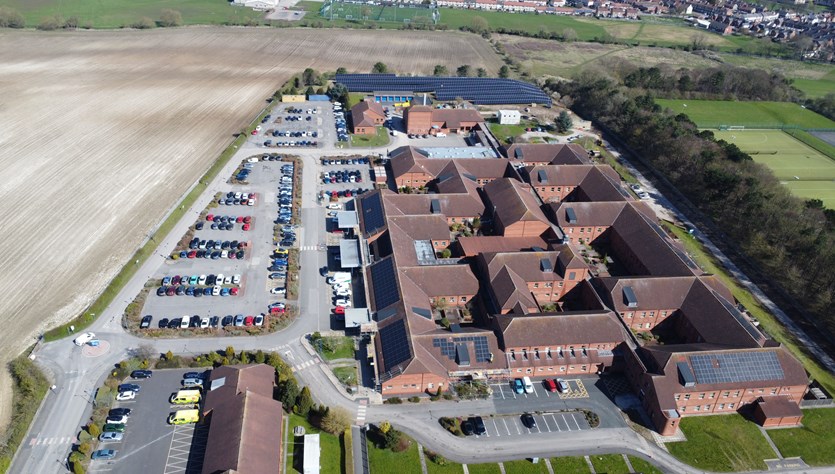
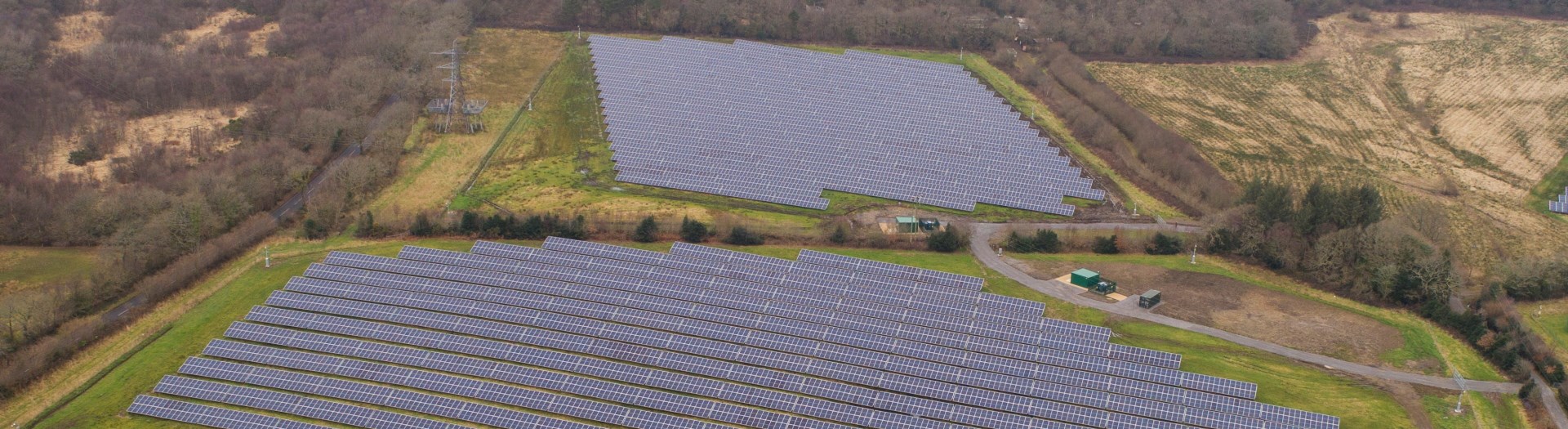
    The Coed-Ely Solar Farm is now officially switched on and supplying electricity directly to the Royal Glamorgan Hospital. This means that one of our most vital public services is being powered by energy generated right here in our community.

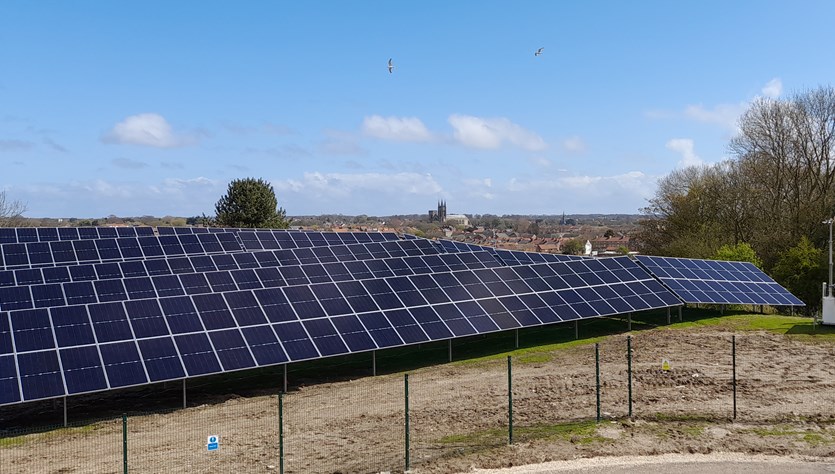
    Built on a reclaimed colliery site, the solar farm features 9,000 panels and produces enough electricity to power around 1,800 homes each year, and as well as powering homes, that energy is helping keep the lights on, machines running, and care flowing at the Royal Glamorgan Hospital.

    Further to this, the project has created local jobs and generated over £600,000 in spending with local businesses and suppliers. It’s a major step forward in making vital public services more resilient and less dependent on unpredictable energy markets.

    The Coed-Ely Solar Farm was jointly funded by Rhondda Cynon Taf County Borough Council, the UK Government through the UK Shared Prosperity Fund (UKSPF), and part-funded by the Welsh Government.

    DJI 20250724102427 0695 D Copy

    The solar farm will export electricity to the grid as well as supplying 1MW of electricity to Royal Glamorgan Hospital.

    Solution detail

    This milestone sees all the hard work pay off as the Royal Glamorgan Hospital receives its first boost of power from the Coed-Ely Solar Farm. This ambitious project is providing a unique opportunity to deliver energy for the benefit of our communities. Any electricity generated that is not used by the hospital is fed into the National Grid, helping strengthen the UK’s overall energy security. But ‘local’ is at the heart of this project, local power and local impact.

    Councillor Ros Davis, Cabinet Member , Rhondda Cynon Taf County Borough Council

    Mark Williams, Vital Energi’s Partnerships Director, said:  “Seeing clean, low-carbon energy transmitted to Royal Glamorgan Hospital is more than just a technical achievement, it’s a demonstration of how the public sector can collaborate to achieve its net zero goals.  This is another fantastic addition to Wales’s low-carbon energy infrastructure and one which will contribute to a cleaner, more sustainable future for everyone.

    “We’d like to congratulate Rhondda Cynon Taf County Borough Council on a visionary scheme which created a template for collaboration which can be replicated throughout Wales and beyond.”

    The Coed Ely Solar Farm was constructed on a reclaimed colliery site, turning 84 acres of former industrial land into a renewable energy asset for the region. As one of the largest local-authority solar projects in Wales, it generates enough clean energy to power around 8,000 homes annually while contributing 5MW to the grid.

    Claire Thompson, Executive Director of Strategy and Transformation, said, “This is a landmark moment for our health board and for the Royal Glamorgan Hospital. The switch-on of solar energy is more than just a technical achievement – it’s a symbol of our commitment to delivering healthcare in a sustainable, forward-thinking way.

    “We’re proud to be part of a project that not only reduces our carbon footprint but also strengthens our partnership with Rhondda Cynon Taf Council and Vital Energi. This is just the beginning of our journey toward a greener future.

    “A heartfelt thank you to all our colleagues whose dedication and hard work made this milestone possible.”

  • Leeds PIPES Showcases Net Zero Innovation at Climate Minister Visit

    Leeds PIPES Showcases Net Zero Innovation at Climate Minister Visit


    Leeds PIPES Showcases Job Creation and Net Zero Innovation at Climate Minister Visit

    Katie White OBE MP, Minister for Climate, visits the 30km Leeds PIPES Heat Network, which has grown over 7 years to connect 4,100 homes and businesses, driving down both energy prices and carbon emissions.

    Katie White OBE MP, Minister for Climate, recently toured the award-winning Leeds PIPES heat network, visiting key sites across the city to explore how the scheme has delivered outstanding decarbonisation and financial savings whilst acting as a catalyst for green job creation, skills development, and social value initiatives.

    Her visit included stops at key buildings connected to the heat network, including Leeds Civic Hall and Leeds Beckett University, where she heard how connecting to the heat network reduced their carbon emissions by approximately 500 tonnes per year, whilst reducing energy costs by around £250,000 per year.

    74

    Pictured left to right; Ian Whitelock, Minister Katie White, Tarik Jacob, Joe Callin, Councillor Katie Dye, and MP Alex Sobel at Leeds Beckett University

    Solution detail

    The tour then moved on to the Cross Green Energy Centre, which takes excess heat from the nearby Recycling and Energy Recovery Facility (RERF). The tour showcased the technologies and processes that convert waste heat into usable, low-temperature hot water and distributes it throughout the city.

    Climate Minister Katie White said: “Leeds PIPES is a shining example of how local leadership and innovation can deliver real progress on the path to net zero.

    EDITED V2

    Pictured; Mike Worrall and Minister Katie White inside Leeds Beckett University Plantroom

    Solution detail

    “This pioneering heat network, delivered by the council and Vital Energi, is not only cutting the emissions of home and commercial heating, it’s also creating hundreds of good jobs for local people, and driving investment into the community. I was delighted to see first-hand how waste is being harnessed to bring clean power to Leeds as part of the government’s clean energy superpower mission.”

    Minister Katie White, OBE MP, Minister for Climate

    The Minister was joined on her visit by Alex Sobel, MP for Leeds Central and Headingley.  Also in attendance was a delegation from Vital Energi including Ian Whitelock – CEO, Mike Cooke – Managing Director, Abby Whitelock – Marketing & Communications Director, and Mike Worrall – Project Director. Leeds City Council were represented by Joe Callin – Project Manager, Andrew Lingham – Senior Project Manager and Councillor Katie Dye – Chair of the Climate Emergency Advisory Committee.

    82

    Pictured; Mike Cooke and Minister Katie White inside Cross Green Energy Centre

    Solution detail

    “The Leeds PIPES Project is about harnessing waste heat to deliver decarbonisation, but it’s also about people. From the pipes in the ground to the construction of the energy centre, we’ve worked with the council to create 450 jobs in total and training opportunities with local education institutions, bringing people into the green energy sector and spending money with local businesses. These projects are developed for the community and to bring wider benefits to the people of Leeds and not just the key iconic buildings and homes connected. It has been great that the Minister for Climate has taken such a keen interest in Heat Networks, and we are hopeful that this is a strong indicator from Government as to how important Heat Networks are to reducing the UK’s emissions.”

    Mike Cooke , Managing Director at Vital Energi

    Construction on the Leeds PIPES heat network began in 2018 and, to date, has seen 30km of heat network delivered throughout the city, connecting iconic buildings such as Leeds Town Hall and Leeds City Library & Art Gallery, as well as residential blocks and offices, with further expansion planned.

    85

    Pictured from left to right; Yasmin Lloyd, Paulius Andriekus, Mike Cooke, Ian Whitelock, Minister Katie White, Mike Worrall, MP Alex Sobel, Councillor Katie Dye, Andrew Lingham, Joe Callin, Abby Whitelock, Dylan Radford outside Cross Green Energy Centre

    Solution detail

  • Leeds PIPES Award shortlist

    Leeds PIPES Award shortlist


    Leeds PIPES Shortlisted for Collaboration Award

    We’re delighted that Leeds PIPES project has successfully been shortlisted at the inaugural Unlock Net Zero Awards for ‘Collaboration of the Year – energy projects’ category.

    The awards recognise and champion progress on the housing sector’s decarbonisation journey and the supply chain that supports it. Leeds PIPES is one of only six projects shortlisted in the category and the winner will be announced at the awards ceremony, taking place alongside Housing 2023 on Tuesday 27 June at Manchester Central.

    The success of the project results from a true partnership approach with Leeds City Council, Ener-vate and ourselves, combining our joint expertise and knowledge to create one of the UK’s major heat networks.

    Leeds PIPES is a £49million project to transform the lives of residents and communities by reducing carbon emissions, improving air quality and tackling high rates of fuel poverty. The success of the project so far has been made possible through a collaborative approach combining our joint expertise and knowledge to create one of the UK’s major heat networks.

    The multi-phase scheme takes heat from the nearby Recycling & Energy Recovery Facility converting energy from non-recyclable household waste into affordable, reliable, and low carbon heat and hot water. This is then distributed to a range of buildings across the city.

    These awards are a great opportunity to celebrate the outstanding work being done to decarbonise the UK’s housing stock. Leeds PIPES is an example of working collaboratively and efficiently, 4 years on from the contract signing the project is now in its third phase which will deliver over 16,000 tonnes of carbon reduction. Our partnership continues to flourish as the network grows.

    Mike Cooke, Managing Director Projects North & Scotland, Vital

    In addition to this award shortlist, Leeds PIPES heat network has been awarded prestigious awards from ADE and Heating & Ventilation Awards.

  • Leeds PIPES Continues Expansion With Three New Major Connections

    Leeds PIPES Continues Expansion With Three New Major Connections


    Leeds PIPES Continues Expansion With Three New Major Connections

    The Leeds PIPES project has become one of the fastest expanding heat networks in the UK and the scheme is set to grow further with St James’s Hospital, Quarry House and Trinity Academy all announcing plans to connect to the network as part of Phase 3 works.

    The project has already seen 26.5km of district heating pipework installed across Leeds during the first two phases of work and phase 3 will see an additional 2km installed.

    The heat network distributes low-carbon heat from the nearby Recycling and Energy Recovery Facility (RERF), and delivers it to local residents, businesses and civic buildings.  The scheme already delivers significant carbon savings each year, and this is set to increase with the addition of the 3 new major connections.

    Since declaring a climate emergency we’ve made fantastic progress on delivering schemes and initiatives to reduce our carbon footprint. Not only is district heating a worthwhile investment to help combat climate change, but it is also a smart investment for the city too. These new connections mean that the network will return more to the council than it costs us—helping to protect vital frontline services.

    Councillor Helen Hayden, Leeds City Council Executive Member

    Mike Cooke, Managing Director for North and Scotland at Vital Energi, said:

    “Leeds PIPES is one of the most exciting heat networks in the UK.  Leeds City Council have demonstrated that cities can deliver massive, rapid decarbonisation as a way of meeting their climate emergency targets and this expansion will allow more organisations to utilise low-carbon heat, increase the efficiency of the network and deliver further carbon reductions.

    “Whilst the carbon savings are of massive importance, its contribution towards fighting fuel poverty can’t be overstated as Leeds City Council can now offer 1,983 homes more affordable heat and hot water.”

    In addition to delivering strong environmental benefits the Leeds PIPES project has supported 430 local, low-carbon sector jobs and 36 apprenticeships and continued safely throughout the pandemic.

    This will be the third time Vital Energi has worked with St James’s Hospital to deliver a carbon reduction project after previously delivering an upgrade to their energy centre and, more recently, installing a range of energy conservation and generation measures, such as air and water source heat pumps, to lower their carbon further.

    Martha Hart, Project Lead, Arup, said:

    “We are thrilled that the second phase of the Leeds PIPES project is now complete, bringing affordable, low-carbon heat to homes and businesses across the city and Leeds another step closer to carbon neutrality by 2030.”

  • Leeds PIPES Claims Top Residential Award

    Leeds PIPES Claims Top Residential Award


    Leeds PIPES Claims Top Residential Award

    We’d like to congratulate our partners, Leeds City Council and Ener-vate after the Leeds PIPES network was named as a winner at the Energy Awards in London.

    The project won “Energy Project of the Year” in the residential category, with the judges saying, “This is an important demonstrator of the practicality of district heating systems and hopefully a model that can be taken forward elsewhere. An excellent entry that hits all the right notes. A great mix of concept, realisation, data and outcomes.”

    Since the project began in 2018, the network has grown to include 30km of district heating pipework, connecting 2,375 homes and 28 buildings, making it a true city-wide heat network.

    Crucially, because the project takes heat from the nearby Recycling and Energy Facility and doesn’t rely on fossil fuels, the council were able to bring stability to customers’ energy bills during times of spiraling energy costs.

    Another important outcome of the project is that it has helped Leeds City make strong progress to meeting its net zero targets and in 2023 alone and was responsible for almost 6,000 tonnes of carbon reduction.

    We’d like to congratulate our project partners, everyone who has and continues to work on the project to grow, operate and maintain it and a big “thank you” to the people of Leeds for their continued support.

  • Princes Dock buildings to connect to Liverpool’s heat network

    Princes Dock buildings to connect to Liverpool’s heat network


    Leading the way: Princes Dock commercial office buildings first to connect to Liverpool’s low carbon district heat network

    Three Net Zero office buildings at Princes Dock, Liverpool Waters, will become the first commercial office buildings in Liverpool to connect their heating and hot water supply to the new Mersey Heat network.

    The multi-million-pound energy centre, currently under construction and set to complete in the autumn, will have the capacity to provide low carbon heat and hot water, through the Mersey Heat network, to thousands of homes and businesses around the city, reducing energy costs and their carbon footprint.

    Businesses based at No. 8, No. 10, and No. 12 Princes Dock, which sit within Peel Waters’ growing Liverpool Waters district, have already been verified as Net Zero for three years running. The popular waterside office space will now also benefit from locally generated heat, through the district heat network and energy centre. This will make it the largest cluster of offices in Liverpool to provide this opportunity to its tenants.

    The energy centre, which will be home to one of the UK’s largest water source heat pumps, will take heat from the water in the nearby Leeds/Liverpool Canal and use it to heat surrounding homes and businesses via a 6km district heating network.

    Last year, renewable energy company, Vital Energi was appointed by Peel NRE to design and build the energy centre off Great Howard Street, which is expected to be complete by September 2024. Led by Peel NRE’s district heat network specialist, Ener-Vate, the Mersey Heat network is set to become a major part of Liverpool’s low carbon energy infrastructure.

    The Mersey Heat network will reduce Liverpool’s reliance on fossil fuels and save 2,000 tonnes of carbon emissions every year – the equivalent of taking 1,000 cars off the roads. The infrastructure will provide low carbon heat and hot water to thousands of homes and commercial space within Liverpool Waters as well as sustainably futureproofing future developments planned for the growing mixed-use district, as well as wider domestic and commercial buildings across Liverpool.

    This initial phase of the project could supply 20GWh of heat every year with planning permission in place to expand the project to supply around 45GWh (the equivalent of supplying 17,000 new homes with heating and hot water).

    It’s fantastic to have a number of buildings at Princes Dock signed up to connect to the Mersey Heat Network. Securing early adopters to the scheme further fortifies the need for heat networks across cities like Liverpool, where a range of buildings are seeking to contribute to the UK’s wider net zero journey and invest in their own sustainable heat and hot water infrastructure. Vital Energi are delighted to be a part of the Mersey Heat Network, developing and delivering a futureproofed and low carbon heat network.”

    Andrew Wightman , Pre-Construction Director at Vital Energi

    With construction of the new energy centre underway, it’s fantastic that we are now securing connections to the network from offices at Princes Dock. This is a highly desirable location for businesses, with a beautiful waterfront setting and access to range of amenities but, at Liverpool Waters, we are also striving for excellence in sustainability and climate resilience. This is also a big priority for our tenants and our growing community, and so it is vital that we connect to this ambitious project right across the Liverpool Waters site to ensure the sustainable regeneration of Liverpool’s northern docklands.”

    Liza Marco, Senior Asset Manager at Liverpool Waters

    Liverpool Waters is part of Peel Waters, a UK wide portfolio of vibrant and innovative, waterfront developments, delivering large-scale, sustainable regeneration projects, creating jobs, economic growth, new homes and new public realm across the country.

  • Lancaster University mark milestone with groundbreaking event

    Lancaster University mark milestone with groundbreaking event


    Lancaster University marks major decarbonisation milestone with groundbreaking event

    Lancaster University marked a major decarbonisation milestone this week with a groundbreaking event at the site of its new Net Zero Energy Centre.

    Situated on the outer edge of its south east Lancaster campus, the Net Zero Energy Centre is part of a sector leading renewable energy project to virtually eliminate the use of gas to heat its Lancaster campus.

    The Net Zero Energy Centre is being delivered by local, renewable energy company Vital Energi and the event highlighted Lancaster University’s continued progress on its ambitious Net Zero Energy Project.

    The new centre will house an innovative array of state-of-the-art air and water source heat pumps totalling 7 megawatts along with a 1 megawatt e-boiler, generating a projected 39-Gigawatt hours (GWh) of low carbon heat, enough to heat 95% of campus buildings. The centre will also include 1,500 cubic metres of thermal stores which will supplement the new heat supply and help ensure consistent heat during peak times of the day.

    A visitor facility will also be incorporated into the design of the new energy centre. This will feature an educational meeting room for visitors from the University and other universities, local schools and community groups with an interest in sustainable energy, specifically heat pump technology.

    To carry the heat across campus, 6.5km of district heating pipework is also being installed to increase the network’s coverage from approximately 65% of buildings to 95%. This will connect 247 buildings and properties to the district heat network to receive low-carbon heat and water. The project is expected to be complete in early 2027.

    Lancaster University’s Vice Chancellor Professor Andy Schofield led the event on the site of the new energy centre, bringing together members of the University community including the project team, researchers, the contractor, and suppliers.

    As Lancaster University continues to build on the success of its historic sustainability projects, the new Net Zero Energy Centre, expanded heat network, and solar PV farm are all crucial steps in fulfilling the University’s commitment to reducing energy related carbon emissions from electricity and heating to net zero by 2030 and aim to be net zero from all other emissions by 2035. The ongoing projects, delivered by energy partners Vital Energi, exemplify Lancaster’s forward-thinking approach, ensuring that future generations can benefit from a cleaner, greener campus while continuing to support groundbreaking research in renewable energy.”

    Professor Andy Schofield , Vice Chancellor – Lancaster University

    Lancaster University has been awarded more than £21 million of funding from the Government’s Green Heat Network Fund (GHNF), which is being matched by the University to develop the Net Zero Energy Centre.

    Scott Lutton, Regional Director, at Vital Energi said: “The new energy centre, utilising air and water source heat pump technology will save 2,700 tonnes of carbon annually, making a significant contribution to Lancaster University’s journey towards carbon neutrality. As part of this project, we have worked closely with Lancaster University and AECOM to engage and raise awareness of the benefits of the energy centre with the Lancaster University community, through career events, outreach, and skills development initiatives. Additionally, Vital Energi, the University, and AECOM have committed to creating 42 local jobs, 73 UK-wide positions, and providing 12 apprenticeships and graduate opportunities, further strengthening our ties with the wider Lancaster community.”

    The Net Zero Energy Centre is the latest addition to Lancaster University’s extensive portfolio of pioneering sustainability projects, reflecting its long-standing commitment to sustainability.

  • Laying foundations for Hull City Council’s £42m District Heat Network

    Laying foundations for Hull City Council’s £42m District Heat Network


    Laying the foundations for Hull City Council’s new £42m District Heat Network

    Image 2026 01 29T111035.253

    Groundworks for the Hull District Heat Network are now underway, marking the start of a low carbon initiative designed to drive economic growth and enhance sustainability across the city.

    Solution detail

    A new energy centre begins to take shape

    Construction of the new energy centre at Trippett Street car park has begun, with steelworks now in place forming the framework of the building. The facility will house air source and water source heat pumps, delivering instant low carbon heat and hot water to council buildings, educational institutions, and private sector businesses. Once complete, the team will move on to the internal works of the structure, taking small steps toward this major initiative. In the future, the scheme plans to supply residential buildings as well.

    Pipework progression across the city

    In addition to the energy centre, approximately 5km of underground insulated pipework will be installed across some of Hull City Centre’s major streets and roads. Works have already commenced at various locations and are progressing well in line with the construction programme, whilst also ensuring access to businesses and buildings is maintained where possible. Once the network is fully installed and operational, these pipes will efficiently transfer heat generated at the energy centre to connected buildings.

    Plans for the future

    These groundworks are just the beginning of a project set to transform Hull’s energy landscape. During 2026, pipework will be installed underneath the River Hull, via the Drypool Bridge underground tunnel, which will connect to future opportunities.

    We are working alongside other developers and experts to further enhance the scheme for the city of Hull.

    Reaching the community

    Above construction works, the project is also about the growth of Hull’s economy, with job creation, education and more. In the coming weeks, we will begin to see more of this commitment come into fruition through our collaboration with Hull College who will provide us with access to deliver learning opportunities, skills development and community engagement.

    As part of the scheme, other commitments will include local school and college engagement, site visits for students, work experience placements, apprenticeship opportunities, and the use of local supply chain to name a few. The scheme is projected to save an estimated 110,000 tonnes of carbon emissions over the next 40 years; the equivalent of almost 1,900 cars being taken off the road each year. Through our partnership with Hull City Council, we endeavour to deliver a project that not only reduces carbon emissions and creates a greener, healthier environment, but also deliver a range of community benefits to the residents of Hull.

  • Lancaster University closer to Net Zero with two major projects

    Lancaster University closer to Net Zero with two major projects


    Lancaster University leaps closer to Net Zero with two major renewable projects

    Vital Energi will be working in partnership with the Lancaster University to deliver a major new energy project which will virtually eliminate their use of fossil fuel gas and move them significantly closer to achieving their scope 1 and scope 2 net zero targets.

    The projects will see the installation of thousands of solar panels and the creation of a low carbon energy centre, housing highly efficient air source heat pumps, which received £21M of funding from the Government’s Green Heat Network Fund (GHNF).  Both schemes are part of the University’s wider decarbonisation efforts, with the University already being one of the highest producers of renewable energy in the UK.

    Today saw the projects take a major step closer with the University holding a groundbreaking event at the site of the new solar farm, marking the official start of the projects which will strengthen Lancaster’s position as a global leader in sustainability.

    Lancaster University’s Vice Chancellor, Professor Andy Schofield, led the event which brought together members of the University community including the project team, researchers, Vital Energi, and suppliers.

    Lancaster University is investing a further £57m to decarbonise its campus and the University is also home to one of the largest groups of environmental science  research groups in Europe.

    Lancaster University has a proud track record of delivering carbon-saving changes for the benefit of our community and planet. Our wind turbine already provides approximately 14 per cent of our campus electricity and to date has donated £200,000 to sustainable projects in the local community. This year marks the start of a significant new investment which will bring us even closer to our Net Zero target.”

    Professor Simon Guy, Pro-Vice-Chancellor Global, Lancaster University

    We’re delighted to mark the beginning of our partnership with Lancaster University for the delivery of these projects, that will contribute towards the University’s journey to achieving net zero. The solar farm, energy centre and district heating projects will show how collaborative partnerships can deliver innovative and sustainable solutions. We look forward to working with Lancaster University who are demonstrably committed to protecting our planet.”

    Andrew Wightman, Pre-Construction Director, Vital Energi

    These significant investments underpin Lancaster University’s commitment to reducing energy related carbon emissions from electricity and heating to net zero by 2030 and aim to be net zero from all other emissions by 2035. The University is currently ranked 24th for sustainability in the 2023 QS World University Ranking and 5th in the UK, and these £57M projects will help to further decarbonize its campus and help towards achieving a Net Zero future.  Lancaster University is proud to be working with local contractors and moving forward with firm actions and investment to deliver these groundbreaking low carbon projects.”

    David Hounslea, Director of Estates, Lancaster University

    About the Projects

    Solar PV Farm

    A new £17M ‘solar PV farm’, funded by the University will consist of more than 17,000 photovoltaic (PV) cell panels, constructed on the University’s land to the east of the M6. The 11.5MW, 52-acre solar farm will generate enough energy to power the equivalent of 3,000 homes. The project also includes a comprehensive landscaping scheme which will enhance the hedgerows and woodland in the area, protecting views for local walkers and creating an environment that will support wildlife and increase biodiversity. Construction of the solar farm will begin in late spring/early summer 2024.

    The new solar farm will also house a bespoke research facility enabling research and teaching across disciplines from plant science, to control system engineering. The solar farm will encompass a 50kW agrivoltaics demonstrator enabling the production of crops and electricity from the same land area. It is believed to be the first field demonstrator in the UK and will comprise an area of tracking photovoltaic arrays and an area of vertical panels.

    Low Carbon Energy Centre

    Following the award of more than £21M of funding from the Government’s Green Heat Network Fund (GHNF), Lancaster University will begin construction of a new ‘Low Carbon Energy Centre’ in Autumn 2024. The GHNF funding will be matched by the University to develop a new £40 million facility on Bailrigg campus which will virtually eliminate the use of gas to heat its Bailrigg Campus. The energy centre will use state-of-the-art heat pump technology to generate a projected 39-Gigawatt hours (GWh) of low carbon heat, enough to heat 95 per cent of the buildings on campus.

    Lancaster Campus District Heat Network

    Lancaster University has also been awarded £560,387 for the Lancaster Campus District Heat Network from the Heat Network Efficiency Scheme (HNES). Funding will go towards upgrading infrastructure across the network and allow it to be “Heat Pump Ready”. The project therefore includes the installation of more efficient pumps and meters, improving the central building management system, enhancing insulation throughout the network. HNES funding will be crucial in achieving the University’s pledge to reach net-zero carbon emissions from electricity and heating by 2030.

    More information about Lancaster University’s commitment to sustainability is available on the website www.lancaster.ac.uk/sustainability

    Sustainability Key Messaging

    Lancaster University is investing £57million to further decarbonize its campus and help towards achieving a Net Zero future. Lancaster is one of the highest producers of renewable energy out of all UK universities.

    • Solar PV Farm
    • New 11.5MW solar PV farm with 17,000 solar panels at the Forrest Hills site generating enough to power over 3000 average households.
    • The new solar PV farm will generate enough electricity to power a journey of 34,580,000 miles using an electric vehicle – equivalent to driving from London to France, over 80,000 times.
    • Net zero energy
    • New energy centre will generate enough low-carbon heat through air-source heat pumps to heat 95% of buildings on campus.
    • 5km of district heating pipework to connect the buildings on campus together.
    • This project will virtually eliminate the use of gas heating on its Bailrigg Campus.

    Solar farm groundbreaking event

    Lancaster University Solar Farm Ground Breaking Event Vital Energi

    Andrew Wightman, Pre-Construction Director, Vital Energi (left) and Andy Schofield, Vice-Chancellor, Lancaster University (right) at the Solar PV Farm groundbreaking event. Image credit to Lancaster University.

    Solution detail

    Lancaster University | solar farm

    1 6 Photo (1)

    5MW solar PV farm with 17,000 solar panels at the Forrest Hills site generating enough to power over 3000 average households.

    The new solar PV farm will generate enough electricity to power a journey of 34,580,000 miles using an electric vehicle – equivalent to driving from London to France, over 80,000 times.

    Solution detail

    Lancaster University | Energy Centre

    EC Render Image 1B

    The new energy centre will generate enough low-carbon heat through air-source heat pumps to heat 95% of buildings on campus. 5km of district heating pipework to connect the buildings on campus together. This project will virtually eliminate the use of gas heating on its Bailrigg Campus.

    Solution detail