Category: Uncategorized

  • Press Releases

    Press Releases


    Press Releases | Vital Energi

    Filter by :

  • Our Apprentice Open Days are Back

    Our Apprentice Open Days are Back


    Our Apprentice Open Days are Back

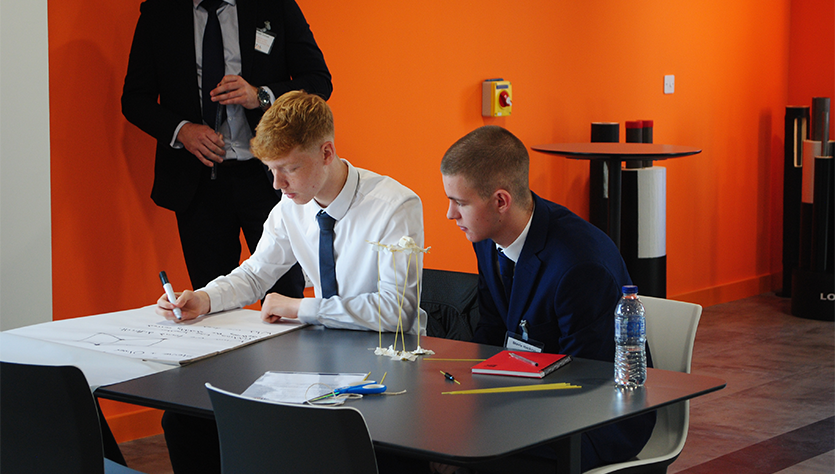
    We recently held our first Craft and Technical apprentice open days at our Training Academy in Blackburn and at our London office.

    The groups were given a number of practical and theoretical challenges to solve in pairs and they had the opportunity to discuss life at Vital Energi with members of our team who were more than happy to answer any questions.

    Applications are still open for our Technical Apprenticeships if you or someone you know would like to shape the UK’s net zero carbon future through our new bespoke renewable energy programmes.

  • Privacy Policy

    Privacy Policy


    Privacy Policy | Vital Energi

    Privacy Policies

    These are our privacy notices explaining how we collect and use your personal data. They describe the processing activities that are carried out by Vital Energi Ltd and the purposes for which these activities are performed.

    We may update these privacy notices from time to time to ensure they are always up to date and accurate. Any changes we may make to our privacy notices will be posted on this page.

    Privacy Policy

    This privacy notice explains what personal data Vital Energi collects from individuals who visit our website, contact us using our web forms, by email or through one of our social channels; or subscribe for our newsletter or other marketing communications. It also explains what information we collect automatically when you visit our website.

    Download the full Policy here.

    Privacy Policy for Business Associates

    This privacy notice explains what personal data Vital Energi collects when we interact for business purposes.

    Download the full Policy here

    Privacy Policy for End Customers

    This privacy notice explains what personal data Vital Energi collects from residents who we directly supply heating and hot water to.

    Download the full Policy here

  • Yorkshire Energy Park welcomes new investors

    Yorkshire Energy Park welcomes new investors


    Yorkshire Energy Park welcomes new investors as work to bring scheme to fruition begins

    The joint venture behind the £200m Yorkshire Energy Park has welcomed a new investor to its Board.

    Vital Energi is a decarbonisation, energy generation and distribution company, operating across the UK. Its portfolio of work includes major city district heating schemes and energy generation and management schemes at hospitals and universities.

    Vital will take a lead on the development’s energy strategy as part of the park’s vision to become one of the first zero carbon business parks in the UK.

    “We’re proud to become the energy partner for Yorkshire Energy Park and play our part in design and delivery of a scheme which will provide great benefits to the tenants and to the local and regional economy. “The Park’s vision is truly impressive, and we are excited to deliver long-term resilient energy and multi-utility infrastructure that supports this vision. “We’re looking forward to seeing the development take shape over the coming months.”

    Gary Fielding, Chairman of Vital Energi

    The energy and technology business park received its formal decision notice in late 2020 following East Riding of Yorkshire Council’s Planning Committee approval in 2019. The flagship development is also a designated tax site as part of the Humber Freeport and is anticipated to create over 4000 jobs, across a range of sectors.

    The joint venture has also appointed Andrew Reynolds as its Project Director, tasked with bringing the scheme to fruition.

    Chris Turner, Chair of Yorkshire Energy Park, said:

    “The Board is delighted to welcome both Vital Energi and Andrew Reynolds to the Yorkshire Energy Park project as we reach a crucial part of the project, with works due to start on site in the new year.

    “Vital is a leader in modern energy solutions that support the decarbonisation ambitions of the UK. I’m looking forward to seeing their team apply this expertise to the Yorkshire Energy Park.

    “Having spent a decade as Development Director at Hines, along with several other senior roles across the UK, Andrew also brings a wealth of experience to the project bolstering our existing team.”

    Based at the former Hedon aerodrome site to the east of Hull, strategically located within the new Humber Freeport, the 212-acre Yorkshire Energy Park will consist of:

    • An energy centre, battery storage and primary substation, providing on-site energy and off-site energy for export;
    • A tier 3 data centre and disaster recovery suite;
    • A mixture of space for businesses, including incubator space for start-up businesses and SME growth;
    • A National Centre of Excellence for education, training and research facilities and associated on site, short stay accommodation;
    • An outdoor building material and testing facility;
    • New sports facilities for the community; and
    • 45 hectares of green space, protected for 150 years as an ecologically enhanced area for protected species.

    The delivery of the park will kickstart the economic future of the Humber region with over £200m inward investment anticipated. The target of 80% local labour through the construction period, along with the creation of trainee, graduate and apprenticeship opportunities will also ensure considerable social return on investment.

    Andrew Reynolds, Yorkshire Energy Park’s Project Director said:

    “The Humber is uniquely positioned to drive the growth of the North and become a global leader in combating climate change, and Yorkshire Energy Park will further contribute to this vision.

    “With the first tranche of tenants set to be announced imminently, Yorkshire Energy Park will be one of the first projects nationally to take advantage of the Freeport benefits, attracting inward investment and creating highly skilled careers for future generations.

    “I am looking forward to meeting residents and local stakeholders over the coming weeks.”

  • Work starts to extend low-carbon heat network across Leeds

    Work starts to extend low-carbon heat network across Leeds


    Work starts to extend low-carbon heat network across Leeds

    Construction has recently commenced on milestone extensions to the innovative low-carbon district heating network being rolled-out in Leeds city centre by sustainable energy experts Vital Energi, in partnership with Leeds City Council.

    £3 million of Heat Network Investment Project (HNIP) funding was secured by Leeds City Council to support the phase three spine extension of the Leeds PIPES project, which uses heat from non-recyclable waste at the nearby Recycling and Energy Recovery Facility (RERF) to generate reliable, affordable, low-carbon heat and hot water for nearly 2,000 flats and a dozen non-domestic buildings across Leeds. The HNIP funding will support a significant 2,500m spine extension across zones covering student apartments, residential developments, multi-storey flats, large public sector sites. Additionally, the extension will help to strategically open up more of Leeds for future sustainable energy developments.

    Demonstrating the momentum of the network, a second separate piece of work has also commenced which will see the Ministry of Justice commit to greener energy consumption for the future in Leeds. Leeds Magistrates Court and Leeds Combined Courts are the latest in a list of high-profile city centre buildings and developments to have signed-up to connect to the district heating network from the existing network along Great George Street. The Combined Court Centre will take up to 1,400 kW and the Magistrates Court up to 800kW from the network.

    At full build out, the heat network has the capacity to save approximately 16,220 tonnes of carbon per year.

    By extending the district heating network, we’re enabling forward-thinking organisations like the Ministry of Justice to commit to a more sustainable future, which in turn sets a great example for other businesses across the city looking to lower their emissions and find more affordable methods of operating. By joining the network, organisations will have access to an affordable, reliable and low carbon way to provide heating and hot water and will avoid feeling as much impact from energy price increases. Meanwhile, making the long-term shift to a more sustainable form of energy will support wider decarbonisation efforts and help take the city a step closer to reaching its net zero ambitions.”

    Mike Cooke , Managing Director, North & Scotland

    VITAL LEEDS AUG2022 170

    Leeds Magistrates Court and Leeds Combined Courts | The latest in a list of high-profile city centre buildings and developments to have signed-up to connect to the district heating network.

    Solution detail

    Moving away from fossil fuel heating is a priority for us across the court estate as we look to build back greener from the pandemic and improve sustainability. Connecting Leeds Combined Court and Leeds Magistrates’ Court to the network will support our target to reduce our carbon footprint and our ambition to achieve net zero carbon by 2050. This project is a great example of local and cross-governmental working to tackle an important issue.”

    Graeme Goldsmith, Delivery Director for HMCTS North East

    VITAL LEEDS AUG2022 56

    Cross Green energy centre | Takes heat from non-recyclable waste at the RERF

    Solution detail

    The Leeds PIPES district heating network is one of our most exciting infrastructure projects and has real momentum behind it with more public, commercial, and residential buildings all choosing to connect. By extending the network to more parts of the city, I am delighted that we’ll soon be able to give even more businesses and residents the opportunity to enjoy affordable, reliable and low carbon heat—helping them to move away from costly fossil fuel based systems and towards a greener future.”

    Cllr Helen Hayden, Leeds City Council, Executive Member for Infrastructure and Climate

    VITAL LEEDS SEP2022 1

    Saxton Gardens energy centre | part of the low carbon Leeds PIPES heat network, helping Leeds City Council on their journey to net zero.

    Solution detail

    Government grants have already allowed homes, businesses and public buildings across Leeds city centre to move away from using costly fossil fuels and this latest heat network funding will help many more to see the benefits of low-carbon heating. Coupled with upgrades through the government’s Public Sector Decarbonisation Scheme, we are showing how investing in cutting-edge clean technologies can help protect consumers and businesses from the costs that are driving up energy bills at a time of high global prices.”

    Lord Callanan, Minister for Business and Energy

  • Work starts next week on Torry heat network

    Work starts next week on Torry heat network


    Work starts next week on Torry heat network

    Site work starts next week on a new heat network for the community of Torry which will provide almost 300 homes with low-cost energy.

    The £10million Torry Heat Network will supply heat for 146 flats in the three high rises at Morven Court, Brimmond Court, and Grampian Court, Deeside Family Centre, along with Provost Hogg Court and Balnagask House, Tullos Primary School, Torry social work office, and about 150 homes in Balnagask Circle, Balnagask Court, and the Farquhar Road stub blocks.

    The heat will be supplied by the energy from waste plant which is being constructed in East Tullos industrial estate to dispose of non-recyclable waste from Aberdeen City, Aberdeenshire and Moray Councils, and the work includes a heat distribution facility which will be located within the former waste transfer station building beside the EfW site.

    “It is great to see work is starting next week on the new Torry Heat Network which will bring low-cost heat to tenants’ homes and public buildings. This will help people with fuel poverty and ensuring they have somewhere warm to live, as well as helping Aberdeen with the goal of reaching net zero for the city. We look forward to watching the work progress in the coming months.”

    Jenny Laing, Aberdeen City Council Leader Councillor

    PA120710 Copy

    As well as work to streets to install the more than 3.7 miles of underground pipes, the project also includes new internal installations, heat metering, and heat supply pipes to the interior of the buildings.

    The main spine heat distribution pipes from the heat distribution facility are to be routed underneath the Aberdeen to Dundee railway line to connect with the existing heating network in Torry.

    It is expected the work will finish late 2023, depending on weather and availability of materials world-wide.

    The main contractor for the work is Vital Energi, which will be carrying out local stakeholder engagement, and appointed Barhale is the specialist design and build under track crossing contractor.

    Solution detail

    “We are pleased to be working with Aberdeen City Council on this innovative project which will harness heat from waste and deliver efficient and affordable low carbon heat to the residents of Torry, whilst helping the council on its journey to net zero.”

    Mike Cooke, Managing Director North & Scotland – Vital Energi

    PA120724 Copy

    The project is to receive £5.787million of grant funding from the Scottish Government’s Low Carbon Infrastructure Transition Programme and the European Regional Development Fund.

    Solution detail

  • Work is advancing at Oval Village

    Work is advancing at Oval Village


    Work is advancing at Oval Village

    Work is progressing at Berkeley’s impressive Oval Village development in South London where we were awarded the design and build contract for Block A, the first of seven blocks.

    Block A is made up of 5 cores, and we have been working on cores 3 and 4 on the mechanical and electrical scope, which have been handed back to the client, ready for occupancy before the end of the year.

    The heating, and chilled and boosted cold water systems are now live on all the first-floor distribution which feeds cores 3, 4 and 5. All sprinkler pipework feeding both cores 3 and 4 are operational. We have all the electrical work live and tested in cores 3, 4 and the temporary concierge, which includes fire alarms, smoke extract, (Life safety systems) external lighting, telecoms, and door entry.

    A major highlight for our team at Oval was getting all the mechanical aspects of the project over the line which included the installation of the temporary Energy Centre, which comprises of boilers, plate heat exchangers and ancillaries feeding into two blocks. On the roof of Block A we have installed two chillers, a boosted cold water system, smoke extract, fire alarm, door entry and level 1 and ground floor sprinkler systems, main LV switch panels, feeding all distribution panels in the cores, main electrical risers and DB boards feeding the floors.

    We’ve taken some pictures of the chillers that sit on Block A roof, inside of the chillers and the mechanical pipework that runs above the different levels of cores 3 and 4. Oval Village overlooks into the iconic Oval international cricket ground and boasts spectacular views of well-known London landmarks, which you can see on the pictures too.

    Our next milestone will be the handing over of Cores 5 by the end of February next year.

  • Work Begins on Aberystwyth University Solar Installation

    Work Begins on Aberystwyth University Solar Installation


    Work Begins on Aberystwyth University Solar Installation

    Low-carbon electricity at Aberystwyth University has moved a step closer after work began on the installation of a major new solar PV array.

    The £2.9m investment will provide up to 25% of the annual electricity needs of the Penglais Campus and reduce the University’s carbon emissions by just over 500 tonnes annually, and up to 12,000 tonnes over its anticipated 25 year working life.

    Covering an area of 3.8 hectares of University owned land on Fferm Penglais, the new array will feature more than 4,500 individual solar panels and is scheduled to be fully operational by the end of July 2022.

    The electricity generated is expected to reduce annual energy related emissions by 8% across the University’s entire energy portfolio (gas and electricity) and contribute to fulfilling the University’s objective of a zero-carbon estate by 2030/31.

    And, at a time of rising energy costs, the project is expected to deliver financial savings of over £325,000 per annum and over £13m over the lifetime of the project.

    We are delighted to be getting construction work underway on this exciting new project which reflects the University’s commitment to reducing our dependence on fossil fuels and cutting our greenhouse emissions. Our ambition is for the University’s estate to become carbon neutral by 2030/1. This solar development is an important step towards realising this aim, however there is much that remains to be done as we tackle some of the underlying challenges society faces and we work to decarbonise our economy for the good of the planet.

    Professor Neil Glasser, Pro Vice-Chancellor at Aberystwyth University

    The Welsh Government Energy Service was approached back in 2018 to evaluate Aberystwyth University’s renewables potential. We helped identify an appropriate site by carrying out initial feasibility modelling, and we provided advice on the development of a business case to secure the investment needed. This is another great example of the Welsh higher education sector leading the way towards net zero and we are excited to see this project coming to life.”

    Brian Drysdale – Development Manager, Welsh Government Energy Service

    1 3 Photo (2) Copy

    Expected to be carbon neutral within the first few years of its working life, construction on the site will also include work to encourage greater biodiversity in surrounding hedgerows. Once fully operational, sheep will continue to graze the pasture around the panels.

    Solution detail

    Aberystwyth University has made some strong progress in meeting its carbon reduction targets and the solar PV array is another significant investment which shows how committed it is to achieving net zero. Whilst the primary driver for this project has been carbon reduction, renewable electricity has the additional benefit that it will insulate the University from the rising price of energy.”

    Scott Lutton, Operation Director-North & Scotland-Vital Energi

    Salix are proud to be supporting Aberystwyth University in delivering this phase of their Re:Fit Scheme, with £2.6m of funding from the Wales Funding Programme, in partnership with the Welsh Government. The Solar PV Array project will play an important role in the work to decarbonise the public sector in Wales, with more than 500 tonnes of carbon estimated to be saved each year”

    Hayley Bristow, Programme Coordinator for Salix Finance Ltd

    1 1 Photo (2)

    Over the past 10 years, Aberystwyth University has reduced its CO2 emissions by over 40% and in 2019 declared a climate emergency.

    Vital Energi also worked with Aberystwyth University to complete a £3m energy performance contract as part of the Welsh Government backed RE:FIT programme which is designed to make buildings more energy efficient.

    The Welsh Government Energy Service has supported the University, providing a range of technical and commercial support, to help identify, develop and deliver suitable projects such as the solar project at Fferm Penglais.

    The University is also a member of a consortium of UK universities to strike a £50m landmark green energy deal, the first time public energy users have collaborated on a deal of this kind to buy clean electricity.

    Solution detail

  • Why is your choice of HIU the key to low-carbon living?

    Why is your choice of HIU the key to low-carbon living?


    Why is your choice of HIU the key to low-carbon living?

    Cover Image Vtherme Cu 2025

    Why is your choice of HIU the key to low-carbon living?

    Heat Interface Units (HIUs) are integral to ensuring optimal energy efficiency across heat networks. Your choice of HIU can directly impact your operating costs, overall system efficiency, and end-user bills. One way to differentiate HIUs in the market, and a topic that is often not discussed, is to consider how much water a HIU uses across a system.

    Cost & Energy Efficiency

    Think of your heating system like a delivery service.

    • A HIU with high standby ‘keep warm’ volume is like a van that idles all day, burning fuel while waiting for its next job.
    • A HIU with lower standby volume, like the vTherm˚e, is more like an electric bike ready when needed, but not wasting energy when it’s not.

    Keeping excess water warm and circulating it unnecessarily is like paying to heat rooms no one ever enters. Multiply that across multiple sites and years, and the costs, both financial and carbon, add up fast.

    Inevitably, this leads to the excess costs being passed onto the end-user by way of higher bills.

    Lower Annual Volumes

    As confirmed by the BESA 2023 test regime, the vTherm˚e Heat Interface Unit  annual water volumes are lower than the nearest competitor unit, topping the table in using significantly less water, even at high temperatures.

    The vTherm˚e HIU ‘keep warm’ standby volume results at 70˚ C: 15.6m3/a (closest competitor unit based on the VWART result is at 20.6m3/a)

    Although a difference of 5m3/a may not seem a huge amount, when this is multiplied by the number of heat interface units on a project, over a year and product lifetime, the water volumes and costs soon increase to huge proportions.

    Breaking down the numbers:

    • One project’s heating system includes 1000 Heat Interface Units (HIUs).
    • The vTherm˚e uses 5 cubic metres less standby water per HIU per year compared to the nearest competitor.
    • Multiply that out: 1,000 HIUs x 5m3/pa = 5000m3 water annually.
    • That’s 5 million litres of unnecessary water circulating through just one system, every single year.

    The vTherm˚e is like filling a bath with just the right amount of water. The nearest competitor? Like overfilling it every time, wasting water, energy, and money.

    Queens Quay Vtherm 013

    With proven performance on low-temperature networks and heat pump compatibility, the vTherm˚e helps reduce project operating costs and improves the experience for residents by cutting bills and carbon.

    Click here to talk to our team

  • Why is BMS the unsung hero of decarbonisation?

    Why is BMS the unsung hero of decarbonisation?


    Why is BMS the unsung hero of decarbonisation?

    When we talk about decarbonisation, people often jump to renewable energy, electrification, and cutting-edge technologies. Yet, one of the most powerful tools for reducing carbon emissions is already sitting at the heart of our buildings: the Building Management System (BMS). A well-optimised BMS can transform energy performance, cut operational costs, and support the journey to net zero, without the need for major structural changes.

    With more than 15 years’ experience, BMS Optimisation Engineer, John Collins, has a unique perspective on why these systems are critical to decarbonisation, particularly in complex, high-demand environments like hospitals. From installation and commissioning to advanced optimisation, he understands how a smart BMS can transform energy performance.

    In his current role at Vital Energi, John is involved in surveying, upgrading, and optimising BMS systems, with a focus on healthcare clients, ensuring they not only meet technical standards but deliver measurable energy savings. His work bridges the gap between design and delivery, combining technical precision with a clear focus on sustainability outcomes.

    In this piece, John shares why BMS plays a key role in decarbonisation, how hospitals can use BMS to achieve meaningful, measurable impact, and more.

    What is a Building Management System?

    A BMS is like a buildings “brain”.  It is also known as a Building Automation System (BAS), or a Building Energy Management System (BEMS).

    It is essentially a computer-based system which monitors and controls all the heating, ventilation and air conditioning systems (HVAC) within a building, or series of connected buildings.

    A BMS quite often also controls and/or monitors other systems such as:

    • Lighting and power distribution
    • Solar PV
    • Energy metering
    • Fire alarms and life safety systems
    • Security and access control

    A BMS is typically made up of a supervisor, which is a graphical interface for an end user to see and control the HVAC systems. This supervisor is then connected to series of BMS outstations throughout the building, either across an ethernet network, or a proprietary network for some older installations.

    The BMS outstations, as an example, are usually situated in plantrooms where air handling units, or heating pumps are present. And are then connected to these via a series of sensors, like temperature sensors, and actuators, which control things like heating valves.

    What is involved in the installation/upgrade of BMS?

    The first step when we upgrade a Building Management System is to review the current BMS setup to understand the age, condition and how it’s currently performing, before designing a clear upgrade plan tailored to the building(s) environment, taking into consideration factors like Health Technical Memoranda (HTMs), which is defined and laid out clearly in reviewable design documentation (RDD) for the client to review and approve.

    Next, we replace outdated hardware with the latest technology, often retrofitting it into existing panels to minimise disruption. We also modernise the BMS network by removing old proprietary networks and in some cases installing a dedicated, secure Ethernet-based BMS network.

    The software is completely rewritten with optimised strategies and updated setpoints, and we refresh the user interface with new graphics and the latest supervisor version for easier control. Alongside this, we install a central weather station for accurate environmental data to feed back into the optimised strategies. We also check and report on the condition of connected HVAC systems with detailed dilapidation reports.

    Finally, we validate the system with the client to ensure everything works as intended and provide full functional description of operations (FDOs) as a part of the operation and maintenance manuals (O&Ms) for the new systems and software strategies.

    How can BMS help organisations achieve their net zero targets?

    BMS is a fundamental part in achieving net zero targets.

    As we have already touched on, the BMS is the thing in charge of controlling a lot of systems within a building. Something that is key for achieving net zero targets is the control of heating and ventilation systems. Now these systems can only operate as good as the thing telling them what to do, and that is the BMS!

    Experience has already told us that changing the BMS hardware alone does not generate any real reduction in energy usage, this largely comes from the software inside, which we put a tremendous amount of effort into analysing and designing optimised software, control logic and strategies, with the latest BMS product ranges providing the perfect platform for this software to be implemented.

    What are the biggest challenges in implementing or optimising BMS within hospital environments?

    Maintaining comfort conditions during hardware installations and through software rewrites. As a company we have a lot of experience with delivering these projects with very little/to no impact to staff or patients, but it is still definitely one of the biggest challenges.

    Another challenge is ensuring our clients fully understand how their system operates, especially since the new optimised software has been implemented. We tackle this by providing full new operation and maintenance documentation as standard with our projects. These are pre-approved by our clients before any changes are implemented and are fully updated once the project is delivered.

    How does BMS impact patient/staff comfort levels?

    The BMS has a huge impact on patient and staff comfort levels, which creates a tricky task designing a system to achieve the same comfort conditions for less energy. We achieve this through extensive energy and weather modelling to establish when and where heating systems can be reduced, and in some conditions be turned off.

    How does BMS contribute to cost savings?

    We have successfully delivered a considerable amount of BMS upgrade and optimisation projects, many of which have overachieved the guaranteed savings.

    One standout project was delivered in collaboration with a major NHS Trust, where collaboration with the Trust and their BMS manager delivered exceptional results. They fully embraced our optimised strategies and even made additional adjustments to settings and schedules, which amplified the savings.

    As a result, annual verified gas savings soared from our guaranteed 1,571,974 kWh to an impressive 7,475,244 kWh – cutting 1,440 tonnes of carbon and saving £199,761 each year, compared to the original target of 371 tonnes of carbon and £65,895 in financial savings.

    Does BMS have to form part of a wider decarbonisation scheme, or can it be a standalone project?

    Something that often gets overlooked is the importance of BMS in wider decarbonisation schemes. In order to carry out other energy conservation measures (ECMs), like replacing secondary heating pumps for more efficient direct drive pumps, changing heating circuits from fixed to variable flow, or retrofitting new EC fans in air handling units, the BMS needs to be considered. All these measures directly integrate into a BMS system, so it is crucial that the system is up to date and optimised properly to get the most out of the other ECMs.

    Not only is the BMS important to anything on the secondary side, but it is also key to any primary side works. If, for example, we are de-steaming a site and installing new low temperature hot water plate heat exchangers, these need to be integrated and controlled by the BMS. Another example is when we install water source, ground source, or air source heat pumps. These systems depend on the BMS to share key information from the building’s existing systems, ensuring they operate effectively and efficiently.

    In short, any new technologies being installed, should, and need to be integrated into the BMS!

    Now that being said, upgrading and optimising your BMS can absolutely be a standalone project that can achieve great energy savings and lay the groundwork for future ECMs, making it the essential first step toward a more efficient, sustainable building.

    Conclusion

    Whether you’re looking to optimise an existing system or plan a full upgrade, the right approach can deliver measurable energy savings, improve comfort, and accelerate your journey to net zero.

    Email [email protected] and talk to our BMS specialists to find out how we can help you transform your building’s performance and achieve your sustainability goals.