Category: Uncategorized

  • Scottish Healthcare Projects Bring 14,000+ Tonnes of Decarbonisation

    Scottish Healthcare Projects Bring 14,000+ Tonnes of Decarbonisation


    Health Board Energy Projects Add Almost 14,500 Tonnes to Scotland’s Decarbonisation Targets

    NHS Borders, NHS Lanarkshire and NHS Tayside are all set for considerable energy and carbon savings as their energy conservation schemes reach completion and go live.

    Now complete, the three projects are set to reduce NHS Scotland’s carbon footprint by over 12,000 tonnes over the course of their lifecycles.  Additionally, NHS Forth Valley has just completed its first 12 months, adding another 2,470 tonnes of carbon reduction to Scotland’s decarbonisation targets.

    The three projects were delivered by Vital Energi through the Non-Domestic Energy Efficiency Framework and include an energy performance contract which guarantees energy and carbon savings, which are verified over a 12-month period.
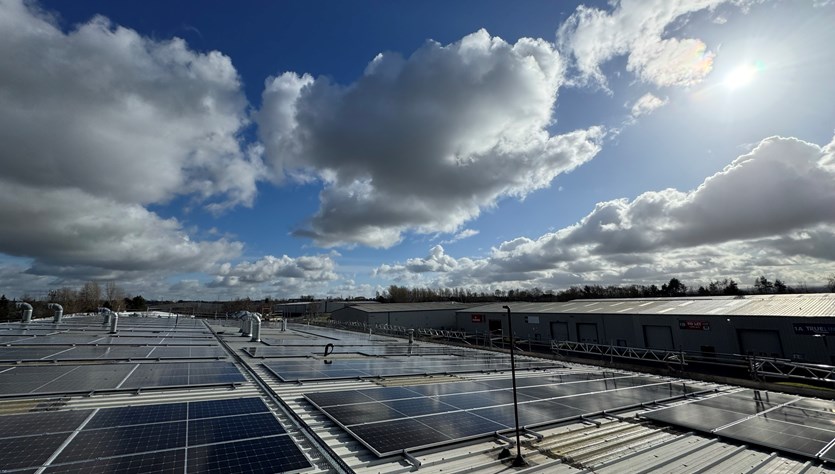
    Image (15)

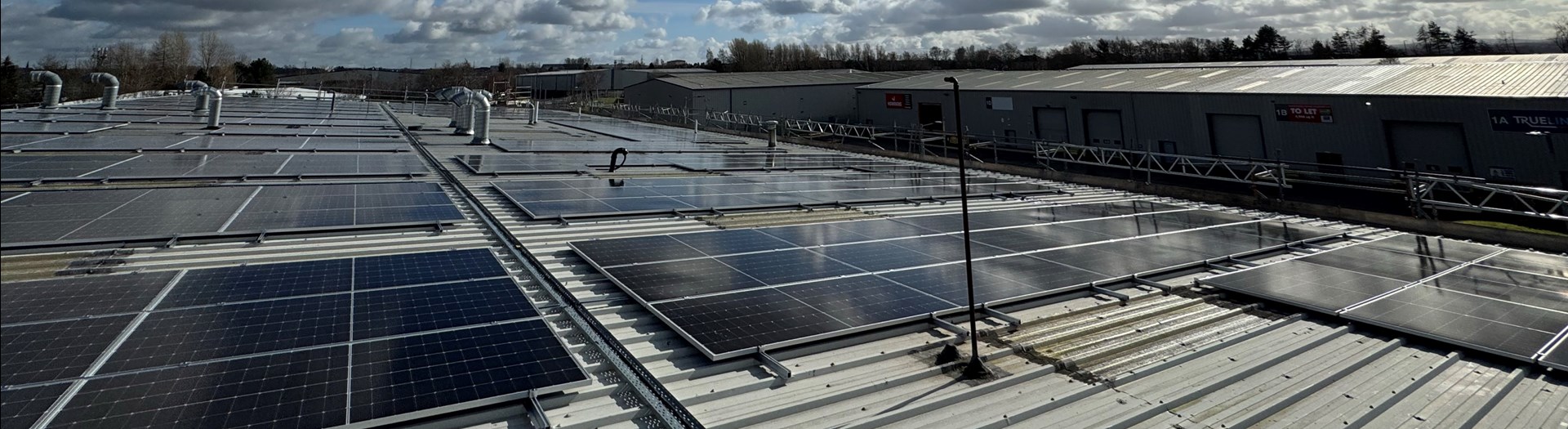
    The Solar PV installation on NHS Lanarkshire’s West of Scotland Laundry roof.

    Solution detail

    These types of energy performance projects are important because they provide assurances to our clients, and we have the confidence to guarantee that savings will be delivered as promised. It’s fantastic to see these decarbonisation schemes moving into the live phase where those savings will be realised, and these are three more fantastic contributions to NHS Scotland meeting its net zero targets.

    Kieran Walsh, Regional Manager, Vital Energi

    NHS Borders

    Our team surveyed the existing energy infrastructure at Borders General Hospital and designed a range of measures which are projected to save £279,302 whilst generating 344 tonnes of carbon reduction per year.  This was achieved through a mixture of upgrades to the lighting, HVAC, valves and building management systems as well as insulating pipework across the hospital and a few smaller satellite sites. We also delivered a 680 kWp solar array, generating clean energy and making the health board more self-sufficient.

    NHS Lanarkshire

    The health board is set to save 191 tonnes of carbon whilst achieving £172,135 of financial savings through a comprehensive mix of energy conservation measures across 2 sites which included  rooftop solar PV, heating pump upgrades and building fabric improvements such as insulation, draught proofing and door glazing upgrades.

    Two separate heat recovery systems have been added to the West of Scotland Laundry site, these bespoke systems have been designed to recover waste heat from both the internal space and mixed effluent of the washing machines.  This achieves 715,174kWh of gas savings and 122TCO2 carbon savings annually from these measures alone.

    NHS Tayside

    NHS Tayside undertook a range of measures which will reduce their carbon emissions across 3 of their sites (and councils) by 186 tonnes per year whilst saving £27,389 per annum.  To achieve this a range of energy conservation measures were installed, including 269 rooftop solar panels installed across 2 of the sites, a total of five  air source heat pumps to provide heating and hot water to each of the sites and improved building fabric performance through measures including insulation, door and glazing upgrades and LED lighting upgrades across 2 sites.

    NHS Forth Valley Completes First 12 months

    In addition to three new projects entering the monitoring and verification phase, the NHS Forth Valley energy conservation project just completed its first 12 months of being live and achieved each of its key performance indicators, saving 116 tonnes of carbon per year, almost £60,000 in energy savings and reduced energy usage by over 600,000 kilowatt hours per year.

    After securing additional funding, works were expanded to also include Battery Energy Storage Systems across three sites and an air source heat pump to further help decarbonise the Health Board’s estate.
    31 01 25 More Than 3000 Tonnes Of Carbon Savings Set For NHS Tayside Photo

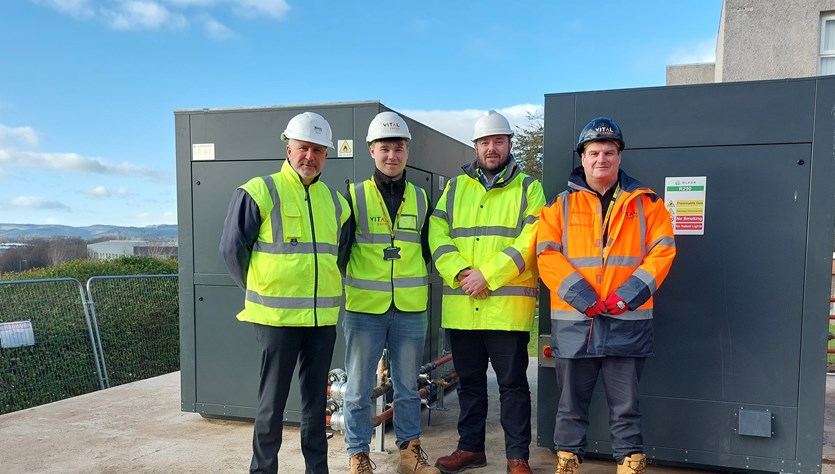
    Mark Anderson Associate Director of Facilities – Property at NHS Tayside, Evan Reilly Construction Degree Apprentice at Vital Energi, David Gibson Head of New Works at NHS Tayside and Scott Roe, Project Manager at Vital Energi

    Solution detail

    Mr Walsh concludes, “These projects exemplify a fundamental step transition to Scotland meeting its net zero targets, so it is imperative that they deliver as promised and the NHS realises the full carbon savings.  We’re delighted to show our commitment to the decarbonisation of the NHS by helping to deliver four more projects which will make a real difference to the Health Boards and local communities.
  • Duffryn Heat Network Upgrade Project Completion

    Duffryn Heat Network Upgrade Project Completion


    duffryn heat network upgrade

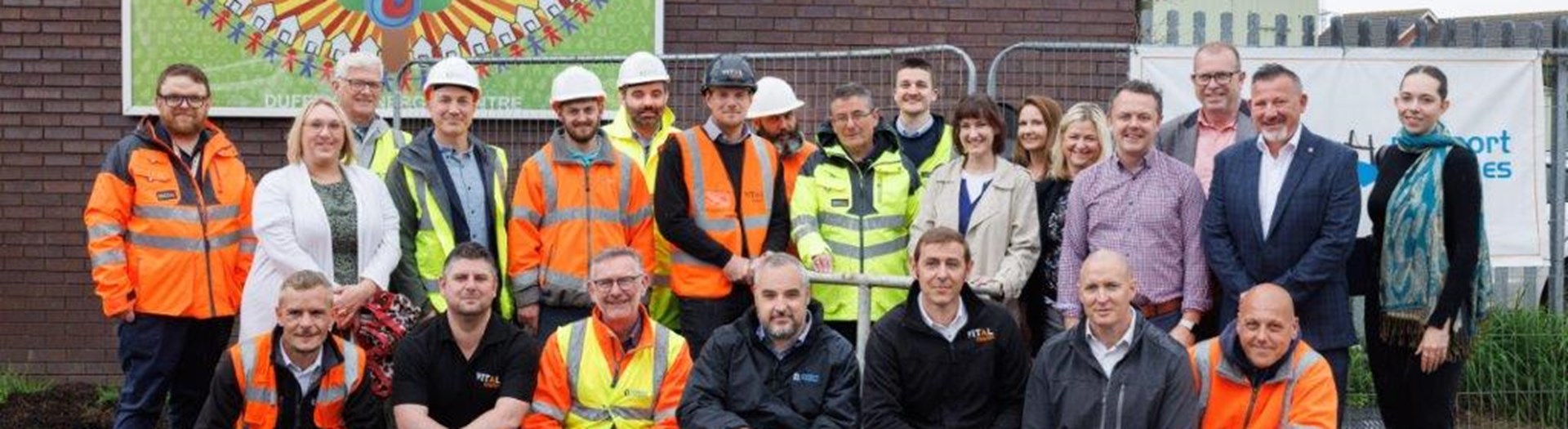
    The newly upgraded pipeline for the Duffryn Heat Network officially went live on Monday 13 May 2024 with Owain Roberts (Director of Property and Place, Newport City Homes) and Dave Hutchinson, Vital Energi’s Operations Director for Heat Networks, ceremonially opening the main valve.

    The Duffryn Heat Network Replacement Project is one of the largest heat network upgrades in the UK and saw Vital Energi replace 7.5km of district heating pipework. The project received £3.7m towards the cost of replacing the pipework from the Heat Network Efficiency Scheme (HNES).

    With the original installation coming to the end of its life, the new network will deliver sustainable heating and hot water to over 1000 customers for decades to come.

    13 5 24 HJ NCH 107A5223

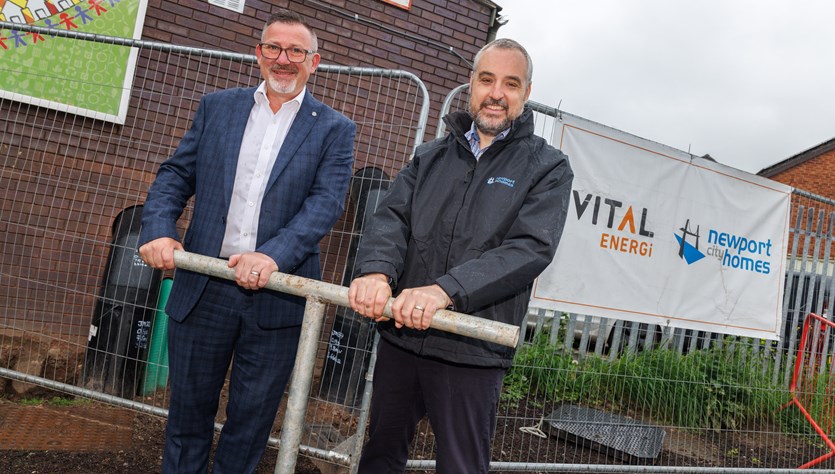
    Owain Roberts (Director of Property and Place, Newport City Homes) and Dave Hutchinson, Vital Energi’s Operations Director for Heat Networks, ceremonially opening the main valve.

    Solution detail

    The Duffryn District Heat Network Replacement Project has been a vast undertaking, and we’re grateful for the patience and support shown to our colleagues by Duffryn residents throughout the duration of these works.

    Sonia Furzland , Exec Director of Operations – Newport City Homes

    Sonia continued, “Duffryn Energy Centre is a central part of the Duffryn community. The new pipework secures the future of the Energy Centre and will continue to deliver sustainable heating and hot water to our customers for decades to come.”

    The Duffryn estate was constructed in the 1970’s, with the Energy Centre installed at the same time. In 2015, construction began on the innovative 2.5MW biomass boiler which uses locally sourced wood chip to deliver low-carbon heat to residents.

    Ashley Walsh, Vital Energi’s Managing Director of Heat Networks explained, “This network has a core part in people’s day to day lives so we’re extremely happy to have been involved in upgrading it, making it more efficient, reliable and bringing it into the 21st century.

    “New products and techniques are now far superior to the technology around when the network was first established, so not only will this heat network last longer, it will also lose less heat and deliver better value for money for its customers.”

  • Extending the Leeds PIPES project to our furry friends at Lotherton

    Extending the Leeds PIPES project to our furry friends at Lotherton


    Extending the Leeds PIPES project to our furry friends at Lotherton Wildlife World

    Extending the Leeds PIPES project to our furry friends at Lotherton Wildlife World

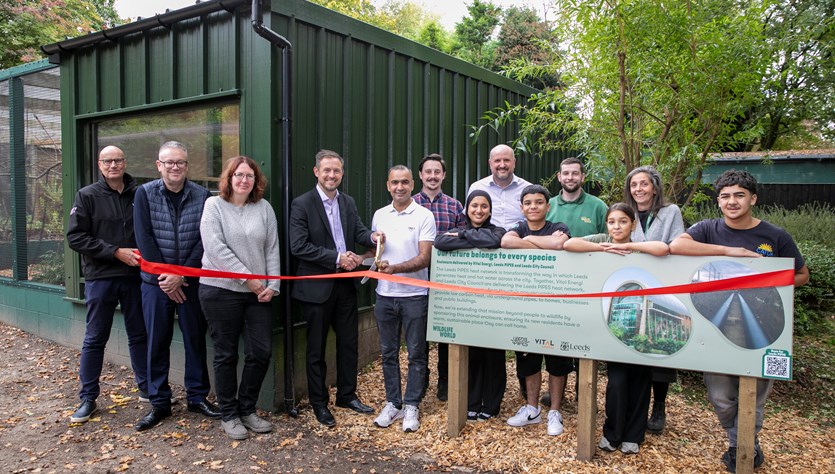
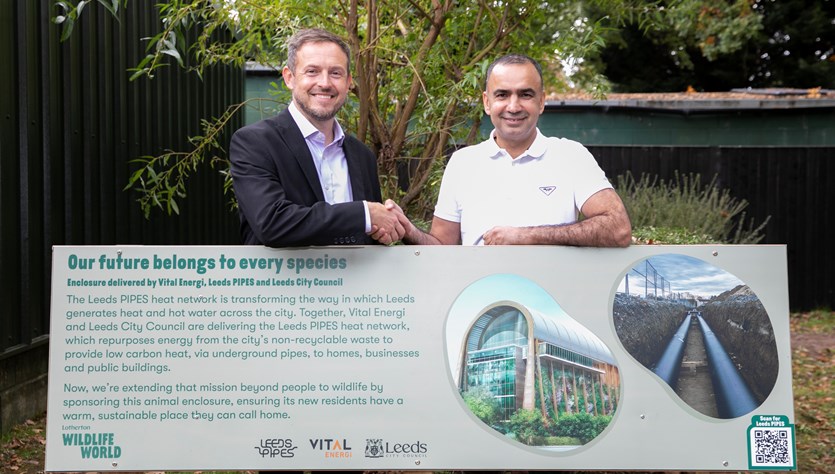
    Vital Energi in partnership with Lotherton Wildlife World, and Leeds City Council, are sponsoring the newest animal enclosure at Lotherton, on behalf of the Leeds PIPES project. The latest enclosure will ensure its new primates have a warm place they can call home offering comfort without compromise.

    Lotherton Wildlife World is a key community space in Leeds, and a fun, educational facility for young people. As part of our ongoing mission to inform and engage, we’re continuing to raise awareness about the Leeds PIPES project through this latest initiative.

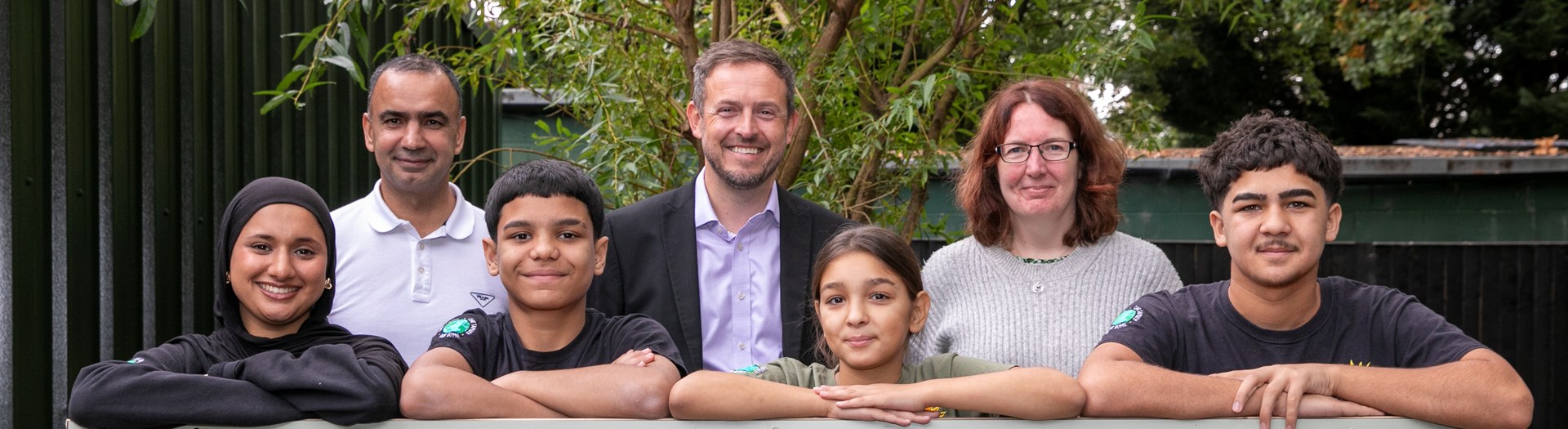
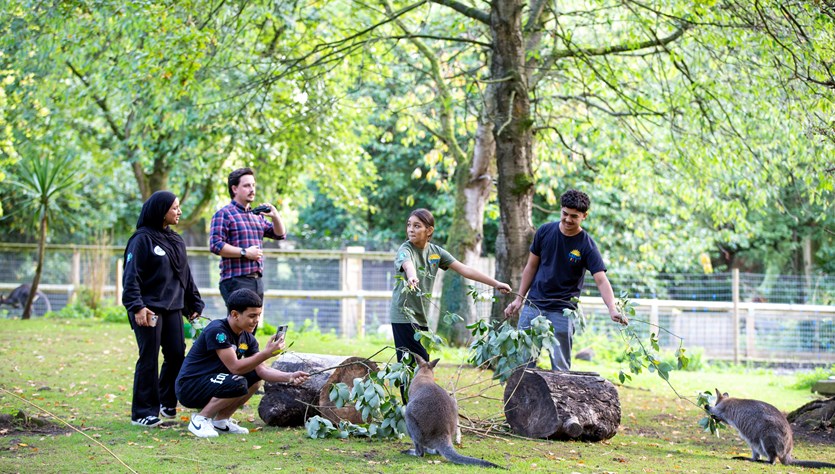
    The enclosure was officially opened on Tuesday 30th September by Councillor Mohammed Rafique, Leeds City Council’s executive member for climate, energy, environment and green space, and Regional Director at Vital Energi, Andrew Wightman. Young people from local organisation ‘CATCH’ also attended to assist with a ribbon cutting ceremony, followed by a ‘Meet the Wallabies’ session.

    The CATCH (Community Action To Create Hope) organisation is a Leeds-based charity dedicated to helping young people unlock their potential through positive mentorship, community support, and engaging activities.

    The new enclosure is one of several initiatives completed as part of the project. Throughout the scheme, the team has actively engaged with the local community and beyond, via a range of drop-in events, educational sessions, and involvement opportunities within the project.

    • 30 stakeholder engagement events held
    • 14 school & college Climate Education workshops hosted
    • 15 net-zero apprentices on the project
    • 430 green jobs created
    • 560 young people reached via our initiatives (so far)

    The Leeds PIPES network provides homes, businesses, and public buildings with affordable, reliable, low carbon, heat and hot water, saving up to 6,450 tonnes of carbon each year. With the network rapidly expanding, now connecting to historic buildings such as Leeds Civic Hall, it was only right to extend our support to the neighbouring species at Lotherton, because a greener future should belong to every species.

    To witness the journey of this project from the early stages to where it is today is impressive, but what’s even more inspiring is how that journey continues through initiatives like the Lotherton Wildlife World enclosure. Our partnership with Lotherton, and Leeds City Council, is a great example of how our collaborations go way beyond the completion of a single project. A huge congratulations to everyone involved in bringing this project to life, and a very warm welcome to the newest residents at the enclosure.

    Mike Worrall , Project Director at Vital Energi

    This new enclosure is a hugely positive addition to the Lotherton Wildlife World Zoo. The lessons learned on creating energy efficient enclosures will be put to good use as we continue to improve and develop the zoo.

    Councillor Mohammed Rafique, Executive Member at Leeds City Council

    We’re really excited about the new purpose-built indoor housing for our Cotton Top Tamarins. It will enable us to provide the perfect living conditions, being able to mimic the same tropical environment they need to thrive. Cotton Tops are critically endangered in their native Colombia, mainly because of deforestation for farming and settlements, so it’s great that zoos like ours can play a part in their survival through education about their plight and breeding programmes.

    Daniel Messer, Zoo Manager at Lotherton Wildlife World

    The new space is now officially open and available to visit at Lotherton Wildlife World.

    Find out more about the Leeds PIPES project here Leeds PIPES Case Study

  • Future of Energy event showcases collaboration, innovation and purpose

    Future of Energy event showcases collaboration, innovation and purpose


    Future of Energy event showcases collaboration, innovation and purpose

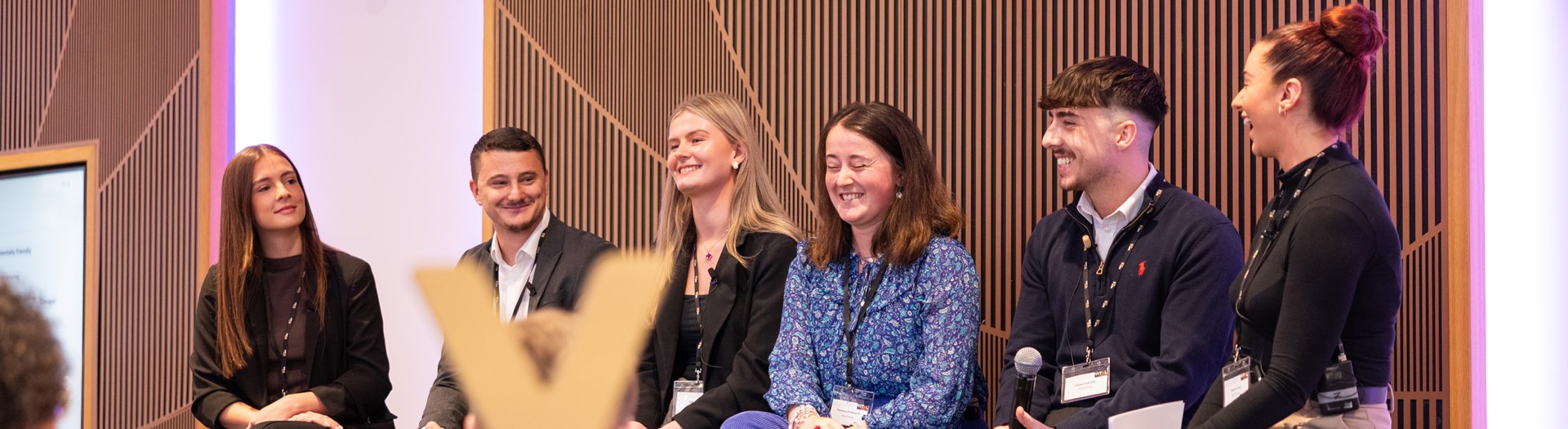
    On 17th September, Vital Energi hosted its Future of Energy event at Kings Cross, London, bringing together over 100 leaders and stakeholders from housing associations, universities, consultants, developers, investors, and policy makers. The day explored one central question: what is the future of energy?

    The event was chaired by Strategy & Partnerships Director, Elliott Sharpe, who shares a roundup of the event, along with his reflections and highlights.

    We wanted to bring the industry together to share insights, challenge assumptions, and inspire collective action. Decarbonisation is not just a technical challenge, it is a social one too. Our role (collectively) is to deliver solutions that benefit people, communities, and future generations.

    Our panel of “Tomorrow’s Trailblazers” – opened the event with our very own group of apprentices and graduates who shared their expectations of today’s decision-makers and their call for a clear and urgent pathway to net zero. Their insight and resilience highlighted that the future of the industry is in capable hands.

    A heavyweight discussion followed, featuring representatives from AECOM, Triple Point, DESNZ, the National Wealth Fund, and Vital Energi, examining how investment, policy, and technical modelling can align to unlock value in energy networks. A key takeaway was lets not make social value a box ticking exercise and lets create meaningful impact! We also have our fingers crossed that the Warm Homes Plan will announce support in the cost of heat challenge hat networks are currently facing.

    In the afternoon, attendees heard stories from Leeds PIPES customers, with speakers from the public and private sectors emphasising the importance of trust, alignment, and a framework for engagement in delivering lasting decarbonisation. Regulatory challenges were also debated in depth, with a focus on how housing associations and the wider sector must prepare for a rapidly evolving policy landscape.

    We then showcased real-world case studies, from Islington Council and the City of London demonstrating that decarbonisation does not have to come at a premium. By combining bold strategies with practical action, we illustrated how meaningful reductions in carbon, consumption and cost are already being achieved and can help fund future decarbonisation works and pay for themselves.

    We wrapped up by sharing why we do what we do, not just what we do, or how we do it – it’s not just the technology, but the purpose behind it. A social value video (below) reminded us that the energy transition is about more than networks, batteries, or heat pumps: it’s about making a tangible difference to communities and future generations.

    We started the day by asking the audience what their vision was for the future of energy. But little did they know, the answer was sat right in front of them all the time, hidden inside their goodie bag. Our amazing children at the Youth Zone in Blackburn created the artwork that became the keyrings in our delegates’ gift bags. Each with a little message, a reminder right from the start that the future we’re building is not just technical – it’s about people and communities too.

    Throughout the event, one clear theme emerged: technology is vital, but purpose is essential.

    The day closed with networking and a strong sense of shared optimism, proving that the Future of Energy is not just a vision, it is already taking shape through collaboration, innovation, and purpose.

    What stood out to me on the day was the strong sense of unity in the room. It felt as though everyone had come together with a shared determination to tackle the energy challenge we face – one that goes beyond climate to include affordability and the wellbeing of our communities.

    There was also a powerful reminder that this transition is about people as much as technology. From the importance of supporting communities today to empowering the younger generation who will shape tomorrow, the event had a real human spirit running through it. That spirit of collaboration and purpose is what I’ll carry forward from the Future of Energy.

  • Why is your choice of HIU the key to low-carbon living?

    Why is your choice of HIU the key to low-carbon living?


    Why is your choice of HIU the key to low-carbon living?

    Cover Image Vtherme Cu 2025

    Why is your choice of HIU the key to low-carbon living?

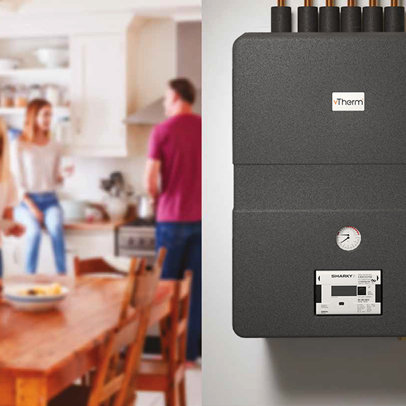
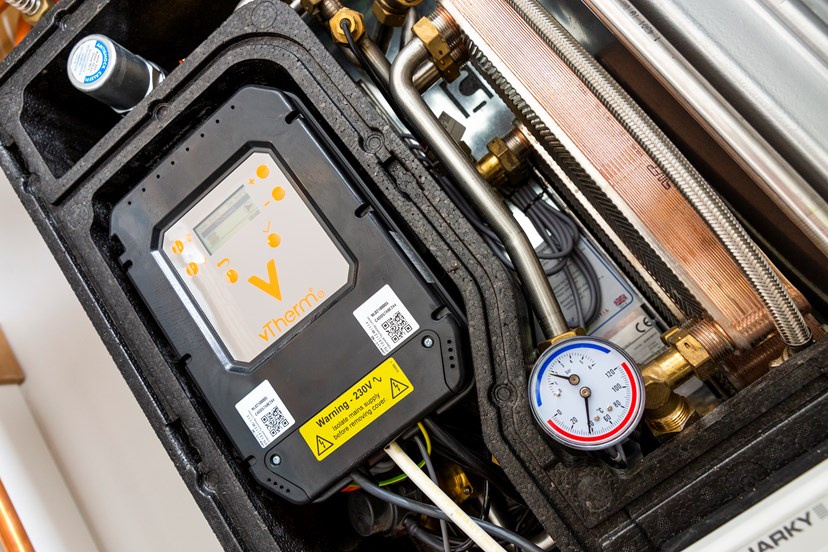
    Heat Interface Units (HIUs) are integral to ensuring optimal energy efficiency across heat networks. Your choice of HIU can directly impact your operating costs, overall system efficiency, and end-user bills. One way to differentiate HIUs in the market, and a topic that is often not discussed, is to consider how much water a HIU uses across a system.

    Cost & Energy Efficiency

    Think of your heating system like a delivery service.

    • A HIU with high standby ‘keep warm’ volume is like a van that idles all day, burning fuel while waiting for its next job.
    • A HIU with lower standby volume, like the vTherm˚e, is more like an electric bike ready when needed, but not wasting energy when it’s not.

    Keeping excess water warm and circulating it unnecessarily is like paying to heat rooms no one ever enters. Multiply that across multiple sites and years, and the costs, both financial and carbon, add up fast.

    Inevitably, this leads to the excess costs being passed onto the end-user by way of higher bills.

    Lower Annual Volumes

    As confirmed by the BESA 2023 test regime, the vTherm˚e Heat Interface Unit  annual water volumes are lower than the nearest competitor unit, topping the table in using significantly less water, even at high temperatures.

    The vTherm˚e HIU ‘keep warm’ standby volume results at 70˚ C: 15.6m3/a (closest competitor unit based on the VWART result is at 20.6m3/a)

    Although a difference of 5m3/a may not seem a huge amount, when this is multiplied by the number of heat interface units on a project, over a year and product lifetime, the water volumes and costs soon increase to huge proportions.

    Breaking down the numbers:

    • One project’s heating system includes 1000 Heat Interface Units (HIUs).
    • The vTherm˚e uses 5 cubic metres less standby water per HIU per year compared to the nearest competitor.
    • Multiply that out: 1,000 HIUs x 5m3/pa = 5000m3 water annually.
    • That’s 5 million litres of unnecessary water circulating through just one system, every single year.

    The vTherm˚e is like filling a bath with just the right amount of water. The nearest competitor? Like overfilling it every time, wasting water, energy, and money.

    Queens Quay Vtherm 013

    With proven performance on low-temperature networks and heat pump compatibility, the vTherm˚e helps reduce project operating costs and improves the experience for residents by cutting bills and carbon.

    Click here to talk to our team

  • RE:FIT Projects Pass Carbon Savings Landmark

    RE:FIT Projects Pass Carbon Savings Landmark


    RE:FIT Projects Pass Carbon Savings Landmark

    Over the last six years we have been working with a range of public sector organisations to lower their carbon emissions as they strive towards net zero.  Over this time we have successfully delivered 12 projects ranging from local authorities and universities to NHS Health Boards and Trusts.

    One of the most innovative aspects of the RE:FIT framework is that projects are underpinned by an energy performance contract which guarantees carbon reduction and financial savings through energy reduction.  We are delighted to announce that this work now accounts for over 11,500 tonnes of guaranteed carbon savings each and every year.

    Swansea Solar Farm

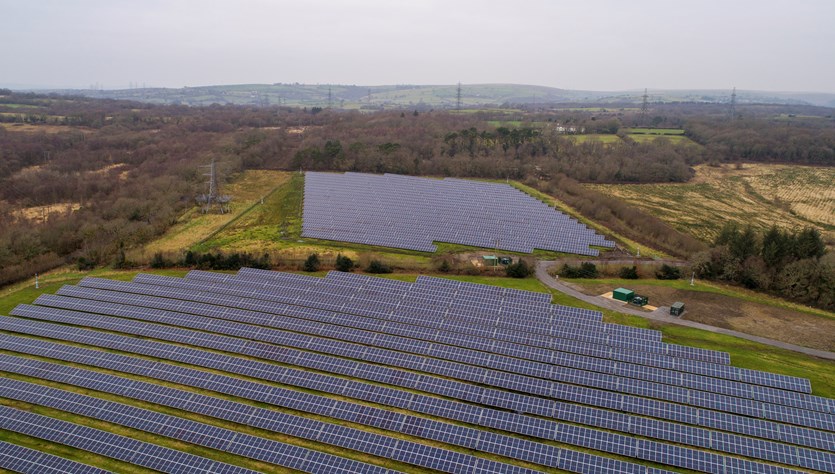
    We installed a major solar farm at Swansea Bay University Health Board through the RE:FIT framework.

    Solution detail

    The RE:FIT framework is about finding the best solution for a company’s decarbonisation within an agreed budget, combining speed, access to funding, reliable contractors and the certainty of knowing that financial savings and carbon reduction are guaranteed.”

    Chris Yeo, Director of Low carbon Solutions for Vital Energi

    Chris continues, “This, however, is only one of over 50 frameworks which we sit on, and we were able to announce several years ago that we were guaranteeing over 1 million tonnes of carbon reduction to the NHS.  Passing both these landmarks demonstrates how effective the correct framework can be and we look forwards to working alongside more of the UK’s councils, universities, hospitals and other public sector organisations as they work towards their net zero goals.”

    In addition to the environmental benefits, our RE:FIT projects are also delivering £9.8m in guaranteed energy savings per year, which is money which can now be reinvested where it will do the most good.

    Projects have seen us install building fabric improvements, lighting upgrades, HVAC improvements, Building Management Systems, heat pumps, rooftop solar PV and major solar farms in buildings ranging from leisure centres, hospitals, and universities to schools and libraries.  We often work with our clients to adopt a phased approach, allowing them to make progress on their net zero journeys as funding becomes available.

    If you’d like to learn more about RE:FIT projects and how they’re delivered we have case studies available here:

  • Vital Energi Celebrates Record Recruitment for Early Careers Programme

    Vital Energi Celebrates Record Recruitment for Early Careers Programme


    Vital Energi Celebrates Record Recruitment for Early Careers Programme

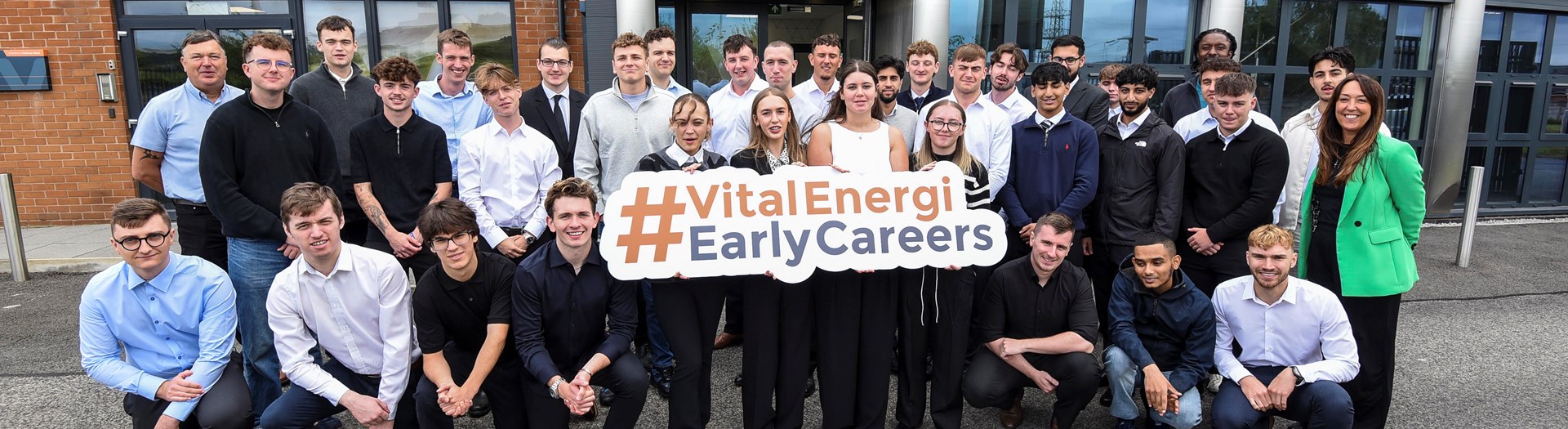
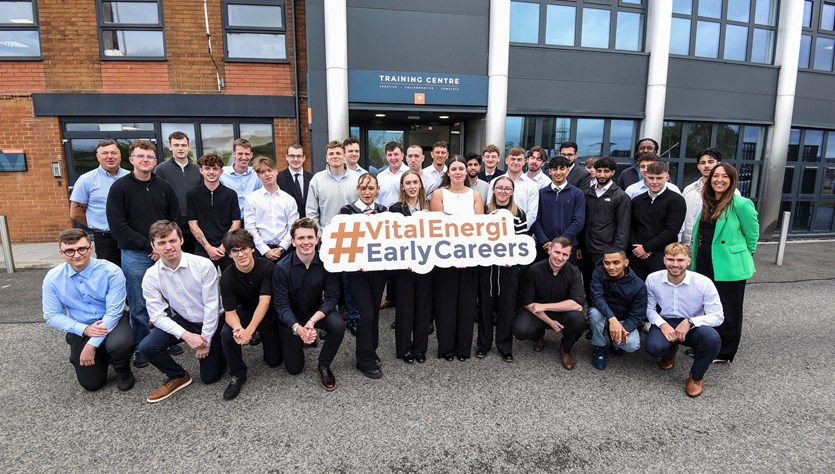
    Please join us in welcoming the new recruits to our Early Careers programme. Over the next few weeks, we will be celebrating an amazing achievement by introducing 59 entrants to the Vital family for our 2025/26 Early Careers intake.

    This year, we have re-designed the apprenticeship programme that was originally launched in 2022 and have worked with our Future Leaders to re-model our graduate programme.  We’re enjoying a record-breaking intake, with 30 apprentices and 29 graduates joining us to contribute to our overall mission of protecting our planet for future generations!

    The new recruits will be based across Vital Energi’s regional offices, including Blackburn, London and Scotland, whilst working on projects throughout the UK. Our Early Career opportunities span from Technical, Low Carbon, Degree, and Business Services disciplines, with additional opportunities in newly launched specialisms.

    The green energy sector is facing a severe skills gap which could prove a genuine barrier to the UK meeting its net zero targets, so it’s essential we can bring enthusiastic and talented young people into the industry to drive it forwards, deliver the projects which generate carbon reduction, and become the future leaders of the industry.”

    Gary Fielding, Vital Energi Chairman

    SHOT 0180

    New starters gathering at Vital Energi’s Blackburn headquarters

    Solution detail

    With a projected 126 apprentices and graduates joining the Vital family, this will make up more than 15% of our workforce! It’s fantastic to see so many people wanting to make a practical contribution to combatting climate change.

    Ella Stokes, People and HR Director for Vital Energi explains, “We’re passionate about our Early Careers Programme as we believe fresh talent and diverse perspectives are the key to building a strong, future-ready workforce. Our apprentices and graduates bring energy, creativity, and adaptability; qualities that help us stay sharp and respond to a fast-changing world.

    By offering clear development pathways, we give people the chance to grow professionally whilst building skills that will allow them to make a positive difference in meeting our overall business/ industry goals, including combatting climate change.”

    If you’d like to learn more about our award-winning Early Careers Programme, click here:

  • Turning up the heat with Energy UK membership

    Turning up the heat with Energy UK membership


    Turning up the heat with Energy UK membership

    Vital Energi is becoming a member of Energy UK alongside five other heat network companies, as it increases its focus on heating more of our homes and buildings with clean, sustainable energy sources.

    Heat from buildings is the UK’s second highest source of emissions, accounting for around one fifth of the total, so converting to alternative, cleaner forms of heating is crucial to meeting the UK’s climate change targets.

    With the Government’s Warm Homes Plan and Future Home Standard expected over the coming months, it is also an important time which will shape the role heat networks can play in heating and cooling buildings more efficiently.

    A heat network is a broad term that applies to any system that distributes heat, and sometimes cooling, from centralised sources to more than one connected customer. A residential scheme may just serve the residents in a single building, whereas a district heating scheme could service a variety of different customers such as homes, public buildings, shops, offices, hospitals and universities.

    Whether supplying a few neighbourhood buildings or entire cities, heat networks can remove the need for individual boilers or heaters in each home, which can be particularly useful in densely populated areas such as blocks of flats. They can also make use of existing heat sources that would otherwise be wasted such as industry, energy-from-waste plants or naturally occurring sources like geothermal.

    The companies joining Energy UK include 1Energy, Bring Energy, Gren, Hemiko, Switch2 and Vital Energi. These companies will join Energy UK’s existing membership of 140 companies, around a quarter of which provide products and services in the clean heat space.

    Under the Energy Act 2023, heat networks zoning aims to accelerate their growth from the current 3% share to 20% eventually, which will see them fulfil the prominent role they have in some other European countries. The sector has ambitions to invest tens of billions in the UK by 2050, supplying 95TWh of power and saving 15 Mtonnes of carbon dioxide. This will lead to the creation of hundreds of thousands of direct and indirect jobs across the UK, primarily in construction and heat network operation.

    “We have seen that heat networks can sit at the heart of communities and improve air quality, reduce emissions and deliver more reliable, affordable heat. We believe that by uniting with other UK energy leaders we can raise the profile of heat networks, which are essential to the UK’s green energy transition. In the UK we are at a critical point in the widescale deployment of heat networks with the introduction of regulation and zoning on the horizon. We look forward to working with Energy UK to ensure new policy and legislation creates protection for customers, improves quality standards and supports the growth of heat networks. Together we can shape a more resilient, equitable and greener future for all.”

    Gary Fielding, Chairman of Vital Energi

    Dhara Vyas, Energy UK’s chief executive said:

    “Heat is a vital part of the clean energy jigsaw and moving to cleaner alternatives will benefit households and businesses through more efficient energy use, and less volatile energy prices by not being reliant on gas. Heat networks have enormous potential to play a big role in this drive, particularly in urban and industrial areas, and help meet the overall goals of clean, sustainable sources, reduced air pollution and more stable bills, while also boosting the economy with investment, jobs and regeneration.

    “So it’s a great time to welcome these new members. We look forward to promoting their work and the contribution they can make to the energy transition as well as supporting them with our policy expertise and close relationships with government, regulators and other stakeholders.”

  • £13m Energy Project Set to Cut Westminster City Council’s C02 Emissions

    £13m Energy Project Set to Cut Westminster City Council’s C02 Emissions


    £13 Million Energy Project Set to Cut Westminster City Council’s Carbon Emissions By 1,700 Tonnes

    The project represents the largest Public Sector Decarbonisation Scheme Grant made to a London Local Authority.

    Westminster City Council is set to make a significant contribution to the decarbonisation of London after awarding us a contract to revolutionise the way they generate and use energy. In February 2021, Westminster City Council was awarded a £13million grant via the Department for Business, Energy and Industrial Strategy’s Public Sector Decarbonisation Scheme.

    The first phase of the partnership, which is being delivered through the Retrofit Accelerator Framework, will see energy conservation measures installed in up to 70 buildings including schools, leisure centres, libraries and commercial premises, and the improvements will save around 1,700 tonnes of carbon emissions per year.

    In 2019, the City Council declared a climate emergency. The contract with us is one of a number of practical steps being taken to meet its ambitious targets to become a net zero council by 2030 and a net zero city by 2040.

    The work has involved a comprehensive energy audit on the council’s property portfolio and has identified a range of energy conservation and energy generating measures which will, not only reduce emissions, but also deliver a future reduced carbon footprint for the Council.

    The works will deliver energy efficient upgrades to the lighting, heating, ventilation and BMS systems within Westminster City Council buildings as well as harnessing the latest renewable technologies such as solar PV and air source heat pumps.

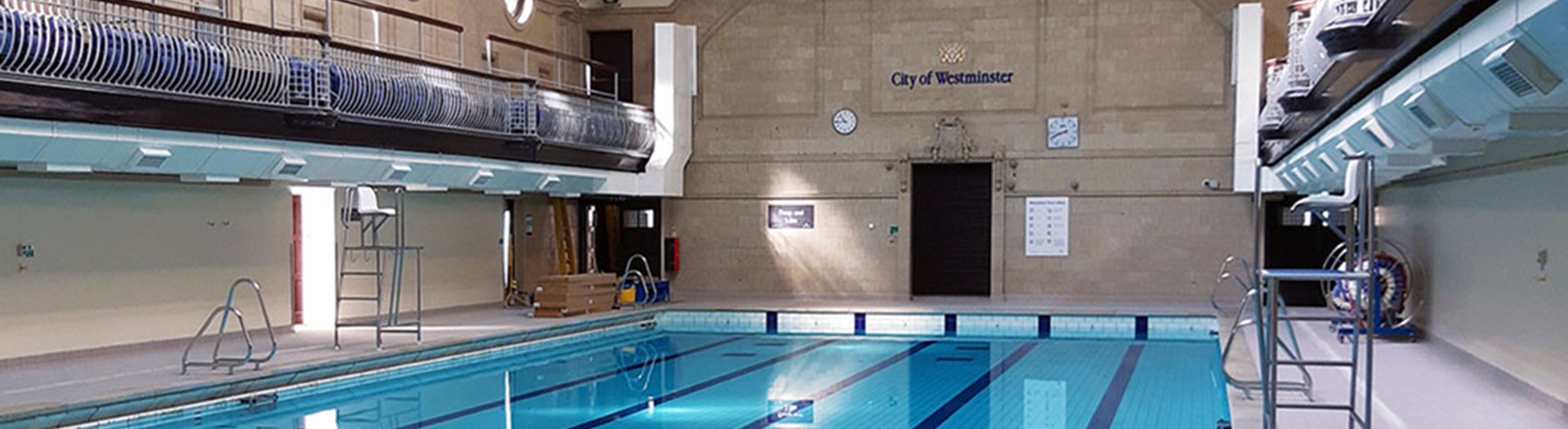
    SJR Mortuary (1)

    Councillor Paul Swaddle, Cabinet Member for Finance and Smart City at Westminster City Council commented:

    “We are committed to tackling the climate emergency and ensuring we create a sustainable economy for the future of Westminster.

    “Large cities like London are among the biggest emitters of carbon, and Westminster’s location at the centre of the capital means we can play a significant role in cutting emissions. Around 86% of Westminster’s total emissions comes from buildings. That’s why we are proud to work with our partners, Vital Energi, to modernise and decarbonise the council’s offices, leisure centres and libraries using the latest technology.

    “By working together, we can build a greener and cleaner Westminster for everyone who visits, works and lives in our city.”

    Solution detail

    Seymour Leisure Centre

    Scott Lutton, Vital Energi’s Operations Director commented:

    “Westminster City Council have declared a climate emergency and are committed to becoming a carbon neutral council by 2030 and this project will make a strong contribution towards meeting this target.  By applying our experience of helping clients to decarbonise though harnessing the latest technology, our in-house team of design and energy modelling experts can develop and deliver a scheme which maximises carbon and energy savings.

    “We specialise in taking responsibility for our clients’ complete property portfolio, regardless of the number of buildings, or size of properties, to deliver the maximum decarbonisation possible.   On this project the largest property is over 8,000m² and the smallest is around 80m², which is a great illustration of the range of opportunities public organisations have for decarbonisation across their entire estate.”

    Solution detail

  • £1bn low carbon heating infrastructure project unveiled in Westminster

    £1bn low carbon heating infrastructure project unveiled in Westminster


    Westminster Heat Network – new £1bn project unveiled

    Iconic London buildings in the heart of the capital to be heated by new low carbon heat network, expected to create 500 jobs and save 75,000 tonnes of CO2 every year.

    Just days after the UK Government revealed an Autumn Budget that included significant infrastructure investment plans, a new £1bn low-carbon infrastructure project has been launched in Westminster, signifying a major step towards driving investment and creating well-paid, secure jobs.

    Unveiled today, this large new heat network in Westminster will become one of the UK’s first ‘heat network zones’ – places where heat networks are the cheapest and best way to decarbonise compared to each building having its own air source heat pump. On average, heat networks are 40% cheaper for customers than building level heat pumps.

    The heat network will supply low carbon heating, sourced from within the local area. The heat will need to come from innovative sources such as the London Underground, the Thames, and the sewer network. It might even be brought down the river on barges.

    One of the core benefits of heat networks, is the ability to harness waste heat from within the local area and make use of it. This makes them low carbon, efficient and resilient, not relying on imported fuel.

    Heat will then be distributed via a network of underground, insulated pipes filled with hot water. The zone will stretch from around Victoria Station, up to Temple Underground Station near the Strand, bounded by St James’ Park.

    Over time, this significant new investment is expected to save 75,000 tonnes of CO2 every year, (equivalent to removing 40,000 cars from the road), create 500 jobs, improve local air quality by reducing nitrogen oxides emissions by 99%, and create 100 opportunities for UK businesses.

    The South Westminster Area Network (SWAN) was brought to life by the Department for Energy Security and Net Zero, and Westminster City Council. To deliver the network, they have brought in the SWAN Partnership, a joint venture between Hemiko and Vital Energi, two of the leading heat networks developers in the UK, who were appointed last month. London Heritage Quarter and AECOM have also been key partners, supporting the network’s growth.

    The SWAN Partnership will be funding, building and operating the heat network. They plan to invest £100m within 3 years, £500m within 10 years, and £1bn by 2050 into what will become one of the UK’s biggest heat networks.

    SWAN reflects a currently unparalleled scale of ambition for growth and investment into heat networks, but it is something that the government wants to replicate in zones across the country.

    By 2050, every major town and city is expected to need district heat networks, requiring over £100bn of private investment and 290k new jobs in total.

    It is not yet known who will join up to this heat network, but Project SWAN could serve landmark buildings like the Houses of Parliament and the National Gallery, alongside buildings owned by Westminster City Council and the Government.

    “Taking waste heat from the River Thames and London Underground to heat such iconic places as the Houses of Parliament and the National Gallery is a really exciting example of what lies ahead on our journey to low-cost, low-carbon heating. This project will help support hundreds of jobs and make bold new strides towards boosting our energy security, as one of seven heat network zones we’re backing with over £5million funding.”

    Miatta Fahnbulleh, Minister for Energy Consumers at DESNZ

    “It is fantastic to see that the South Westminster Area Network (SWAN) has taken this critical step forward. The council has been actively supporting the Government through the early stages of this pioneering network and will now take on a principal role to ensure that the project delivers the best outcomes for our residents and businesses. We know that the gas used to heat and power buildings is one of the biggest contributors to both carbon emissions and air pollution in Westminster. However, these new low-carbon district heat networks will tap into local waste heat sources, delivering clean and affordable energy to those who need it most. The SWAN project will be a crucial piece of our net zero carbon journey in Westminster, leading the way for others and showing what a positive clean energy future could look like.”

    Cllr Adam Hug, Leader of Westminster City Council

    “Heat networks are the most cost-effective way to decarbonise our densely populated cities. The Government’s heat network zoning regulations, introduced last year as part of the Energy Act, have now created the right market conditions for private sector investment. By combining Hemiko’s investment capabilities with Vital Energi’s comprehensive expertise in designing, building, operating and owning energy infrastructure, the SWAN Partnership will deliver the first zonal scale heat network and demonstrate a model that other towns and cities will seek to replicate.”

    Nick Gosling, Chief Strategy Officer of Vital Energi

    “Using heat from the iconic River Thames and London Underground to heat some of the capital’s most famous buildings is a true story of pro-growth, circular economy in London. Heat networks are the next big utility in the UK, and we are investing £1bn over the next 6 years into networks that will allow local people and businesses to make use of locally wasted heat. We strive to embed ourselves in the local community, understanding the pressures and opportunities in the area, and figuring out how we can help, such as bringing high-quality green jobs and supply chain opportunities. This network will be the flagship network in the UK, the first new zonal scale network in a market that offers an investment potential the size of the UK offshore wind industry. Steps like this show that the UK heat networks market is open for business.”

    Toby Heysham, CEO of Hemiko

    Businesses are being encouraged to register their interest in joining the network, by emailing [email protected]. First movers are needed to unlock this least cost decarbonisation pathway and the jobs that come with it, for the benefit of everyone in Westminster. The more who join up, the cheaper it is for everyone.

    From start to finish, it took just 4 months from launching the competitive process to signing the contract for SWAN and beginning the development work, five times faster than most procurement exercises run to date.

    This new procurement approach for heat networks is expected to speed up the delivery of heat networks, to decarbonise the UK faster, and create a more investable heat networks market. This model, and variations of it, is expected to be replicated by at least 7 projects across the country within the next year alone, with more thereafter.

    Construction of SWAN is due to start in 2026.

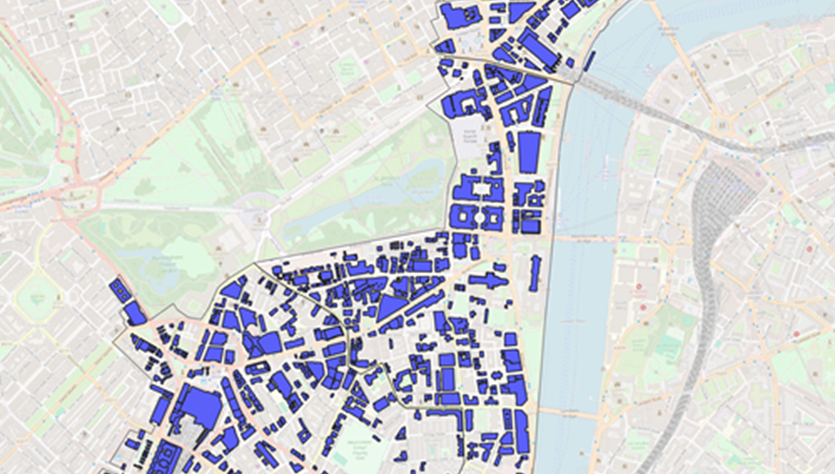
    Swan Map (1)

    For the buildings identified on this map, connecting to SWAN should be the most cost-effective way to decarbonise heating, according to the Energy Department’s National Zoning Model.

    Solution detail