Category: Uncategorized

  • Northern Lights shine again in annual walking football tournament

    Northern Lights shine again in annual walking football tournament


    Northern Lights shine again in annual walking football tournament

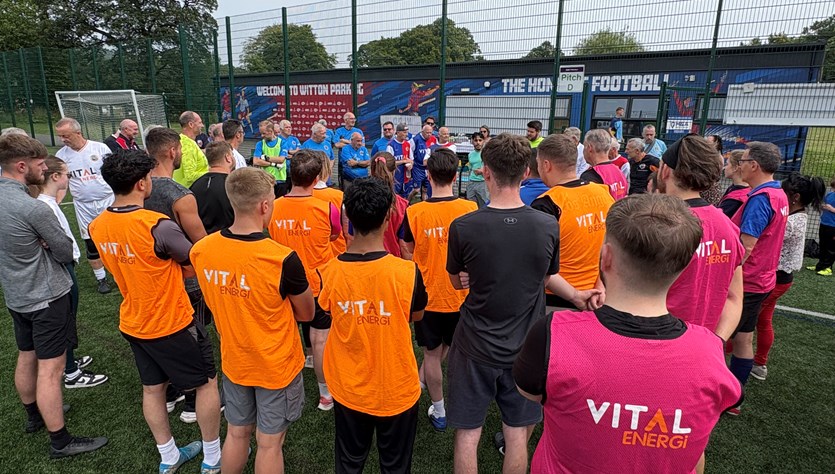
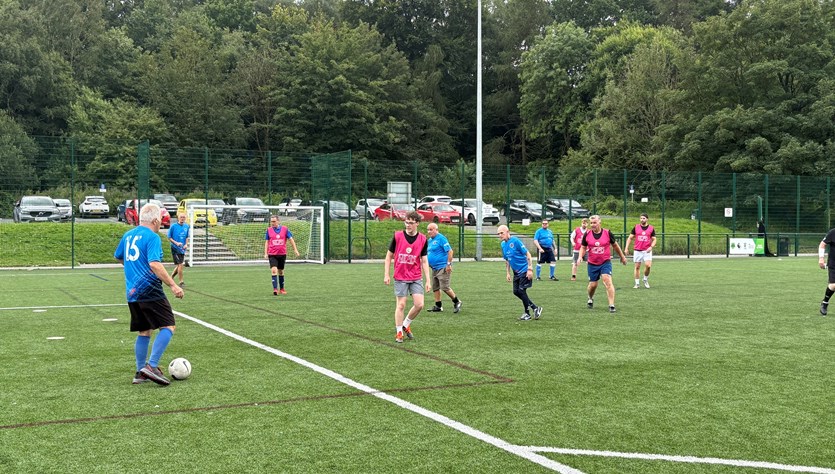
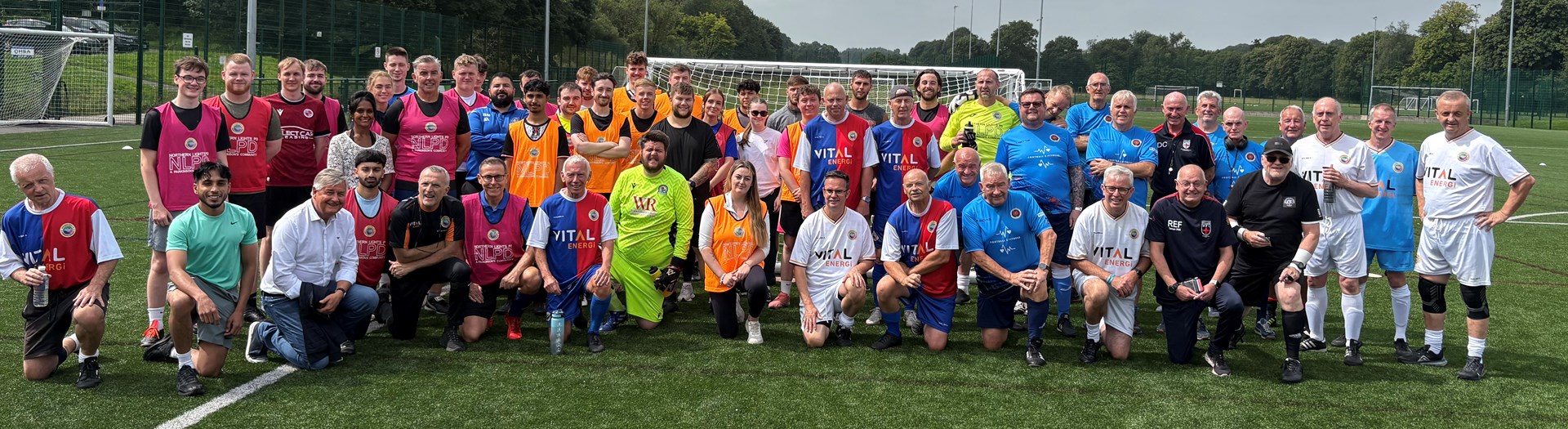
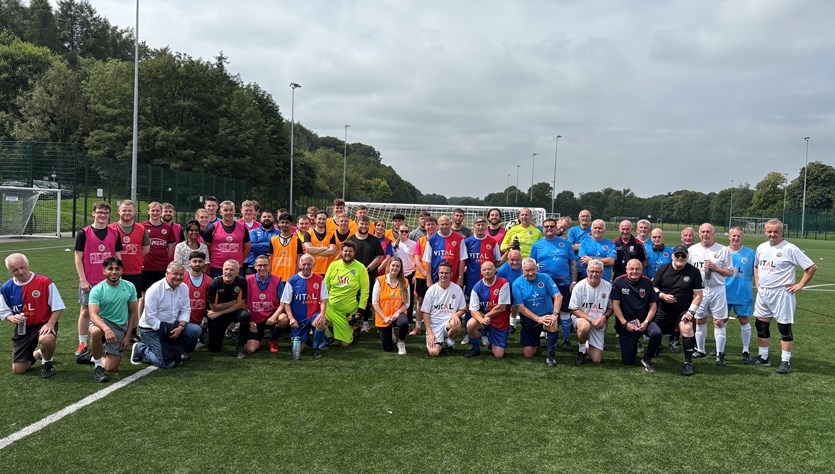
    Teams from Vital Energi and Parkinsons support community, Northern Lights, returned to the pitch last week to take part in our annual walking football tournament at Witton Park, Blackburn.

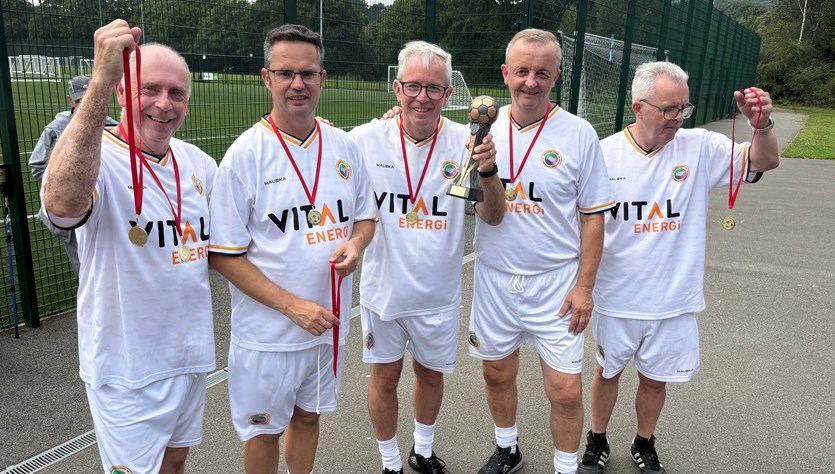
    The tournament is in its third consecutive year, and once again, Northern Lights (NLPD) took home the trophy. NLPD A team took the top spot and Vital Energi Team C finished as runners-up.

    We’d like to say a huge thank you to everyone who took part, whether you played in the tournament, cheered from the sidelines, or took part in the raffle, which raised an amazing £426 for the charity.

    Vital Energi’s Chairman, Gary Fielding, was at the tournament cheering from the sidelines.

    “It was fantastic to see teams from Vital and Northern Lights take to the pitch for our third annual walking football tournament,” said Gary. “It was great to see the energy, camaraderie, and team spirit from both sides from start to finish.

    “As part of our five-year sponsorship commitment, it’s fantastic to be able to support events like this, not just for the fun, but for the incredible charity behind it and raising awareness of Parkinson’s. Maybe next year, we’ll be celebrating with the trophy too!”

    We’ve received lots of lovely messages from Northern Lights members which shows that this tournament is definitely a highlight of their year.

    “Norman and I would like to thank Vital Energi for their hospitality as always, your support for our group is truly outstanding and is very much appreciated. Our lads love taking part in this tournament and look forward to it each year, the camaraderie that takes place within all teams is amazing they are made to feel so welcome,” said Mary Stead, Trustee of the charity whose husband Norman was diagnosed with Parkinsons 14 years ago.

    Steve Ashworth, member of NLPD who helped establish the relationship with Vital Energi, said:

    “I have to say it is an absolute pleasure to be involved with, and great to see all the guys catching up on the business and personal exploits from the previous 12 months. The respect shown by all, really is second to none…..long may that continue. In that regard, we are all thankful to Gary for allowing the game to take place. And so, another successful tournament has been celebrated, and we now look forward to the 2026 event.”

    A special thank you to Asif Asvat who organised the teams and delivered a great speech at the beginning of the tournament.

    “My highlight was definitely giving the opening speech to everyone at the start of the tournament and just seeing another successful, friendly tournament come together,” said Asif. “It was a great atmosphere all round!”

    Based in the North West, NLPD is a self-funded, voluntary organisation which offers support and help to people with Parkinson’s disease – a brain disorder that causes unintended or uncontrollable movements, such as shaking, stiffness, and difficulty with balance and coordination – and brings people together by introducing them to the joys of walking football.

    A great way to stay fit and potentially relieve some of the symptoms of Parkinson’s, walking football also allows participants to learn new skills and make friends with those in a similar situation.

    Find out more about NLPD by clicking here.
  • Leeds PIPES Showcases Net Zero Innovation at Climate Minister Visit

    Leeds PIPES Showcases Net Zero Innovation at Climate Minister Visit


    Leeds PIPES Showcases Job Creation and Net Zero Innovation at Climate Minister Visit

    Katie White OBE MP, Minister for Climate, visits the 30km Leeds PIPES Heat Network, which has grown over 7 years to connect 4,100 homes and businesses, driving down both energy prices and carbon emissions.

    Katie White OBE MP, Minister for Climate, recently toured the award-winning Leeds PIPES heat network, visiting key sites across the city to explore how the scheme has delivered outstanding decarbonisation and financial savings whilst acting as a catalyst for green job creation, skills development, and social value initiatives.

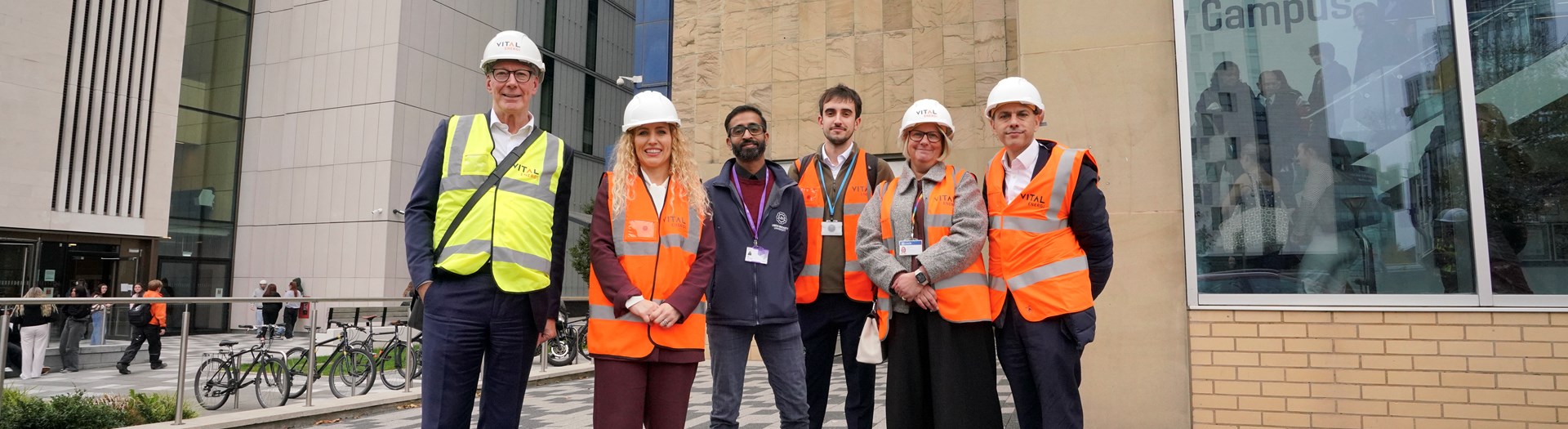
    Her visit included stops at key buildings connected to the heat network, including Leeds Civic Hall and Leeds Beckett University, where she heard how connecting to the heat network reduced their carbon emissions by approximately 500 tonnes per year, whilst reducing energy costs by around £250,000 per year.

    74

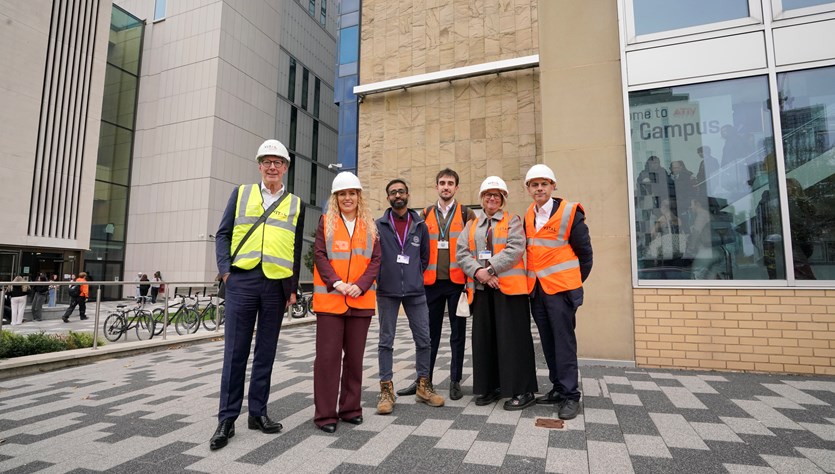
    Pictured left to right; Ian Whitelock, Minister Katie White, Tarik Jacob, Joe Callin, Councillor Katie Dye, and MP Alex Sobel at Leeds Beckett University

    Solution detail

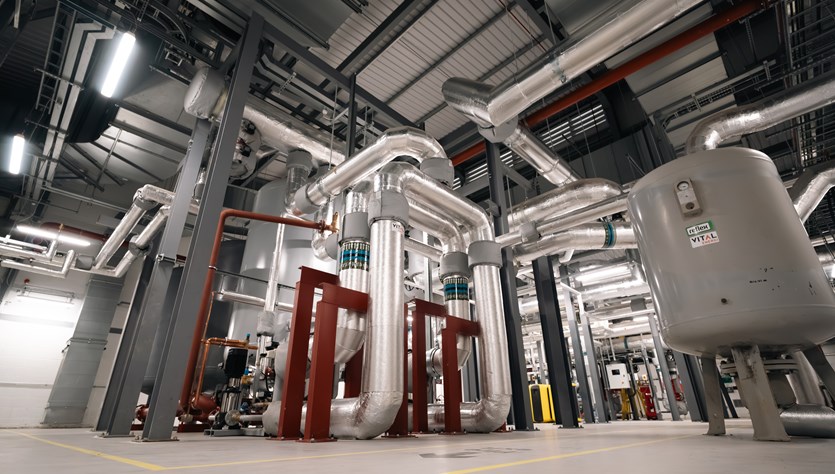
    The tour then moved on to the Cross Green Energy Centre, which takes excess heat from the nearby Recycling and Energy Recovery Facility (RERF). The tour showcased the technologies and processes that convert waste heat into usable, low-temperature hot water and distributes it throughout the city.

    Climate Minister Katie White said: “Leeds PIPES is a shining example of how local leadership and innovation can deliver real progress on the path to net zero.

    EDITED V2

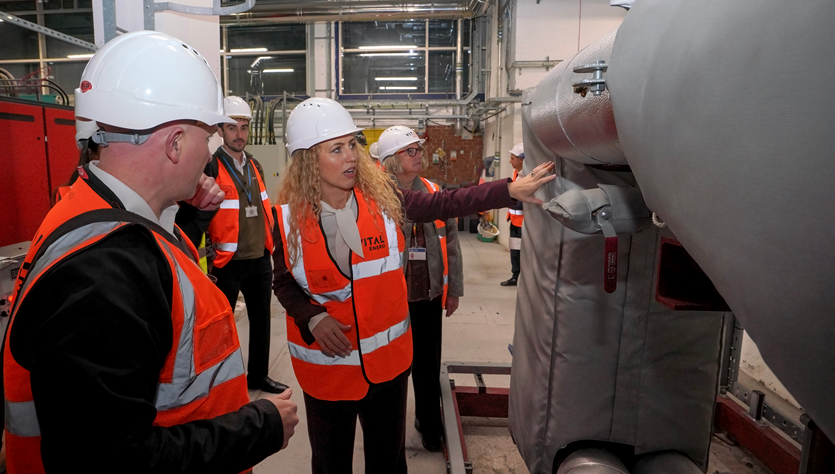
    Pictured; Mike Worrall and Minister Katie White inside Leeds Beckett University Plantroom

    Solution detail

    “This pioneering heat network, delivered by the council and Vital Energi, is not only cutting the emissions of home and commercial heating, it’s also creating hundreds of good jobs for local people, and driving investment into the community. I was delighted to see first-hand how waste is being harnessed to bring clean power to Leeds as part of the government’s clean energy superpower mission.”

    Minister Katie White, OBE MP, Minister for Climate

    The Minister was joined on her visit by Alex Sobel, MP for Leeds Central and Headingley.  Also in attendance was a delegation from Vital Energi including Ian Whitelock – CEO, Mike Cooke – Managing Director, Abby Whitelock – Marketing & Communications Director, and Mike Worrall – Project Director. Leeds City Council were represented by Joe Callin – Project Manager, Andrew Lingham – Senior Project Manager and Councillor Katie Dye – Chair of the Climate Emergency Advisory Committee.

    82

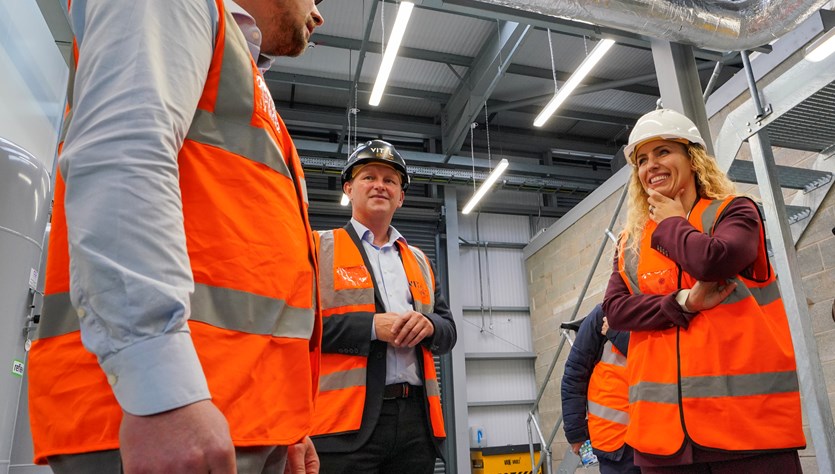
    Pictured; Mike Cooke and Minister Katie White inside Cross Green Energy Centre

    Solution detail

    “The Leeds PIPES Project is about harnessing waste heat to deliver decarbonisation, but it’s also about people. From the pipes in the ground to the construction of the energy centre, we’ve worked with the council to create 450 jobs in total and training opportunities with local education institutions, bringing people into the green energy sector and spending money with local businesses. These projects are developed for the community and to bring wider benefits to the people of Leeds and not just the key iconic buildings and homes connected. It has been great that the Minister for Climate has taken such a keen interest in Heat Networks, and we are hopeful that this is a strong indicator from Government as to how important Heat Networks are to reducing the UK’s emissions.”

    Mike Cooke , Managing Director at Vital Energi

    Construction on the Leeds PIPES heat network began in 2018 and, to date, has seen 30km of heat network delivered throughout the city, connecting iconic buildings such as Leeds Town Hall and Leeds City Library & Art Gallery, as well as residential blocks and offices, with further expansion planned.

    85

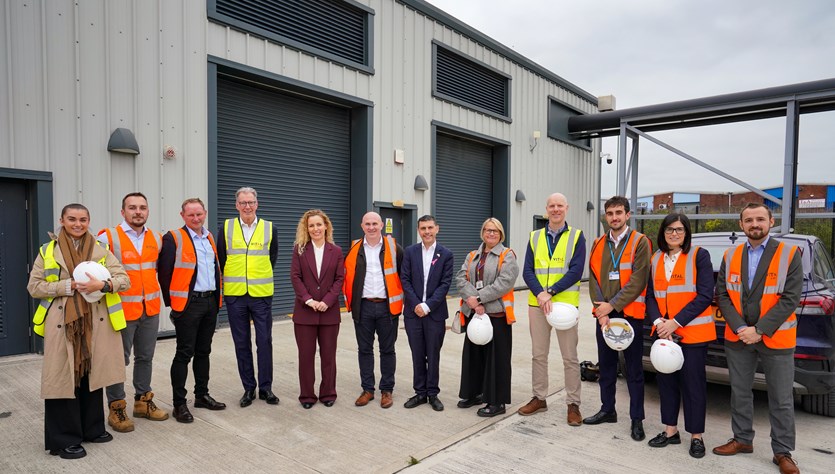
    Pictured from left to right; Yasmin Lloyd, Paulius Andriekus, Mike Cooke, Ian Whitelock, Minister Katie White, Mike Worrall, MP Alex Sobel, Councillor Katie Dye, Andrew Lingham, Joe Callin, Abby Whitelock, Dylan Radford outside Cross Green Energy Centre

    Solution detail

  • Handling A Shutdown & Minimising On-Campus Disruption

    Handling A Shutdown & Minimising On-Campus Disruption


    Handling A Shutdown & Minimising On-Campus Disruption

    University campuses evolve over time and need heat networks which grow and develop alongside them.  Vital Energi has been working in partnership with Loughborough University for 25 years to ensure their heat network can meet the needs of staff and students.

    We recently sat down with the University’s Project Manager, David Bell to discuss preparing for shutdowns, reconfiguring networks and how to minimise disruption on campus.

    Vital Energi: When you know you’re doing a heat network shutdown, what are your considerations?

    David Bell: Firstly, you have to consider which part of the campus is involved. Our campus is split into three areas: Central, East, and West.

    The East side consists mainly of teaching spaces and offices, so a shutdown there primarily affects staff during the working day.

    The Central campus is different as it contains most of our student accommodation. We must be very careful about how we manage that impact. Students are our clients; they pay to live on campus, and we have a duty of care to ensure they always have heat and hot water. For that reason, we schedule most Central campus shutdowns during the summer, from June through to the end of September, when far fewer people are around.

    The West side of campus has some teaching areas as well, but it also includes the Science and Enterprise Park, which is home to commercial companies renting space from us. That means close coordination is essential.

    We often plan these works years in advance, making the best use of that time. We start with initial communications to let everyone know what’s planned and then liaise with the contractor. Vital Energi handles much of the detail under our oversight, bringing their technical experience and understanding of heat network systems. Once we know the timescales and finer points, we can introduce more detailed communications and engage with stakeholders to identify and resolve any potential issues.

    VE: You’ve mentioned communications a few times now. How important are they on higher education projects?

    DB: Communications are essential.

    On this project, we were doing enabling works over the summer as part of a new 500-bed student accommodation build. A lot of the existing heat and water infrastructure ran through the area where the new buildings were going, so we had to divert those services. That also meant diverting mains cold water and both the high-voltage and low-voltage cabling.

    We held a joint meeting with Vital Energi East and other contractors to coordinate everything and make sure everyone knew who was digging where and when. The cold-water work wasn’t too disruptive as it was mostly outside the main compound, but within the compound we had HV and LV works happening at the same time.

    David Cooper, your project manager, managed that brilliantly. He kept everyone in the loop, worked with a senior lecturer to create a safe walkway through the site in case of emergencies, and even helped with bin deliveries and car park access. It’s those small details that make a big difference.

    From the initial planning stages right through to estimating and coordination, communications were spot on. The whole team at Vital delivered exactly what we’ve come to expect, which is the reason we keep working with them.

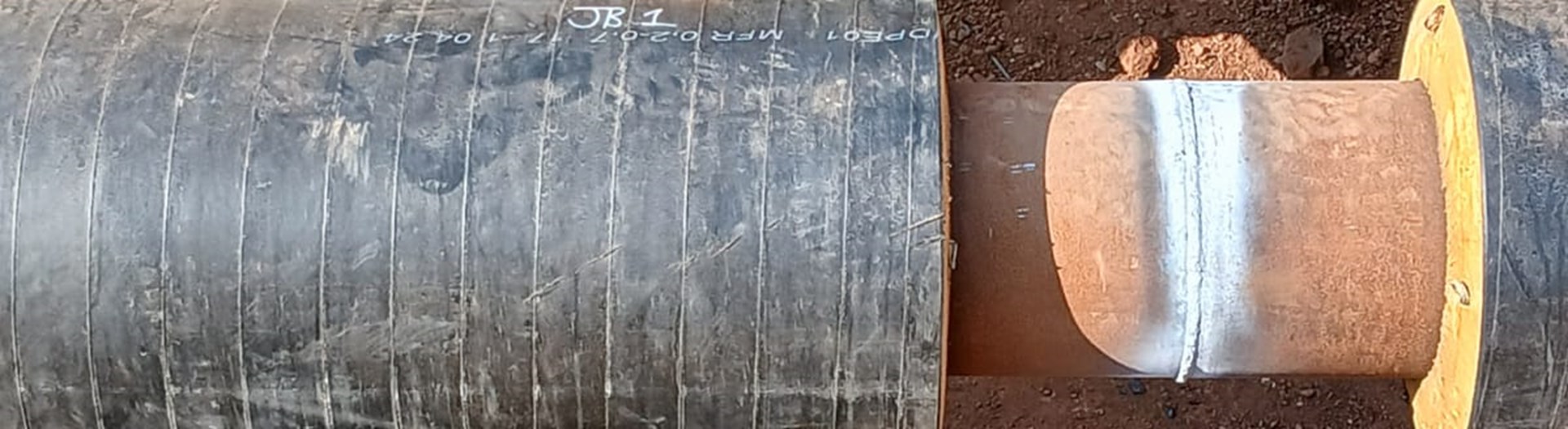
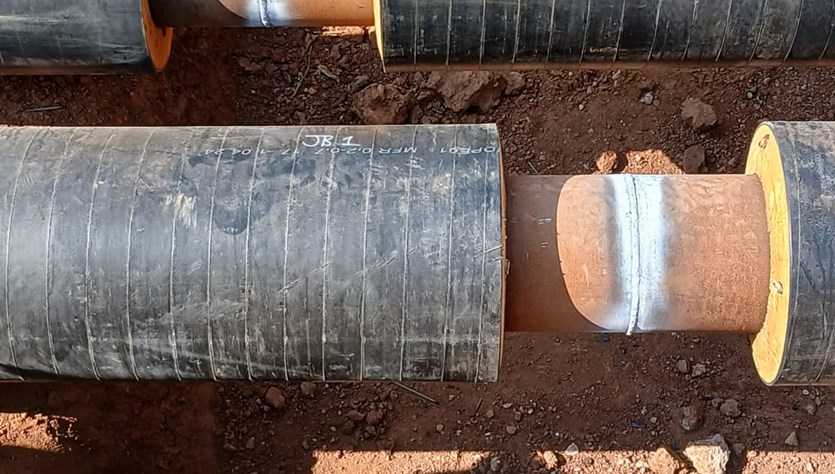
    NDT Tested Welds

    Non-Destructive Testing on the welded joints ensures the highest quality and contributes to longevity.

    Solution detail

    From the initial planning stages right through to estimating and coordination, communications were spot on. The whole team at Vital delivered exactly what we’ve come to expect, which is the reason we keep working with them.

    David Bell – Project Manager, University of Loughborough

    VE: Construction and engineering works can cause disruption, and not all projects can be delivered during the summer holidays. What levers can you pull to reduce that disruption and minimise the impact?

    DB: It depends on the project, but our long lead times make it easier to plan ahead and reduce issues. If we have an emergency shutdown outside of the holidays, for example, we work closely with our Rooms and Accommodation Department to look for solutions through timetabling.

    If a lecture was scheduled in a building without heat, we might move it elsewhere. Rooms and timetabling will always work together to avoid disrupting core teaching wherever possible.

    Our biggest concern is always the students, so we do everything possible to keep heat and hot water running while they’re here. Sometimes it can’t be helped, but careful planning and clear communication help to minimise the impact.

    It’s like a sliding scale of solutions. We aim to do everything outside of term time, but if that’s not possible, we’ll find individual solutions. Even outside of term we must be careful as graduation, for instance, is a key date that needs to be respected.

    VE: Can you give us practical examples of how you worked with Vital Energi to reduce the impact on this project?

    DB: The pre-construction period is critical. That’s when we issue communications to everyone involved so stakeholders can provide feedback before work starts.

    Vital sent senior members of staff to the pre-start meetings and developed very good relationships with our Facilities Management team, which meant everyone knew what was happening and could keep others informed. I maintain a stakeholder map to help the project team identify who they need to speak to, and we liaise closely with Security to manage access. We also have a project management board that’s updated weekly or monthly. My role is to make sure Vital has those relationships in place and that communication stays consistent.

    You can see the benefits of that planning in practice. On one occasion, there was a fire on an adjacent site, and emergency vehicles needed access through our site. Because emergency routes had already been factored in and protected at the planning stage, everything went smoothly.

    VE: So responsiveness is also important?

    DB: Absolutely. Some issues need fast resolution, and Vital are very strong in that area. Your project manager shared his mobile number with everyone who needed it and responded quickly whenever issues arose.

    Vital are also proactive in branding their site fencing with contact details, which makes it clear how to provide feedback or raise a concern, and those queries are resolved promptly.

    VE: University campuses are constantly changing and evolving. What can you do to make sure your heat network keeps up?

    DB: We’ve known for five years that we were going to build this new student accommodation, so we planned accordingly. We’ve also got a ten-year plan, which means anything we do now complements that bigger picture and is future proofed. Having a long-term view is essential.

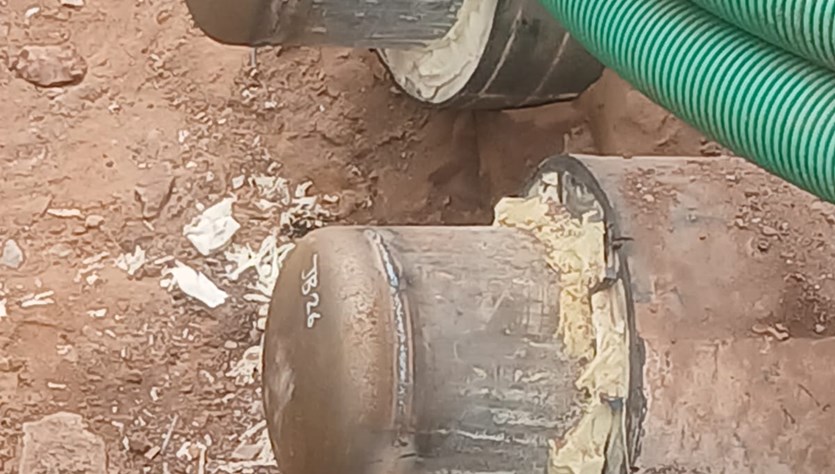
    Old Pipework Capped Off

    Capping the original pipework as part of the reconfiguration works

    Solution detail

    VE: Are here any areas you feel are undervalued, but if you do them right, your project goes more straightforward?

    DB: We live in a world of technology, but there’s still no substitute for the personal touch. When Vital has a project, I’ll call, arrange a site meeting, have a coffee, and we go through the drawings together. That kind of open, two-way discussion sets the foundation for a good partnership.

    Everyone is flooded with emails these days, so that face-to-face contact at the start makes a real difference.  Also, that’s when you can start helping them to understand your culture.

    VE: No two campuses are the same. How much work goes into helping contractors understand yours?

    DB: That’s a really important point. Vital has been working with us for 25 years now, so they know the campus well, but that experience has built up over time.

    We have “Loughborough standards” and specifications, and most Universities will have variations of their own.  They’re all clearly set out in our ITT documents, which help contractors understand the technical expectations. But you also have to learn the culture of how the university operates.

    The project manager on this job came straight from another higher education project, but he quickly realised that methods and procedures which worked elsewhere wouldn’t necessarily work here. He listened, adapted, and came up with the right solutions for our environment.

    We also do simple things like sharing the academic calendar, identifying sensitive dates, and connecting contractors with curriculum and facilities management teams. It’s about building a full picture of how the site functions.

    VE: So trust becomes a big issue?

    DB: Absolutely. I can’t be on site eight hours a day, it’s just not realistic. My job is to communicate what’s needed, set the required standards, and then trust the contractor to deliver. I provide oversight, not micromanagement.

    That’s why experience and a strong track record are so important. Good contractors work to the right quality and standards, and we make sure that happens without needing to watch every move.

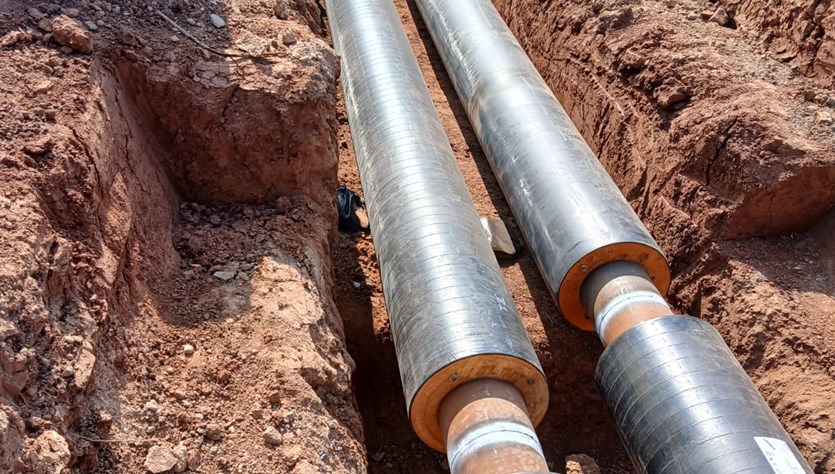
    Diversion Run

    The new 300m section of heat network being installed.

    Solution detail

    VE: If you get the invitation to tender right, does that solve many of the technical challenges?

    DB: It certainly helps. We don’t use external cost consultants; we estimate project values ourselves and apply to our special projects team for funding.

    Our framework contractors have already met the necessary standards, and the ITT documents set out the scope of works, specifications, and procedures. We assess bids on both price and quality.

    There’s always a temptation to go for the cheapest option, but that can cost far more in the long term. Especially with district heating systems, it’s important to have the right expertise… you need absolute confidence that your contractor knows what they’re doing.

    VE: How would you rate Vital’s approach?

    DB: You met every single expectation, and in some cases, you went above and beyond, which was great to see.

    VE: You’ve managed your heat network successfully for over 25 years now. What advice would you give to organisations just starting out?

    DB: Technically, I’d say build resilience into your design. Our network is designed so we can isolate certain branches and redirect heating through others. That means we can shut down parts of the system while still delivering service elsewhere, which is a big help during reconfiguration works.  You can’t overstate the importance of resilience.

    More broadly, build strong relationships with your contractors. There’s real comfort in knowing you’re working with professionals you can trust.

    Finally, don’t focus solely on price… aim for value. Budgets are tight, and value for money is essential, but long-term infrastructure has to last. Choosing the cheapest option can cost far more in maintenance, repairs, and operational issues later.

  • Vital Energi Supports Rural Mobile Library’s Life-Saving Mission

    Vital Energi Supports Rural Mobile Library’s Life-Saving Mission


    Vital Energi Supports Rural Mobile Library’s Life-Saving Mission

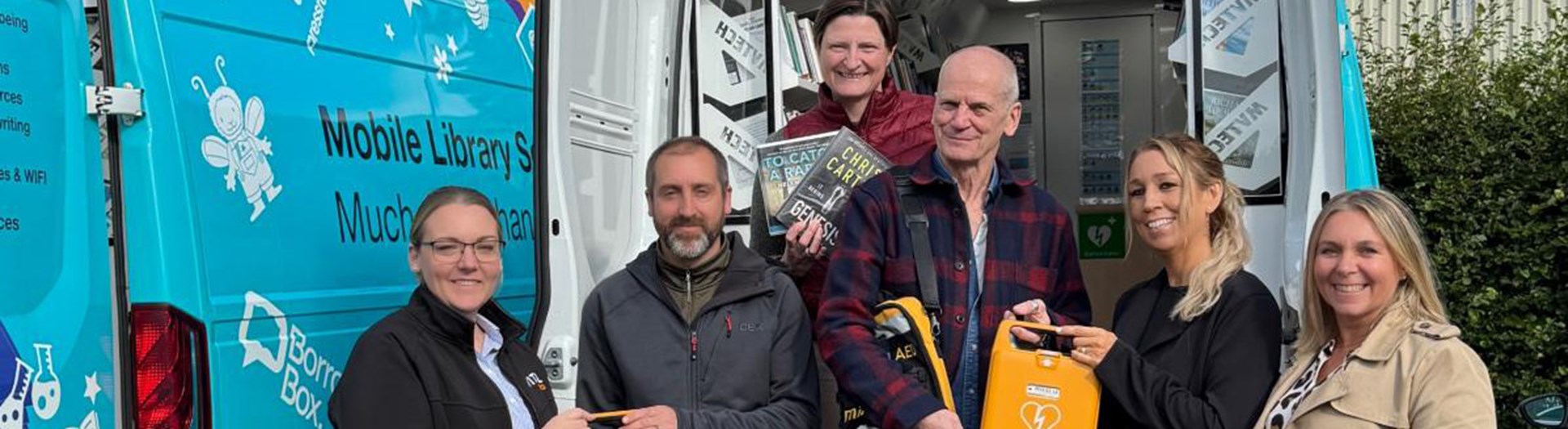
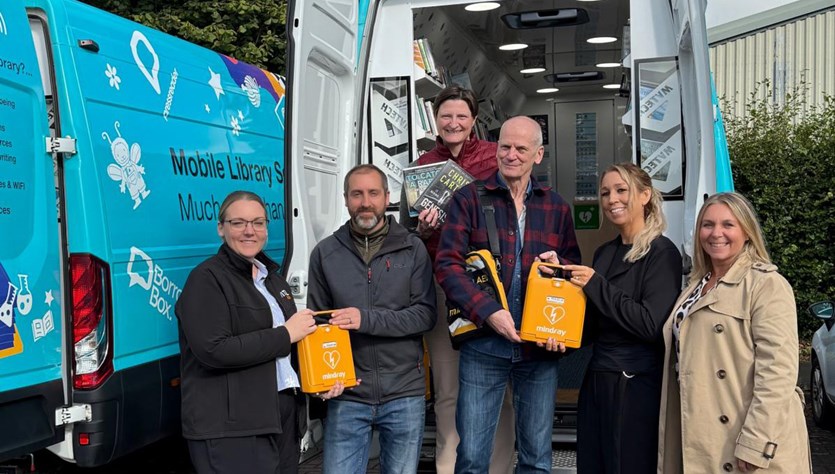
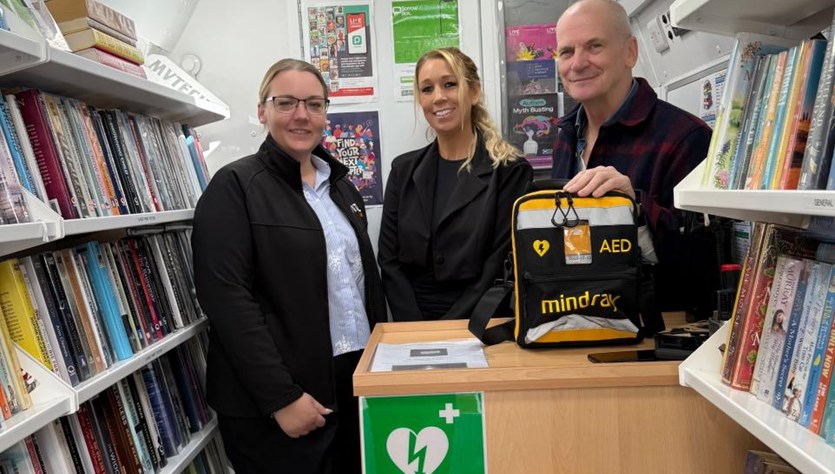
    Our work brings us into contact with some amazing organisations who are supporting their communities and we recently got the opportunity to support an innovative partnership between NHS Borders and Live Borders, which aims to save lives by fitting defibrillators into their mobile community vans which travel to some of the most remote areas of Scotland.

    Alongside our partners OCAD, James Ramsay, and Excalibur Energy, we have fully funded two potentially lifesaving defibrillators, ensuring critical emergency response capability for some of the most rural and remote areas in the Scottish Borders.

    Use 3

    We worked with our partners,OCAD, James Ramsay, and Excalibur Energy, to fully fund two potentially defibrillators, supporting the innovative partnership between NHS Borders and Live Borders.

    Solution detail

    This is a fantastic example of community spirit and corporate responsibility coming together to make a real difference. We’re incredibly grateful to everyone who donated and to Vital Energi for stepping in to help Live Borders complete this important project.”

    Councillor Carol Hamilton, Executive Member for Housing and Culture

    Defibrillators save lives. Every year in the UK, over 30,000 people suffer an out-of-hospital cardiac arrest, yet quick CPR and defibrillation can more than double the chance of survival. As highlighted by the British Heart Foundation, community access to these devices remains unequal, but deploying them in public spaces, like mobile library vans, means help can reach those who need it most.

    In addition to the purchase of defibrillators, local donations of over £300 will fund essential staff training and maintenance to keep these defibrillators ready for emergencies.

    Lisa Martin, Social Value & Customer Care Manager, Vital Energi explains, “We’re extremely proud to support this initiative, which aligns with our commitment to improving community wellbeing.  Providing defibrillators for mobile library vans supports NHS community anchor strategy and ensures lifesaving equipment is available where it’s needed most, and we’re pleased to play a part in making that happen.”

    We’ve been working with NHS Borders to revolutionise the energy infrastructure at Borders General Hospital and delivered a range of improvements such as improvements to the lighting, HVAC, valves, building management systems, and insulation of pipework across the hospital and satellite sites.  Additionally, we installed a 680 kWp solar array, helping generate clean, renewable energy and making the health board more self-sufficient in the long term

    Catriona McAllister, Chief Executive of Live Borders said, “The installation of defibrillators in our mobile library vans is a powerful step forward in making lifesaving equipment accessible to the communities we serve. These vans travel to some of the most rural and remote parts of the Borders, and having emergency response capability on board could truly mean the difference between life and death.”

  • The Customer Experience… Connecting to a Heat Network

    The Customer Experience… Connecting to a Heat Network


    The Customer Experience… Connecting to a Heat Network

    Heat networks can be an unfamiliar technology and connecting onto one can come with some concerns… We recently sat down with Tredegar Primary School’s Head Teacher, Jenny Thomas, to find out her pre-project fears, how the process went and what advice she has for others connecting to a heat network.

    I believe you had some concerns about your school connecting to the heat network.  Could you talk us through them?

    My main concern was around footpaths being closed and this leading to a drop in attendance at the school.

    What was your actual experience of connecting to the heat network and did those concerns occur?

    Vital Energi spent time meeting with me to eliminate any concerns. The team worked with me to remove any barriers. I had confidence that I could call a member of the team to discuss any potential issues, knowing that I would get a response quickly.

    How do  you feel we did at listening to you, taking on board your knowledge of the school and how it works so we could better deliver the project?

    I think the team did very well. They were very strategic in their approach, and we worked together on important dates for the school. At the time, the school was going through some structural changes, so we had builders on site. The Vital Energi team were keen to get all stakeholders involved in meetings to avoid any disruption.

    Jenny & Richard Marchant Landscape

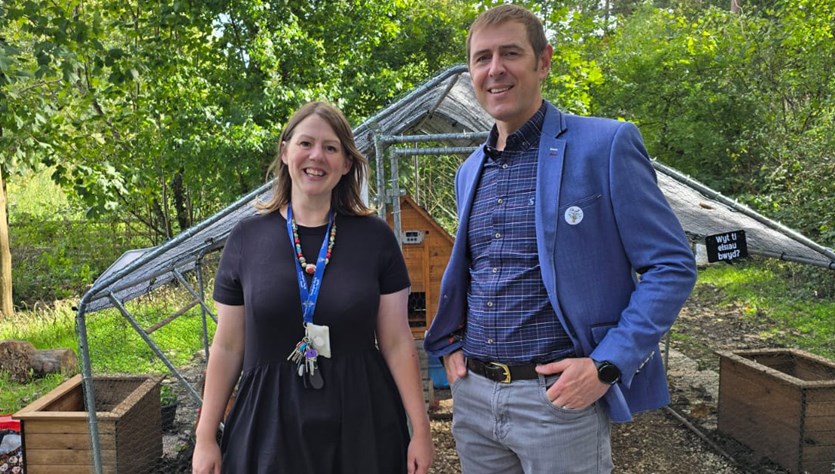
    Jenny Thomas, Head Teacher at Tredegar Primary School and Richard Marchant, Vital Energi’s Operations Manager at the opening of the school’s new Nurture Park.

    Solution detail

    Vital Energi spent time meeting with me to eliminate any concerns. The team worked with me to remove any barriers. I had confidence that I could call a member of the team to discuss any potential issues, knowing that I would get a response quickly.

    Jenny Thomas – Head Teacher, Tredegar Primary School

    How were we at communicating with you, your staff and parents?

    It was great to have a local team member in the Project Manager Richard. This meant that our community could relate to the organisation. The team did everything possible to get important information known to the community.

    We often speak of our clients as partners.  Do you think we lived up to this when connecting you to the heat network?

    Most definitely.

    Can you think of any instances where we went the extra mile to help?

    On occasion, we suffer from anti-social behaviour. There was one occasion when the safety barriers (adjacent to the main car park gates) had been torn down. When I arrived at school in the morning, I knew that this was going to cause issues as we have car parking problems in the area as well as the build-up of pedestrians trying to access the site. I phoned up a team member and within 20 minutes, someone was on site sorting out the issue. This meant that the school day wasn’t impacted, and I could tick one issue off my list straight away.

    How does it feel to know your school is now lower carbon?

    I know that this is a big target for Newport City Council so it’s great to know that we are contributing to their aims.

    What advice would you give to someone who’s considering connecting to a heat network?

    Connect with the team to find out all the information you need. They will take the time to go through the finer details with you.

    Looking back, how do you feel the process of connecting to a heat network went?

    The process went much better than expected. It’s not often I say that, so this is a great achievement! Thank you!

    IMG 20250916 WA0018

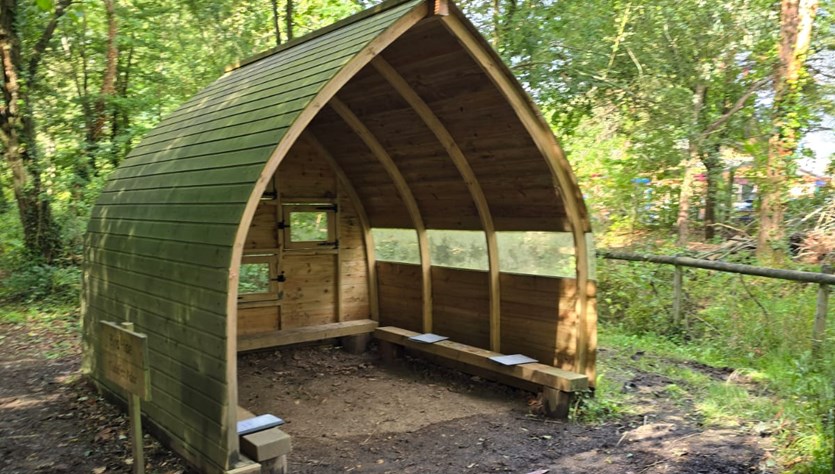
    One of the new outdoor spaces created for the Nurture Farm, part funded by Vital Energi, which promotes active learning.

    Solution detail

  • Candid Conversation… Power of Connection

    Candid Conversation… Power of Connection


    Candid Conversation… Power of Connection

    We know that the strength of our business comes down to the strength of our relationships with our clients, our teams, and each other.

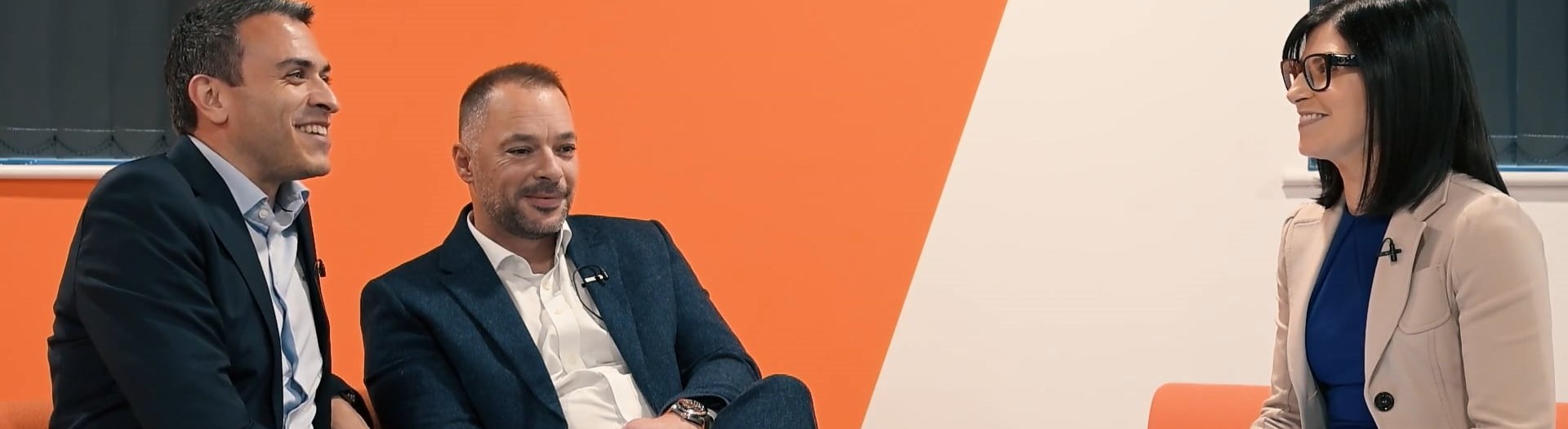
    This Mental Health Awareness Day, we’re highlighting the value of connection, trust, and having someone to talk to through an honest conversation between Andrew Whitelock, Commercial Director, and Scott Lutton, Regional Director (North & Scotland).

    Over the past decade, the two have built a working relationship that’s grown into a genuine friendship. Together, they reflect on what it means to lead with empathy, how a strong moral compass builds trust, and why the best teams are built on honesty and support.

    It’s a reminder that success and leadership isn’t just about strategy or delivery it’s about people.

  • Energy Centre Opening Marks New Green Chapter for Liverpool Waterfront

    Energy Centre Opening Marks New Green Chapter for Liverpool Waterfront


    Mersey Heat Opening Marks New Green Chapter for Liverpool Waterfront

    Mersey Heat Energy Centre Officially Opens

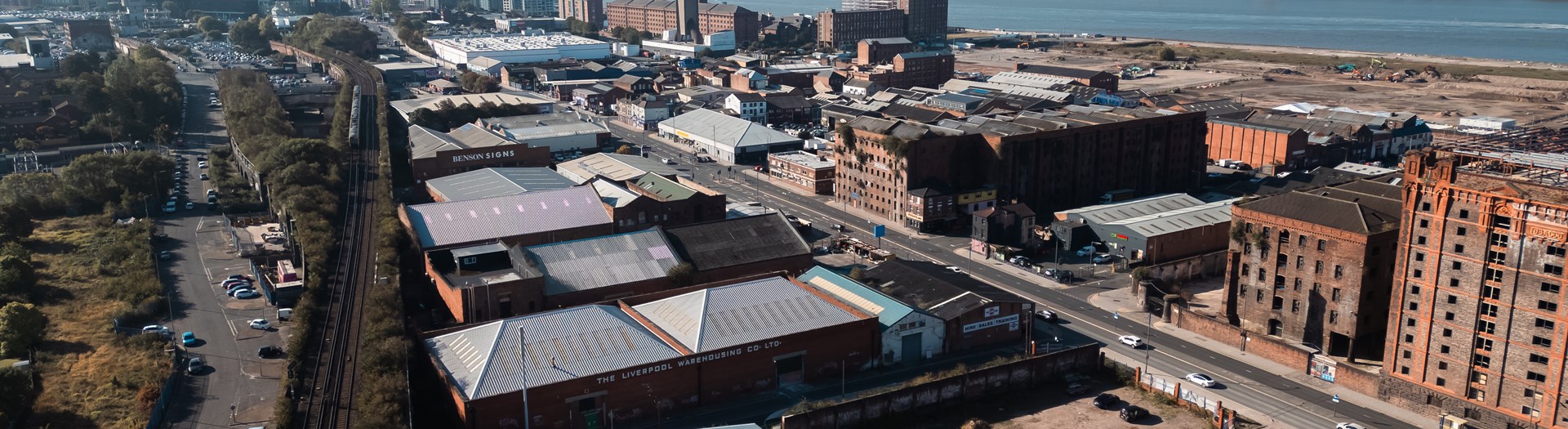
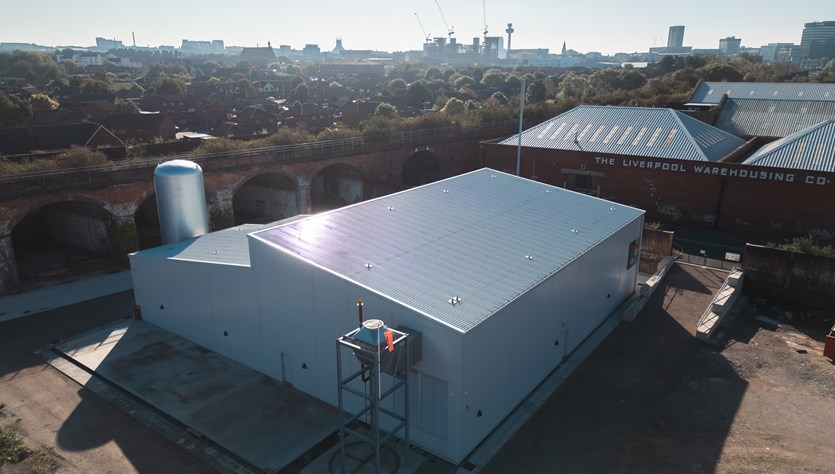
    The Mersey Heat Energy Centre has officially opened and, in a North West first, will now begin heating the multi-billion-pound Liverpool Waters Development with heat extracted from the Leeds/Liverpool Canal.

    This milestone marks a new phase in the Mersey Heat Network, bringing low-carbon heating to the people, businesses and buildings of Liverpool.

    The project is now serving well-known properties such as the Titanic Hotel and Tobacco Warehouse, and looking ahead, the network has the potential to serve up to 17,000 homes across Liverpool.

    The event was hosted by Ener-Vate, trusted commercial consultants in the low-carbon energy sector and lead developer of the scheme on behalf of The Peel Group, leading investors in infrastructure, transport, and real estate. We’re proud to have formed a collaborative partnership with both organisations to deliver this latest addition to Liverpool’s low-carbon infrastructure.

    Since we were appointed in 2019 to design, build, and maintain the project, the team has made remarkable progress, working in partnership to complete the state-of-the-art energy centre, and its supporting heat network.

    However, our efforts extend beyond construction. From the outset, community engagement has been a core priority and will remain so through the next phases and beyond.

    The official opening was marked by the presence of key stakeholders, including Councillor Liam Robinson, leader of Liverpool City Council, and Councillor Anthony Burns, Leader of St Helens Borough Council and Net Zero Cabinet Leader for the Liverpool City Region, who attended to witness and celebrate the milestone event.

    For more information on the technologies used on the project, take a look at the case study here.

  • Gosod Paneli Solar bron wedi’i gwblhau yn Fferm Solar 6MW Coed-elái

    Gosod Paneli Solar bron wedi’i gwblhau yn Fferm Solar 6MW Coed-elái


    Gosod Paneli Solar bron wedi’i gwblhau yn Fferm Solar 6MW Coed-elái

    This article is also available in English by clicking here.
    Lai na phum mis ar ôl i’r gwaith adeiladu ddechrau’n swyddogol ar Fferm Solar Coed-elái, mae Cyngor Rhondda Cynon Taf, Bwrdd Iechyd Prifysgol Cwm Taf Morgannwg, a Vital Energi yn dathlu filltir arwyddocaol wrth i’r olaf o’r 9,400 o baneli solar gael eu gosod mewn pryd ar gyfer Diwrnod y Ddaear a gynhelir ar Ebrill 22, 2025.

    Mae’r fferm yn chwarae rhan sylweddol yn natgarboneiddio’r cyngor gan y bydd yn allforio 5MW o drydan glân i’r grid, ond bydd hefyd yn helpu i leihau allyriadau Bwrdd Iechyd Prifysgol Cwm Taf Morgannwg gan y byddant yn derbyn 1MW o bŵer carbon isel drwy gytundeb prynu pŵer arloesol.

    Mae’r fferm solar wedi’i lleoli ar hen safle glofa ac yn cael ei darparu gan Gyngor Bwrdeistref Sirol Rhondda Cynon Taf mewn partneriaeth â Vital Energi, Hydrock, a Rhomco. Mae’n fenter graidd i helpu’r cyngor i gyrraedd ei dargedau carbon niwtral erbyn 2030.

    Mae thema Diwrnod y Ddaear eleni, ‘Ein Grym, Ein Planed’, yn ceisio ynni adnewyddadwy. Gyda’r gosodiad paneli solar bron wedi’i gwblhau, dyma’r amser perffaith i ddathlu’r cyflawniad hwn. Mae’n ysbrydoledig i weld mentrau tebyg ledled y byd, tra’n ein gyrru tuag at blaned lanach. Rydyn yn falch i fod yn rhan o’r symudiad hwn.”

    Cynghorydd Tina Leyshon, Cyngor Rhondda Cynon Taf

    Meddai’r Cynghorydd yn parhau.“Trwy gyflenwi trydan carbon isel i Ysbyty Brenhinol Morgannwg, rydyn ni’n helpu i leihau ei ôl troed carbon, gan wneud y prosiect hyd yn oed yn fwy buddiol a chyflenwi ein GIG lleol yn uniongyrchol.”

    “Yn ogystal â hynny, gan nad yw’r domen lo wedi’i hadfer, sydd ar y safle, yn addas ar gyfer amaethyddiaeth, mae’r prosiect yma’n dangos sut y gall tir gael ei ailbwrpasu ar gyfer ynni glân wrth fod yn gymorth i fioamrywiaeth ar yr un pryd. Bydd hawliau pori anifeiliaid yn parhau, gan ddangos bod prosiectau ynni solar yn gallu bodoli ochr yn ochr â ffermio i wella bioamrywiaeth.”

    “Rydym wrth ein bodd y bydd yr ysbyty cyfan yn cael ei bweru gan ynni’r haul ar ddiwrnodau brig yr haf. Bydd hyn yn cael effaith gadarnhaol sylweddol ar ein hymrwymiadau datgarboneiddio a ‘Green CTM’ a sut y gallwn ddarparu gofal iechyd mewn modd cynaliadwy ar gyfer cenedlaethau’r dyfodol. Fodd bynnag, nid yw’r cynllun hwn yn ddiwedd y stori yn Ysbyty Brenhinol Morgannwg, a byddwn yn darparu mwy o ynni adnewyddadwy a thechnolegau carbon isel yn y dyfodol i ddatgarboneiddio gofynion ynni’r ysbyty ymhellach.

    Dywedodd Linda Prosser , Bwrdd Iechyd Prifysgol Cwm Taf Morgannwg

    Hyd yn hyn, mae’r prosiect wedi creu deg swydd leol ac wedi cynhyrchu dros £600,000 o wariant gyda busnesau a chyflenwyr lleol. Mae’r tîm hefyd yn gweithio’n galed i wella bioamrywiaeth drwy blannu perthi a gosod pyst gwenyn, blychau adar, a blychau ystlumod.

    Bydd Fferm Solar Coed Elái yn darparu digon o ynni i bweru tua 8,000 o gartrefi bob blwyddyn tra’n cyflenwi trydan carbon isel yn uniongyrchol i Ysbyty Brenhinol Morgannwg drwy rwydwaith gwifrau preifat dros dri chilometr. Mae’r dull arloesol hwn yn sicrhau bod hyd at 15% o alw blynyddol yr ysbyty am drydan yn cael ei ddiwallu’n gynaliadwy gan godi i 100% ar ddiwrnodau brig yr haf.

  • Coed-Ely Solar Farm now powering Royal Glamorgan Hospital

    Coed-Ely Solar Farm now powering Royal Glamorgan Hospital


    Local Power for Local Care: Coed-Ely Solar Farm now powering Royal Glamorgan Hospital (1)

    Mae'r dudalen hon ar gael yn y Gymraeg yma.

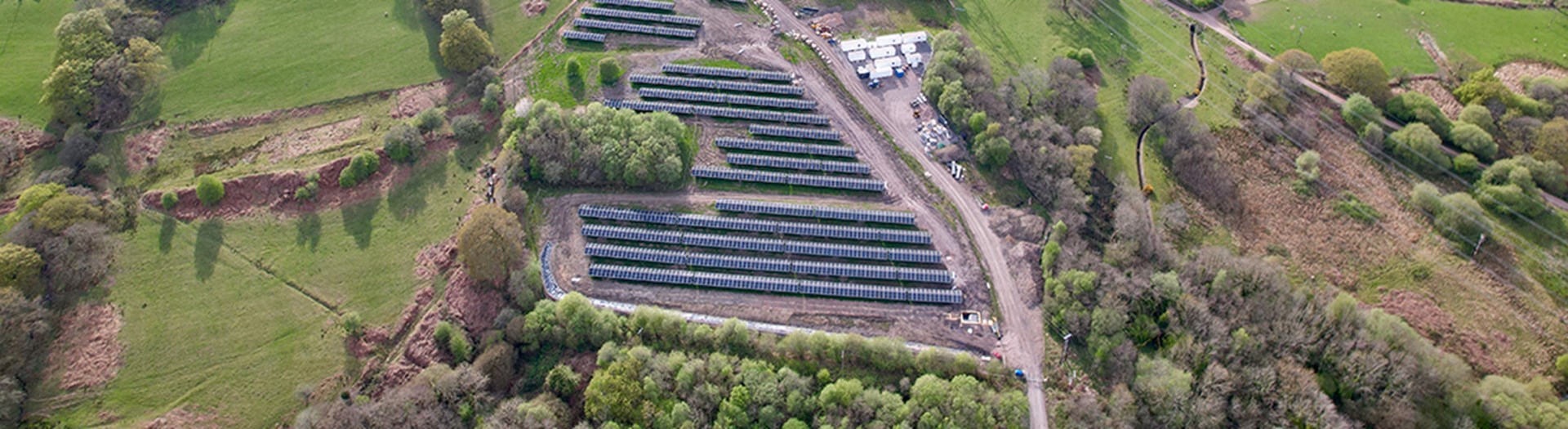
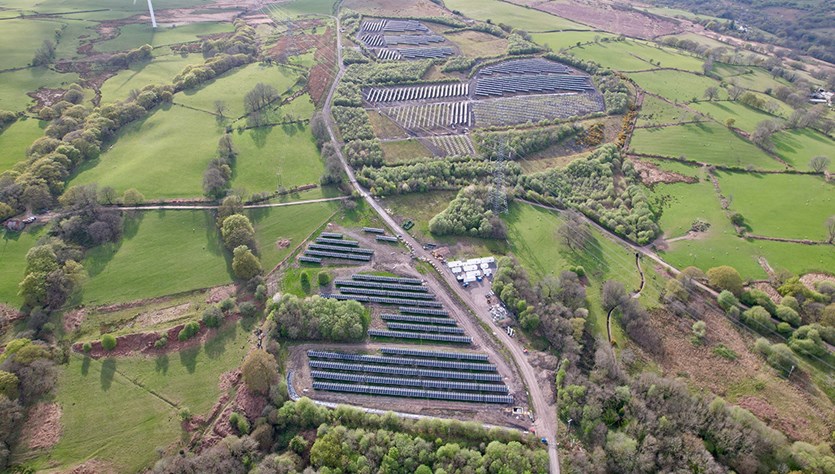
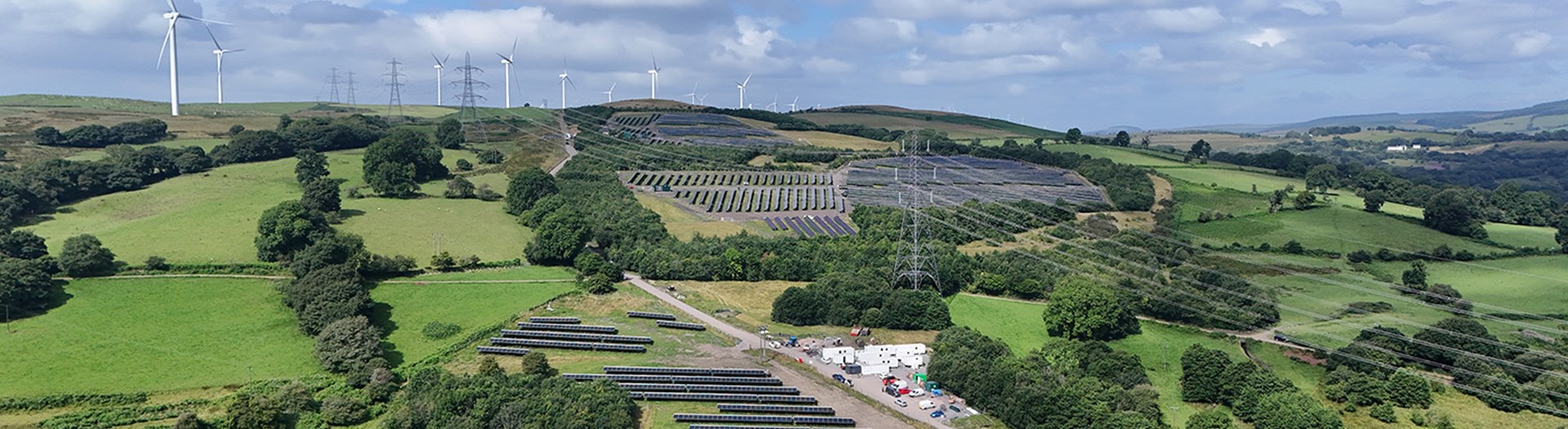
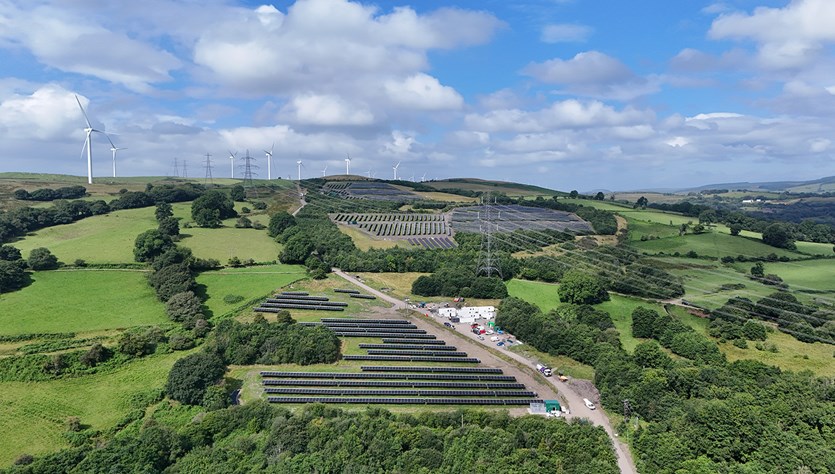
    The Coed-Ely Solar Farm is now officially switched on and supplying electricity directly to the Royal Glamorgan Hospital. This means that one of our most vital public services is being powered by energy generated right here in our community.

    Built on a reclaimed colliery site, the solar farm features 9,000 panels and produces enough electricity to power around 1,800 homes each year, and as well as powering homes, that energy is helping keep the lights on, machines running, and care flowing at the Royal Glamorgan Hospital.

    Further to this, the project has created local jobs and generated over £600,000 in spending with local businesses and suppliers. It’s a major step forward in making vital public services more resilient and less dependent on unpredictable energy markets.

    The Coed-Ely Solar Farm was jointly funded by Rhondda Cynon Taf County Borough Council, the UK Government through the UK Shared Prosperity Fund (UKSPF), and part-funded by the Welsh Government.

    DJI 20250724102427 0695 D Copy

    The solar farm will export electricity to the grid as well as supplying 1MW of electricity to Royal Glamorgan Hospital.

    Solution detail

    This milestone sees all the hard work pay off as the Royal Glamorgan Hospital receives its first boost of power from the Coed-Ely Solar Farm. This ambitious project is providing a unique opportunity to deliver energy for the benefit of our communities. Any electricity generated that is not used by the hospital is fed into the National Grid, helping strengthen the UK’s overall energy security. But ‘local’ is at the heart of this project, local power and local impact.

    Councillor Ros Davis, Cabinet Member , Rhondda Cynon Taf County Borough Council

    Mark Williams, Vital Energi’s Partnerships Director, said:  “Seeing clean, low-carbon energy transmitted to Royal Glamorgan Hospital is more than just a technical achievement, it’s a demonstration of how the public sector can collaborate to achieve its net zero goals.  This is another fantastic addition to Wales’s low-carbon energy infrastructure and one which will contribute to a cleaner, more sustainable future for everyone.

    “We’d like to congratulate Rhondda Cynon Taf County Borough Council on a visionary scheme which created a template for collaboration which can be replicated throughout Wales and beyond.”

    The Coed Ely Solar Farm was constructed on a reclaimed colliery site, turning 84 acres of former industrial land into a renewable energy asset for the region. As one of the largest local-authority solar projects in Wales, it generates enough clean energy to power around 8,000 homes annually while contributing 5MW to the grid.

    Claire Thompson, Executive Director of Strategy and Transformation, said, “This is a landmark moment for our health board and for the Royal Glamorgan Hospital. The switch-on of solar energy is more than just a technical achievement – it’s a symbol of our commitment to delivering healthcare in a sustainable, forward-thinking way.

    “We’re proud to be part of a project that not only reduces our carbon footprint but also strengthens our partnership with Rhondda Cynon Taf Council and Vital Energi. This is just the beginning of our journey toward a greener future.

    “A heartfelt thank you to all our colleagues whose dedication and hard work made this milestone possible.”

  • Fferm Solar Coedelái bellach yn pweru Ysbyty Brenhinol Morgannwg

    Fferm Solar Coedelái bellach yn pweru Ysbyty Brenhinol Morgannwg


    Pŵer Lleol ar gyfer Gofal Lleol: Fferm Solar Coedelái bellach yn pweru Ysbyty Brenhinol Morgannwg

    This article is also available in English by clicking here.
    Mae Fferm Solar Coedelái bellach wedi’i throi ymlaen yn swyddogol ac yn cyflenwi trydan yn uniongyrchol i Ysbyty Brenhinol Morgannwg. Mae hyn yn golygu bod un o’n gwasanaethau cyhoeddus pwysicaf yn cael ei bweru gan ynni a gynhyrchir yma yn ein cymuned.

    Mae’r fferm wedi’i hadeiladu ar safle glofa wedi’i adfer, mae’r fferm solar yn cynnwys 9,000 o baneli ac yn cynhyrchu digon o drydan i bweru tua 1,800 o gartrefi bob blwyddyn, ac yn ogystal â phweru cartrefi, mae’r ynni hwnnw’n helpu i gadw’r goleuadau ymlaen, peiriannau’n rhedeg, a gofal yn llifo yn Ysbyty Brenhinol Morgannwg.

    Mae’r prosiect wedi creu swyddi lleol ac wedi cynhyrchu gwariant gwerth dros £600,000 gyda busnesau a chyflenwyr lleol. Mae’r garfan wedi gweithio’n galed i wella bioamrywiaeth trwy blannu gwrychoedd a gosod pyst gwenyn, blychau adar a blychau ystlumod ochr yn ochr â’r Fferm Solar.

    Cafodd Fferm Solar Coedelái ei hariannu ar y cyd gan Gyngor Bwrdeistref Sirol Rhondda Cynon Taf, Llywodraeth y DU drwy Gronfa Ffyniant Gyffredin y DU, a’i hariannu’n rhannol gan Lywodraeth Cymru.

    Mae’r garreg filltir yma’n cynnwys gweld yr holl waith caled yn dwyn ffrwyth wrth i Ysbyty Brenhinol Morgannwg dderbyn ei hwb cyntaf o bŵer o’r fferm solar. Mae’r prosiect uchelgeisiol yma’n gyfle unigryw i ddarparu ynni er budd ein cymunedau. Bydd unrhyw drydan a nad yw’n cael ei ddefnyddio gan yr ysbyty yn cael ei fwydo i’r Grid Cenedlaethol, gan helpu i gryfhau diogelwch ynni cyffredinol y DU. Ond mae ‘lleol’ yn pwysig I’r prosiect hwn, pŵer lleol ac effaith leol.

    Cynghorydd Ros Davies,Aelod o’r Cabinet , Gyngor Bwrdeistref Sirol Rhondda Cynon Taf

    Meddai Mark Williams, Cyfarwyddwr Partneriaethau Vital Energi: “Mae gweld ynni glân, carbon isel yn cael ei drosglwyddo i Ysbyty Brenhinol Morgannwg yn fwy na chyflawniad technegol yn unig, mae’n dangos sut y gall y sector cyhoeddus gydweithio i gyflawni ei nodau sero net. Dyma ychwanegiad gwych arall at seilwaith ynni carbon isel Cymru ac un a fydd yn cyfrannu at ddyfodol glanach a mwy cynaliadwy i bawb.

    “Hoffen ni longyfarch Cyngor Bwrdeistref Sirol Rhondda Cynon Taf ar gynllun gweledigaethol a greodd dempled ar gyfer cydweithio y mae modd ei ailadrodd ledled Cymru a thu hwnt.”

    Adeiladwyd Fferm Solar Coedelái ar safle glofa wedi’i hadfer, gan droi 84 erw o hen dir diwydiannol yn ased ynni adnewyddadwy ar gyfer y rhanbarth. Fel un o’r prosiectau solar mwyaf awdurdod lleol yng Nghymru, mae’n cynhyrchu digon o ynni glân i bweru tua 8,000 o gartrefi bob blwyddyn wrth gyfrannu 5MW at y grid.

    Meddai Claire Thompson, Cyfarwyddwr Gweithredol Strategaeth a Thrawsnewid: “Dyma gam pwysig i’n bwrdd iechyd ac i Ysbyty Brenhinol Morgannwg. Mae troi ynni’r haul ymlaen yn fwy na chyflawniad technegol yn unig – mae’n symbol o’n hymrwymiad i ddarparu gofal iechyd mewn ffordd gynaliadwy, blaengar.

    “Rydyn ni’n falch o fod yn rhan o brosiect sy’n lleihau ein hôl troed carbon ac yn cryfhau ein partneriaeth â Chyngor Rhondda Cynon Taf a Vital Energi. Dim ond dechrau ein taith tuag at ddyfodol mwy gwyrdd yw hwn.

    “Diolch o galon i’n holl gydweithwyr y gwnaeth eu hymroddiad a’u gwaith caled y garreg filltir yma’n bosibl.”

    Ychwanegodd Matt Ace, Cyfarwyddwr Rhanbarthol Stantec yng Nghymru: “Roedd y prosiect uchelgeisiol yma yn gofyn am wybodaeth ofalus a helaeth ynghylch dylunio solar a chyflenwi pŵer, yn ogystal ag ymchwiliadau daearegol cymhleth a modelu economaidd dibynadwy. Rydyn ni’n falch o fod wedi bod yn rhan o garfan brosiect hynod gydweithredol a blaengar. Credwn fod y cynllun yma’n dangos yr hyn y gellir ei gyflawni pan fydd partneriaid cyhoeddus a phreifat yn rhannu gwydnwch, effeithlonrwydd ac arloesodd fel nodau cyffredin.”