Category: Uncategorized

  • Upcoming webinar

    Upcoming webinar


    Upcoming webinar: Why Smart Data is Central to Your Decarbonisation Strategy

    Join our free interactive webinar which discusses how smart data can be used to optimise your energy scheme and enhance your decarbonisation strategy, paving the way to net zero, on Tuesday 23 March from 2pm.

    Vital Energi advocate using smart data to inform strategy and help deliver the UK’s low carbon future and are proud to be providing organisations across the UK with innovative energy solutions to assist with their net zero ambitions.

    Submit your questions to our panel of housing and energy industry experts, who will share their smart data experiences and provide an insight into just how powerful smart data can be in shaping your decarbonisation strategy.

    Find out more about our panel and the topics they will be covering during the webinar.

    Introduction: The webinar will be chaired by Nicholas Doyle, Co-Founder of Chirpy Heat.

    Nicholas has worked in housing for nearly 30 years and has been responsible for award-winning housing, energy, and environmental initiatives nationally and internationally. In 2018 he was a Co-Founder of Chirpy Heat, the leading provider of services to housing providers on heat networks.

    Discussion: The route to decarbonisation and the importance of data with Vital Energi’s Head of Sales, Katy Lister, and Executive Consultant, Robin Feeley.

    With 20 years’ experience within the energy utilities industry, Katy provides innovative solutions for clients across Operations & Maintenance, Metering & Billing, Heat Interface Units, and Design & Build projects.

    Robin has worked in housing for over 16 years and has hands-on experience in housing management, maintenance, regeneration, and development. In 2013, Robin transformed L&Qs approach to sustainability by setting up ‘L&Q energy’, a commercial approach to energy and sustainability, which today operates 65 heat networks and provides heat to over 10,000 customers.

    Discussion: Enabling scalable smart data and funded metering & billing solutions with Mark Winn, Energy Sector Specialist at SMS Plc.

    With over 8 years’ energy industry experience, Mark has a demonstrable record in identifying and delivering cost-saving and avoidance solutions. In his role with SMS Plc, Mark’s focus is supporting Social Housing and Local Authority Landlords in decarbonising their stock and reducing the cost of electricity for tenants, whilst making sure the solution is compliant and effective.

    Discussion: Smart data, a Housing Association perspective with Nathan Rodwell, Energy Manager at social housing giant A2Dominion.

    A Member of the Institute of Residential Property Managers, Change Management Practitioner Nathan has worked in a variety of roles in Housing and Property Management for the last 10 years including A2Dominion’s business transformation process ‘Fit for the Future’. Nathan is very proactive in tackling issues relating to climate change.

    Discussion: The Power of Smart Data – Visibility, Building Tariffs and Control with Matthew Bailey, Director at Hodkinson Consultancy, who specialise in energy and environment.

    A Chartered Environmentalist and Member of the Energy Institute, Matthew is adept at ensuring large-scale energy and sustainability strategies can be effectively implemented. He combines detailed technical knowledge with an understanding of the legal and regulatory requirements for residential buildings, providing invaluable guidance for developers.

    If you would like to join our webinar and explore more about how smart data can inform your decarbonisation journey – please register here.

    This will be an interactive question and answer led event. If you have a question for any of the panelists please email them to [email protected] by 5pm on Monday 22nd March.

  • Vital Energi set to deliver bespoke renewable energy apprenticeships

    Vital Energi set to deliver bespoke renewable energy apprenticeships


    Vital Energi collaborate with The City of Liverpool College to deliver bespoke renewable energy apprenticeships

    Vital Energi are delighted to be working in collaboration with The City of Liverpool College to deliver bespoke renewable energy and heat network apprenticeship programmes.

    The new apprenticeship programmes demonstrate Vital’s commitment to developing the key industry skills required to achieve net zero and create a sustainable workforce for the future.

    Having pledged to recruit 20 apprentices across the UK, Vital are proud to be joining forces with The City of Liverpool College, which will deliver the curriculum from the £2m state-of-the-art Training Academy located at Vital’s Blackburn headquarters, for two pathways: Craft and Technical.

    Both pathways will take apprentices on an energy journey where they will learn and work within the renewable energy and heat networks market. They will discover how energy is generated and distributed, and how to manage and reduce consumption for residential and commercial clients. Apprentices will also learn how carbon emissions are reduced through Vital’s renewable technologies and the innovative products they have developed.

    The programmes will be delivered via a blended mix of virtual online teaching and a minimum of 25 days curriculum learning each year within the Training Academy. Apprentices will spend the majority of their time on-site working on exciting projects, where they will pick up a wealth of skills through hands-on experience and support from Vital’s experienced and knowledgeable team.

    Vital Energi’s Managing Director for the North & Scotland, Mike Cooke, completed an apprenticeship at The City of Liverpool College and he believes this formed a great foundation for his successful career path.

    “I loved the apprentice programme at The City of Liverpool College,” said Mike. “At 18 years old this was my first opportunity to experience independence and life in the city. My apprenticeship provided me with social, interpersonal, and technical skills which have been the platform of my career, and even though the pay was significantly less than Vital’s offer today, I’ve been able to progress through my career without being saddled with tuition fees and student loans. A real and genuine upside.”

    Liverpool City Region has an ambition to reach net zero carbon by 2040 and The City of Liverpool College is focussed on developing its curriculum around the needs of industry, creating a workforce for the future by developing the skills needed to enter the world of work in sustainable careers.

    Sophie Park, Director of Workforce Skills at The City of Liverpool College, said:

    “Our partnership with Vital Energi is built on the knowledge and skills of its engineers and our innovative curriculum leaders at The City of Liverpool College. Working with progressive, exciting organisations such as Vital Energi helps us to continue to innovate and provide our students with the skills they need to enter the workforce and forge successful, sustainable careers.

    “This new state of the art training centre will play an essential role in developing the skills needed to deliver our low carbon future.”

    “Vital are forward-thinking, agile and strategic in the deployment of our resources. As we emerge from the Covid-19 pandemic, 2021 creates an opportunity to support apprentice recruitment and shape the workforce of the future, enabling a journey to net zero for our customers and the UK as a whole. “We’re really excited to be working with The City of Liverpool College to deliver our new renewable apprenticeships, and we’re looking forward to welcoming our first cohort in September.”

    Mike Cooke, Vital’s Managing Director for the North & Scotland

    During the three-year Craft programme, apprentices will study for a Level 3 Building Services Engineering Craftsperson qualification. They will learn a range of key skills from pipework fabrication and jointing techniques such as electro fusion jointing, to welding, the installation of plumbing and heating systems, and more.

    At the end of the Technical programme, apprentices will achieve a Level 3 Building Services Design Technician qualification, after developing their understanding of building services design principles.

    As well as using project management systems to ensure timeframes and budgets are adhered to, apprentices will work alongside the commercial team to understand contractual agreements and review the financial performance of a project, produce technical reports, plus more.

    Vital Energi are working on nationwide projects and are looking to recruit apprentices from all over the UK. The curriculum learning will take place in the North West, so depending on your location, this may require residential attendance which will be funded by the company.

    For more information about Vital Energi’s apprenticeship programmes, click here.

  • Vital welcome Chris Beckwith as new Construction Director

    Vital welcome Chris Beckwith as new Construction Director


    Vital welcome Chris Beckwith as new Construction Director

    We’re delighted to welcome Chris Beckwith as our new Construction Director for London and the South. With 30 years in the industry, Chris brings a wealth of construction expertise and is highly skilled in delivering complex projects in a logistically challenging environment.

    Tell us a bit about your construction experience and how long you’ve worked within this industry.
    I’ve worked in construction for 30 years, starting out as a trainee and progressing to Site Manager, running a number of projects in Central London. I moved into Contracts Management before becoming Construction Director. I’ve worked largely for tier one contractors throughout my career and have completed a large volume of complex and prestigious schemes for clients such as the Royal Household, De-Vere Hotels, Imperial College, and The Dorchester Collection.

    Where would you say your strengths lie?
    For most of my career I’ve worked on complex structural refurbishment projects commonly requiring façade retentions, core alterations and a high level of temporary works. These schemes provide a new challenge each day and enhance your approach to risk and the need to look well ahead in every aspect of the process.

    What project are you working on at the moment, and how is your expertise having an impact?
    I’m currently working on Energetik’s Meridian Water Heat Network (MWHN), which is a new Energy Centre and below-ground district heating network designed to supply very-low carbon heat and hot water to over 50,000 homes by capturing up to 60MW of unused energy generated at the NLWA’s Energy Recovery Facility. The site is located on a busy Eco-Park and is bound by three other construction projects and a live watercourse. The building accommodates most of the footprint of the site with towers up to 30m high which will require construction and cladding. There are continuous changes within the Eco-Park paired with moving targets of the projects around us, and my expertise has enabled us to successfully unravel a logistically challenged project within this ever-changing external environment.

    Why is this project different to other projects Vital have been working on?
    Within the London region, Vital’s focus has been on the exemplary design, installation, commissioning, and operation of energy centre fit out projects. The MWHN project serves to demonstrate the London team’s broadened ability to provide the full turnkey approach to energy centre builds.

    How does Vital compare to companies you’ve worked for previously?
    Vital listen to their clients and their staff, and do genuinely make improvements where possible. The internal teams thrive on collaboration, and the level of skill and experience within the business is some of the best I’ve seen. Vital strive to provide their clients the best service possible and work closely with them towards achieving net zero, and I’m really excited to play a part in the UK’s journey to decarbonisation.

    Welcome to the Vital team, Chris.

  • Mayoral Visit Gives Glimpse of Bristol’s Low Carbon Future

    Mayoral Visit Gives Glimpse of Bristol’s Low Carbon Future


    Mayoral Visit Gives Glimpse of Bristol’s Low Carbon Future

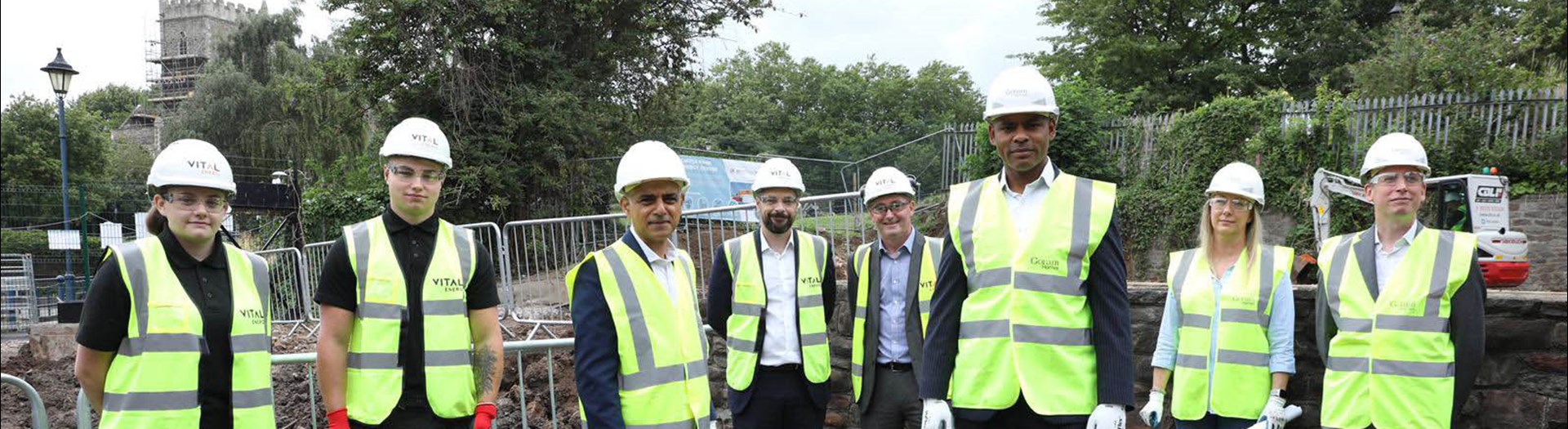
    Mayor of Bristol, Marvin Rees and Mayor of London, Sadiq Khan visited the site of the new Castle Park Water Source Heat Pump project which will revolutionise how the city generates low-carbon heat.

    The 3MW water source heat pump will be the largest project of its kind in England and will take water from the nearby floating harbour and use it to generate heat and hot water for local businesses and residents.

    The heat pump will be housed in an energy centre which will have a mixed-use development built above it.  When operational it will contribute low carbon heat to the Bristol Heat Network which already supplies over 1,000 properties.

    This project is an ambitious partnership between Bristol City Council and Goram Homes which will deliver rapid decarbonisation and make a substantial contribution to meeting their carbon reduction targets whilst delivering secure, affordable homes. This is a particularly exciting as large scale water source heat pumps are an underused renewable solution and this will be a fantastic showcase to demonstrate the carbon reductions they can generate.”

    Scott Lutton, Operations Director – North & Scotland

    Both mayors toured the site, received a project briefing from Project Director Hugh Thompson and learned more about how the heat pump will take water from the nearby harbour and convert it into useable heat and hot water.

    Find out more about the Castle Park project by watching the video below

  • Bristol Heat Network Set for a Lower-Carbon Future

    Bristol Heat Network Set for a Lower-Carbon Future


    Bristol Heat Network Set for a Lower-Carbon Future

    Bristol’s heat network will enter a new stage of decarbonisation when the Castle Park heat pump begins generating low-carbon heat and we’re delighted that the new year has brought a series of major milestones.

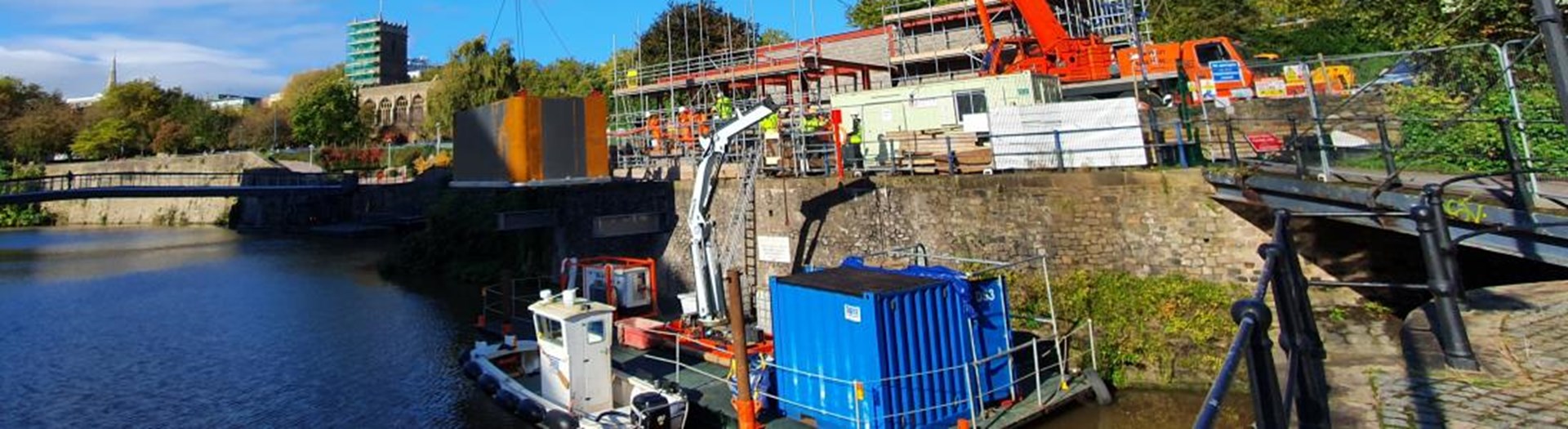
    The project team have so far installed the abstraction platform, which is responsible for the intake of harbour water, thermal store and, most recently, the delivery of the 32-tonne packaged plant room which will house the water distribution pumps, which circulate low carbon hot water from the water source heat pump within the energy centre.

    The Castle Park project represents a significant investment and is being delivered in partnership between Goram Homes, Bristol City Council and Vital Energi and will supply 3MW of green heat into the network which already supplies heating and hot water to 1,000 properties.

    This is a very exciting project as it demonstrates that you can harness the latest, cutting-edge technology and integrate it into existing heat networks. By using the latent heat in the harbour we can provide the people of Bristol with lower carbon heat and hot water and take another step towards making Bristol a net zero city.

    Scott Lutton, Operations Director North & Scotland, Vital Energi

    The 3MW water source heat pump will take water from the nearby floating harbour and use it to generate low-carbon heat and hot water for the residents of Bristol via the existing Bristol heat network.

    As part of the heat pumps development, people enjoying the north side of the park may notice warm air being ejected away from the energy centre. This is due to the installation of Dry Air Coolers which allow the heat from the pump to be dissipated into the air while the energy centre is being built. The scaffolding will be erected on the 28th Jan 2022, with the units being delivered and set up on the 31st Jan 2022. The units will be fenced off in the park and the warm air will be ejected away from the energy centre towards the north of the park. They will be there for approximately 6-8 weeks in total.

    More information on the Bristol City Council’s heat network can be found on their Energy Service website.

    Take a look at the progress pictures here

  • Helping accelerate Camden’s transition to a low carbon future

    Helping accelerate Camden’s transition to a low carbon future


    Innovative energy efficiency tool accelerates Camden’s transition to a low carbon future

    Vital Energi have partnered with Danfoss and Camden Council to reduce the carbon consumption at Oakshott Court through the installation of a revolutionary Leanheat artificial intelligent software technology which is paving the borough’s way to net zero.

    Thanks to their longstanding relationship with Camden Council, Vital Energi are trialling an energy efficiency tool which harnesses the power of digitalisation to optimise energy generation and consumption, and increase operational efficiencies.

    The heating network temperature will be regulated to target a maximum of 24 degrees within the flats which will make a positive difference to the lives of the 114 residents of Oakshott Court, a 1970s block of flats in Somers Town which is owned by the council, who until now have experienced overheating in the summer months due to constant heating. The council and residents will now benefit from reduced carbon emissions and lower building maintenance costs.

    Danfoss have acquired and continue to develop the intuitive Leanheat AI technology software which works with a built in weather compensation and predication tool, which will optimise the heating system water temperature to meet an ideal and comfortable ambient temperature across the flats. An outdoor weather sensor has also been installed to capture localised weather readings as part of the machine learning applied within the software.

    Vital Energi have installed the hardware products required for the Leanheat software to be able to take control of the building, which includes a hardwired controller within the plant room in the basement of Oakshott Court. They have undertaken minor system modifications to the existing secondary heating pipework to accommodate a new three port control valve and temperature sensors, as well as installing climate room sensors strategically within a number of the 114 individual flats to gain an accurate heat map of the block and monitor the temperature and humidity of each dwelling.

    The data from the climate room sensors is sent to a secured and encrypted cloud where, along with data from the internal sensors and outside weather sensors, readings are taken every 10 minutes and the AI software creates a new set point. A signal is then automatically sent to open or close the control valve where heating is fed into the building to ensure the correct temperature is maintained across the block.

    “We’re really pleased to be continuing our relationship with Camden Council and helping deliver their ambitious net zero target through the installation of future-proof energy solutions. The energy efficiency trial at Oakshott Court ensures optimum comfort and improved wellbeing of residents, and is another step towards communities across Camden benefitting from greener, more affordable heat and hot water.”

    Rob Callaghan, Managing Director of Vital’s London Division

    Danfoss’ Software Solutions Manager – District Energy UK, Soulla Paphitis, said:

    “Leanheat AI software is a revolutionary low cost and easy to implement solution which will drastically change the heating profiles of existing buildings. The aim is to reduce emissions and support the transition to net zero, ensuring minimal disruption to residents and making sure their comfort is met throughout the year.

    “Working with Vital and Camden has been a breath of fresh air, Vital have driven ahead with being innovative and client focused whilst Camden have maintained a clear focus of resident comfort and future strategy across all their housing stock.”

    Oakshott Court is connected to the existing Somers Town district heating network, which was designed and built by Vital Energi in 2014. The heat network delivers heat and hot water to the residents of Camden and was designed with expansion in mind, allowing additional buildings to be connected and for it to grow into one of London’s major heat networks.

  • Leeds PIPES Continues Expansion With Three New Major Connections

    Leeds PIPES Continues Expansion With Three New Major Connections


    Leeds PIPES Continues Expansion With Three New Major Connections

    The Leeds PIPES project has become one of the fastest expanding heat networks in the UK and the scheme is set to grow further with St James’s Hospital, Quarry House and Trinity Academy all announcing plans to connect to the network as part of Phase 3 works.

    The project has already seen 26.5km of district heating pipework installed across Leeds during the first two phases of work and phase 3 will see an additional 2km installed.

    The heat network distributes low-carbon heat from the nearby Recycling and Energy Recovery Facility (RERF), and delivers it to local residents, businesses and civic buildings.  The scheme already delivers significant carbon savings each year, and this is set to increase with the addition of the 3 new major connections.

    Since declaring a climate emergency we’ve made fantastic progress on delivering schemes and initiatives to reduce our carbon footprint. Not only is district heating a worthwhile investment to help combat climate change, but it is also a smart investment for the city too. These new connections mean that the network will return more to the council than it costs us—helping to protect vital frontline services.

    Councillor Helen Hayden, Leeds City Council Executive Member

    Mike Cooke, Managing Director for North and Scotland at Vital Energi, said:

    “Leeds PIPES is one of the most exciting heat networks in the UK.  Leeds City Council have demonstrated that cities can deliver massive, rapid decarbonisation as a way of meeting their climate emergency targets and this expansion will allow more organisations to utilise low-carbon heat, increase the efficiency of the network and deliver further carbon reductions.

    “Whilst the carbon savings are of massive importance, its contribution towards fighting fuel poverty can’t be overstated as Leeds City Council can now offer 1,983 homes more affordable heat and hot water.”

    In addition to delivering strong environmental benefits the Leeds PIPES project has supported 430 local, low-carbon sector jobs and 36 apprenticeships and continued safely throughout the pandemic.

    This will be the third time Vital Energi has worked with St James’s Hospital to deliver a carbon reduction project after previously delivering an upgrade to their energy centre and, more recently, installing a range of energy conservation and generation measures, such as air and water source heat pumps, to lower their carbon further.

    Martha Hart, Project Lead, Arup, said:

    “We are thrilled that the second phase of the Leeds PIPES project is now complete, bringing affordable, low-carbon heat to homes and businesses across the city and Leeds another step closer to carbon neutrality by 2030.”

  • New Manchester landmark shines a light on low carbon heat network

    New Manchester landmark shines a light on low carbon heat network


    New Manchester landmark shines a light on low carbon heat network

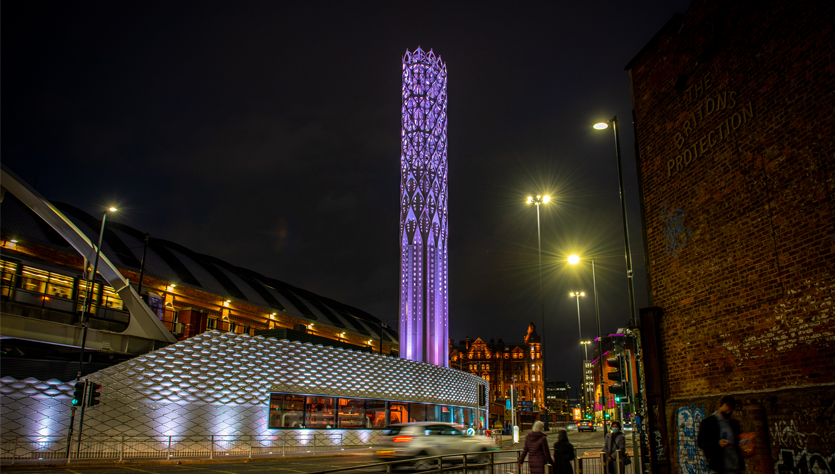
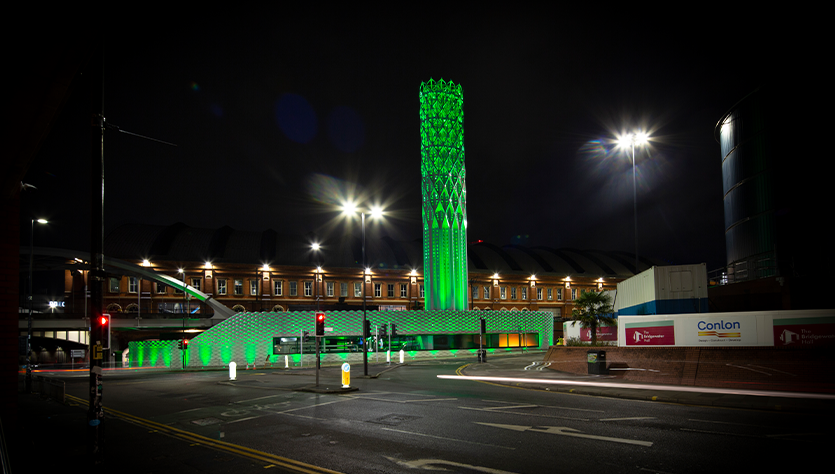
    Manchester’s new Tower of Light structure has been officially switched on, marking a milestone in the development of the city’s new Civic Quarter Heat Network. 

    Owned by the Council and built by Vital Energi, the focal point of the Civic Quarter Heat Network is the 40m Tower of Light, which will be lit up every night. The tower will be a striking new landmark in the city centre and be the most visible manifestation of the network, which will provide heating and electricity to some of Manchester city centre’s most iconic buildings. The network, which will go live early next year, will help them to reduce their carbon emissions and support the city’s transition to zero carbon by 2038.

    Using low carbon power generated in an energy centre located underneath the railway arches by Manchester Central, the network will serve the Bridgewater Hall, Manchester Central Convention Complex, Central Library, Heron House, Manchester Art Gallery and Manchester Town Hall and Town Hall extension buildings via 2km of underground pipes.

    And the network will also have the capacity to connect to other buildings in the vicinity – both existing and future, whether public or private-owned – helping them to reduce their carbon footprints too.

    “We’re delighted to be helping Manchester City Council transition to a low carbon future through the development of the Civic Quarter Heat Network. The installation of future-proof infrastructure will revolutionise how heat and power is distributed through the city. The flue’s innovative lighting scheme paired with the partially transparent ‘Wall of Energy’, which allows the public to catch a glimpse inside the energy centre, ensures the Tower of Light will become an iconic feature to Manchester’s skyline.”

    Mike Cooke, Vital’s Managing Director for the North & Scotland

    Councillor Tracey Rawlins, Executive Member for Environment for Manchester City Council, said:

    “The Civic Quarter Heat Network is a trailblazing system which demonstrates Manchester’s determination to cut our carbon emissions.

    “As a Council we are committed to playing our full part in limiting the impacts of climate change as the city strives to become zero carbon by 2038 – at least 12 years ahead of the national target.

    “It’s a complex challenge but ambitious projects such as this network show that we are taking action to rise to it. As well as looking beautiful, we hope that the Tower of Light will be a beacon for this kind of work.”

    The network has an efficient combined heat and power engine which captures and re-uses heat created as a by-product of producing electricity. Although initially fuelled by natural gas, there are plans to further reduce its carbon footprint as alternative measures and fuel supplies become available including the use of biomethane and the potential introduction of hydrogen into the fuel mix in 2024

    The project received Heat Networks Investment Project (HNIP) funding, which is delivered by Triple Point Networks Investment Management on behalf of the Department of Business, Energy, and Industrial Strategy (BEIS).

    Ken Hunnisett, Project Director for Triple Point Heat Networks, added:

    “The Heat Network Investment Project has awarded more than £250m to projects across England and Wales and while we love them all equally, few if any are as breathtakingly beautiful as Manchester’s magnificent Tower of Light which seems destined be one of the city’s most recognisable landmarks and an icon of its ambitious net zero strategy.

    “Many congratulations to everyone involved with the project on the achievement of this latest milestone.”

  • Progress at Beam Park

    Progress at Beam Park


    Progress at Beam Park

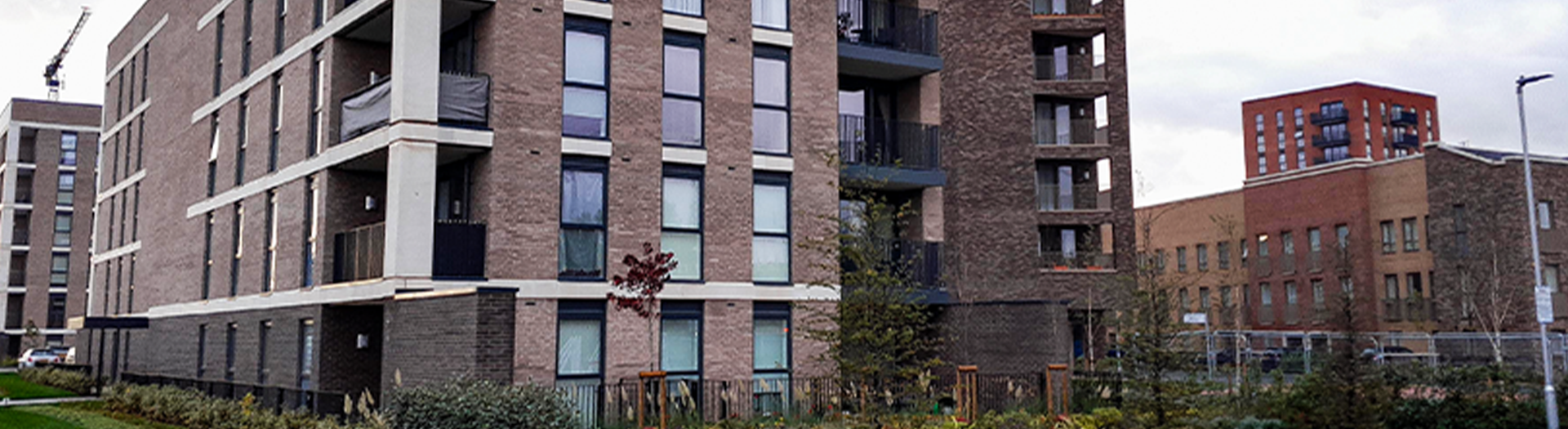
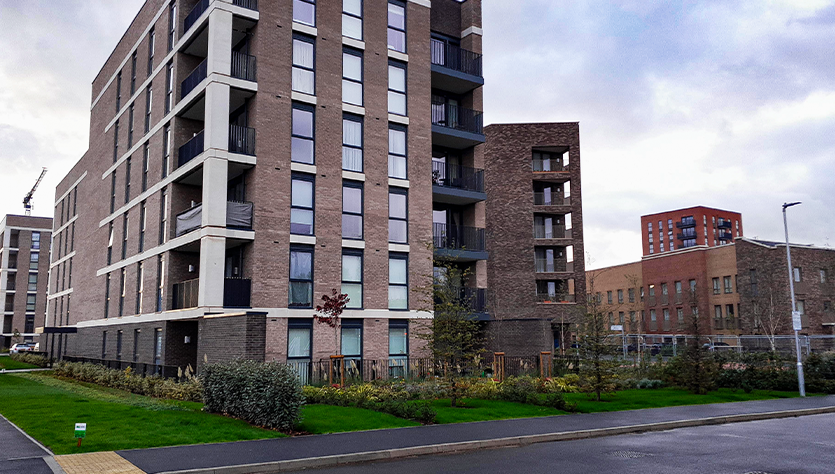
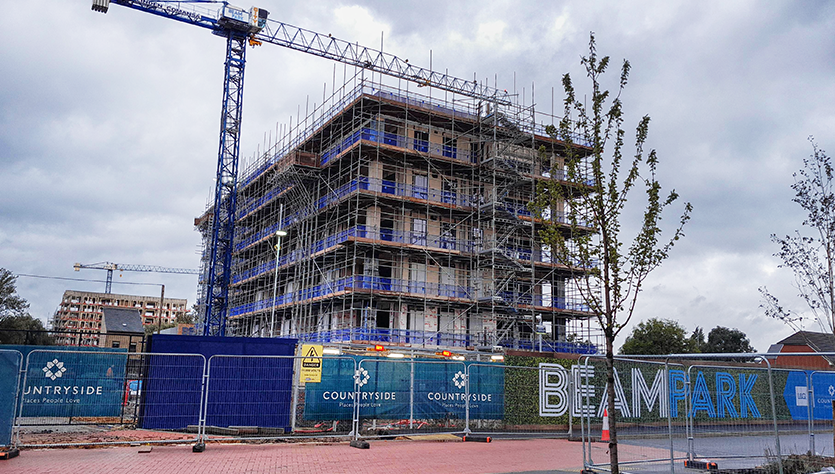
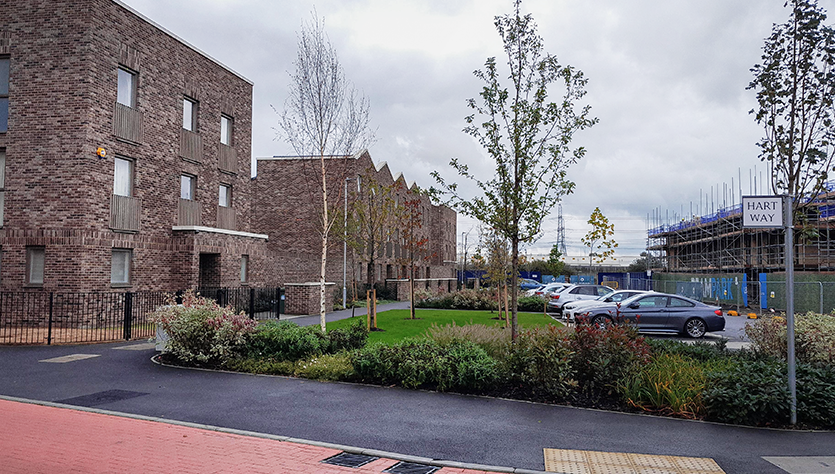
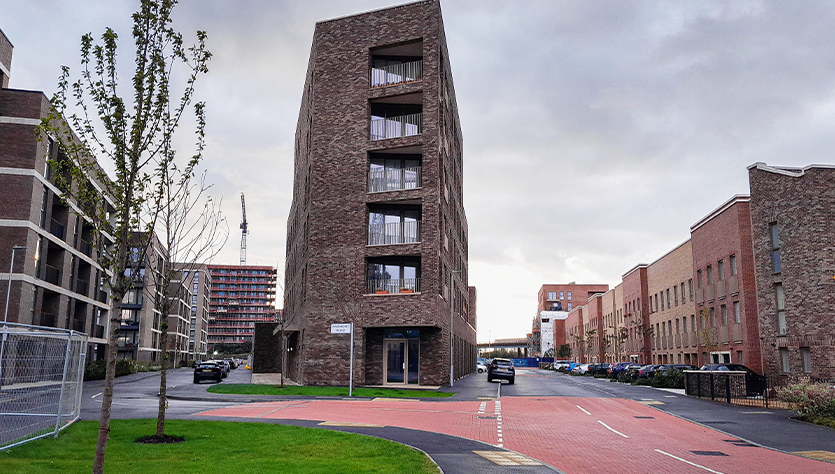
    Work is almost complete at Beam Park, where we’ve designed and installed an energy centre to supply sustainable heat and power to 1,200 homes, and we’ll soon be handing the keys over to our client, Countryside.

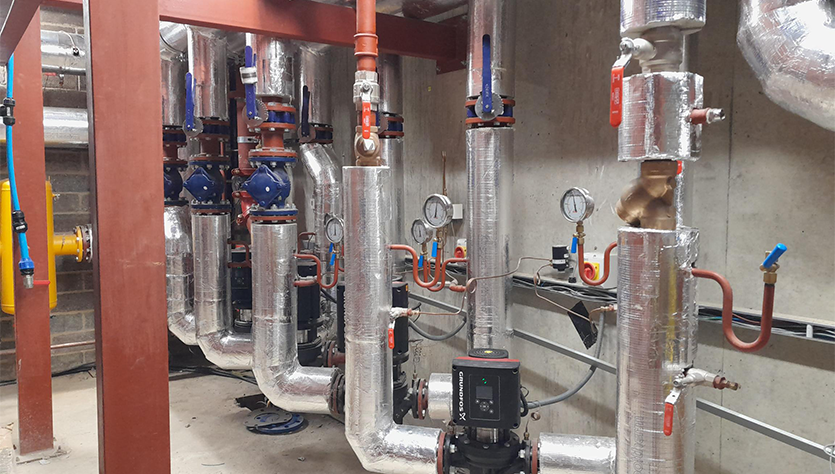
    We have installed all plant and equipment within the Energy Centre which includes 2no Bosch CHP and 6no Hoval gas fired boilers, LTHW and gas pipework. Flues have been installed to above roof level in Block L, in which the EC is situated (12 stories high), ventilation has 4no supply fans and 2no extract fans which have been ducted to their positions.

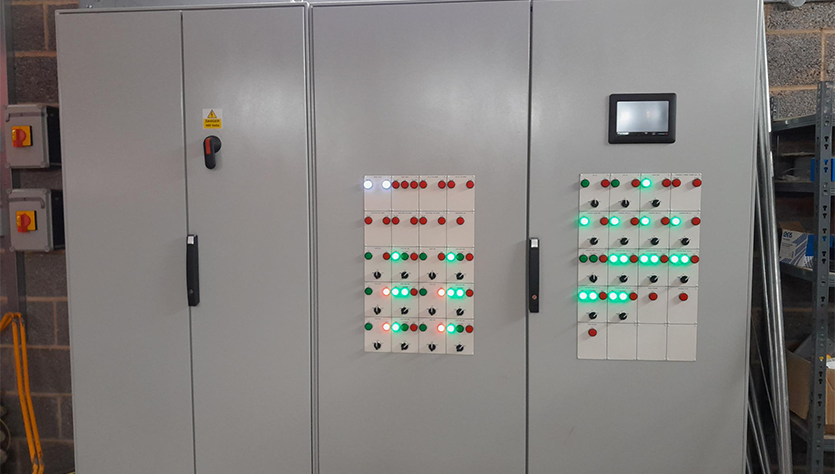
    Electrical power is now available to BMS panel and is allowing commissioning of the system. Pumps, pressurization unit and Vacuum Degasser have now been commissioned, and supply and extract fans have been wired and are due to be commissioned next week.

    Michael Davidson, Senior Project Engineer at Beam Park, said:

    “This has been a really enjoyable project to work on, and we have a great relationship with the client. We hit a few bumps in the road in relation to the distribution network operator suppliers of gas and power, but we’re back on track and are ready for the boiler and gas commissioning in mid-November.”

    Fun fact – located in the London Boroughs of Barking and Dagenham and Havering, the Beam Park site is the former home of one of the largest car plants in the world. It was also used for a dress rehearsal of the opening ceremony of the London 2012 Olympic and Paralympic Games and formed the backdrop for the popular British film ‘Made in Dagenham’.

    We’ve secured phase 2 of the project where work will begin soon – watch this space!

  • Vital Energi build a sustainable future for Coventry hospitals

    Vital Energi build a sustainable future for Coventry hospitals


    Vital Energi build a sustainable future for Coventry hospitals

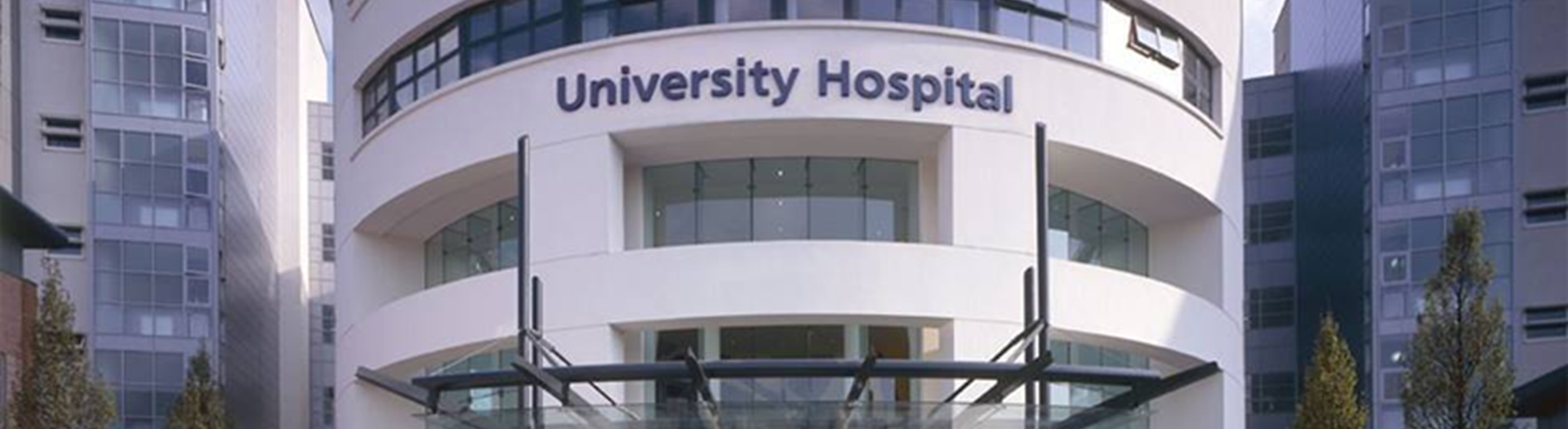
    Vital Energi are delivering financial savings of £1.6m a year for University Hospitals Coventry and Warwickshire NHS Trust (UHCW), money that will be used to improve patient care.

    They have also helped reduce the carbon footprint of UHCW’s two hospital sites by 4,125 tonnes a year after installing future-proof energy generation equipment.

    The project, which was delivered under the Carbon and Energy Fund (CEF), involved significant restructuring works of University Hospital Coventry’s main clinical waste compound to be able to accept the new 3.3MW CHP and all ancillary equipment. New accommodation was constructed to relocate and store medical sharps cabinets, and a new delivery area built to redirect deliveries of clean linen and the removal of all site laundry.

    Vital Energi also completed upgrades to the BMS system at the Hospital of St Cross in Rugby and upgraded over 2,000 lighting fittings to new efficient LED bulbs.

    Work commenced in August 2019 and carried on through the pandemic. During this time, the biggest vaccine campaign in NHS history launched, and University Hospital administered the UK’s first ever Covid jab on 8th December last year.

    “We overcame a number of challenges during construction, such as maintaining the waste compound operational activities in a safe and efficient manner while building works were carried out in proximity. We also maintained a good workflow through the project despite the Covid-19 pandemic hitting at a critical point in the schedule. We’re delighted that the energy project programme was a success and the Trust are now gaining the benefits of the integrated energy solutions which are paving the way to a low carbon future for both hospitals.”

    Steve Black, Vital’s Account Director who led the project

    UHCW Sustainable Development Manager, Clive Robinson, said:

    “The Trust is pleased with the energy saving solutions provided by Vital Energi, the savings both financial and in carbon emissions are part of our journey towards net zero.

    “Delivering a complex project such as this on a busy hospital site with minimal disruption was a credit to all involved.”

    All teams involved in the project from Vital Energi, the Trust, the PFI, and all subcontractors, worked closely together to ensure a successful outcome.