Category: Uncategorized

  • Driving decarbonisation at TfL’s Therapia Lane tram depot

    Driving decarbonisation at TfL’s Therapia Lane tram depot


    Driving decarbonisation at TfL’s Therapia Lane tram depot

    London’s Therapia Lane trams depot in Croydon makes green transition through removal of fossil fuels and installation of hundreds of new solar panels.

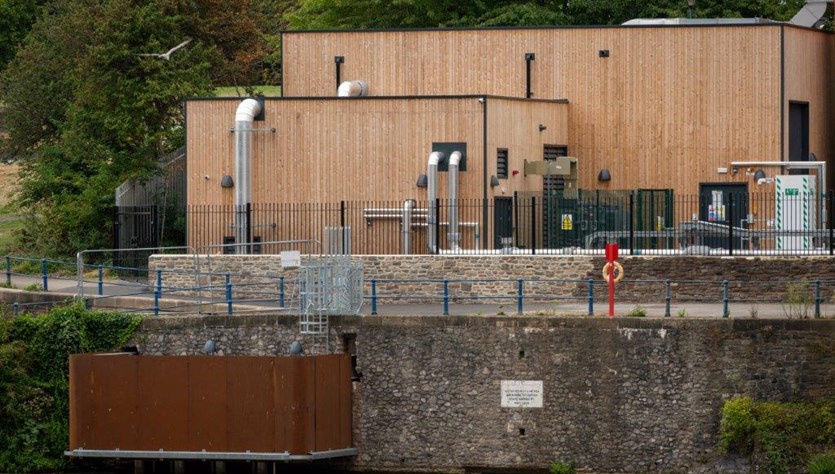
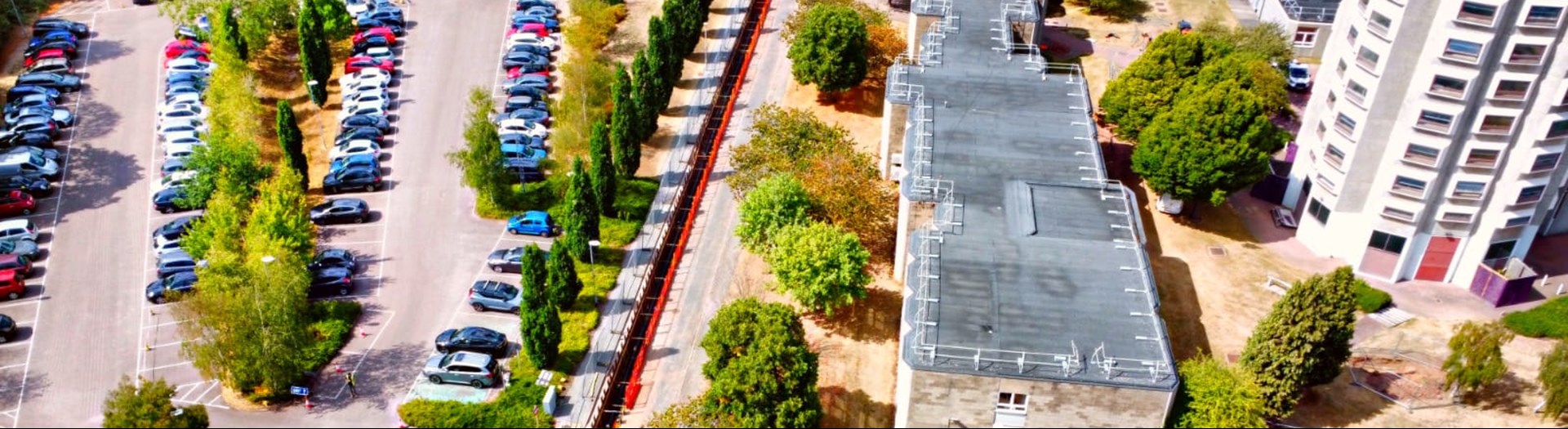
    Therapia Lane, where London Trams are based, has become Transport for London’s first depot to remove fossil gas usage by upgrading its heating system. It has also introduced on-site solar generation.

    By adapting the depot in its biggest overhaul since it opened 27 years ago, the new heating and power system prepares the site for the future and ensures operational sites play a role in reducing climate change impact. The heating system has been modernised with a range of low-carbon, electric heat pumps and infrared panel heaters, replacing the unsustainable fossil fuel gas boilers. The infrared panel heaters target areas where staff work most, minimising ambient heat loss and achieving higher energy performance compared to traditional central systems. The heating system upgrade has enhanced hot water delivery through the installation of energy-efficient, on-demand electric water heaters.

    The additional electricity consumption from the new heating system will be offset by using 1,800m2 of solar panels on the roof of the depot, which will generate 187 kWp of energy. Energy savings will come from energy efficiency measures such as improved insulation and LED lighting, which will also create a better, brighter, and more comfortable working environment for staff. The measures are expected to cut carbon emissions by around 183 tCO2e annually – similar to the emissions from a modern housing development – delivering significant long-term sustainability benefits alongside operational cost savings. Work at Therapia Lane, carried out in a live operating environment working around the clock, will also help inform efforts to decarbonise other active operational buildings on TfL’s estate as well as depots across the country.

    It’s fantastic news that Therapia Lane depot has become TfL’s first depot to remove fossil fuel gas usage by upgrading its heating system and installing hundreds of new solar panels. This green transition will help improve energy efficiency and save money, showing that sites like this have an important role in reducing the impacts of climate change. The Mayor and I will continue to work with partners to ensure we can deliver a greener and fairer London for everyone.

    Mete Coban, Deputy Mayor of London for Environment and Energy

    The decarbonisation of Therapia Lane depot, one of the busiest operational spaces in south London, shows that it is possible to eliminate the use of fossil fuels from large, complex buildings as it runs on fully electric infrastructure. It is vital we invest now in making our operations cleaner and greener to reduce our emissions and build the next generation of green skills, further supporting the Mayor’s ambition of a carbon neutral capital by 2030. The upgrade at Therapia Lane depot is also helping the wider industry close the green skills gap through net-zero placements. TfL and supplier Vital Energi are investing in the next generation of net-zero apprentices and graduates to help meet the UK’s net zero target and tackle climate change through working on TfL’s modernisation and decarbonisation projects.

    Lilli Matson, TfL’s Chief Safety Health & Environment Officer

    Whilst working on the Therapia Lane trams depot project, I gained first-hand exposure to a live rail infrastructure environment, whilst gaining a better understanding of how design, construction, and operational requirements come together on a large transport project. My awareness of site safety procedures has improved and how works are planned around an active operational environment. It also gave me valuable experience linking drawings and design intent to what is installed on site, which helped reinforce engineering principles in a real-world context. The site tour was a personal highlight, particularly seeing the job come towards completion, how much work has been put in to meet deadlines and the vast change there has been.

    Kyrel Rose, Net Zero Apprentice, Vital Energi

    The project was part funded by the Government’s Public Sector Decarbonisation Scheme as well as the Public Sector Low Carbon Skills Fund. The funding is delivered by Salix and run by the Department for Energy Security and Net Zero. Whilst the Public Sector Decarbonisation Scheme helps fund energy efficiency works, the Low Carbon Skills Fund has funded heat decarbonisation plans and design. As part of efforts to accelerate decarbonisation under the fund, major upgrades including air and water source heat pumps, LED lighting and using smart sensor technology to adjust ventilation, cooling and heating levels in real time at TfL’s main head office Palestra House are in the process of cutting fossil fuel reliance and reducing carbon emissions by more than 1,500 tonnes annually. Similar technology is planned for other offices above stations like Aldgate, Baker Street, Oxford Circus and Victoria.

    This project shows how clean power is benefitting communities across Britain – creating skilled jobs and strengthening our public services with the potential to create savings that can be invested into improving services for passengers. It is a prime example of the vital part that facilities like Therapia Lane will play in our clean energy transition.

    Martin McCluskey, Minister for Energy Consumers

    We’re proud to have delivered this landmark project at Therapia Lane, which demonstrates how operational sites can transition away from fossil fuels without compromising performance. By combining advanced electric heating solutions with on-site solar generation, we’ve created a system that is both energy efficient and future ready. This project not only cuts carbon emissions but also sets a blueprint for decarbonising similar facilities across the UK. In partnership with TfL we’re delivering decarbonisation projects across their estate and accelerating their journey to net zero, while developing the green skills that will power a sustainable future.

    Scott Lutton, Regional Director, Vital Energi

    Transport for London has made great strides in its net zero journey and these major energy efficiency upgrades which reduce emissions, are not only about cleaning up our environment, but they are about saving bills and reducing costs in the long term. Removing the need for fossil fuels is a giant step forward and we look forward to seeing what next for Transport for London as it continues to decarbonise its services

    Ian Rodger, Salix’s Director of Public Sector Decarbonisation

    Decarbonising London’s built environment and retrofitting the city’s transport infrastructure are important steps towards meeting the country’s Net Zero 2030 goal. TfL’s effort to decarbonise its assets will help future proof London’s transport system and make it more resilient for future generations. It’s encouraging to see decarbonisation efforts reaching fruition through projects like this and the ICE looks forward to working with TfL and other bodies to continue to share knowledge to equip engineering professionals to reduce carbon emissions.

    Katherine Etheridge, Institute of Civil Engineers Regional Director

    The upgrade of the Therapia Lane depot is just part of TfL’s wider work to further decarbonise London’s transport network and adapt its systems to reduce the impacts of climate change. As one of the largest consumers of electricity in the UK, TfL has entered a Power Purchase Agreement that will see a solar facility built to generate about 80 Gigawatt hours (GWh) of electricity per year when completed – enough clean power to run both the DLR and Tram network for 15 years. TfL has also launched a private wire tender to receive zero-carbon electricity from solar farms connected directly to the London Underground network, bypassing the central grid.  This could generate up to 64 megawatts (MW) of electricity in the long term. The outcome of the tender will be announced once the process completes.

    TfL is also working to further reduce its environmental impact across its wider network by upgrading lights to use LEDs to reduce electricity consumption, as well as improving biodiversity and delivering other forms of green infrastructure such as 390,000 square metres of wildflower verges on its road network. It is also maintaining and developing urban greening features, especially in outer London where there is more greenery, which can support better drainage and reduce flooding.

  • Do air source heat pumps work in cold weather? Our experts tell all

    Do air source heat pumps work in cold weather? Our experts tell all


    Do air source heat pumps work in cold weather? Our experts tell all

    Air source heat pumps are one of the most effective technologies for reducing carbon. They harness the natural heat energy present in the air to warm up a space. They work by extracting heat from the outside air and transferring it into a building. The pump uses a working fluid (refrigerant) to absorb heat from the outdoor air, which is then compressed to increase its temperature. This refrigerant is then circulated through a heat exchanger to distribute this heat into a building.

    So, if they absorb heat from the air, how are they affected when it’s cold outside?

    You might think that if the temperature outside falls below zero, the heat pump will stop working, however even in cold air, there is still sufficient heat for the heat pump to absorb and convert into useful energy.

    We had a chat with Vital Energi’s Elliott Sharpe (Strategy & Partnerships Director), Dave Wilkinson (Design Director), Chris Green (Engineering Director), and Liam Grice (Senior Engineer), who advised how you can maximise a heat pump’s efficiency during cold weather, the best location for it, how you can prepare it for cold weather, and more.

    How efficient is an air source heat pump in cold weather?
    When we talk about efficiency of an air source heat pump (ASHP), we often consider how many units of heat we get from an ASHP for each unit of electricity used. Because it gets its energy from the surrounding air, we might get 3 units of heat for every 1 unit of electricity, so an efficiency of 300% in the summer months. As the outdoor temperature drops as we head towards winter, the efficiency of an ASHP does reduce. As this reduces, we could find a situation where the heat pump is producing 1 unit of heat for every 1 unit of electricity, which is 100% efficient, this might not sound all that bad, but heat pumps can deliver much higher efficiencies than this when deployed correctly. 

    How do you maximise efficiency during winter? 
    Generally, during cold weather, the heat pump is operating at its worst efficiency when most heat is required. Careful design of the heat pump and the system it is connected to is important to maximise the efficiency. Understanding that heat pumps may have a reduced capacity at low temperatures is important in correctly sizing the heat pump to cope with this. If you buy a 300kW boiler, that boiler is 300kW all year round. That’s not quite the case for an ASHP, which might provide 300kW in a +10°C ambient temperature, and only 150kW during the coldest of days. The efficiency of heat pumps increases as their supply temperature reduces, so its beneficial to design heat emitters to operate effectively at lower temperature e.g. –underfloor heating can work on a 45C flow. Including buffer vessels or thermal storage can also provide flexibility which can lower the cost of heating from the heat pump. Optimisations of the heat pumps defrost cycle are essential for achieving the best winter performance and should be carefully considered.

    Is there anything you can do to prepare your heat pump for cold spells?
    Absolutely! The main objective should be to ensure that the heat pump is operating as it should. Proactive maintenance will assist with this, where the entire system should be inspected, refrigerant and oil levels checked, and any issues addressed. Consider scheduling maintenance before winter begins to ensure optimal performance.
    In cold ambient temperatures, the heat pump will enter a defrost cycle more often. For optimum efficiency and performance, the air source collector should be unrestricted and free from debris. If you notice any excessive ice build-up on the air source collector it might suggest that the defrost cycle may not be functioning correctly.

    Is there an optimum position or location where an ASHP will perform better during colder months?
    ASHPs use fans to move ambient air over the collector. Any restrictions to the air flow will reduce performance. The air is cooled as it passes over the collector, so it is important to minimise air recirculation. Manufactures guidance should be followed to make sure there is sufficient free space around the heat pump and consider any additions such as acoustic panels and their impact on air circulation. Computational Fluid Dynamics (CFD) modelling is a useful investment to make during the design process to make sure the air source collector position is optimised.

    Are there specific refrigerants or technologies that can improve winter performance?
    When choosing a heat pump, it’s crucial to assess its suitability for various operating conditions over its lifespan. Understand your load profile to determine peak performance needs. If the ambient temperature drops below the design threshold, the system’s heat output and efficiency will decrease. Consider these factors carefully to select the optimal heat pump technology and refrigerant that precisely meets your requirements.

    How can defrost cycles be optimised to reduce energy consumption and output limitations?
    Typically, when ambient temperatures are below 7ᵒC, ASHPs will need to regularly complete a defrost cycle to remove frost which forms on the coil surface as moisture from the air freezes. The process requires energy to melt the frost, and generally the heating output is reduced during this time, so it is critical the process is completed quickly and efficiently. This can be optimised as part of the commissioning and O&M activities, making sure all temperature probes are fitted correctly and the settings are correct so the defrost process is not more frequent and longer than needed. It is a balance though, because not defrosting correctly causes severe performance issues. If all the frost has not melted and drained away, this will refreeze and eventually create ice which blocks the coil. Manual intervention is often then needed to get the system running optimally again.

    Are there any energy conservation measures that can be implemented during the winter months which will help a heat pump run more efficiently?
    There is a term often used which is ‘fabric first’. What this means is, the first port of call for any project should be to try and reduce your energy demands first, before looking into any new technology. This fabric first approach could be improving the performance of your windows, to reduce how much heat you lose. It could mean adding more insultation to walls and ceilings. All of these measures will result in your site/building requiring less energy.

    Click here to discover more about heat pumps, and learn about some of the air source heat pump projects we’ve delivered below.

    Westminster City Council
    Northwick Park Hospital
    Bridlington Hospital

  • Digital Twins: The Blueprint of Energy Transformation

    Digital Twins: The Blueprint of Energy Transformation


    Digital Twins: The Blueprint of Energy Transformation

    As the energy landscape evolves, so too must the tools we use to design, optimise and futureproof our infrastructure. Among the most transformative of these tools is the Digital Twin – a virtual replica of a physical system that allows us to simulate, analyse and improve performance with high levels of precision.

    Having worked with Digital Twin for a number of years, Energy Projects Development Manager, John Fonseka, shares insight into how this technology works, and the benefits it can bring.

    From Site to Simulation: Building the Digital Twin

    Creating a Digital Twin is not a one-click process. At the heart of this transformation is the six-stage process outlined in the diagram below. Vital Energi’s methodology complements this by conducting extensive site and BMS surveys, ensuring the Digital Twin is built on a foundation of accurate and comprehensive data.

    It begins with a detailed on-site asset survey and energy data analysis to understand how a site’s energy generation and distribution system is currently designed and operating. This foundational step ensures that the virtual model reflects the real-world conditions accurately, capturing the nuances of legacy systems, operational constraints and energy flows.

    Sandbox for Innovation

    Once the Digital Twin is built, it becomes a sandbox for innovation. Engineers can test concepts, simulate performance under different scenarios and identify inefficiencies that would be difficult to detect otherwise. This is where the real value emerges – not just in visualising the system but in understanding it deeply enough to optimise it. We use this sandbox to stress-test proposed modifications under various conditions, such as partial loads and adverse weather, to optimise system performance before implementation.

    The process continues with performance analysis and options appraisal. Here, carbon, cost and comfort are weighed to determine the most effective solutions. Whether it’s adjusting flow temperatures, reconfiguring control strategies or integrating new technologies, the Digital Twin provides a safe and insightful environment to explore possibilities before committing to physical changes. The calibrated Digital Twin enables us to generate techno-economic studies to accurately quantify the feasibility of integrating low carbon technologies like heat pumps.

    Beyond Optimisation: Managing Future Uncertainty

    But the journey does not end with optimising an existing installation or installing an optimised design. The Digital Twin evolves alongside the system it represents. Through real-time data monitoring and analysis, it ensures that efficiencies are maintained and improvements are sustained. It becomes a living model with human intervention – one that adapts, learns and guides decision-making over time.

    This approach is particularly valuable in complex environments like healthcare estates, where infrastructure varies widely in age and condition, and operational continuity is non-negotiable. In such settings, the ability to simulate upgrades and assess their impact without disrupting services is a game-changer. It allows teams to plan phased interventions, align technical solutions with funding opportunities and ensure that new systems meet both performance and resilience requirements.

    Digital Twins also support a more holistic view of energy strategy. By integrating energy conservation measures (ECMs) such as BMS upgrades, distribution system improvements, solar PV and fabric improvements into the model, teams can assess how these elements interact and contribute to long-term sustainability. This helps avoid the pitfall of implementing impressive but costly solutions that are difficult to operate efficiently. This process enhances this optioneering strategy by incorporating dynamic simulation capabilities into measurement and verification, delivering more meaningful and actionable data.

    Achieving Success

    Ultimately, the success of Digital Twin initiatives depends on the quality of information used to populate the model. Collaboration is key – from design engineers and energy consultants to estates teams and finance directors, everyone must be aligned on the strategy. The process is creative, collaborative and complete – bringing together data, expertise and vision to shape energy systems that are not only efficient but resilient and future-ready.

    A Mindset Shift

    Digital Twins are not just a technical innovation; they are a mindset shift. They invite us to think differently about how we manage energy, how we plan for change and how we build and commission systems that serve us better. In doing so, they turn ambition into action – and potential into performance. Vital Energi embodies this mindset by transforming ambition into action through a rigorous, data-driven approach that bridges uncertainty and solution.

    Imagine a building not just as bricks and mortar, but as a living, breathing entity – one that can be mirrored, studied and optimised in a virtual reality. This is the promise of the Digital Twin: a dynamic replica of physical infrastructure that allows us to see not only what is, but what could be.

    Real-World Impact

    Digital Twin is not just theory or a buzzword or a shiny new toy to win a sales opportunity. At Bridlington Hospital, the deployment of Hysopt’s Digital Twin technology led to a leap in energy efficiency. Without changing a single piece of hardware, the system’s heat utilisation improved from 83.4% to 98.5% by optimising the operation – a testament to the power of simulation and optimisation. The same virtual model enabled the team to fine-tune return temperatures, unlocking the full potential of low-carbon heat pumps.

    Digital Twins at Vital

    At Vital Energi, we use two Digital Twin platforms for hydronic and hydraulic applications: Hysopt for HVAC system design and optimisation, and MATLAB for product design and performance modelling. These tools are not only used to predict and influence outcomes before they become reality, but they also serve as training platforms, enabling engineers to explore advanced concepts and test designs with no strings attached.

    Digital Twins are redefining how we approach energy systems, turning buildings from static structures into dynamic, responsive environments. They are the blueprint of energy transformation where inefficiencies are exposed, options are appraised and futureproofing without ‘oversizing’ becomes a reality.

    If only I had a pound every time I mentioned ‘Digital Twin’ in this article, I would not be a millionaire, I will be £19 richer!

    The Six Stages of Digital Twin Creation The Six Stages of Digital Twin Creation 0.2 Mb
  • DESNZ Chair explores Mersey Heat’s role shaping UK’s low carbon future

    DESNZ Chair explores Mersey Heat’s role shaping UK’s low carbon future


    DESNZ Committee Chair explores Mersey Heat’s groundbreaking role in shaping UK’s low carbon future

    Mersey Heat, being delivered in partnership by Vital Energi, Ener-Vate and Peel Waters has quickly established itself as one of the most prominent heat networks projects in the country and we were happy to host our second ministerial visit in two weeks, welcoming Bill Esterson, MP for Sefton, and the recently appointed Chair of the Commons Select Committee for Energy Security & Net Zero.

    As DESNZ plays a crucial role in shaping the future of the UK’s heating infrastructure, we were pleased to see the Sefton Central MP take such a keen interest in this pioneering renewable heat project that is changing the face of Liverpool’s low-carbon infrastructure.

    It was fantastic to see a large-scale district heating system up and running here right on the doorstep of my constituency. The committee will be examining in detail how we deliver energy security and net zero by 2050, this is one of those solutions that can unlock low carbon development. Furthermore, we can see it is already creating high quality jobs and development opportunities here in the Liverpool City Region.”

    Bill Esterson, Chair of the Commons Select Committee for DESNZ

    Successful projects like Mersey Heat are showcasing the transformative effects of city-wide district heating and proving decarbonisation at scale is possible. To accelerate the adoption of heat networks, focused policy support and increased funding are essential to enable new schemes to enter the market and existing ones to expand and reach their full potential. If we achieve this then heat networks can take their place as one of the cornerstones of the UK’s heating strategy.”

    Andrew Wightman, Regional Director, Vital Energi

    It was an honour to welcome Bill Esterson, MP, to the Mersey Heat Network and showcase the significant progress we’ve made on this transformative project. Mersey Heat is an example of how innovative technology, like the water source heat pump, can deliver large-scale decarbonisation, providing both environmental benefits and energy security for Liverpool. We’re proud to be part of a project that is helping to shape the future of low-carbon infrastructure in the UK.”

    Jo Longdon, Director of Strategy, Ener-Vate

    Mersey Heat, which is owned by Peel and being delivered in partnership with Vital Energi and Ener-Vate, has seen the creation of an innovative energy centre which houses one of the largest water source heat pumps in the UK and takes heat from the Leeds-Liverpool Canal. This heat is distributed around the city via a 6km district heating network with the potential to deliver 45GW of heat to 6,700 homes and 1.3 million square feet of commercial space at full build out.

    The initial phase alone is estimated to save 2,000 tonnes of carbon emissions each year.

    In addition to the technical achievements, large infrastructure projects like this are also an opportunity to embed ourselves in the local community, deliver social value and leave impactful, long-lasting legacies through employment and training opportunities, partnerships with local groups and supporting local charities. So far we have been able to place seven apprentices on the project, reached 340 local children through our Climate Education Sessions and supported Claire House Children’s Hospice through Peel Waters annual Dragon Boat Race.

    This visit underscores the importance of sustainable heating solutions in the UK’s journey towards a greener future and Mersey Heat clearly illustrates how we can implement cutting-edge technologies that contribute to a fossil-free future while meeting the energy needs of communities across the country.

    The tour, organized by Vital Energi and Ener-Vate, in collaboration with Peel, ADE, DESNZ, and Liverpool City Council, encompassed the Mersey Heat  Tobacco Warehouse show apartment, plant room, canal pumping system and the energy centre which houses the water source heat pump. It provided a comprehensive look at how this ambitious project is shaping the future of heat networks.

    The subsequent Q&A provided an opportunity to learn more about the evolution of Mersey Heat and how it’s changing the face of energy in Liverpool, reducing carbon and delivering energy security, paving the way for a more sustainable future.

    It was a pleasure to be part of the group extending a warm, Liverpool welcome to with Bill Esterson, MP and we look forwards to a bright future for heat networks.

  • Delivering Vital STEM session for Liverpool school

    Delivering Vital STEM session for Liverpool school


    Delivering Vital STEM session for Liverpool school

    Building Services Engineering apprentice and STEM ambassador, Ibrahim Qadir, along with Trainee Energy and Commercial Modeller, Millie Cooney, recently visited St. Margaret’s Church of England Academy in Aigburth, Liverpool, to support their What’s your Emergency Enterprise Day.

    The aim of the day was to inspire and inform students about different career paths available across a range of industries that they may not have considered before now, and Ibrahim and Millie went along to fly the flag for the renewable energy and heat networks industry.

    They held five engaging sessions across the day for year 10 students, highlighting how Vital Energi are helping organisations across the UK meet their environmental goals, and they shared some case studies from local projects too. Students also took part in a group task, where they were given a client brief and budget to develop an optimum energy solution. The duo received excellent feedback from both staff and students.

    Ibrahim is a former St. Margaret’s Church of England Academy student, so we asked him some questions about the experience, why he wants to inspire the younger generation to join the industry, why he chose to become a STEM ambassador, and more.

    Tell us about your visit to St. Margaret’s Church of England Academy…
    Millie and I went back to my old high school to give a presentation and do some STEM activities with the students. Our intention was to not only talk about engineering, but also the sustainable solutions and practices that we implement, as a business, to achieve our environmental goals.  We began the sessions with an introduction to Vital, explaining what we do and shared some local case studies of our work, including Liverpool Waters and the University of Liverpool Quad Node. Students were then given a town, client brief, and a range of solutions all with different costs as well as heating and electricity production properties (a bit like top trumps). They were asked to design sustainable and cost-efficient solutions to meet the town’s needs. The game, which was designed by Elly in our Marketing team, helped the students grasp some of the transferable skills that engineers require such as critical thinking, teamwork and communication. The feedback from teachers and organisers was all positive, and they commented on the how engaged the students were with the presentation and task.

    What did the students learn?
    They learnt about the importance of implementing sustainable solutions in safeguarding the environment we live in. We highlighted the numerous pathways into engineering, such as apprenticeships and graduate schemes, explaining how broad of a term ‘engineer’ is, as it encompasses a wide range of disciplines, the roads to which are countless.

    Why did you choose to visit this school?
    This school was the high school I used to go to. I believed as a former student I could relate to them better and answer questions that I would have asked at that stage of my own life.

    Why did you want to become a STEM ambassador?
    I was given the opportunity to become a STEM ambassador and step out of my comfort zone to help inspire my own and younger generations to pursue a career in engineering. I believe that our work plays such a major role in the quality of people’s day to day life, so it is important to invest into its future.

    Do you have any other STEM initiatives planned?
    Yes, I have another event in March as part of the Leeds PIPES contract community engagement, which I’m really looking forward to.

    If you’re considering the renewable energy and heat networks industry as a career, our apprenticeship scheme is now open. Click here for more information.

    “Thank you so much for supporting our What’s your Emergency Enterprise Day at St Margaret’s with the workshops you delivered and inspiring the students to look at different careers. I was so blown away with the preparation and thought that went into your workshop, from both yourselves and Elly, who created the game.  The idea was fabulous, and the students really got involved during the day.  I was talking to some of the teachers at the end of the day and they were saying that a few of the students they expected to be not so engaged in your workshop were heads down, getting on with the task.  So, thank you.”

    A representative from the school,

  • Decarbonising Islington Waste and Recycling Centre

    Decarbonising Islington Waste and Recycling Centre


    Decarbonising Islington Waste and Recycling Centre

    Islington Council had a target for their Waste and Recycling Centre to be decarbonised and to take steps towards a greener and healthier future for the borough. The project is now complete, and this milestone achievement marks a significant step forward in the Council’s efforts towards achieving net-zero emissions by 2030. The Waste and Recycling Centre will be the first council building to be completely transformed with energy saving upgrades.

    Vital Energi installed 852 solar panels on the roof of the recycling centre and delivered essential mechanical and electrical work which included the replacement of six Air Handling Units (AHUs) with electric and refrigerant coils. The generation system in the plantroom which was run by two Direct Gas Fired Domestic Hot Water (DHW) now runs via an air-to-water source heat pump DHW system which supplies the centre with hot water.

    Vital Energi upgraded the Low Voltage (LV) electrical infrastructure by building a new LV switch room which included the installation of lighting, power, containment, fire alarm and protection services. This upgrade will improve energy efficiency, increase carbon savings to the environment and reduce energy consumptions and costs.

    “Islington Council has a commitment to achieving their carbon net zero target by 2030 and this project not only displays the importance of renewable technologies, but it also takes the council a step further towards reaching their goal. Great to see the impact social value initiatives have had on the charity and local football clubs, strengthening the community whilst ensuring we are protecting the planet for our future generations”.

    Gerry Davies, Regional Director, Vital Energi

    To celebrate the completion of the project, the council organised a ceremony which saw the attendance of the Mayor of Islington, Council Champion, and many others present at the inauguration of the new project.

    “As a council, we’re committed to making the borough a greener, healthier place for everyone. To truly tackle the climate emergency, it is going to need the whole borough to play its part. I’m delighted that we can lead the way by making existing buildings as green as possible, using the best technologies available including solar power to create clean energy, and reduce our reliance on fossil fuels. The transformation of the Waste and Recycling Centre shows the huge benefits and impact that greener technologies can bring, and how vital it is for local and national government to work together on projects like this. By taking advantage of state-of-the-art technology, we are reducing our environmental impact and showing how we can make a difference, leading by example in combatting climate change.”

    Cllr Rowena Champion, Islington Council’s Executive Member

    Vital Energi share the council’s passion for maximising the social value of the project and were able to sponsor Kentish Town under 12s girls football team, Vital Energi organised two football tournaments which we titled ‘The Vital Energi Cup’ with a family fun day theme held at Market Road Football Pitches in Islington. The tournament helped raise more than £700 for Kentish Town F.C., all proceedings went towards equipment and pitch hire, and we provided a new kit to one of the Kentish Town teams.

    Vital Energi went further and raised over £7000 for Islington Giving towards their Islington Winter Appeal which helps to make an impact in the local community, helping to create opportunities for isolated older people to make connections and beat loneliness.

    “Since the beginning of our partnership with Vital Energi, the team have gone above and beyond in their social value commitments. In addition to significant contributions to the work of Islington Giving, Ben and the Vital team have been all hands on deck to organise fundraising events – from raffles to an under 13’s community football tournament – and support our events and campaigns. Their support is helping to making a real difference to the lives of people in Islington, providing essential funding to a range of local community projects like Grub Club – helping isolated older men to make connections and build confidence in the kitchen, and Mother2Mother – a group providing therapeutic support for female caregivers. We are so grateful to the team for their enthusiasm and dedication and look forward to continuing to work together to make Islington a more equal place, where everyone has the opportunity to live a good life”.

    Lisa Robinson at Islington Giving, Director of Communications and Development

  • Deal signed on Mersey Heat WSHP

    Deal signed on Mersey Heat WSHP


    Deal signed on Mersey Heat WSHP

    Deal signed to deliver water sourced heat pump to Mersey Heat Energy Centre

    A deal has been signed with Star Refrigeration Ltd to provide a £2.5m water source heat pump to the Mersey Heat Energy Centre currently under construction at Peel Water’s Liverpool Waters at Princes Dock in Liverpool.

    Led by Peel NRE’s district heat network specialist Ener-Vate and being built by Vital Energi, the project is set to become a major part of the city’s low carbon energy infrastructure.

    One of the first to be installed in the UK, the pump will use game changing technology to extract heat from the water in the Leeds Liverpool Canal and use it to provide low carbon energy to thousands of homes and businesses around the city via a 6km district heating network.

    Set to be operational by winter 2024, the Mersey Heat Energy Centre will provide an easy, affordable and convenient solution to decarbonise heating with the potential to provide enough low carbon heat for over a fifth of the homes in Liverpool. Local homes and businesses will be able to connect into the existing district heating pipework which has already been installed.

    The government has identified heat networks as a crucial part of how the UK will reach net zero and one of the most cost-effective ways of decarbonising heating in built up areas. Using a water sourced heat pump to heat buildings is three times more efficient than using electricity for heating and has the potential to reduce carbon emissions by up to 90%.

    Jo Longdon, Commercial Director, Ener-Vate, said: “This is another major milestone towards delivering a game changing new approach to the way homes and businesses are heated in Liverpool. There isn’t the option to do nothing, we have to move away from fossil fuels and towards low carbon sources of heat. The Energy Centre will enable buildings to easy connect via an existing pipeline network providing an overnight solution to the challenge of decarbonising our heat sources.”

    “This is a major development which will have a real, positive impact on Liverpool’s future and we are delighted that sustainability is embedded at its core. We have seen, first hand, how effective large-scale water source heat pumps can be in decarbonising communities and are proud to be helping to bring another piece of Liverpool’s future green infrastructure to life which will serve the people of Liverpool for decades to come.”

    Andrew Wightman, Pre-Construction Director, Vital Energi

    David Pearson, Director, Star Refrigeration Ltd, said: David Pearson, Director, Star Renewables said: “Our heat pumps are manufactured in the UK and are an efficient way to cut CO2 emissions and lower the carbon footprint of connected buildings by around 75%, which will reduce further as the grid decarbonises. It will help thousands of homes and businesses move away from fossil fuels.

    “We’re proud to be providing a key component of the Mersey Heat Energy Centre, with the district heat network providing a critical step on the city region’s decarbonisation journey.”

    The 8m x 12m pump, which is currently being manufactured in Glasgow, will be delivered to the Mersey Heat Network Energy Centre in the summer.

    The district heating network will provide low carbon heat and hot water for up to 6,700 homes and 1.3 million square feet of commercial space at the Liverpool Waters development as well as wider domestic and commercial buildings across Liverpool. This initial phase of the project could supply 20GWh of heat every year with planning permission in place to expand the project to supply around 45GWh (the equivalent of supplying 17,000 new homes with heating and hot water).

  • Coventry Hospitals to Reduce Energy Costs by £1.6m a Year


    Coventry Hospitals to Reduce Energy Costs by £1.6m a Year

    We have guaranteed to cut energy costs by £1.6m a year for University Hospitals Coventry and Warwickshire NHS Trust by installing modern energy generation equipment and completing energy system upgrades at two hospitals.

    University Hospital and the Hospital of St Cross will benefit from the energy efficient solution that will see carbon emissions cut by 4,125 tonnes each year.

    The £6m scheme involves a CHP engine being integrated into the complex waste compound system at University Hospital, with comprehensive modifications to facilitate the new technology. This will deliver a low cost and low carbon heat and power supply to the hospital under an energy performance contract that guarantees the savings for 15 years.

    The project also includes complete upgrades to the BMS system at the Hospital of St Cross and upgrading 2,000 lighting fittings to new efficient LED bulbs. A considerate construction plan will be provided to avoid disturbance to hospital operation, and any disruption to University Hospital’s energy supply.

    We will provide operation and maintenance services for the CHP system for the next 15 years.

    This innovative solution is the first time Vital have integrated new energy generation equipment into a large PFI Hospital. We had to assess the existing energy system and existing building to design a solution that would cater for the hospital’s needs without making any major modifications to the building’s infrastructure.

    Steve Black , Vital Energi’s Account Director

    The scheme is being delivered under the Carbon and Energy Fund (CEF).

  • Councillors Tour New Solar Facilities at Westminster Leisure Centre

    Councillors Tour New Solar Facilities at Westminster Leisure Centre


    Councillors Tour New Solar Facilities at Westminster Leisure Centre

    Vital Energi have completed the rooftop solar PV project at the Queen Mother Sports Centre as part of a £13m RE:FIT project and the leader of Westminster City Council, Cllr Rachael Robathan joined other council members and Vital Energi for a tour of the installation.

    The work at the Queen Mother Sports Centre is one of  twelve solar installations taking place which    will see approximately 1550 panels installed. These panels will generate 550kw of zero-carbon electricity and result in over 40 tonnes of carbon reduction per year.

    This is a major project which will see improvements delivered to 70 buildings and reduce emissions by almost 1,700 tonnes per annum. By harnessing a range of technologies and focussing on carbon reduction, this project will play a large role in helping Westminster City Council reach their net zero target. We are delighted that the solar panels are now in place and will deliver zero carbon electricity to both the Queen Mother and Moberly leisure centres, but this work is one small part of a much bigger project and we look forwards to the other energy saving technologies coming online and further reducing carbon emissions.

    Scott Lutton, Operations Director, Vital Energi

    Attending the event were:

    • Cllr Rachael Robathan – WCC – Leader of the Council
    • Cllr Paul Swaddle – Cabinet Member for Finance and Corporate Property
    • Cllr James Spencer – Cabinet Member for City Management
    • Gerald Almeroth – Executive Director for Finance and Resources WCC
    • Claire Barrett – Director of Corporate Property WCC
    • John Hamilton – Head of Service Development WCC
    • Paul Casey – Energy Officer WCC
    • Scott Lutton – Operations Director Vital Energi
    • David Oatt –Operations Manager, Vital Energi
    • Paul Carnew – Senior project Manager
    • David O’Dowd – Senior project Manager

    Works included in the RE:FIT project include:

    • Lighting – Replacing approximately 12000 lights across  60 Westminster sites.
    • BMS – Optimisation works and upgrades to BMS systems across 18 Westminster sites.
    • Thermal Insulation – Improvements have already been made to 22 of the council’s sites.
    • EC Fan Upgrades – Replacing 46 fans across two sites.
    • Heat Pumps – Installing 1.8 MW of air source heat pumps to provide lower-carbon heating.
    • Draught Proofing – completing works to seal windows/doors to reduce heat loss on X sites.

    The RE:FIT project will see energy upgrades delivered at council-owned buildings throughout the City of Westminster and is funded by a £13m grant via the Department for Business, Energy and Industrial Strategy’s Public Sector Decarbonisation Scheme and is the largest grant of its type to be awarded to a London Local Authority.

  • Corran Capital raises new £80m fund and acquires stake in Vital Energi

    Corran Capital raises new £80m fund and acquires stake in Vital Energi


    Corran Capital raises new £80m fund and acquires stake in Vital Energi

    Specialist clean energy private equity firm, Corran Capital, has acquired a 30% stake in Vital Energi, the UK’s leading heat infrastructure company, to help accelerate the UK’s transition to net zero.

    The investment will enable Vital Energi to rapidly scale as an owner and operator of low-carbon heat networks. The company is also targeting new markets, moving at pace into adjacent technologies including solar, battery and heat storage, and electric vehicle charging.

    The transaction comes as new government zoning regulations are introduced requiring new and existing buildings and developments to connect to low-carbon heat networks where available. This is expected to drive significant private investment into the sector.

    With a 30 year track record and 700 employees, Vital Energi is already the UK’s market leader in developing and delivering heat networks. Based in Blackburn and with offices in London, Glasgow, Hereford and Burton-on-Trent, the company has connected over 100,000 homes to heat network schemes, including in Glasgow, Manchester, Liverpool, Leeds, Hull and London, working with local authorities and housing associations to tackle fuel poverty.

    Corran will work closely with Vital Energi management to help deploy further institutional capital to accelerate the delivery of low-carbon generation, infrastructure and energy efficiency solutions across the UK in private and public sector properties.

    Backers of the deal include major institutional investors like Strathclyde Pension Fund and Lexington Partners, representing over $30 billion in assets globally. Through their commitment to Corran, they will help provide the institutional capital to accelerate Vital’s leadership position and the deployment of further renewable heat projects, playing a part in ensuring the UK achieves its long-term climate goals.

    “This investment will enable Vital Energi to play an even greater role in tackling climate change while delivering affordable energy for homeowners and building occupiers. We want to build on our existing client relationships and develop new low carbon infrastructure projects to scale-up the pace of decarbonisation and provide more green jobs for the future.”

    Gary Fielding, Founder and Chairman of Vital Energi

    Gary Le Sueur at Corran Capital said:

    “We are excited to partner with the Vital Energi team to capture the significant growth opportunities in renewable heat and accelerate the broader energy transition. It is a long term journey and will require substantial amounts of capital – both private and public sector – over the next 50 years.  Vital Energi is in pole position with its expertise and skills to play a critical role in delivering important renewable heat and energy efficiency solutions for its customers across the UK.”

    Corran has appointed Lucy Graham as a partner to support Vital Energi and its investment and expansion plans. Graham was formerly with private equity group Cairngorm Capital and in leverage finance with Virgin Money. She will work with Vital’s management on new opportunities and to deliver the capital required to accelerate the deployment of renewable heat projects. Corran plans to make additional appointments to the Corran team in the next year to strengthen its support to Vital Energi further.

    Corran has already backed Renewco Power, a solar, wind and battery storage company formed by the firm in 2021 with the backing of SSE plc, the FTSE 100 clean energy company that committed £48 million to Corran’s first fund.  Renewco Power, based in Glasgow and now with 38 employees, has developed a pipeline of renewable power project opportunities across the UK, Spain, Italy and the US.