Category: Uncategorized

  • Supporting the Palace of Westminster’s low carbon future

    Supporting the Palace of Westminster’s low carbon future


    Supporting the Palace of Westminster’s low carbon future

    We’ve been sub-contracted to support the Palace of Westminster’s Restoration & Renewal Programme, where we’re completing an early concept feasibility study on the application of water source heat pumps to reduce the carbon footprint of the Palace.

    The iconic Palace of Westminster, home of Parliament, has played a unique role in our political history for 900 years and now it needs urgent repair.

    Work has started on extensive surveys and inspections throughout the Palace to better understand the condition of the building, and thanks to our extensive experience in the design and installation of heat pumps, we have been asked to compile a comprehensive feasibility study into the use of water source heat pumps.

    We will assess and quantify the potential available energy from the River Thames and detail how river heat exchange and boreholes can be used in tandem to ensure the most resilient and robust heating and cooling supply arrangement. We’ll also review options and make recommendations for the optimum heat pump technologies and arrangement.

    The Restoration and Renewal Programme is committed to embedding sustainability across all phases of the works. Sustainability aspirations and objectives have been developed and will be used to steer design, construction and operational decisions.

    Through the feasibility study, we’ll be supporting the delivery of one of the Programme’s key sustainability aspirations which is, “delivering resilience using innovative technology to maintain operation in a changing climate. Optimising building performance, establishing long term maintenance strategies and sustainable logistics.”

  • Spring date set for Wolverhampton solar farm

    Spring date set for Wolverhampton solar farm


    Spring date set for Wolverhampton solar farm

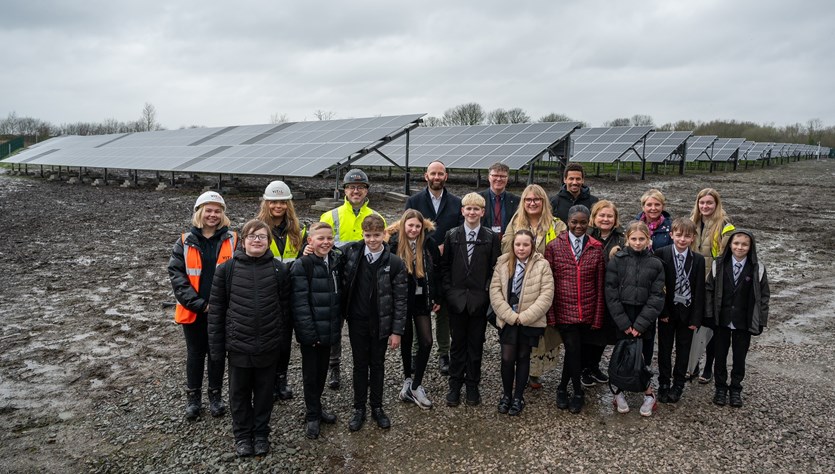
    A solar farm which will power Wolverhampton’s New Cross Hospital for three quarters of the year is set to be up and running this spring.

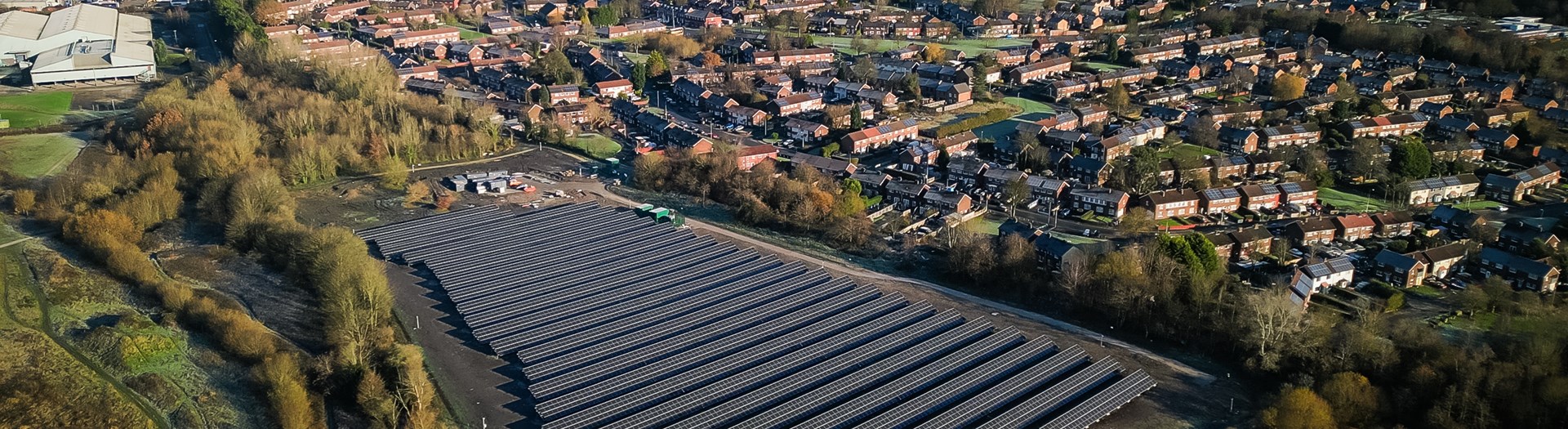
    The Royal Wolverhampton NHS Trust (RWT), City of Wolverhampton Council, and project partners including Vital Energi, have built the solar farm at a former landfill site the size of 22 football pitches, adjacent to Bentley Way, Wednesfield. It is set to open in April.

    The facility will power the entire hospital site with self-generated renewable energy for around 288 days a year, and save the Trust around £15-20 million over the next 20 years – money which will be put back into frontline healthcare.

    The solar farm will produce 6.9MWp of renewable energy to New Cross Hospital and will generate an estimated carbon saving of 1,583 tonnes of CO2e per annum.

    More than 15,000 electricity generating solar panels have been installed at the site by main contractor Vital Energi.

    Work to secure the 40-plus acre brownfield site included protecting badger setts, and removing methane.

    The project, combined with existing green technologies, allows the Trust to move away from reliance on the national grid and to reduce its exposure to rising electricity costs in the next two decades. It also supports the Trust’s goal of reducing its carbon emissions by 25 per cent by 2025, and of reaching net zero carbon emissions by 2040.

    Stew Watson, Director of Estates Development at RWT, said: “This investment is a huge boost to help us achieve that.

    “Our primary focus is always on the patient and these works ensure the Trust saves money on future energy bills, which we can then subsequently invest across other healthcare services.”

    “As the largest employer in Wolverhampton, we take sustainability very seriously and are committed to continually working to reduce our carbon footprint. We have taken a number of steps to reduce and better manage our energy consumption and operate in a sustainable manner. One of these steps is to look at using renewable energy so we are very pleased the development will be opening soon and delighted at the way the partnerships have worked out.”

    Professor David Loughton CBE, Group Chief Executive at RWT

    Ashley Malin, Managing Director at Vital Energi, added: “We’re delighted to have transformed a former coal mine and landfill site into this impressive solar farm, which is the largest single source of green energy on a hospital site within the UK.

    “The clean energy will power the air source heat pumps within the hospital, and significantly reduce the hospital’s carbon footprint.”

    Work has also been completed on the underground cabling to connect the hospital to the solar farm, which covers a distance of one and a half miles.

    RWT has received around £15m in grant funding for the project. This comprised contributions from the government’s Levelling-Up fund, the NHS and Salix Finance, a government-funded body.

    The Trust also received a further £33m to carry out green energy works as part of the Department of Business, Energy, and Industrial Strategy’s Public Sector Decarbonisation Scheme.

    LP1 8169

    L-R: Jon Gwynne (CEF), Ashley Malin, Professor David Loughton CBE, Stew Watson

    Solution detail

  • St Edward Awards Vital Additional M&E Work on Kensington Development


    St Edward Awards Vital Additional M&E Work on Upcoming Kensington Development

    Our involvement with the energy scheme at Berkeley St Edward’s Royal Warwick Square has developed as we have been awarded the £8.9m contract to provide the complete mechanical and electrical infrastructure for two residential blocks and the leisure suite.

    The work will see us complete the entire shell and core build out for 127 apartments, leisure facilities including a gym and pool, and the double basement car park, and involves installation of the low temperature hot water, chilled water, boosted cold water and low voltage distribution systems from the basement plant rooms to each apartment. We will also be installing all domestic hot and cold water services and heating and cooling systems to each property, the leisure suite and communal areas.

    Each apartment will also benefit from the installation of their own heat interface unit (HIU) to distribute the heating and cooling supply to each property

    This is the second project we have worked on at Royal Warwick Square after we won the scheme to expand the existing energy centre to cater for additional demand from 6 new residential blocks, which has seen us install two boilers, a 210 kWe CHP engine and a new chilled plant room, along with low temperature hot water, chilled water and low voltage connections to the blocks. Our knowledge and experience of the site has put us in the best possible position to successfully deliver the comprehensive mechanical and electrical infrastructure for two of the blocks to ensure they are ready for client handover.

    Rob Callaghan, Regional Director for the South

    Royal Warwick Square is a collection of 1, 2 and 3 bedroom properties with private leisure facilities in the Royal Borough of Chelsea and Kensington.

    Work for the additional phase is expected to be complete by February 2021.

  • Success for Queens Quay at the Scottish Green Energy Awards 2021

    Success for Queens Quay at the Scottish Green Energy Awards 2021


    Success for Queens Quay at the Scottish Green Energy Awards 2021

    Microsoftteams Image (70) (3)

    The Queens Quay heat pump project in Clydeside has added another accolade to its growing collection after claiming top honors at the Scottish Green Energy Awards.

    The project was a finalist in three categories and was named winner of the 2021 Carbon Reduction Award.

    Councillor Iain McLaren, Convener of Infrastructure, Regeneration and Economic Development, said: “I am thrilled that West Dunbartonshire Council’s Energy Centre and heat network has been recognised at this important event. This project delivers low carbon heat, helping us to reduce our organisation’s carbon footprint as we work towards our ambition of being net zero by 2045, and also offers our residents access to affordable heating.  Well done to all involved.”

    Solution detail

    West Dunbartonshire Council 2

    The Queens Quay project was shortlisted in the following categories:

    • Sustainable Development Award
    • Carbon Reduction Award
    • Outstanding Project Award

    This is the third award the project has received this year, after being named Heat Pump City of the Year by the European Heat Pump Association and highly commended in the H&V News Awards Heat Pump Project of the Year category.

    Congratulations to West Dunbartonshire Council on another award success.

    Solution detail

    Queens Quay is the first major water source heat pump project to demonstrate that we can harness the heat in our rivers, seas, and estuaries, which will be a game changer as we move to electrify heat. West Dunbartonshire Council have been pioneers in this area and shown how renewable energy can be a huge contributor on the journey to net zero. We now look forward to the heat network expanding and allowing more customers to access low-carbon, more affordable heat.

    Scott Lutton, Operations Director (North) – Vital Energi

  • Sunny Future for Swansea Bay UHB’s Solar Farm

    Sunny Future for Swansea Bay UHB’s Solar Farm


    Sunny Future for Swansea Bay UHB’s Solar Farm

    Brynwhillach Solar Farm begins exporting zero-carbon electricity to Morriston Hospital as project officially goes live.

    The Swansea Bay University Health Board solar farm has reached an exciting milestone after the 10,000 solar panels installed by Vital Energi went live and began exporting electricity to Morriston Hospital.

    The installation will generate 4MW of zero-carbon electricity for the hospital and will reduce the Health Board’s carbon emissions by 20,000 tonnes over the lifecycle of the project.

    Scott Lutton,  Operations Director – North and Scotland  explains, “This is a very important project for both the Health Board and the NHS in general as it will be the first Welsh hospital to receive its electricity from a dedicated solar farm and in addition to the large carbon savings, the hospital will reduce its energy spend by £439,000 per year.

    “As energy security is paramount to the NHS, the solar farm underwent a rigorous testing period and met all the requirements of the local district network operator.  Once it successfully passed these requirements the system went live and is now supplying zero carbon electricity to the hospital.”

    Vital Energi have also installed the supporting electrical infrastructure and 3km private wire network which will connect the solar farm to Morriston hospital.

    The project presented a number of challenges, however the Health Board’s project team together with Vital Energi, were able to overcome these and deliver the UK’s first dedicated solar farm with private wire supplying carbon free electricity to a large acute hospital. The Health Board takes its environmental responsibilities seriously and is committed to reducing its carbon footprint. This development demonstrates the Health Board’s commitment to the Welsh Government’s target of net zero carbon by 2030

    Des Keighan, Assistant Director of Operations at SBUHB

    This is the second energy project Vital Energi have delivered for SBUHB after phase 1 saw them deliver a range of energy conservation measures which reduced carbon emissions by 2,476 tonnes per annum whilst generating £870,000 of cost savings per year. Both projects were procured through the RE:FIT framework and come with an energy performance contract which guarantees performance, financial and carbon targets.

  • Sunny side up – MP Sir Ed Davey & Mayor of Bedford visit Solar Farm

    Sunny side up – MP Sir Ed Davey & Mayor of Bedford visit Solar Farm


    Sunny side up – MP Sir Ed Davey & Mayor of Bedford visit Solar Farm

    The Mayor of Bedford Dave Hodgson and leader of the Liberal Democrats, Sir Ed Davey, MP were among a group who visited the Bedford Green Technology & Innovation Park project on 4th of February to see how the site will be transformed from a former landfill site into a 21st Century solar park.

    The site at Elstow has undergone extensive remediation works to transform it into a green energy park with work now underway to install the council-owned solar farm which will generate over 4MW of zero carbon electricity for the grid.

    Vital Energi are currently on site at the 30-hectare plot, installing the piles that will support the steel frames.  Once this work is complete, the installation of circa 8,000 panels will take place.

    I was delighted to be shown around the Park. I would like to congratulate Mayor Dave Hodgson and Bedford Borough on this hugely innovative project to deliver cheap, green, energy. The £2.3million from the Council along with £1.8million from the South East Midlands Local Enterprise Partnership (SEMLEP) show real investment in our future energy supply

    Sir Ed Davey MP, Leader of the Liberal Democrats

    Scott Lutton, Vital Energi’s Operations Director – North & Scotland comments, “Playing a part in transforming this land from a former landfill site into a 21st century zero-carbon energy park is extremely exciting and will make a significant contribution to Bedford Borough Council on their journey to net zero.  It is a great example of how to reclaim sites of this nature and turn them into something truly inspirational”.

    The project will help the council meet their targets of becoming carbon neutral by 2030 and they were awarded more than £1.8m from the South East Midlands Enterprise Partnership (SEMLEP) Getting Building Fund towards the project.

    Mayor Dave said “It was great to see the progress at the Bedford Green Technology & Innovation Park. This project will not just deliver green electricity but also encourage others to reduce carbon emissions and adopt innovative technologies”

    Sir Ed added “I was delighted to be shown around the Park. I would like to congratulate Mayor Dave Hodgson and Bedford Borough on this hugely innovative project to deliver cheap, green, energy. The £2.3million from the Council along with £1.8million from the South East Midlands Local Enterprise Partnership (SEMLEP) show real investment in our future energy supply.”

  • Supporting Berkeley Homes’ sustainable vision

    Supporting Berkeley Homes’ sustainable vision


    Supporting Berkeley Homes’ sustainable vision through heat pump installation

    Vital Energi has been awarded a £3.1m contract to design and build the Energy Centre for phase 3 of Berkeley Homes North East London’s Woodberry Down development, which is located next to Finsbury Park.

    Commenced in 2009, Berkeley is regenerating the neighbourhood in a 30-year project which will deliver over 5,500 mixed-tenure new homes. The development will be built over 8 phases, and will create a bustling community which is also home to 15 acres of landscaped parkland, 42 acres of open water, including a water sports and open water swimming reservoir, and the Woodberry Wetlands –a dedicated nature reserve cared for by the London Wildlife Trust.

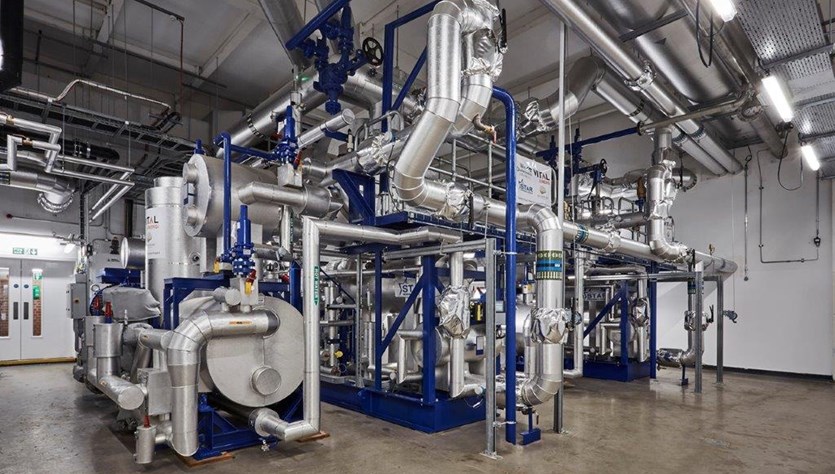
    Vital Energi will install 800kW of air source heat pumps (ASHP) on the roofs of two blocks, which will extract heat from the air and supply heating and hot water to the development. ASHPs are a low carbon heat source which will typically generate three times more energy than they use, making them 300% more efficient than traditional central heating systems.

    “We have worked closely with Vital Energi for over fifteen years and have established a fantastic working relationship with them over this time. Sustainability and energy efficiency are key pillars at Woodberry Down, and are at the forefront of everything we do. The introduction of the Energy Centre will play a huge part in our mission to reduce carbon emissions and will also lower energy costs for residents here.”

    David Barry, Operations Director, Berkeley Homes (North East London) Ltd

    Primary low-temperature heating system (LTHW) pipework will be installed within the Energy Centre, as well as distribution pipework which will run from the heat pump down to the energy centre, which when complete, will serve all 8 phases of the development. Three 1.5MW condensing boilers will be fitted within the new Energy Centre along with a Building Management System, as well as three 6m high 27,000 litre thermal stores.

    The Energy Centre will be a double height space (9m high) located adjacent to the basement and ground floor levels, so plant deliveries will require complex engineering, including a specialist movement company and temporary works design.

    Once complete, Vital Energi will operate and maintain the Energy Centre for 2 years, to ensure all equipment is maintained to a high standard, and carry out planned and reactive services of the Energy Centre.

    Rob Callaghan, Managing Director of Vital Energi’s London and Southern Division, said:

    “We’re delighted to be continuing our relationship by working on another of Berkeley Homes’ impressive mixed-use developments. It’s great to see an innovative regeneration project like Woodberry Down with energy conservation at its core.

    “Berkeley are passionate about creating low carbon resilient homes to help tackle climate change, and we’re proud to be helping them on their journey by installing highly efficient renewable technologies such as air source heat pumps.”

    Vital Energi will commence construction at the end of August.

  • Solar Panels Complete 2,000+KM Journey to Ostoya Roztocze Orphanage

    Solar Panels Complete 2,000+KM Journey to Ostoya Roztocze Orphanage


    Solar Panels Complete 2,000+KM Journey to Ostoya Roztocze Orphanage

    We often get the chance to support great causes whilst working on projects, so we were delighted to be able to donate 32 Solar PV panels to the Ostoya Roztocze Orphanage in Poland, which houses Ukrainian children who have been orphaned in the war.

    We recently delivered the 5MW Chamber house solar farm for Rochdale Borough Council, who made us aware that the orphanage needed solar panels and that the “Giving to Ukraine” charity was sending a convoy to Poland which could transport them.

    Solar Panels About To Begin Their Journey

    The Solar PV panels begin their journey from Heywood in Lancashire

    Solution detail

    We were delighted to donate the panels, which have completed their 2,000+km journey from Lancashire to Szczebrzeszyn in Poland and are now installed on the roof of the orphanage, delivering approximately 16kW of low-carbon electricity.

    We’d like to thank Rochdale Council for bringing such a great opportunity to our attention and Ostoya Roztocze Orphanage for the fantastic work they are doing.

    Solution detail

    Microsoftteams Image (12)

    The solar panels arrive at the orphanage and are unloaded by volunteers

    Solution detail

    Microsoftteams Image (16)

    The solar PV panels in-situ on the roof of the orphanage

    Solution detail

    Microsoftteams Image (15)

    The 32 panels are now producing clean electricity for use by the orphanage

    Solution detail

  • Solihull’s Energy Network gets backing from the National Wealth Fund

    Solihull’s Energy Network gets backing from the National Wealth Fund


    Solihull’s new low carbon Energy Network gets backing from the National Wealth Fund

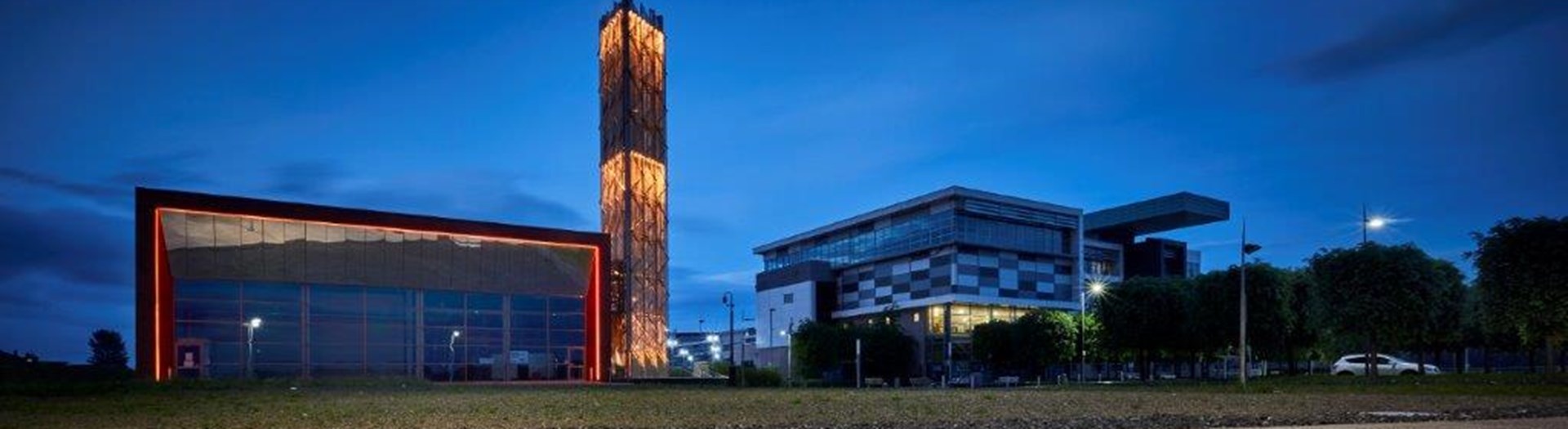
    Solihull Council has secured financing from the National Wealth Fund (NWF) to help deliver its ambitious town centre energy network. The innovative new network will provide low carbon heating, hot water and power (electricity) to a range of town centre buildings, helping to reduce fuel bills and future-proof against changes in customer energy needs.

    The project will be the first heat network to receive funding from the NWF via a £9.6m loan provided through its Local Authority function. This low-cost long-term financing option will enable the Council and its delivery partners to complete installation of the pipework for the first phase of the project.

    The project aligns with the NFW’s clean energy mandate and supports Government ambitions to increase the use of low carbon heat networks to 20% by 2050, up from 3% today. This drive is intended to help decarbonise the UK’s building stock, which is currently the second largest contributor to carbon emissions after transport.

    The first phase of the network in Solihull will provide heat and power to public and private sector customers, including Council-owned buildings and education campuses. It is intended that future phases will then connect other buildings in the town centre and link to planned commercial or residential developments in line with the Council’s Town Centre Masterplan.

    The project is being delivered by Vital Energi who will design, build, operate and maintain the new network. Vital Energi is a leading national player in the heat network and low carbon energy sector and has successfully delivered a range of exemplar, high-profile networks including Leeds PIPES and Mersey Heat.

    The initial funding required to get this carbon saving scheme off the ground was provided by the Government’s Heat Networks Investment Project (HNIP) and West Midlands Combined Authority.

    Heat networks like this one, which will provide buildings in the heart of Solihull with low-carbon, affordable heat and electricity, will play an essential role in the clean power transition. By helping homes and businesses in Solihull to stay warm in a cheaper and more efficient way, this investment will help more people feel the benefits of our drive towards clean power as part of the Plan for Change.”

    Miatta Fahnbulleh, Minister for Energy Consumers

    Councillor Andy Mackiewicz, Portfolio Holder for Climate Change and Planning said:

    “For individual buildings, decarbonising heat is expensive and often disruptive to occupants. A town centre energy network enables existing buildings and new developments to benefit from centrally based low carbon heat generation with minimal disruption and in a cost-effective manner benefitting from economies of scale. It also provides opportunities to instal rooftop solar panels that can supply the energy network customers, utilising roof space and ultimately protecting the green belt.

    “The real beauty of this scheme is that it can expand through subsequent phases to meet growing demand and link into new buildings and developments. As we progress with the scheme, we anticipate signing up many more customers who will be able to see the obvious benefit it can provide.

    Before embarking on this exciting scheme, we undertook detailed financial modelling as part of the business case, the favourable loan we have been able to secure from the NWF improves the financial case for the scheme which will recover all of its capital investment costs over its lifetime.”

    Lorna Pimlott, National Wealth Fund Managing Director, Local Authority Advisory & Lending, said:

    “Heat networks have a key role to play in the nation’s transition to net zero and we’re pleased to support Solihull Council in this important project. The NWF’s lower cost of finance will enable the council and Vital Energi to deliver the first phase of the heat network on time and within budget, enabling consumers to cost-effectively decarbonise their buildings while providing greater energy price resilience in the future.”

    Gemma Dyson, Pre Construction Director for Vital Energi, said:

    “The Solihull Low Carbon Energy Network is making significant progress on site, and this funding from NWF is more positive news.  We are all working hard to get the network up and running quickly, so that the end users can benefit from low carbon heat, hot water, and power, which will be a key step in decarbonising their buildings. We’ve also been making great strides with our social value commitments on the project, ensuring that we are making a difference in the community as well as helping the borough decarbonise.” 

  • Solar Car Park Project Set to Get Underway for Salford City Council

    Solar Car Park Project Set to Get Underway for Salford City Council


    Solar Car Ports Installation for Salford City Council | Vital Energi

    Two depots run by Salford City Council are set to take a step closer to their net zero carbon targets after news they are undertaking a solar car port project which will revolutionise the way they generate electricity.

    The scheme, which is being designed and delivered by Vital Energi, is part-funded by the European Regional Development Fund and, when complete, will see four state-of-the-art solar car ports installed across the council’s Turnpike Depot and Swinton Hall Road Depot.

    Artist’s Impression of Solar Car Port Design

    Solar Car Ports 1

    Solution detail

    Solar PV is one of the most effective ways of reducing your carbon emissions, but for a project to work you need the space to install them. By choosing solar car ports the Council have been able to make use of their car park without losing any spaces. It’s an innovative solution and will allow the council to generate significant solar electricity which is another strong step on their road to net zero.

    Gemma Dyson, Proposals Manager – Vital Energi

    One solar car port sized at 177kW will be installed at the Swinton Hall Depot, whilst a larger scheme comprising of 3 car ports sized at 477kW will be installed at the Turnpike Depot.  The electricity generated will be fed into the depot buildings and offset electricity from the grid.

    The schemes are being delivered for Salford City Council who is a partner in the Unlocking Clean Energy Greater Manchester project.  Greater Manchester has set a target of becoming a carbon-neutral city region by 2038 and are using the GMCA (Greater Manchester Combined Authority) Go Neutral Smart Energy framework to procure the schemes.