Author: admin

  • Navigating the UK’s grid capacity

    Navigating the UK’s grid capacity


    Navigating the UK’s Grid Capacity: Thoughts

    Lack of grid capacity is a potential hurdle to the UK meeting its net zero targets. Many organisations are hoping to utilise renewable electricity generation as part of their decarbonisation process, but face waits until 2030 and onwards for connection.

    Vital Energi’s Design Director, EC&I, Steve Kelly, sets out the challenges facing UK organisations and helps explain how they can navigate the UK’s thorny issue of grid capacity to develop viable energy projects which will propel them to net zero.

    STEVE WEBSITE

    Steve Kelly – Design Director EC&I

    Solution detail

    A brief history of the UK’s Grid…

    The electrical infrastructure in the UK has been evolving for over a century, from an individual and regionalised set of small supply networks to the UK National Grid Transmission Network and Distribution System that we have today. This is made up of 14 Distribution Network Operators (DNOs) and 17 Independent Distribution Network Operators (IDNOs).

    Initially power generation was produced by strategically placed large fossil fuel generation plants such as coal and gas fired power stations that used a top-down approach to supplying end users via an electrical network. This was subsequently supplemented by Nuclear and Hydro electric generation.

    To facilitate the mass movement of electrical energy from one point to another, a complex electrical network consisting of National Grid’s Transmission Network and localised Distribution Network Operators (DNO and IDNOs) were created to carry the power over long distances from the generation power plant to the customers that required power.

    In addition to the larger power stations there has always been the ability for smaller, innovative, and greener embedded generation to be able to connect onto the network such as CHP, hydro and biomass, and more recently solar, wind and battery storage systems.

    To further strengthen the Grid’s stability to provide power, a series of sub-sea interconnections have been installed from the UK to Belgium, France, Ireland, Netherlands and, more recently, Norway. This has enabled the bulk transfer of power to and from the European continent and provided us with stability and energy security.

    Energy Distribution Diagram

    Energy is now generated through a range of renewable and non/renewable sources, distributed and transmitted via the grid to businesses, homes and organisations.

    Solution detail

    Why is Grid Capacity a potential issue for the UK’s net zero targets?

    Up until recently there has always been headroom on both the DNO and Transmission Network for embedded generation to be able to connect. These embedded generation schemes are generally made up of such technologies such as CHP (combined heat and power), biomass generators, roof and field mounted solar PV and have often been installed as part of wider schemes to reduce both energy consumption and carbon emissions and achieve BREEAM status for development.

    Along with new forms of generation, additional loads are being introduced on the aging electrical infrastructure on both transmission and distribution systems. In line with net zero goals set by the government, consumers and the public are trying to reduce carbon usage and become net zero as soon as possible. This has resulted in initiatives to reduce the use of fuel and gas, and with the growing popularity of electric vehicles and home heat pumps, there is additional strain on the electrical network.

    The additional load and generation that is trying to connect has put massive pressure on both the DNO’s local network and, more so, on the transmission network. Although it may be perceived that the additional generation and load may ‘net off’ it is often the location of the installed equipment that is the problem. For example, a new offshore wind farm in the northeast may be the ideal location in terms of wind, constructability, and planning, but if the load is required in the south, this puts substantial strain on the transmission network to deliver this required power through its current infrastructure. As well as the underground cables and overhead cable lines, all other parts of the electrical infrastructure, such as substations, need to be reviewed to ensure that they are capable of accommodating the new constraints that generation puts on it.

    In a statement from National Grid, they said:

    To meet the government’s target (Net Zero), our industry must deliver more than 5 times the amount of electricity transmission infrastructure in the next 7 years, than has been built in the past 30 years.”

    National Grid, Utilities Company

    This is a phenomenal undertaking for National Grid, and it’s going to take some time and resources to complete.

    Reasons to be optimistic for the future of the UK Grid

    As of February 2023, the National Grid had a connections queue of 257MW worth of projects waiting to connect against a 147GW of low carbon requirement to achieve net zero. Unfortunately, only 30-40% of the applications in the queue materialise into an actual project. This has meant that new connections are being given a date of between 12-15years before they can connect, which are dates that are not acceptable to investors.

    One cause for optimism is that the core players with the power to transform our grid infrastructure have all issued definitive indicators that there is appetite for reforms which will enable a stronger, more resilient, more flexible grid.

    In order to try and free up capacity and remove the “speculative projects”, as of March 2023 the National Grid published a 5-point plan to help.

    1) Operating a Transmission Entry Capacity Amnesty until April 2023, allowing developers to terminate their connection contracts without incurring liabilities, freeing up capacity in the queue.

    2) Updating modelling assumptions to reflect current connection rates and reducing the assumption that most projects in the queue will connect.

    3) Changing the treatment of storage, including batteries, on the network to allow them to connect faster and free up capacity for other projects.

    4) Developing new contractual terms for connection contracts to manage the queue more efficiently so that those projects that are progressing can connect and those that are not can leave the queue.

    5) A ‘soon-to-be-made’ offer of an interim option for storage projects to connect to the network sooner, but with the caveat that they may be required to turn off more frequently when the system is under stress without initially being paid to do so.

    Additionally, OFGEM issued an open letter on future reforms to the electricity connections process, which focuses on reforms to deliver benefits to current and future customers, accelerate progress to net zero, begin to deliver as soon as possible, coordinate across onshore and offshore networks on the transmission and distribution grids and ensure the reforms are resilient to wider reforms.

    In April 2023, the The Energy Networks Association (ENA) published a three-step plan to speed up connections to the grid. If successful, this will result in mature projects which are closer to delivery gaining priority. Another core priority is changing how transmission and distribution networks co-ordinate connections, improving their interactivity. The final of the three points aims to bring greater flexibility for storage customers through new contractual options.

    A combination of the work being undertaken by National Grid, OFGEM and the ENA, alongside the new investment in the Grid infrastructure should enable projects to connect earlier than their proposed date, but these could still be 2030 onwards.

    This issue has become such a frustration to investors and customers that the former Prime Minister, Rishi Sunak detailed changes needed to be made in his new approach to net zero speech given on the 20th September 2023.

    Right now, it can take fourteen years to build new grid infrastructure. There are enough projects waiting to be connected to generate over half of our future electricity needs. So, I can announce today that the Chancellor and Energy Security Secretary will shortly bring forward comprehensive new reforms to energy infrastructure.”

    Rishi Sunak , former Prime Minister

    We’ll speed up planning for the most nationally significant projects. And we’ll end the first-come-first-served approach to grid connections by raising the bar to enter the queue and make sure those ready first, will connect first.”

    Rishi Sunak, former Prime Minister

    How can organisations best manage their potential low-carbon electricity projects?

    Although there are encouraging noises being made by both National Grid and the Government, new connections will still be beyond most customers’ requirements for their own targets to reach net zero.

    It is now more important than ever to ensure that grid applications are progressed as early as possible and that planning and funding is in place to ensure that “shovel ready” projects can connect to the grid as quickly as required and they are not sat in a queue awaiting a long connection date.

    Additional mitigation measures can also be considered to overcome these timescales by ensuring that any proposed scheme does not significantly impact either the DNO’s or Grid’s existing network. Schemes such as Active Network Management, Curtailment schemes, export limitation, fault level reduction could be introduced into the design at an early stage, ensuring an early connection.

    Communications should be started with the local Distribution Network Operator at the feasibility stage of the scheme. This will allow any potential limitations on the network to be known about in advance of a timely and costly application being submitted, and should also inform the size and design of the scheme. Early engagement with DNOs has enabled us to convert many schemes into real projects that might otherwise have been sat in a queue.

    IMG 0363

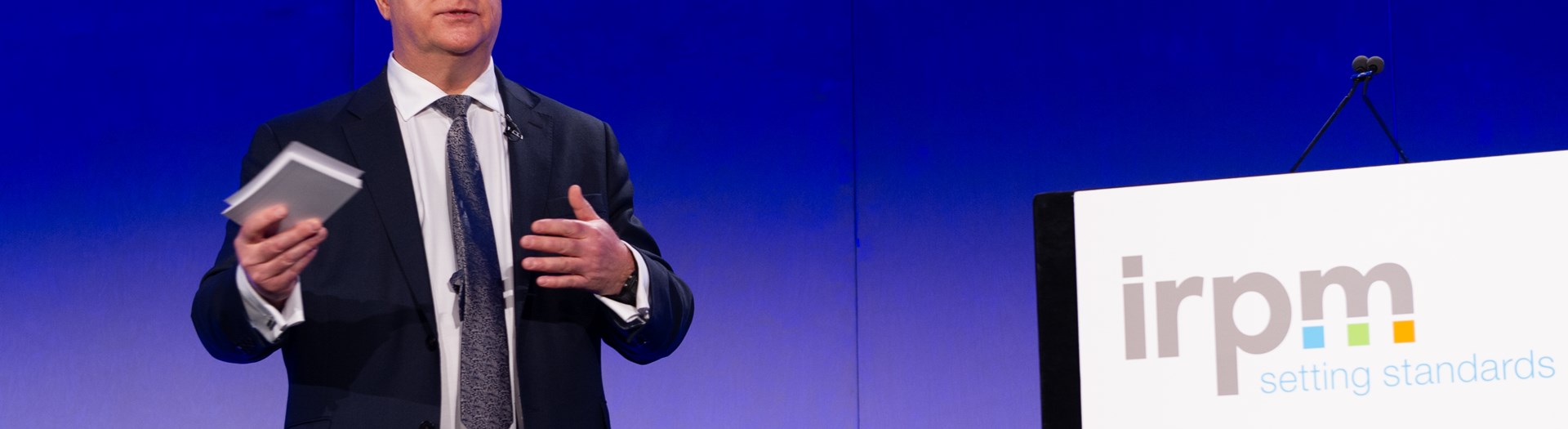
    Steve Kelly attending Solar and Storage LIVE, Birmingham

    Solution detail

    Many clients who wish to use renewable electricity generation as a way to decarbonise are now in a position where this is not viable within their set timeframe. If we scale this across the entire country, then it becomes a genuine barrier to the UK meeting its net zero targets.

    Experienced energy partners, like Vital Energi, can help clients evolve their projects so that they are both technically and economically viable. All schemes are unique, so solutions need to be unique too, but by partnering with an experienced service provider, clients are able to access their considerable experience of finding creative solutions to unlock projects.

    If you’d like to discuss your potential project and the options available to you then please get in touch with us. 

  • Climate Change Minister officially opens University’s solar development

    Climate Change Minister officially opens University’s solar development


    Climate Change Minister officially opens University’s green electricity solar development

    Climate Change Minister officially opens University’s green electricity solar development

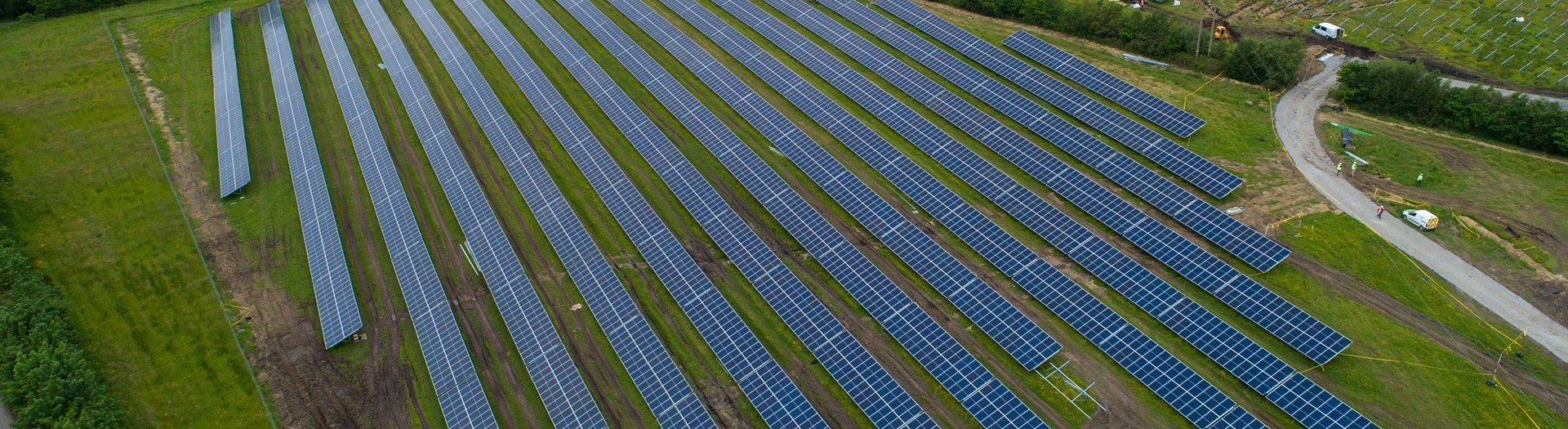
    A solar array producing at least a quarter of the electricity required by Aberystwyth University’s Penglais Campus has been officially opened today (Thursday 9 March 2023) by the Welsh Government Minister for Climate Change, Julie James MS.

    The green electricity development is expected to reduce the University’s carbon emissions by over 500 tonnes a year as well as deliver annual energy cost savings of over £450,000 based on current prices.

    Covering 3.8 hectares of land belonging to the University on Fferm Penglais, the array includes around 4,500 individual solar panels.

    Construction on the site has also included work to encourage greater biodiversity in surrounding hedgerows and drainage basins. With the development now fully operational, sheep can continue to graze the pasture around the panels.

    The £2.9m investment has been supported by the Welsh Government Energy Service and funded by a £2.6m loan from Welsh Government via Salix Finance Ltd and the University, with support from the Higher Education Funding Council for Wales (HEFCW).

    Minister for Climate Change, Julie James said: “I am delighted Aberystwyth University have progressed this solar development. The technical support from Welsh Government’s Energy Service and zero interest finance from the Wales Funding Programme operated on Welsh Government’s behalf by Salix Finance Ltd, has been vital to deliver the scheme.

    At times of high electricity prices, the return on this investment will be even greater than first envisaged. The way the scheme has delivered demonstrates once again that investing in clean energy can result in financial and carbon savings whilst enhancing biodiversity.”

    Julie James , Minister for Climate Change

    Professor Neil Glasser, Pro Vice-Chancellor for the Faculty of Earth & Life Sciences at Aberystwyth University, said: “As a University we are committed to tackle the challenges of climate change in as many ways as possible. We do so not only through our research and teaching but also through our strategic institutional aims. This solar array marks another key milestone towards the University’s aim of becoming a zero-carbon estate by 2030/31 and we are grateful to all those involved in this important development.”

    Mark Williams, Partnerships Director at Vital Energi said: “It’s a privilege to work alongside public sector organisations, such as Aberystwyth University, to help them meet their net zero targets and we’re delighted the first two phases of our work with them have had such a positive impact with respect to reducing both their emissions and their energy bills.  The solar array was a significant investment by the University to deliver an innovative project and we’re sure it will be an inspiration to other organisations looking to decarbonise.

    Joan Dayap, Programme Manager, Wales Team Salix Finance said: “Salix are proud to be supporting Aberystwyth University in decarbonising its estate with £2.6m of funding from the Wales Funding Programme, delivered in partnership with the Welsh Government and the Welsh Government Energy Service. The Solar PV array will generate financial savings for the University of over £450,000 at current energy prices and more than 500 tonnes of carbon annually. The University is a brilliant example of the innovative work taking place across the education sector in Wales, playing a crucial role in the nation’s journey towards net zero.”

    Over the past 10 years, Aberystwyth University has reduced its CO2 emissions by over 40 per cent and in 2019, the institution made a formal climate emergency declaration.

    In addition to the solar project at Fferm Penglais, the University has been working closely with the Welsh Government Energy Service which has provided a range of technical and commercial support to help identify, develop and deliver suitable green projects.

    In 2020, the University joined a consortium of UK universities to strike a £50m landmark green energy deal – the first time public energy users had collaborated on a deal of this kind to buy clean electricity.

  • Join Vital Energi at Unlock Net Zero Live to discuss your energy needs

    Join Vital Energi at Unlock Net Zero Live to discuss your energy needs


    Join Vital Energi at Unlock Net Zero Live to discuss your energy needs

    We understand that housing providers are facing unprecedented pressure to balance customer care, decarbonisation and energy costs and Unlock Net Zero Event will be the perfect opportunity to discuss how Vital Energi can help you meet your energy goals.

    Join us on stand U110 where we will be showcasing our range of digital technologies which we developed to enhance the heat network customer experience whilst helping your decarbonisation strategy to become a reality.

    Learn more about:

    • vTherm˚e Heating Interface Unit The space saving vTherm°e Heat Interface Unit (HIU) is amongst the most efficient models in the market and has one of the lowest VWARTs of all BESA tested HIU’s.
    • vTherm˚c Cooling Interface Unit Launched in 2022, the vTherm˚c Cooling Interface Unit range is available in three different capacities and is designed to enhance energy efficiency whilst cooling your space.
    • vPro2, In Home Display Intuitive, feature rich in-home display designed to help prepayment end users make informed decisions.

    On Tuesday 23rd November at 13:30, Katy Lister, Vital Energi’s Client Relationship Director, will be hosting a question and answer session on the UNLOCK NET ZERO SOLUTIONS stage where you will have the opportunity put your questions to a panel of guests from the housing and energy sectors, as they discuss their priorities and the available tools to tackling the current energy market challenges.

    We look forward to welcoming you to Unlock Net Zero Live at Excel London between 23rd & 24th November 2022, and hopefully, helping you on your decarbonisation journey.

    To book your free ticket by clicking here

    To arrange to meet the Vital Energi team at Unlock Net Zero Live, please email:

    Katy Lister (Client Relationship Director) [email protected]

    Glenn Harrison (Business Development) [email protected]

    Lance Colwyn (vTherm Business Manager) [email protected]

  • Elstow Solar Farm goes live and begins saving over 900 tonnes of CO2

    Elstow Solar Farm goes live and begins saving over 900 tonnes of CO2


    Elstow Solar Farm goes live and begins saving over 900 tonnes of carbon emissions

    Bedford Borough Council’s brand-new solar farm has been fully energised and is now exporting low-carbon electricity to the grid. The project is made up of over 8,000 solar panels, is capable of generating up to 4.2MW of electricity and is enough to power approximately 1,000 homes.

    Guests from South East Midlands Local Enterprise Partnership (SEMLEP), Bedford Borough Council and Vital Energi gathered to celebrate the event at an official grand opening on 28th July 2022 and the opening was marked by the cutting of a ribbon by Bedford Borough Mayor, Dave Hodgson.

    The event was be attended by:

    • Neil Hart (SEMLEP), Judith Barker
    • The Mayor Dave Hodgson (BBC), Paul Pace, Shah Faisal, Natasha Hollidge, Gemma Drake, Claire Wilkinson, Melanie MacLeod, Haydn Rees, Patrick Lyons, Thomas Askham, Martin Jon
    • Simon Jones (Vital Energi), Chris Tickle, Tom Nolan
    • Josh Freeman (Wiser) Graeme Outridge
    • George Webb (G Webb), Richard Bream
    • Patricia Jones (Bedford College)
    • Gordon Brady (Bedford University)

    I am delighted to be opening the solar farm. This project creates green energy at a former landfill site right here in Bedford Borough. The solar farm is delivering low carbon, clean energy and will encourage others to reduce carbon emissions, adopt innovative technologies and improve air quality. The project has cost £4.15m – with Bedford Borough Council investing over £2.2milion and the project being awarded more than £1.8million from the South East Midlands Enterprise Partnership (SEMLEP) toward the project. We also received additional support from HM Government via the Getting Building Fund which is designed to deliver jobs, skills and infrastructure across the country. I would like to thank them for their contribution.”

    Dave Hodgson, Mayor of Bedford Borough

    Scott Lutton, Vital Energi’s Operations Director explained, “Former open cast landfill sites can be problematic, but Bedford Borough Council have created an innovative solution which will transform the areas into a 21st-century solar farm.  This approach will now generate huge carbon savings which will make a strong contribution to Bedford Borough on its net zero journey.  The topography of the land is quite uneven, which made this a challenging project to install, but we’re delighted with the technical solution and it’s a great, new addition to Bedford’s low-carbon energy infrastructure.”

    Bedford Borough Council have set ambitious targets of becoming net-zero by 2030 and the solar array will play an important role in meeting these targets.

    Official Opening of the Solar Farm

    1

    Hilary Chipping, SEMLEP CEO said, “SEMLEP is proud to have supported this fantastic project which contributes to sustainable economic growth and innovation by changing the dial on energy use and attracting new, innovative businesses. In addition to generating clean, green energy it has delivered new jobs and, in collaboration with the universities and college, will support the development of skills in green technologies, all benefitting the communities of the area.”

    Solution detail

  • We can help you achieve net zero as PSDS round 3 launches next month

    We can help you achieve net zero as PSDS round 3 launches next month


    PSDS round 3 launches next month

    The Government has announced that the third round of PSDS funding will open for applications on 6th October, which is fantastic news for public sector organisations looking to decarbonise, but you need to act quickly to secure the funding.

    PSDS funding is delivered as a non-repayable grant and is a fantastic opportunity for public sector organisations who don’t have all of the required budget to self-fund the development and delivery of decarbonisation projects, but first they must successfully navigate the applications process.

    The priority for PSDS round 3 is to provide funding to replace fossil fuelled heating systems at the end of their working lives, such as gas boilers, and replace them with low carbon heat sources combined with additional energy efficiency measures, to facilitate a ‘whole building’ approach to heat decarbonisation.

    Once the total budget for round 3 is confirmed, the majority of the 2022/23 grant funding will be allocated to projects that need to be undertaken between 1st April 2022 and 31st March 2023, where the heating system has reached the end of its working life. A smaller proportion of the funding has been set aside to specifically support multi-year decarbonisation projects where heating systems that are expected to reach the end of their working lives in 2023/24 or 2024/25, but decarbonisation work must start in 2022/23.

    With short timescales, predicted over subscription, and Salix Finance (who manage the funding) stating that projects will be assessed in the order in which they’re received, organisations could be forgiven for feeling that the clock is already ticking.  Early engagement from an energy specialist, such as Vital Energi, is recommended as it can bring the specialist skills and knowledge necessary to develop a viable suite of projects across a property portfolio.

    We have partnered with several clients to support their application, and whilst they must submit the material themselves, we can review the feasibility of range of decarbonisation measures, develop design and costings and energy and financial modelling to develop the information that needs to be submitted. In PSDS round 1, our clients received over £100m in funding, which represented over 10% of the total fund, and we hope to create similar partnerships in round 3. This is a great opportunity for public sector organisations to decarbonise their estate, and PSDS provides a key way of unlocking the incremental funding needed to make these projects a reality.

    Nick Gosling, Vital Energi’s Chief Strategy Officer

    If you’re interested in the range of support Vital Energi can provide both through the application process and in delivery of your decarbonisation projects, then please email [email protected] or contact us here.

  • Vital supporting new green skills training targeting unemployed

    Vital supporting new green skills training targeting unemployed


    Vital supporting new green skills training programme targeting unemployed in West Yorkshire

    Vital Energi are one of seven employers supporting an important initiative by Generation UK which aims to train, support and place unemployed people into high demand and meaningful jobs.

    The scheme involves a 10-week programme to equip learners with the technical and behavioural skills they need to thrive in the green energy sector as Retrofit Advisors.

    We are delighted to be working with Generation on this exciting green careers initiative as it presents candidates with a unique opportunity to work on some of the UK’s innovative and exemplary heat network projects. The roles available will be instrumental in developing our service further in the residential sector and will help to raise industry standards.

    Mike Cooke, Managing Director, North & Scotland, Vital Energi

    Retrofit Advisors are in growing demand across energy companies, specialist installers, housing associations and local councils.  It’s estimated we’ll need ~10,000 skilled retrofit professionals by 2025 alone.

    Jess Sewter, Partnerships Director for Generation in Leeds City Region explains, “We’re looking to bring the success of our bootcamps to a new green jobs programme for the region, working with Trustmark and the Retrofit Academy and with support from funding partner Macquarie and local employers in the sector.”

    Businesses across the sector already report capacity challenges and the difficulty in finding people with the right skills and aptitude for these roles, whilst at the same time youth employment has been severely impacted by the pandemic, especially for those from underrepresented backgrounds.

    The Retrofit Advisor programme launches 14 March 2022 and is open for applications from anyone 18 and over, living in Leeds City Region and not in education or employment. The programme suits those eager to make a difference to climate change, provide great customer service, and embark on an exciting new career.

    To book on to the programme or find out more about the application requirements, please use this link https://genuk.online/Vital

  • Join us at The Distributed Energy Show this December


    Join us at The Distributed Energy Show this December

    We are excited to be exhibiting at The Distributed Energy Show in Telford on the 8th and 9th December, where we look forward to discussing our energy solutions including decentralised energy generation, energy conservation measures and multi-utility network distribution schemes based on low carbon or zero carbon technologies. 

    Vital Energi continue to produce energy efficient heat and power systems and consumption reduction solutions with long term cost benefits for clients in a broad range of markets including Healthcare, Education, Industrial, Commercial, Residential, and Local Authority.

    In addition to our exhibition space at the conference, Chief Strategy Officer, Nick Gosling, will join Dr Joel Hamilton and Tim Ward from the Department for Business, Energy & Industrial Strategy (BEIS) to discuss Heat Network Innovations in Conference Room 2 on Wednesday 8th September at 12 noon.

    Come and see us on stand 1609 – to register for your free ticket please visit The Distributed Energy Show website here.

    Alternatively, if you’d like to get in touch to discuss how we can support you on your decarbonisation journey, please contact us here.

  • Vital Set for Chartered Institute of Housing Annual Conference 2021

    Vital Set for Chartered Institute of Housing Annual Conference 2021


    Vital Set for Chartered Institute of Housing Annual Conference 2021

    We are excited to be attending the three-day Chartered Institute of Housing’s (CIH) annual conference at Manchester Central from the 7th to 9th September 2021, where we’ll be meeting with social and private housing providers and their customers to talk about how our solutions can meet their metering, billing and energy challenges.

    This is a great opportunity to share our expertise with the industry on topics ranging from how to decarbonise your housing stock, through to how to comply with the Heat Network (Metering and Billing) Regulations.  We’re looking forward to meeting people from across the housing sector, listening to them and discussing how we can help them achieve their energy goals.

    Glenn Harrison, Vital Energi’s Business Development Manager

    In addition to our exhibition space at the conference, Glenn Harrison will be discussing ‘Digitalisation of Heat – Understanding Customers & Networks’ in The Insight Theatre on Wednesday 8th September at 9.30am.

    Come and find us at stand number G12. If you’d like to book your ticket for the conference, you can visit the CIH website here. 

    Alternatively, if you’d like to get in touch to discuss how we can help you, please contact us here.

  • Work begins on Castle Park Water Source Heat Pump Energy Centre

    Work begins on Castle Park Water Source Heat Pump Energy Centre


    Work begins on Castle Park Water Source Heat Pump Energy Centre

    Work has begun on the energy centre which will contribute low carbon heat to the Bristol Heat Network.  The project will be delivered by Bristol City Council and Goram Homes in partnership with Vital Energi. Once the Energy Centre is complete, a mixed-use development will be built over it with construction due to begin next year following a design competition.

    On Friday 18th June 2021, Cllr. Nicola Beech, Cabinet Member for Climate, Ecology, Waste and Energy, Goram Homes board member Cllr. Don Alexander, and Stephen Baker, Managing Director, Goram Homes, visited the site to mark the start of the work. Cllr. Beech said:

     “The Bristol Heat Network is an integral part of our strategy for decarbonising the city and ensuring that Bristol continues to play its part in addressing the climate crisis. The council has invested over £60m in low-carbon and renewable infrastructure in recent years and we’re delighted to be working in partnership with Goram Homes on this innovative project.

    “It’s exciting to be replacing old technology with greener solutions and great to be supporting businesses and public sector partners with their own efforts to decarbonise. Developing the heat networks has so many benefits for the city including the reduction in fuel poverty, cutting carbon emissions and creating thousands of jobs to support the local economy.

    The 3MW water source heat pump will take water from the nearby floating harbour and use it to generate heat and hot water for local businesses and residents. Bristol’s heat network currently supplies over 1000 properties with low-carbon heat from a variety of sources across the city and continues to expand to new areas.

    One of the truly exciting things about heat networks is that they last in excess of 50 years and can be constantly upgraded as new low-carbon and zero carbon technologies become available. Goram Homes are making a sizeable investment to incorporate heat pumps which are one of the lowest-carbon solutions around and will see them take a large step on their decarbonisation journey.

    Mike Cooke, Vital Energi’s Managing Director-North & Scotland

    In 2018 Bristol City Council declared a climate emergency and pledged to make Bristol carbon neutral by 2030. Heating and hot water accounts for 40% of energy-related carbon dioxide emissions worldwide, and 19% of the UK’s greenhouse gas emissions come from heating our homes and workspaces. Water source heat pumps are estimated to reduce the amount of energy needed to heat a building by 80%, and the Castle Park Energy Centre will provide affordable heating with a low carbon footprint for a greener, cleaner Bristol. Cllr. Don Alexander said:

     ‘It’s great to see that work is now underway and to be able to talk about the project with people face to face. The Energy Centre at Castle Park, which will provide low-carbon heat and hot water for local businesses and residents, shows Goram Homes’ ability to deliver the kind of bold solutions that Bristol now needs.”

    Goram Homes and Cllr. Don Alexander will soon be launching a series of face-to-face events to give local residents and communities a chance to find out more about our pipeline of developments. You can read a Q&A with Don here where he discusses his excitement about being able to get back out into the community.

    For more information on the Bristol City Council’s heat network can be found on their Energy Service website.