Author: admin

  • A Day In The Life Of A Vital Apprentice

    A Day In The Life Of A Vital Apprentice


    A Day In The Life Of A Vital Apprentice

    As part of our celebrations for National Apprenticeship Week, we caught up with Technical Apprentice, Aidan Whetham, who is currently working on site at Torry Heat Network.

    Aidan, please could you tell us a little bit more about yourself…

    Hey, I’m Aidan, I’m 19 years old and I’ve been a Vital Energi apprentice since September 2022. Before that I was studying, and in my spare time I coached children aged from 18 months to 12 years in community clubs and football nursery schemes. I still enjoy watching and playing football at evenings and weekends with my friends.

    What attracted you to be an apprentice at Vital Energi?

    I think apprenticeships are a great way for young people to enter into the world of work, especially into the energy industry. It’s a really exciting time and I think the industry will continue to grow over the next few years and throughout my lifetime. I’ve always had an interest in learning and understanding renewables so the opportunity to become an apprentice with Vital was something I couldn’t pass up on. My dad is also a Project Manager at Vital, so I’ve heard a lot from him whilst growing up and wanted to explore my interest further and develop my knowledge and skills.

    Can you tell us a bit about the project that you’re working on?

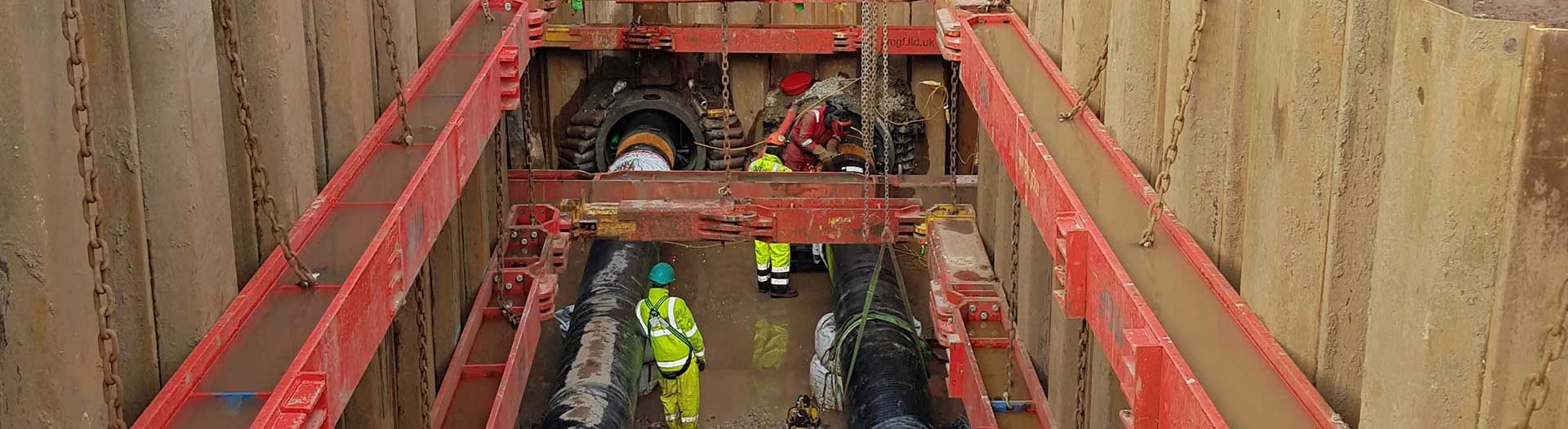
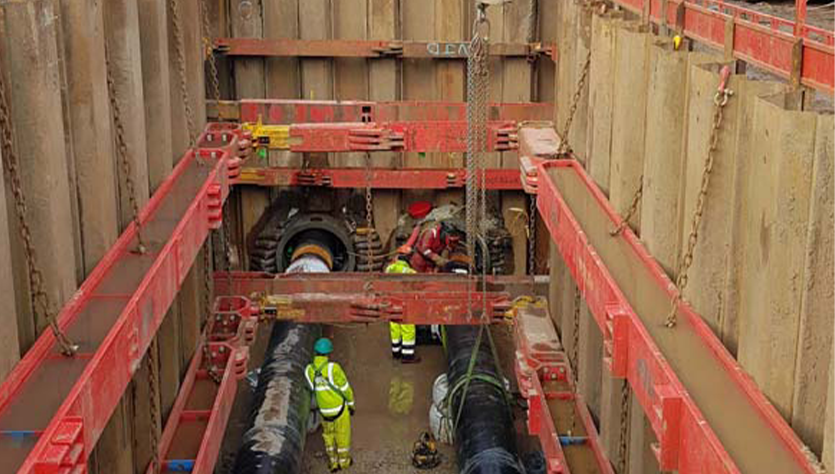
    I’m currently on site on the Torry Heat Network project, which is a district heating scheme with an energy centre that is supplied by an EFW (energy from waste) plant. It will use the non-recyclable rubbish from Aberdeen City and convert it into power. During this process, steam is generated which is then converted into hot water and pumped around almost 300 homes in the Torry area of Aberdeen via a 3.7 mile network of underground pipes. We’re currently working on the civil engineering, laying more pipework in the ground as the network continues to grow at pace.

    What have you learned so far from working on this project?

    I didn’t understand all the moving parts within project management and delivery, and now I think I’m really developing a sound knowledge of all the aspects by being put in at the deep end (but with support). I really enjoy being hands on and going through the equipment schedule, from contacting supply chain partners and ensuring parts are on-site ready for installation, and when mechanical contractors are ready to install them.

    What’s been a highlight for you whilst working on site?

    The biggest highlight is watching the project unfold, from the early stages to now and beyond. It’s really rewarding to see my involvement, and the team’s hard work come to life every day during the delivery.

    Is the apprenticeship what you expected it to be?

    It’s a lot more than I expected, but in a good way. I didn’t expect to be hitting the ground running as much as I have done. I’ve really enjoyed being part of the team and learning from experts within their field, with responsibilities from the get-go.

    What’s next after your apprenticeship? Where would you like to see yourself in the next 5 years

    As part of my apprenticeship, over the next 2 years, I’ll do a rotation across different departments of the business to learn more and see what I enjoy the most. After this I’ll hopefully return to permanently join an on-site team, helping with project delivery, as I feel that I’m more suited to being on the delivery side of hopefully lots of different energy projects in the future.

    If you’re considering the renewable energy and heat networks industry as a career, our apprenticeship scheme is now open. Click here for more information.

  • 70 hours of shaping sustainable futures at Lancaster University

    70 hours of shaping sustainable futures at Lancaster University


    70 hours of shaping sustainable futures at Lancaster University

    Our projects go beyond infrastructure. They serve as catalysts for local employment, training, and community investment opportunities, which can leave lasting, impactful legacies. We’ve been working in partnership with Lancaster University, to deliver two major low carbon, energy projects, the Net Zero Energy Project, and the Solar Farm.

    Throughout these projects, we have worked closely with students, staff, and local stakeholders on various social value initiatives, to inspire action on carbon reduction, promote sustainable careers, and emphasise the importance of the University’s net zero journey.

    Our impact so far

    So far on the project, we’ve delivered more than 70 hours of engagement with local schools and colleges, sponsored over £3000 towards the Lancaster University Triathlon in support of the St John’s Hospice and Cancer Care charities, hosted and attended 5 career drop ins, in addition to 7 student engagement events, and provided 3 internships to university students.

    Looking ahead, we’re planning a range of activities over the coming months, including a tree planting event for students to participate in.

    Empowering the Next Generation

    As part of our ongoing efforts to inspire and educate the next generation, we’ve delivered a range of enriching initiatives involving local schools and colleges. In one of our recent sessions, we facilitated a workshop in collaboration with Vital Energi and Lancaster University, for pupils at Central High School. The session was inspired by the book “How Bad Are Bananas? – The carbon footprint of everything by Mike Berners-Lee” and explored environmental impacts of everyday choices. This gave pupils the tools they needed to understand how they can make small changes to lessen their impact.

    Creating First Steps towards Careers in Green Energy

    We hosted a seminar for Lancaster University students to introduce them to careers in the sustainability sector. Our aim is to inspire those who have begun to explore the world of green careers and want to know what it is like to work on projects such as the Net Zero Energy Project. We followed up with a careers drop-in session to network with university stakeholders across the departments. Discussions with our senior construction team, apprentices and graduates centred on collaborative opportunities for students. These could be work placements, upskilling tours or construction phase projects which all help students take their first step towards a sustainable future.

    “Thank you for the presentation today! It was very insightful hearing from the team at Vital Energi about the tangible developments you are contributing to at Lancaster University.”

    Robert Graham, Student at Lancaster

    The Healthy Living Roadshow

    Giving students a sense of ownership and an understanding of the intricacies and benefits of the Net Zero Energy Project was a core part of our pre-construction planning, and our staff have been happy to support multiple drop-in sessions, including the Healthy Living Roadshow at County College. Through showcases of the ongoing scheme, as well as direct access to our project management team, students gained a deeper understanding of the innovative works taking place and the direct impact on campus life. Interactive activities like the “Aim for Net Zero” darts competition made learning engaging, whilst promoting awareness of the project’s significance.

    Good Things Come in Threes

    Since 2016, Sport Lancaster’s sprint-distance Triathlon event has been a huge success, and along with sponsoring the University’s “Try-a-Try” Triathlon, three of our colleagues put themselves forward to compete in the event as a relay team. The morning was a great chance for us to help raise money for both St John’s Hospice and Cancer Care. The Sport Lancaster team praised our contributions, noting that the sponsorship of the bike racking, traffic management, and race timing supported the smooth running of the event. They also acknowledged that although the construction works may have altered the route, it is all part of a positive initiative, the Net Zero Energy Project.

    Internships and Work Placements

    What better way to make a mark in the sustainable energy sector than by gaining first-hand experience on the project. In partnership with Lancaster University, we have been offering internships and work placements to give students real-world experiences. The Net Zero Energy Project offers learning and development opportunities for junior engineers, apprentices, and graduates across various disciplines. These early-career professionals can gain practical knowledge of cutting-edge energy technologies, system integration, and sustainable heating solutions, preparing the next generation of engineers and specialists to lead on future projects.

    “My time at Vital Energi was an incredibly rewarding experience. I had the opportunity to explore different aspects of the business, from gaining an insight into construction management, to contributing to a whole-life carbon assessment, and producing P&ID drawings for the mechanical design team. I also gained valuable exposure to the Lancaster University Net Zero Energy Project, which highlighted the complexity and importance of the journey towards net zero. Throughout my placement, my supervisors and colleagues were supportive and welcoming, I couldn’t have asked for a better experience. Thank you, Lisa Martin, Stuart Hoyle, Gemma Read, Stephen Booth and the rest of the team for their support.”

    Baraa Elrayah , Student at Lancaster University

    Passing on our Skills and Knowledge to Future Leaders

    Why do we do this? Because we believe that the next generation is the key to achieving global net zero. Through our partnership, we contribute to a healthier planet, by educating individuals on the importance of eco-friendly living and sustainable careers. We aim to motivate them, giving meaning to their aspirations. By providing access to resources that support sustainable practices and careers, we can guide them in making a meaningful difference.

  • 6 steps to a successful Energy Services Company (ESCo) partnership

    6 steps to a successful Energy Services Company (ESCo) partnership


    6 steps to a successful Energy Services Company (ESCo) partnership

    As the UK’s heat network market moves towards regulation, the importance of developing sustainable and customer-focused energy solutions is becoming more critical than ever. For housing developers and providers, partnering with an Energy Services Company (ESCo) can enable them to benefit from reduced operational and financial risks, data-driven insights to support regulatory compliance, affordable tariff structures, and effective customer engagement strategies.

    Here are six key steps to building a successful ESCo partnership:

    1. Evaluate potential ESCo partners to ensure your long-term goals are met

    The first step of developing an Energy Services Company (ESCo) is to evaluate whether your intended partner’s ESCo service model aligns with your long-term goals. Focus on ESCo providers with a proven track record of delivering efficiency gains, carbon footprint reduction, consumer protection, proactive customer communication, and operational cost savings specifically within the heat network sector. Consider how their proposed solutions could meet your required performance metrics, sustainability targets, and customer experience values.

    2. Minimise your risk by negotiating the right contractual framework

    Next, negotiate a transparent and risk-aligned contract that clearly defines performance guarantees, service levels, and financial liability. This will ensure customers benefit from fair tariffs, a great customer experience, and optimal system performance. Take the time to understand any proposed ESCo revenue-sharing model and ensure it motivates both parties to achieve optimal network performance, providing a revenue stream that could be utilised to offset capital costs or further reduce consumer tariffs. Thoroughly evaluate the proposed operational and financial risk mitigation strategies, ensuring comprehensive liability insurance is in place for any potential system malfunctions or performance shortfalls.

    3. Treating customers fairly and providing a great experience is critical to success

    It’s crucial to select a partner which at its core, emphasises treating customers fairly, and engages with the community at every level of service delivery. This approach, as demonstrated by Vital Community Energi, is designed to ensure that the energy solutions provided are not only efficient, but also consider the consumer experience, and ultimately enhance customer satisfaction.

    You will need to be able to fully rely on your ESCo partner to support your customers and ensure they are equipped to answer questions and requests. There is a responsibility in providing heating and hot water and by building an ESCo partnership built on customer service values, you can contribute positively to community welfare and sustainability.

    4. Taking control of regulatory compliance with technical expertise and innovation

    Your ESCo partner should take full control over your compliance with heat network regulation therefore it is important to evaluate their technical capabilities and experience in design, constructing, and optimising heat network infrastructure and assets. To support Heat Network Technical Assurance Scheme (HNTAS) compliance, look for partners who can demonstrate their expertise in energy audits, equipment upgrades, data analytics platforms, and advanced control systems. Prioritise ESCos actively researching and implementing cutting-edge technologies for improved network efficiency and resilience.

    5. Explore funding options from full ownership to shared investment models

    Each ESCo is unique, so review the proposed financial model and ensure it meets your strategic objectives and fits within your financial expectations. If not, you can explore various funding options ranging from full ESCo ownership and operation to shared investment models. Consider the implications of upfront capital outlays versus performance-based contracts and look for competitive terms for ongoing maintenance and service fees, to enable you to interrogate the long-term costs of the ESCo.

    6. Develop a collaborative approach and clear communication channels

    Finally, choose an ESCo partner with a collaborative approach, that values your operational expertise and integrates seamlessly into your existing team. It is important to have clear communication channels for regular data sharing, performance reporting, and joint decision-making on energy optimisation strategies. A relationship built on open communication and transparency will ensure a successful and mutually beneficial partnership.

    Developing a successful ESCo partnership involves carefully evaluating potential partners, negotiating risk-aligned agreements, and prioritising the fair treatment of customers. Collaboration is key and by working with an established company like Vital Energi, you gain access to proven expertise in the development of sustainable energy processes, tailored funding models, and an enhanced customer experience. Choosing the right ESCo partner is not just about meeting today’s needs—it’s an investment in a sustainable, resilient, and community-focused energy solution.

    If you are interested in developing an ESCo partnership and would like to learn more, please get in touch.

    You can also read the full Housebuilder & Developer article here.

    Read about our latest ESCo agreement here:

    Hepworth Place – Energy Services Company (ESCo)

    Hepworth Place – Energy Services Company (ESCo)

  • 5 things you may not know about battery storage

    5 things you may not know about battery storage


    5 Useful Facts About Battery Energy Storage Systems

    Battery storage, or battery energy storage systems (BESS), are rechargeable batteries that can store energy from different sources and then release power when customers need it most. It’s an exciting time for Vital as we’ve recently installed four 2MW BESS at acute hospital sites across the UK.

    Commercial Structuring Manager, Stewart Williams, has been involved in the procurement of our batteries and is playing a key role in the research and development of batteries and energy storage. He’s investigating emerging battery technologies for use in future projects too!

    Stewart shares 5 things you may not know about battery storage…

    1. A useful analogy to understand GW vs GWh
      Power Capacity (GW) vs Energy Capacity (GWh) explained. Energy is the ability to cause change; power is the rate energy is moved, or used – think of a bath, the rate the water runs down the plughole is power capacity (maximum power discharged at a given time) and the amount of water the bathtub holds is energy capacity (total amount of energy able to be stored).
    2. How many homes can the current UK battery fleet power?
      At the end of 2023, the total operating power capacity of batteries in Great Britain was 3.5GW, up from 2.1 GW at the end of 2022.Total energy capacity has grown even quicker, up to 4.5GWh at the end 2023 from 2.3GWh in 2022, which means the average duration of battery energy capacity in GB is now 1.27 hours, up from 1.1 hours in 2022. The UK battery fleet is forecasted to reach over 5GWh in energy capacity by the end of 2023, which would be enough to power 600,000 homes for a full day.
    3. UK battery storage pipeline
      With a record 1.5GW and 2.2GWh of battery capacity being added operationally in 2023, the pipeline for battery storage schemes in the UK is now at 71GW/110GWh. This includes 24GW/40GWh with planning approval and 2.8GW/4.9GWh already being constructed. There is still marginal difference in GW/GWh for operational (peak chasing) assets, but now a significant difference for pipeline schemes with the emergence of longer duration storage assets. 
    4. Government investment in battery
      Recent data shows that nearly a fifth of the UK government’s total energy technologies investment must be spent on energy storage between 2025 and 2030 to meet renewables targets. Almost 10% of grid capacity in the UK will be provided by battery storage by 2030, costing an estimated £20 billion.
    5. Europe’s largest battery is in the UK
      The largest live Battery Energy Storage System (BESS) by energy capacity in Europe as at the beginning of 2023 is in the UK, in Yorkshire. This stores up to 196MWh or enough to power around 300,000 homes for 2 hours. For context, each of the four 2MW/2MWh BESS we’ve installed at NHS sites across the UK would store enough power to boil nearly 22,000 kettles…

    Click here to learn more about battery storage.

    Learn more about Vital’s battery projects:

    Stewart Williams (3)

    Commercial Structuring Manager, Stewart Williams

    Solution detail

  • 5 key considerations when selecting the perfect heat pump

    5 key considerations when selecting the perfect heat pump


    Heat Pump Selection: 5 Key Factors | Vital Energi

    Commercial Heat Pumps are an ideal renewable energy solution for those with a high demand for heating, cooling, and hot water, and they are playing a key role in our transition to net zero. When it comes to choosing the right one to suit your organisation or site though, the task can seem daunting as there are so many variables which can affect the performance and efficiency.

    Vital Energi’s Elliott Sharpe (Strategy & Partnerships Director), Chris Green (Engineering Director), and Liam Grice (Senior Engineer), have shared 5 key factors you should consider before embarking on your heat pump journey.

    Do you have metered data?
    Before you take the leap into the world of heat pumps, it’s crucial to get acquainted with one essential element of your building’s energy puzzle: metered data. Why is this data so important? Well, it’s the compass that guides you toward the most efficient solution and best application of your heat pump. 

    Imagine buying clothes without knowing your exact size – it’s a gamble. Similarly, choosing a heat pump without metered data or some form of energy data can be a gamble. Accurate energy usage data helps you determine the right-sized heat pump for your building, preventing an oversized or undersized system that can lead to inefficiency and high energy bills.

    Heat pumps are renowned for their energy efficiency, but to truly reap the rewards, you need to know how much energy your building consumes. Metered data helps identify energy waste and inefficiencies, allowing you to address them and maximize the cost savings potential of your heat pump. So, before you embark on your heat pump journey, start with the data – it’s the key to unlocking efficiency, savings, and environmental benefits.


    Choose your refrigerant wisely
    One of the largest factors that determines a heat pump’s efficiency and performance is the working fluid it uses. There is no “one size fits all” refrigerant, so careful consideration over your exact requirements is essential to allow the optimum fluid to be selected.

    Think about regulatory requirements too. Impending regulation changes may mean the heat pump can be installed now, however future maintenance challenges may arise, so working fluid selection is critical to make sure the heat pump can be serviced reliably and cost effectively for the life of the product.

    Natural working fluids often have a lower environmental impact compared to their synthetic counterparts. They have extremely low global warming potential and do not contain forever chemicals making them a great option to futureproof your heat pump.


    Check your electrical capacity
    Before investing in a heat pump, there’s a crucial step that often gets overlooked but can make or break your decision: checking your building’s/site’s electrical capacity. Understanding your power supply is not just a technicality, it’s a fundamental prerequisite for a successful installation, after all, heat pumps require an electrical power supply to operate.

    Investing in and installing a heat pump without assessing your electrical capacity can be risky. By checking your capacity upfront, you eliminate any costly surprises. In some cases, you might discover that your building’s electrical capacity is insufficient for a heat pump. This isn’t necessarily a roadblock, it’s a chance to plan for an upgrade. Upgrading your electrical system can expand your options and allow for expansion of your commercial heat pump solution. 

    In conclusion, understanding your building’s electrical capacity is a foundational step in the heat pump journey. It ensures that you know your building/development is ready to cater for your new heat pump solution, as well as identifying any electrical enabling works early, before you make that initial heat pump investment. Don’t let electrical surprises derail your decarbonisation journey—start with a thorough capacity check.


    What temperature do you need?
    A heat pump typically operates at its best when it is delivering lower temperatures. It is important to think about how this heat will be delivered throughout your building. Keeping existing pipework and heat emitters may help to reduce capital spend, however this could well be at the detriment to operational costs.

    Do you have any building upgrades planned? Building fabric improvements, new windows, or perhaps an extension? Take these into account when reviewing the temperature and distribution of heat across your premises.

    A heat pump is a big investment. Considering these factors in advance will give you the best possible opportunity of it having a long, successful lifespan.


    Consider your source of energy
    Air source heat pumps are often the most straightforward solution for organisations, and can offer fantastic efficiencies and carbon reductions compared to conventional heating systems. However, ask yourself, is there an opportunity to use an energy source with a warmer temperature than air?

    Consider whether you can use your surroundings to your advantage. Perhaps this could be a local water source, such as a river or lake. What about ground source? A ground array, borehole or aquifer can provide favourable source conditions. Is there an existing waste heat stream or air source you could use? An industrial process or refrigeration system may be rejecting heat to the ambient air already, recovering this might be the perfect source. Or maybe a combination of any of these?


    Click here to discover more about heat pumps, and learn about some of the heat pump projects we’ve delivered below.

    Queens Quay
    London Borough of Southwark Heat Pumps
    Northwick Park Hospital

  • 5 things you didn’t know about solar

    5 things you didn’t know about solar


    5 Interesting Insights on Solar Technology

    Principal Engineer, Alex Marshall, has been with Vital Energi for almost four years and plays a key role in bid development for a wide range of projects, many of which include solar.

    We asked him to share 5 interesting facts about solar…

    1. By the end of 2023, the UK is expected to have 15,674 MWp of installed solar capacity; a growth of roughly 20% from 2022. The renewable energy that will be generated by those panels is equivalent to the annual electricity demand of approximately 4 million traditional homes. Vital will have installed almost 50 MWp by 2024!
    2. The largest solar farm in the world is the Golmud Solar Park in Qinghai, China. It has an output capacity of 2.8 GWp, which is equivalent in size to over 10,000 football fields. It contains over 7 million solar panels, which would have required 126,000 tonnes of sand to produce enough silicon to make the panels. The energy produced from this solar farm would equate to the annual demand of over 1.3 million traditional UK homes alone.
    3. Conventional solar panels have a maximum efficiency of 33.7%. By re-engineering the way panels are made, such as using multiple layers and combining different materials, scientists have worked out that this could go up to 86%! But we are a long way off yet…
      Some novel materials that are being used require interesting combinations of elements, such as Gallium, Indium, and Arsenic. Newer materials that are being investigated are Perovskites – which have complex crystal structures for harvesting light and significantly increase the efficiency of panels.
    4. Solar panels are manufactured using silicon, which is highly abundant in its natural ores (the main one being sand). Silicon can be processed into different types of material depending on the intended use:
      ​​​​​​​Traditional solar panels use individual or multiple smaller wafers of silicon (monocrystalline and polycrystalline), which can be expensive to produce, but have high efficiencies and outputs with relatively long lifespans.
      Some solar panels are coated with an amorphous (gel-like) layer, which is less expensive and better suited to harsh environments (dark / cold / hot), but is more susceptible to degradation over time.
      Unfortunately, as has been reported in the press, a lot of the silicon produced for solar panels is produced in an area of China where there have been widespread reports of modern slavery. At Vital, we work closely with our supply chain to ensure that the PV panels we procure are not linked to these specific areas of China, and that everything we use is ethically sourced.
    5. The world’s power usage is approximately 17 Terawatts (TW) on average. If we built a huge solar farm in the desert, we’d need around 43,000 square miles to produce this level of continuous power. Just 1% of the Sahara Desert would be enough area to provide all of this power and would cost a tenth of the equivalent in nuclear power stations.

    ​​​​​

    Learn more about some of Vital’s solar projects:

  • 48 Homes Set for Low Carbon Heat in Dalmarnock

    48 Homes Set for Low Carbon Heat in Dalmarnock


    48 Homes Set for Low Carbon Heat in Dalmarnock

    Dalmarnock took another step towards its net zero targets recently when work began on the district heating system which will connect Keepmoat’s Arrolbridge development to the £6m Clyde Gateway heat network.

    Vital Energi are delivering the 12-week programme of works which will see the main network, which it delivered in 2020, extended by 1km to connect 48 new homes.

    Dh3

    Vital Energi worked closely with the developers to create an innovative flexible steel pipe solution which will enter homes through a pre-installed duct, allowing the business to progress with construction of the development whilst district heating works take place at the same time.

    In addition to the district heating network, Vital Energi will also provide its vTherm°e heat interface unit, which will convert heat from the network into useable heating and hot water for residents, providing a complete turnkey, low-carbon system.

    Solution detail

    We’re thrilled to be working on this development to bring this low energy heating solution to residents in Dalmarnock. We are looking forward to providing much needed family homes to the area, which, as well as being connected to this innovative district heating network, will feature energy saving and environmentally friendly features for our customers. Our Arrolbridge development has been designed for a new era of living, with flexible home office spaces included in each property and all homes encircling a central green public open space with play facilities.”

    Spokesperson, Keepmoat

    DH2

    The Arrolbridge development will include a range of two-, three- and four-bedroom houses, which will have energy efficient designs for a lifetime of low energy bills, including enhanced insulation and solar PV panels. These will also be the first residential properties to connect to this district heating network.

    Solution detail

    Ashley Walsh, Managing Director – Heat Networks commented: “Keepmoat wanted this development to be of the highest environmental standards and have installed measures such as enhanced insulation and Solar PV panels on this development. The connection to the district heating network will further drive down the carbon emissions of the development, which will be another positive step for Dalmarnock on its net zero journey.

    “It is fantastic to see much-needed homes being delivered just 3km from Glasgow town centre and this is another great addition to Dalmarnock’s green energy infrastructure.”

  • £13m Energy Project Set to Cut Westminster City Council’s C02 Emissions

    £13m Energy Project Set to Cut Westminster City Council’s C02 Emissions


    £13 Million Energy Project Set to Cut Westminster City Council’s Carbon Emissions By 1,700 Tonnes

    The project represents the largest Public Sector Decarbonisation Scheme Grant made to a London Local Authority.

    Westminster City Council is set to make a significant contribution to the decarbonisation of London after awarding us a contract to revolutionise the way they generate and use energy. In February 2021, Westminster City Council was awarded a £13million grant via the Department for Business, Energy and Industrial Strategy’s Public Sector Decarbonisation Scheme.

    The first phase of the partnership, which is being delivered through the Retrofit Accelerator Framework, will see energy conservation measures installed in up to 70 buildings including schools, leisure centres, libraries and commercial premises, and the improvements will save around 1,700 tonnes of carbon emissions per year.

    In 2019, the City Council declared a climate emergency. The contract with us is one of a number of practical steps being taken to meet its ambitious targets to become a net zero council by 2030 and a net zero city by 2040.

    The work has involved a comprehensive energy audit on the council’s property portfolio and has identified a range of energy conservation and energy generating measures which will, not only reduce emissions, but also deliver a future reduced carbon footprint for the Council.

    The works will deliver energy efficient upgrades to the lighting, heating, ventilation and BMS systems within Westminster City Council buildings as well as harnessing the latest renewable technologies such as solar PV and air source heat pumps.

    SJR Mortuary (1)

    Councillor Paul Swaddle, Cabinet Member for Finance and Smart City at Westminster City Council commented:

    “We are committed to tackling the climate emergency and ensuring we create a sustainable economy for the future of Westminster.

    “Large cities like London are among the biggest emitters of carbon, and Westminster’s location at the centre of the capital means we can play a significant role in cutting emissions. Around 86% of Westminster’s total emissions comes from buildings. That’s why we are proud to work with our partners, Vital Energi, to modernise and decarbonise the council’s offices, leisure centres and libraries using the latest technology.

    “By working together, we can build a greener and cleaner Westminster for everyone who visits, works and lives in our city.”

    Solution detail

    Seymour Leisure Centre

    Scott Lutton, Vital Energi’s Operations Director commented:

    “Westminster City Council have declared a climate emergency and are committed to becoming a carbon neutral council by 2030 and this project will make a strong contribution towards meeting this target.  By applying our experience of helping clients to decarbonise though harnessing the latest technology, our in-house team of design and energy modelling experts can develop and deliver a scheme which maximises carbon and energy savings.

    “We specialise in taking responsibility for our clients’ complete property portfolio, regardless of the number of buildings, or size of properties, to deliver the maximum decarbonisation possible.   On this project the largest property is over 8,000m² and the smallest is around 80m², which is a great illustration of the range of opportunities public organisations have for decarbonisation across their entire estate.”

    Solution detail

  • Press Releases

    Press Releases


    Press Releases | Vital Energi

    Filter by :

  • Modern Slavery Policy

    Modern Slavery Policy


    Modern Slavery Policy | Vital Energi

    Vital Holdings Limited Annual Modern Slavery & Human Trafficking Statement 2026

    Vital Energi is fully committed to compliance with the Modern Slavery Act 2015 (the “Act”) in all its divisions, not only in its own dealings but in those of its supply chain. We have taken several steps to combat slavery and human trafficking and will continue to work to ensure this does not occur in our business or supply chain. This statement has been published in accordance with the Act and sets out the steps we have taken to prevent slavery and human trafficking in our business and supply chains.

    Download our full Annual Modern Slavery & Human Trafficking Statement 2026 here