Author: admin

  • CO2 reduction moves closer at Bedford Green Technology & Innovation Park

    CO2 reduction moves closer at Bedford Green Technology & Innovation Park


    Carbon reduction moves closer as first panels go in at Bedford Green Technology and Innovation Park

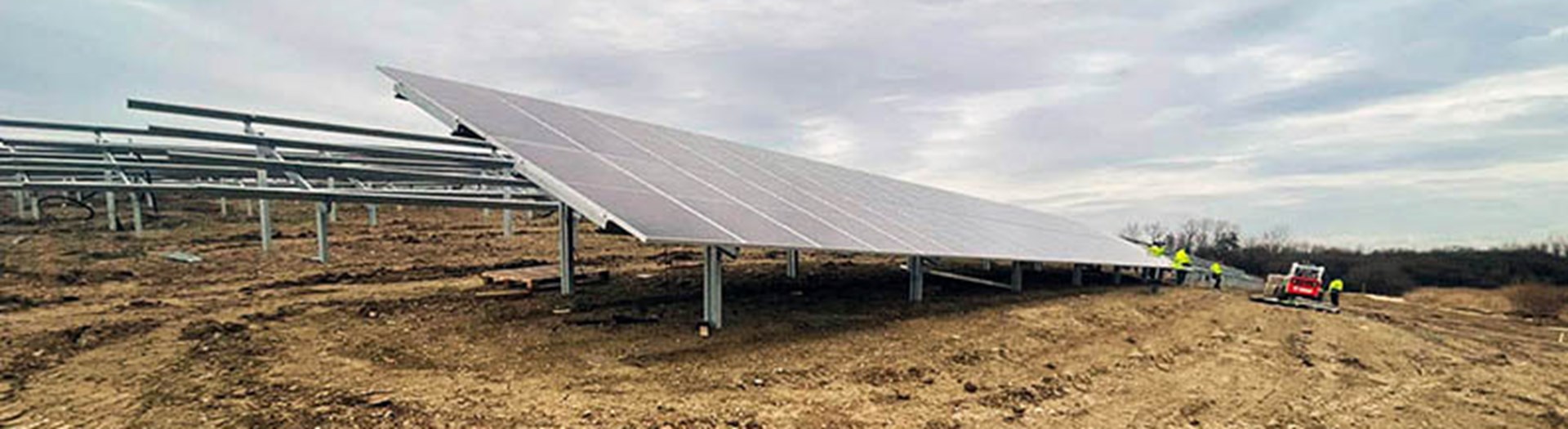
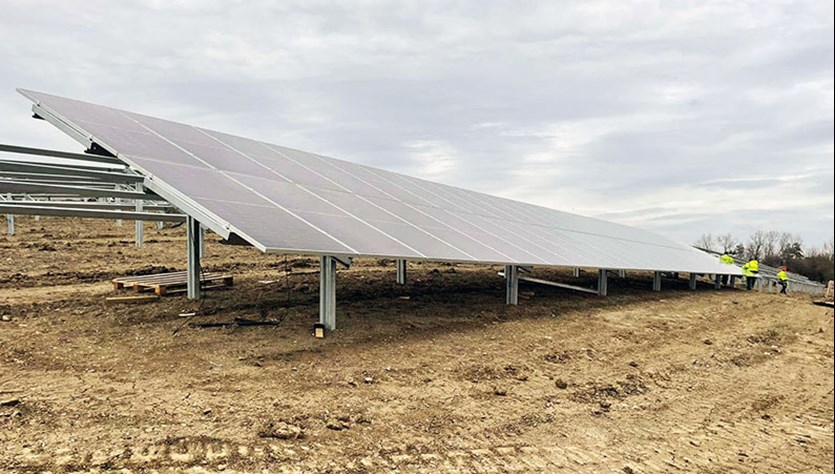
    A former landfill site is set to play a central role in Bedford Borough Council’s net zero plans after the first of 8,080 solar PV panels were installed at the Bedford Green Technology & Innovation Park project.

    After extensive regeneration works to the site, 4.2MW of capacity will be installed, stretching across a 30-hectare plot.  Piling and frames have been installed and, when complete, the project will save an estimated 1,000 tonnes of carbon per year.

    It is fantastic to see this former landfill site be transformed in this way, creating green energy right here in Bedford Borough. We have always worked to lead by example locally, cutting our carbon emissions and working towards carbon neutrality by 2030. This is a really exciting project to be involved in.”

    Dave Hodgson, Elected Mayor of Bedford Borough

    Without Pallette 1

    The project will help the council meet their targets of becoming carbon neutral by 2030 and they were awarded £1.867m from the government Getting Building Fund through the South East Midlands Enterprise Partnership (SEMLEP) towards the project.

    Solution detail

    The transformation of this site is nothing short of remarkable. It will go from being an old landfill site to a state-of-the-art solar farm capable of producing 4.2MW of zero carbon electricity. This is a great example of how ambitious councils can harness renewable energy to help meet their net zero targets and contribute to a cleaner and greener UK.”

    Scott Lutton, Operations Director for Vital Energi

    The project is set to be operational in April and tested and commissioned by May 2022.

  • Career Pathways – Getting to Know Shannon O’Neil

    Career Pathways – Getting to Know Shannon O’Neil


    Career Pathways – Getting to Know Shannon O’Neil

    When we talk about pathways into the engineering industry, apprenticeships and degrees may be two of the most popular routes, but there are far more options for people who want to gain the skills, knowledge and experience needed to make a success of their careers.

    To celebrate International Women in Engineering Day we sat down with Shannon O’Neil to discuss how her journey took her from College to Vital Energi via a Merchant Navy Cadetship.

    Tell us a little about your career…

    I joined Vital Energi as an Operations and Maintenance Engineer after leaving the merchant navy and have been with the company for a year and a half now. My job calls for me to maintain and oversee the sites, making sure they perform safely and efficiently to provide heat whilst maintaining their parameters. I schedule and undertake maintenance; perform inspections and monitor the system and I absolutely love it. There are many similarities in the role comparing with the navy that I massively enjoyed, whilst being able to come ashore and live a more sociable lifestyle.

    I’ve been here one year and a half and I like how everyone is eager to help and I am gaining more experience and learning every day.  I love working with experienced engineers who talk me through new tasks, expand my knowledge in engineering and are keen in working together to help each other out.  The diversity within O&M has been so beneficial to me as I am constantly learning new skills and ways to work from them.

    Shannon Pic 4

    Shannon outside the Queens Quay energy centre – One of the projects she provides maintenance on.

    Solution detail

    Why did you enter the heat network industry?

    We cover various sites, the main site of mine is Queens Quay. This is similar to what I was doing onboard ships in terms of the controls and how the plant operates allowing me to transfer my skills. Ships tend to take their heat from engines to heat their domestic water so the CHP’s we also work with operate very similar. I undertook engine overhauls on the ship so I was intrigued with the annual boiler inspections and the work that goes into stripping, rebuilding and testing them.

    My merchant navy career took me to some far-flung places and saw me sail through the Panama Canal and spend time in South America amongst other places.  After 6 years however, I was ready to end to the two-months-on two-months-off routine and applied for a job at Vital Energi.

    Shannon Pic 2

    Shannon’s career path saw her spend 6 years in the Merchant Navy before joining Vital Energi.

    Solution detail

    How did you enter the industry?

    I initially did a HND at college in Electrical Engineering. With this I was planning on going to university but I was more so interested in the practical work and getting experience. The cadetship offered 8 months of experience with getting the qualification so it was an easy decision for me to make and it turned out to be the most amazing experience.

    I was in the merchant navy for 6 years and the knowledge and experience I gained really positioned me well for finding another job and the green energy industry looked like a great place for me to use my skills.

  • Castle Park Lifts European Heat Pump Association Awards

    Castle Park Lifts European Heat Pump Association Awards


    Castle Park Lifts European Heat Pump Association Awards

    The Castle Park Water Source Heat Pump (WSHP) project in Bristol has been named as the winner of the “Heat Pump City of the Year” award at the 2022 European Heat Pump Association awards held in Brussels earlier this week.

    The awards attracted almost 50 of Europe’s highest profile WSHP projects and saw the Castle Park energy centre claim the top spot, shining a spotlight on Bristol’s low-carbon heat network.

    Scott Lutton, Vital Energi’s Operations Director – North & Scotland, “We’d like to congratulate Bristol City Council and Goram Homes for their fantastic achievement.  This project demonstrates that WSHPs can plug into existing networks and opens up the possibility of harnessing the Gigawatts of ambient heat in the UK’s rivers, which will play a large part in meeting our net zero targets.

    Heat pumps can lower energy bills and deliver strong carbon savings and Castle Park is one of the first major WSHP projects in the UK, so we’re delighted that it has gained recognition at the European level and hope it will inspire other similar projects going forwards.”

    Castle Park Energy Centre and the Bristol Heat Network play an integral part in decarbonising the city, and I’m delighted that our work with Goram Homes and Vital Energi has been recognised. Developing the heat networks has so many benefits for the city, including the reduction in fuel poverty, cutting carbon emissions and creating thousands of jobs to support the local economy. “The installation of the 3MW Water Source heat pump and abstraction equipment manufactured by Star Refrigeration were only capable of being deployed with the establishment of an expert multidisciplinary team with Vital Energi as Principal Contractor, Sustainable Energy Ltd as lead designers and DQS as QS/Project manager. “This award highlights our ability to deliver the kind of bold and innovative solutions that Bristol needs to tackle the climate emergency. Bristol’s Heat Network will continue to expand through our City Leap Energy Partnership, delivering reliable, decarbonised heat to new communities, whilst creating much needed jobs across the region.” A particular challenge in the case of Castle Park was the topography of the site and the team certainly rose to the challenge even in this extreme example.”

    Kye Dudd – Cabinet Member – BCC, Environment, Ecology, Energy and Waste

    “I’m thrilled that Goram Homes has been recognised for this innovative development in our city. Water Source Heat Pumps generate the lowest carbon heat around, and this is a shining example of harnessing our local resources – the floating harbour – to provide cleaner, greener heating for Bristol. I look forward to building more homes that can benefit from technology like this.”

    Stephen Baker, Managing Director of Goram Homes

    SJH 4106

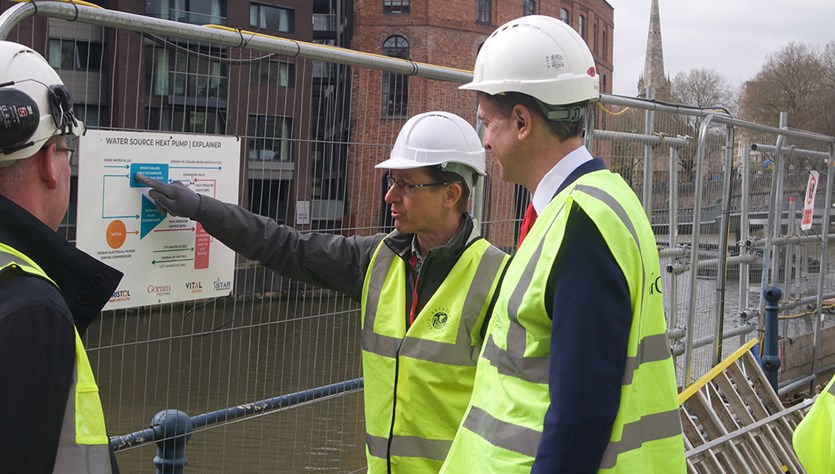
    The Castle Park energy centre takes water from the nearby floating harbour, passes it through a heat pump and then the heat is transferred into the Bristol Heat Network, helping to lower the carbon emissions of approximately 1,000 homes and businesses.

    The European Heat Pump Association was created in 2011 to collect best practice, create role models and raise awareness of the potential of heat pumps and the awards are one of the keyways the association shine a light on the industry.

    Solution detail

  • Chamber House Solar Farm Powers Up

    Chamber House Solar Farm Powers Up


    Chamber House Solar Farm Powers Up

    Power up! Heywood flicks the switch on major new solar farm

    The largest publicly owned solar farm in Greater Manchester has powered up in Heywood.

    The 10 hectare site at Chamber House, which secured just over £3m funding from the European Regional Development Fund (ERDF), is now switched on.

    The electricity produced, which, at 5.5 megawatts of electricity, would be enough to power 2,000 homes, will be supplied to the national grid. It will be used to offset the council’s annual energy bill, potentially saving the authority thousands of pounds a year.

    In addition to saving over 2,300 tonnes of carbon emissions a year, the solar farm is also bringing extra environmental benefits, with a huge planting scheme taking place across the site. More than 8,000 hedges, trees and plants have been planted as well as wildflower seeding to increase biodiversity, alongside the installation of bird boxes and wildlife habitats to encourage animal life-cycles to continue to thrive.

    “This project is a really important step forward in our fight against climate change and means Rochdale will be more than playing its part in helping to deliver Greater Manchester’s pledge to become net zero by 2038. These types of innovative clean and green projects are really important and I know we are looking at delivering more of them in the future.”

    Councillor Tricia Ayrton, Rochdale Borough Council

    Vital Energi got the local community involved during the build, arranging mock interviews for local schoolchildren, presenting climate education workshops, holding site tours and offering work experience and local apprenticeship opportunities.

    Chamber House Solar Farm was delivered by Rochdale Development Agency (RDA) in partnership with the council. This solar farm forms one of a number of  projects being delivered under the ERDF funded Unlocking Clean Energy within Greater Manchester (UCEGM) umbrella project led by Energy Systems Catapult (ESC).

    “Greater Manchester have some extremely ambitious net zero targets and Chamber House Solar Farm will be a great addition to their renewable energy infrastructure, generating clean electricity for decades to come. Not only that, but we were able to make significant improvements to the land in areas such as planting and drainage, making it a truly sustainable project.”

    David Oatt, Regional Manager, Vital Energi

  • Chris Calder: First steps to decarbonising your manufacturing plant

    Chris Calder: First steps to decarbonising your manufacturing plant


    Chris Calder: First steps to decarbonising your manufacturing plant

    With over 10 years’ experience within the energy sector, Vital Energi’s Project Development Director, Chris Calder, shares examples of ways in which the food and beverage manufacturing industry can start to take control of their energy consumption and build a resilient future.

    The UK food and beverage industry is experiencing significant challenges through rising costs due to factors such as inflation rates and supply chains. Over the last few years, the industry has seen many local and global factors impact the daily business operations. From volatile utility costs directly proceeding the COVID 19 pandemic, to a war that has had significant impacts, the road ahead has felt challenging.

    We must also acknowledge the immense pressure on supply chains, particularly on suppliers of raw goods and materials. This pressure has been driven by factors such as inflation and concerns over supply security, like reduced availability of ingredients and bad weather affecting crops, leading to a perfect storm of challenges. Whilst there are some immediate solutions to energy there also must be more support from the new Government to encourage greater adoption of on-site generation and clearer pricing on third party charges for energy bills.

    There are however strategies to mitigate these rising costs, and some are easier and quicker to adopt than others. Breaking down into simple tasks is often a way that we help customers set out and plan for not only their net zero requirements but also their cost and carbon reduction in the short and medium term.

    There are growing pressures to decarbonise due to net zero targets, economic challenges, and shifting consumer values. Not only is sustainability key to staying relevant and maintaining positive brand perception, it also helps achieve certifications like B-Corp, demonstrating a commitment to both environmental and social responsibility.

    Data Visualisation & Optimisation

    One of the critical first steps to reducing energy consumption is understanding where it’s going. The simple and cost-effective act of installing meters and submeters will give extraordinary amounts of data, which can be used to drive local efficiencies, and reduce the baseline heat, gas and power consumption before beginning larger projects. Clear data allows for easy optimisations, such as turning key plant equipment on/off or up/down at critical times of the day, which from previous experience could potentially reduce energy consumption by up to 30% on sites that haven’t streamlined operations.

    Installing a Building Management System (BMS) or upgrading an old control system can reduce consumption by 10-15%, and it can evolve and grow over time to incorporate more assets and buildings.

    Visualising and optimising data not only drives down consumption, but in some cases, can create new revenue streams in flexibility markets too.

    Onsite Generation & Renewables

    When faced with the challenge of reducing carbon emissions, it’s easy to act upon the most obvious thing that emits carbon – the onsite generation. Whilst this is incredibly important, if the first steps are not taken to reduce and rationalise energy, then systems could be installed in the wrong size, which could lead to higher capital expenditure costs, higher operational expenditure costs and larger overall investment. When considering where to start with onsite generation there are some key considerations. Is the data for the site up to date and accurate? This will drive the overall size of asset that is installed.

    Installing solar panels is an incredibly cost-effective way of reducing costs by generating electricity that would normally be imported from the grid. In many cases solar arrays can produce up to 30% of the annual electrical demand and even more if coupled with a battery storage device.

    Solar generation can then be used to offset the transition to the electrification of heat. Since the cost of electricity still dwarfs the cost of gas then it can often be challenging to replace fossil fuel burning assets over to greener solutions. However, with the inclusion of solar and also the rationalisation of actual energy consumption many customers are able to achieve similar operational costs when moving to a heat pump for example. The installation and management of the heat pump is incredibly important, and one size almost always doesn’t fit all. There are many technical considerations to be made which is why it’s important to consult with an expert when considering this change as swapping a boiler for a heat pump is not a simple like for like transition.

    There are also very unique ways to tackle on site generation. Depending on the customer, there can be instances where a waste biproduct of the production line can be used to re-energise the site and reclaim valuable waste. Where there is excess heat, this can be captured and re-used to pre-heat other areas of the site or converted to electricity to power other processes.

    Future Technology and Opportunities

    There are many cases where a business has recently invested in assets, such as CHPs, and are now concerned about reducing their emissions. There are options available through technologies such as carbon capture. Where there is a business need to use carbon in the process, such as carbonated beverages or in packaging, then capturing the carbon on site and converting into food grade CO2 can be a viable option. This can give a security of supply while also reducing direct emissions. In some cases, CHPs have been installed as power only or power led assets, where the heat is effectively wasted due to low requirement, the best use case for this would be to share this excess heat with those who have a need locally.

    Our future will be made up of mini networks of generating assets that share heating, cooling and power demands across borders to make best use of the available generation. There have been very successful case studies of data centres supplying their excess heat to housing developments or other local off takers. Future developments need not mean brand new technologies, innovation can simply be sharing our resources rather than losing it.

    As products and technologies evolve, we will see cost reductions come through maturity of market supply. In the meantime, there are present and real solutions to the cost pressures faced by the food and beverage sector.

    Carbon Emissions in the Sector

    According to the Department for Environment, Food & Rural Affairs (DEFRA), the food chain is responsible for approximately 20% of the UK’s greenhouse gas emissions. The pressure is on the industry to decarbonise not only from a Scope 1 and 2 perspectives but also from Scope 3, where manufacturers form part of the high street supply chain Scope 3 emissions. Retailers are becoming increasingly aware of the need to partner with environmentally friendly suppliers and subsequently that adds to the pressure of the industry to take action. Those who fall into the UK ETS also need to consider the cost of carbon and the potential for this to increase over the years further challenging the bottom line of customers. Some businesses have also been known to relinquish their B-Corp status because the cost of purchasing carbon credits became untenable. As a result, they decided to focus on their own carbon reduction methods and other initiatives that could better help the planet. With the cost of carbon credits increasing and the validity of sources on the market this brings back the attention of what can be done at a local level.

    There is a cost of inaction. Although day to day challenges are mounting for manufacturers there is a growing pressure to secure long term futures that include green production of products. Therefore, we must enable that transition by sharing best practices and guiding businesses to a simple long-term strategy. Removing carbon from operations brings with it many cost benefits. The immediate and obvious benefits are seen in the reduction of energy used and the newly created on site generation avoiding the grid. However also has its long-term benefits that strengthen relationships with customers, retail and end consumers.

    Next Steps

    The UK food and beverage sector is grappling with rising costs driven by inflation, supply chain disruptions, and energy price increases. These challenges have significant implications for both producers and consumers. Simultaneously, the sector must address its substantial carbon footprint. Through a combination of sustainable practices, technological innovation, and supportive policies, the industry can navigate these challenges and contribute to the UK’s broader environmental goals. Addressing these issues not only supports economic stability but also ensures a more sustainable and resilient food system for the future.

    There is no one size fits all solution, but the first step for every organisation is to enlist an expert to look at your data, and come up with a bespoke energy solution.

    Vital Energi have been able to shape decarbonisation strategies for organisations across the UK including major malt manufacturers, Simpsons Malt, where we’re reducing their carbon footprint by 25,000 tonnes a year, and Muntons, where we have installed a 14MW biomass boiler.

    To find out how we can help you take the first step on your net zero journey, please email [email protected].

  • Candid Conversation… Health and Wellbeing

    Candid Conversation… Health and Wellbeing


    Candid Conversations… Health and Wellbeing

    We are sharing a powerful and open conversation between Mike Cooke and Simon Jones about something that affects over 50% of the population, and highlights…

    Your health comes first – no deadline is more important than your wellbeing.

    Support makes a difference – knowing you have colleagues who listen and genuinely care can help more than you think.

    Talking matters – sometimes, a simple conversation can be the first step toward getting the support you need.

    We’d like to say a huge thank you to Simon for wanting to share his story and for reminding us all why prioritising our health is so important. Watch the video in full here:

    Take a moment today to show appreciation for your colleagues and check in with those around you.

    Hear Simon’s Story Here:

  • Candid Conversation… Results and Resilience

    Candid Conversation… Results and Resilience


    Candid Conversation… Results and Resilience

    A-Level Results Day can feel like the moment that shapes your entire career but at Vital Energi, we know it’s just the beginning.

    Kieran Walsh, Regional Manager (North & Scotland) and Alex Marshall, Associate Design Director, started their careers on very different paths. Neither followed a straight line to success, but both have built thriving careers in the UK’s low-carbon energy industry.

    In this video, they share real-life career advice for school leavers, apprentices, and graduates,  from overcoming self-doubt to seizing opportunities. If you’re wondering how to build a career you love (no matter your grades), check out their video below:

  • Candid Conversation… Power of Connection

    Candid Conversation… Power of Connection


    Candid Conversation… Power of Connection

    We know that the strength of our business comes down to the strength of our relationships with our clients, our teams, and each other.

    This Mental Health Awareness Day, we’re highlighting the value of connection, trust, and having someone to talk to through an honest conversation between Andrew Whitelock, Commercial Director, and Scott Lutton, Regional Director (North & Scotland).

    Over the past decade, the two have built a working relationship that’s grown into a genuine friendship. Together, they reflect on what it means to lead with empathy, how a strong moral compass builds trust, and why the best teams are built on honesty and support.

    It’s a reminder that success and leadership isn’t just about strategy or delivery it’s about people.

  • Candid Conversation… Growth and Taking Risks

    Candid Conversation… Growth and Taking Risks


    Candid Conversation… Growth and Taking Risks

    As we mark National Careers Week and Employee Appreciation Day, we are taking time to recognise our people, their growth, and the connections they build at work.

    Today, we are highlighting a unique working relationship built on trust, collaboration, and learning side by side. Harriett Atkinson, Business Executive to Managing Director and Mike Cooke, Managing Director work closely together every day and share their thoughts on the importance of skills development, taking career risks, and how working so closely means pushing each other to become the best versions of themselves.

    If you’re wondering how to build a career you love, check out their video below:

  • Cambridge residents optimise their energy use thanks to Vital’s new app

    Cambridge residents optimise their energy use thanks to Vital’s new app


    Cambridge residents optimise their energy use thanks to Vital’s new app

    Vital Energi have signed a five-year deal with the North West Cambridge Development, providing over 1,000 Eddington residents with a revolutionary way to manage their energy use.

    The first phase of the North West Cambridge Development, Eddington, has over 1,100 homes and has been designed with exemplary sustainability specifications to help support a healthy, active and environmentally conscious community.

    The North West Cambridge Development has signed up to Glass, keen to encourage online account management in order to reduce paper billing, in line with their sustainability goals. Glass, Vital Energi’s new smart energy app and online portal, allows Eddington residents to access their utility accounts in a way that is easy and convenient for them.

    Vital recently developed and launched Glass to give heat network users the visibility and control to better manage their energy use and payments, and it allows users to top-up or pay their bills anytime, anywhere. Using the built-in weather forecast, customers can also predict their future spend.

    Glass also provides housing associations, local authorities, developers and other service managers with access to energy consumption and financial data via a dedicated portal. This will allow the North West Cambridge Development to better serve Eddington residents, optimise network performance and effectively reduce debt.

    “We are very excited to have been selected to manage the heat and estate service charge on behalf of North West Cambridge. Our Glass app and online portal provide an excellent platform to encourage residents to self-manage their accounts and optimise their energy usage.”

    Denise Neville, Head of Service Delivery at Vital Energi

    Warren Forsyth, Operations Director at Eddington, said: “We are delighted to have started working with Vital on the heat and estate service charge billing for all Eddington customers.  This will help us further develop and streamline Eddington’s utility billing to the benefit of our customers.”

    Vital Energi has been working closely with North West Cambridge Development over the last seven years after supplying, designing and installing their district heating network, and taking over the operation and maintenance of their energy centre.

    The Eddington energy centre generates heating and hot water for the homes at Eddington distributed via a district heating network rather than individual gas boilers in each property. This means for efficient use of resources, providing greener, more environmentally friendly heating, hot water and energy, which is a vital part of the sustainability strategy for the North West Cambridge Development.

    Click here for more information about Glass.