Author: admin

  • Corran Capital raises new £80m fund and acquires stake in Vital Energi

    Corran Capital raises new £80m fund and acquires stake in Vital Energi


    Corran Capital raises new £80m fund and acquires stake in Vital Energi

    Specialist clean energy private equity firm, Corran Capital, has acquired a 30% stake in Vital Energi, the UK’s leading heat infrastructure company, to help accelerate the UK’s transition to net zero.

    The investment will enable Vital Energi to rapidly scale as an owner and operator of low-carbon heat networks. The company is also targeting new markets, moving at pace into adjacent technologies including solar, battery and heat storage, and electric vehicle charging.

    The transaction comes as new government zoning regulations are introduced requiring new and existing buildings and developments to connect to low-carbon heat networks where available. This is expected to drive significant private investment into the sector.

    With a 30 year track record and 700 employees, Vital Energi is already the UK’s market leader in developing and delivering heat networks. Based in Blackburn and with offices in London, Glasgow, Hereford and Burton-on-Trent, the company has connected over 100,000 homes to heat network schemes, including in Glasgow, Manchester, Liverpool, Leeds, Hull and London, working with local authorities and housing associations to tackle fuel poverty.

    Corran will work closely with Vital Energi management to help deploy further institutional capital to accelerate the delivery of low-carbon generation, infrastructure and energy efficiency solutions across the UK in private and public sector properties.

    Backers of the deal include major institutional investors like Strathclyde Pension Fund and Lexington Partners, representing over $30 billion in assets globally. Through their commitment to Corran, they will help provide the institutional capital to accelerate Vital’s leadership position and the deployment of further renewable heat projects, playing a part in ensuring the UK achieves its long-term climate goals.

    “This investment will enable Vital Energi to play an even greater role in tackling climate change while delivering affordable energy for homeowners and building occupiers. We want to build on our existing client relationships and develop new low carbon infrastructure projects to scale-up the pace of decarbonisation and provide more green jobs for the future.”

    Gary Fielding, Founder and Chairman of Vital Energi

    Gary Le Sueur at Corran Capital said:

    “We are excited to partner with the Vital Energi team to capture the significant growth opportunities in renewable heat and accelerate the broader energy transition. It is a long term journey and will require substantial amounts of capital – both private and public sector – over the next 50 years.  Vital Energi is in pole position with its expertise and skills to play a critical role in delivering important renewable heat and energy efficiency solutions for its customers across the UK.”

    Corran has appointed Lucy Graham as a partner to support Vital Energi and its investment and expansion plans. Graham was formerly with private equity group Cairngorm Capital and in leverage finance with Virgin Money. She will work with Vital’s management on new opportunities and to deliver the capital required to accelerate the deployment of renewable heat projects. Corran plans to make additional appointments to the Corran team in the next year to strengthen its support to Vital Energi further.

    Corran has already backed Renewco Power, a solar, wind and battery storage company formed by the firm in 2021 with the backing of SSE plc, the FTSE 100 clean energy company that committed £48 million to Corran’s first fund.  Renewco Power, based in Glasgow and now with 38 employees, has developed a pipeline of renewable power project opportunities across the UK, Spain, Italy and the US.

  • Councillors Tour New Solar Facilities at Westminster Leisure Centre

    Councillors Tour New Solar Facilities at Westminster Leisure Centre


    Councillors Tour New Solar Facilities at Westminster Leisure Centre

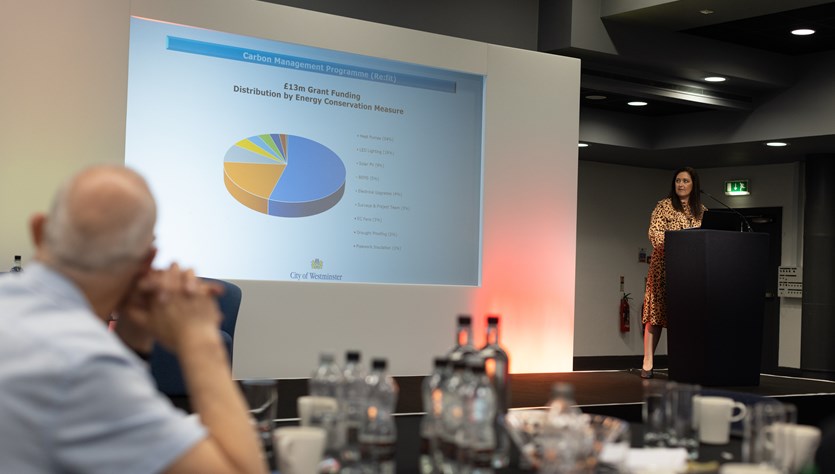
    Vital Energi have completed the rooftop solar PV project at the Queen Mother Sports Centre as part of a £13m RE:FIT project and the leader of Westminster City Council, Cllr Rachael Robathan joined other council members and Vital Energi for a tour of the installation.

    The work at the Queen Mother Sports Centre is one of  twelve solar installations taking place which    will see approximately 1550 panels installed. These panels will generate 550kw of zero-carbon electricity and result in over 40 tonnes of carbon reduction per year.

    This is a major project which will see improvements delivered to 70 buildings and reduce emissions by almost 1,700 tonnes per annum. By harnessing a range of technologies and focussing on carbon reduction, this project will play a large role in helping Westminster City Council reach their net zero target. We are delighted that the solar panels are now in place and will deliver zero carbon electricity to both the Queen Mother and Moberly leisure centres, but this work is one small part of a much bigger project and we look forwards to the other energy saving technologies coming online and further reducing carbon emissions.

    Scott Lutton, Operations Director, Vital Energi

    Attending the event were:

    • Cllr Rachael Robathan – WCC – Leader of the Council
    • Cllr Paul Swaddle – Cabinet Member for Finance and Corporate Property
    • Cllr James Spencer – Cabinet Member for City Management
    • Gerald Almeroth – Executive Director for Finance and Resources WCC
    • Claire Barrett – Director of Corporate Property WCC
    • John Hamilton – Head of Service Development WCC
    • Paul Casey – Energy Officer WCC
    • Scott Lutton – Operations Director Vital Energi
    • David Oatt –Operations Manager, Vital Energi
    • Paul Carnew – Senior project Manager
    • David O’Dowd – Senior project Manager

    Works included in the RE:FIT project include:

    • Lighting – Replacing approximately 12000 lights across  60 Westminster sites.
    • BMS – Optimisation works and upgrades to BMS systems across 18 Westminster sites.
    • Thermal Insulation – Improvements have already been made to 22 of the council’s sites.
    • EC Fan Upgrades – Replacing 46 fans across two sites.
    • Heat Pumps – Installing 1.8 MW of air source heat pumps to provide lower-carbon heating.
    • Draught Proofing – completing works to seal windows/doors to reduce heat loss on X sites.

    The RE:FIT project will see energy upgrades delivered at council-owned buildings throughout the City of Westminster and is funded by a £13m grant via the Department for Business, Energy and Industrial Strategy’s Public Sector Decarbonisation Scheme and is the largest grant of its type to be awarded to a London Local Authority.

  • Coventry Hospitals to Reduce Energy Costs by £1.6m a Year


    Coventry Hospitals to Reduce Energy Costs by £1.6m a Year

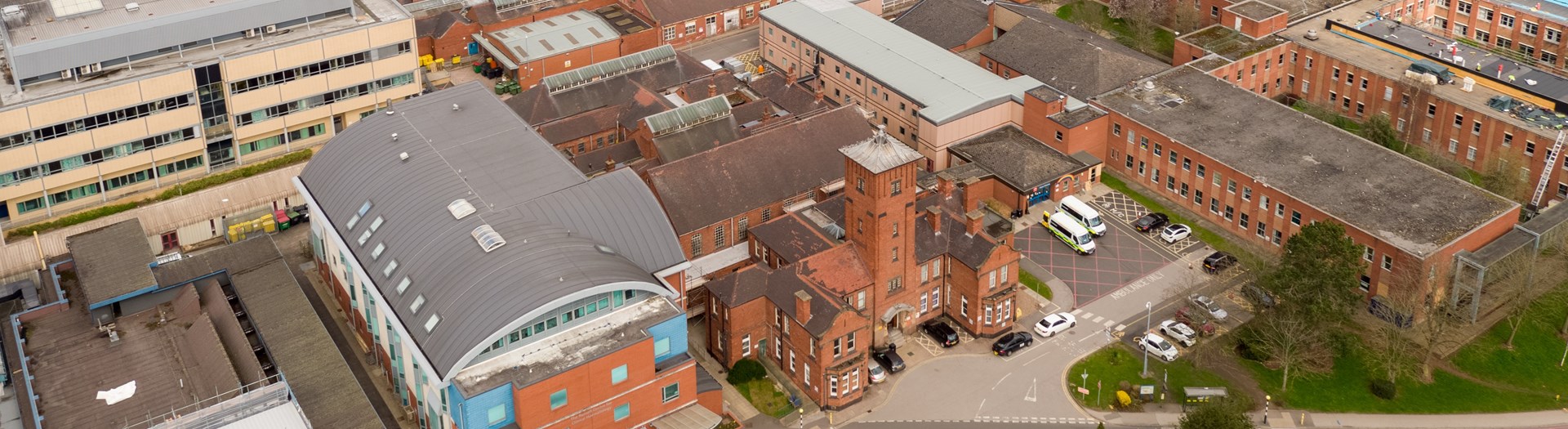
    We have guaranteed to cut energy costs by £1.6m a year for University Hospitals Coventry and Warwickshire NHS Trust by installing modern energy generation equipment and completing energy system upgrades at two hospitals.

    University Hospital and the Hospital of St Cross will benefit from the energy efficient solution that will see carbon emissions cut by 4,125 tonnes each year.

    The £6m scheme involves a CHP engine being integrated into the complex waste compound system at University Hospital, with comprehensive modifications to facilitate the new technology. This will deliver a low cost and low carbon heat and power supply to the hospital under an energy performance contract that guarantees the savings for 15 years.

    The project also includes complete upgrades to the BMS system at the Hospital of St Cross and upgrading 2,000 lighting fittings to new efficient LED bulbs. A considerate construction plan will be provided to avoid disturbance to hospital operation, and any disruption to University Hospital’s energy supply.

    We will provide operation and maintenance services for the CHP system for the next 15 years.

    This innovative solution is the first time Vital have integrated new energy generation equipment into a large PFI Hospital. We had to assess the existing energy system and existing building to design a solution that would cater for the hospital’s needs without making any major modifications to the building’s infrastructure.

    Steve Black , Vital Energi’s Account Director

    The scheme is being delivered under the Carbon and Energy Fund (CEF).

  • Deal signed on Mersey Heat WSHP

    Deal signed on Mersey Heat WSHP


    Deal signed on Mersey Heat WSHP

    Deal signed to deliver water sourced heat pump to Mersey Heat Energy Centre

    A deal has been signed with Star Refrigeration Ltd to provide a £2.5m water source heat pump to the Mersey Heat Energy Centre currently under construction at Peel Water’s Liverpool Waters at Princes Dock in Liverpool.

    Led by Peel NRE’s district heat network specialist Ener-Vate and being built by Vital Energi, the project is set to become a major part of the city’s low carbon energy infrastructure.

    One of the first to be installed in the UK, the pump will use game changing technology to extract heat from the water in the Leeds Liverpool Canal and use it to provide low carbon energy to thousands of homes and businesses around the city via a 6km district heating network.

    Set to be operational by winter 2024, the Mersey Heat Energy Centre will provide an easy, affordable and convenient solution to decarbonise heating with the potential to provide enough low carbon heat for over a fifth of the homes in Liverpool. Local homes and businesses will be able to connect into the existing district heating pipework which has already been installed.

    The government has identified heat networks as a crucial part of how the UK will reach net zero and one of the most cost-effective ways of decarbonising heating in built up areas. Using a water sourced heat pump to heat buildings is three times more efficient than using electricity for heating and has the potential to reduce carbon emissions by up to 90%.

    Jo Longdon, Commercial Director, Ener-Vate, said: “This is another major milestone towards delivering a game changing new approach to the way homes and businesses are heated in Liverpool. There isn’t the option to do nothing, we have to move away from fossil fuels and towards low carbon sources of heat. The Energy Centre will enable buildings to easy connect via an existing pipeline network providing an overnight solution to the challenge of decarbonising our heat sources.”

    “This is a major development which will have a real, positive impact on Liverpool’s future and we are delighted that sustainability is embedded at its core. We have seen, first hand, how effective large-scale water source heat pumps can be in decarbonising communities and are proud to be helping to bring another piece of Liverpool’s future green infrastructure to life which will serve the people of Liverpool for decades to come.”

    Andrew Wightman, Pre-Construction Director, Vital Energi

    David Pearson, Director, Star Refrigeration Ltd, said: David Pearson, Director, Star Renewables said: “Our heat pumps are manufactured in the UK and are an efficient way to cut CO2 emissions and lower the carbon footprint of connected buildings by around 75%, which will reduce further as the grid decarbonises. It will help thousands of homes and businesses move away from fossil fuels.

    “We’re proud to be providing a key component of the Mersey Heat Energy Centre, with the district heat network providing a critical step on the city region’s decarbonisation journey.”

    The 8m x 12m pump, which is currently being manufactured in Glasgow, will be delivered to the Mersey Heat Network Energy Centre in the summer.

    The district heating network will provide low carbon heat and hot water for up to 6,700 homes and 1.3 million square feet of commercial space at the Liverpool Waters development as well as wider domestic and commercial buildings across Liverpool. This initial phase of the project could supply 20GWh of heat every year with planning permission in place to expand the project to supply around 45GWh (the equivalent of supplying 17,000 new homes with heating and hot water).

  • Coed-Ely Solar Farm Welcomes Welsh Government

    Coed-Ely Solar Farm Welcomes Welsh Government


    Coed-Ely Solar Farm Welcomes Welsh Government

    On Thursday, November 6, Cabinet Secretary for Economy, Energy and Planning, Rebecca Evans MS attended the official opening of the new Coed-Ely Solar Farm, alongside Cabinet Member for Resources, Councillor Ros Davis, and representatives from the UK Shared Prosperity Fund (UKSPF), UK Government, NHS, Stantec, Rhomco, Vital Energi and the Welsh Government Energy Service.

    The visit came as part of the official switch on for the solar farm, which began supplying electricity directly to the Royal Glamorgan Hospital in early October. The visit provided opportunity to see the project generating electricity for one of our most vital public services.

    The visit included a tour of the solar farm and a visit to the hospital, meeting the team behind the project and learning more about the unique partnership between Rhondda Cynon Taf County Borough Council and Cwm Taf Morgannwg University Health Board, highlighting how the project has improved energy security, created local jobs, and generated over £600,000 in spending with local businesses and suppliers.

    Coed Ely Solar Farm is made up of 9,400 solar PV panels which can generate 6MW of electricity, with 5MW exported to the grid and 1MW sent to Royal Glamorgan Hospital through a 3.2km private wire network. It’s built on the site of a former 84-hectare colliery tip and is a great example of how we can repurpose our industrial past to be part of our energy future. Marking Welsh Climate Week and tying in with this year’s theme, unlocking the benefits of change, the solar farm creates local power for local care whilst providing grazing for farm animals and thriving hedgerows for local wildlife.

    The Coed-Ely Solar Farm was jointly funded by Rhondda Cynon Taf County Borough Council, the UK Government through the UK Shared Prosperity Fund (UKSPF), and part-funded by the Welsh Government.

    IMG 0518

    Welcoming the Cabinet Secretary for Economy, Energy & Planning, Rebecca Evans MS to the Coed Ely solar farm.

    Solution detail

    Seeing the solar farm live is a truly magnificent milestone. This ambitious project has been delivering energy for the benefit of our communities for a few weeks now and it’s fantastic to meet with our contractors, partners and those from the Royal Glamorgan Hospital on site today to see the project in action. The visit comes as part of Welsh Climate Week and this year’s theme, unlocking the benefits of change, ties in perfectly with what the solar farm stands for, creating local power for local care whilst still providing grazing for farm animals and thriving hedge rows for local wildlife.

    Councillor Ros Davis, Cabinet Member , Rhondda Cynon Taf County Borough Council

    Councillor Davis continues, “Any electricity generated that is not used by the hospital is fed into the National Grid, helping strengthen the UK’s overall energy security. But ‘local’ is at the heart of this project, local power and local impact.”

    Cabinet Secretary for Economy, Energy and Planning, Rebecca Evans MS said: “The Coed Ely Solar Farm is a shining example of how we can transform our industrial heritage into clean energy infrastructure that serves our communities.

    By repurposing this former colliery site to power vital NHS services, we are demonstrating that Wales’ journey to net zero can create local jobs, support local businesses, and ensure our public services are more resilient and sustainable for the future.”

    Secretary of State for Wales Jo Stevens said: “The Coed Ely Solar Farm is a great example of the UK Government investing in a project that creates jobs, drives economic growth, contributes to lowering household and public sector energy bills, and helps achieve carbon neutral targets.

    We have invested £4.892 million from the UK Shared Prosperity Fund which, alongside funding from our partners, means the solar farm is now supplying green electricity to the Royal Glamorgan Hospital and the national grid and playing a part in our mission to make the UK a clean energy superpower.”

    Mark Williams, Partnerships Director at Vital Energi explains: “One of the truly exciting things about this solar farm is that it demonstrates what can be achieved when the public sector collaborates to improve resilience, lower carbon emissions and save money on energy bills.  We shared the council’s vision that this project should bring maximum value to the community, so we’re pleased we could employ local people, spend money with local businesses and work with the charities, schools and groups which make up this fantastic community.”

  • Construction underway at innovative Warrington carbon-capture facility

    Construction underway at innovative Warrington carbon-capture facility


    Construction underway at innovative Warrington carbon-capture facility

    Work has begun at a new state-of-the-art carbon-capture plant at Lingley Mere business park which also aims to be the first in the UK to provide low-carbon heating to local buildings.

    The project, Mersey Biochar, will lock away over 2,500 tonnes of carbon a year into biochar, a versatile product with a range of uses from improving soil quality to decarbonising the construction industry. Led by climate-action organisations Severn Wye Energy Agency and Pure Leapfrog, a consortium of experts, including Vital Energi and Pyrocore are behind the project, which is hosted by United Utilities.

    Capturing carbon and other greenhouse gases will be critical for the UK’s plans to meet net zero by 2050 and the Mersey Biochar pilot will help to strengthen UK expertise in this area.

    We are very excited to see work getting underway at Lingley Mere. To achieve net zero we must find creative ways of heating our homes and businesses. Mersey Biochar will help us prove we can generate energy, capture carbon and create biochar. We’re looking forward to demonstrating that this technology can be rolled out across the country to help tackle climate change.

    Warren Spiers , Vital Energi

    Severn Wye CEO Sandy Ruthven says:

    ‘We are very excited to see work getting underway at Lingley Mere. To achieve net zero we must find creative ways of heating our homes and businesses. Mersey Biochar will help us prove we can generate energy, capture carbon and create biochar. We’re looking forward to demonstrating that this technology can be rolled out across the country to help tackle climate change.’

    Mersey Biochar will capture carbon from green waste or ‘biomass’, in this case a byproduct of local forestry management which would otherwise release its carbon back into the atmosphere as it decays. Carbon is locked in through a process called pyrolysis, which heats the biomass in a virtually oxygen-free environment to produce biochar.

    Every tonne of biochar produced can remove up to 3.6 tonnes of CO2 from the atmosphere and store it away for centuries. This facility is expected to produce 700 tonnes of biochar each year which will equate to over 2,500 tonnes of carbon reduction.

    Paul Gilligan, CEO of decarbonisation specialist partners Pure Leapfrog, says:

    ‘As we continue along our planned product development pathway, we will see this unit, and more like it in the future, not just to capturing and storing carbon but also delivering clean heat to communities and providing energy services to the electricity grid. This technology has an exciting and valuable future.’

    Once the facility’s carbon-capture capabilities are proven, the project also aims to be the first of its kind in the UK to recycle the heat generated from biochar production to heat and power United Utilities’ buildings on the site – part of the company’s long-term sustainability goals.

    As United Utilities’ Bioresources and Green Energy Director, Tom Lissett, explains:

    ‘This innovative technology opens up the opportunity to decarbonise our office heating requirements at Lingley Mere using the heat created during the pyrolysis process. It is an important step forward for us in our journey to decarbonising our head office in Warrington.’

    Mersey Biochar is funded by the UK’s Department for Energy Security and Net Zero through their Direct Air Capture and Greenhouse Gas Removal innovation programme, established to find new and inventive ways of reducing UK carbon emissions.

    Industry experts PyroCore supplied the first elements of the plant in November. The facility is being built by energy specialists Vital Energi and expected to be in operation at the end of the summer.

  • Commentary on the 2020 Budget


    Commentary on the 2020 Budget

    Much of the 2020 budget focuses on protecting people’s health and supporting economic security throughout the period of temporary economic disruption caused by the global outbreak of COVID-19.  Around £640 billion of capital investment was announced on roads, railways, communications, schools, hospitals and power networks across the UK by 2024-25.

    There were also some important indications of the Government’s direction of travel towards a greener economy and transition to net zero.

    The UK has already cut carbon emissions by more than any other G7 country, and in 2019 was the first major economy to legislate for a target of net zero greenhouse gas emissions by 2050.  The UK prepares to host this year’s COP26 UN climate summit, and the Budget announced a range of policies to reduce emissions, ensure our environment is protected and resilient to climate change, and generate green economic opportunities.

    The Budget announced an £800 million Carbon Capture and Storage (CCS) Infrastructure Fund to establish CCS in at least two UK sites, one by the mid-2020s, a second by 2030. To encourage more environmentally friendly ways of heating homes and other buildings, the government will also introduce a Green Gas Levy to help fund the use of greener fuels and increase the Climate Change Levy that businesses pay on gas.

    Road transport is responsible for 91% of domestic transport emissions, and around a fifth of overall UK emissions. To support drivers to move away from polluting vehicles, the Budget announced investment in electric vehicle charging infrastructure, which will ensure that drivers are never more than 30 miles from a rapid charging station, and provided £532 million for consumer incentives for ultra-low emission vehicles, and reduces taxes on zero emission vehicles.

    The government will tackle air pollution by providing £304 million to help local authorities reduce nitrogen dioxide emissions and improve air quality.

    The government will also invest in the natural environment, planting enough trees to cover an area the size of Birmingham. There are also plans to go further to tackle the scourge of plastic waste by introducing a Plastic Packaging Tax, as well as providing further funding to encourage producers to make their packaging more recyclable.

    We have explored some elements of the new Chancellor’s budget which are particularly relevant to the low-carbon industry.

    Mixed Views on the Renewable Heat Incentive

    Extension of Domestic RHI for a year might seem a positive step, although in some ways this incentives’s Developers to install individual heat pump solutions rather than district heating networks, so on balance may not be fully supported by the industry.  The news however that the non-domestic RHI tariff guarantee would be extended would seem to be positive, and we await further details on this with keen interest.  We are disappointed that all parts of the RHI were not extended to avoid a 12-month gap between the end of the non-domestic RHI and the start of the new Green Heat Scheme.   We hope that the extension of RHI tariff guarantee will bridge this gap, by allowing projects supported by non-domestic RHI to be commissioned in the period up to April 2020.

    Green Heat Network Fund

    It is good news that £96 million of funding for the final year of Heat Networks Investment Project (HNIP) was confirmed as this will support viability of a number of large-scale projects.  A more pressing, question however would be:  What happens when the Heat Network Investment Project ends?  Part of the answer to this comes in the form of the £270 million Green Heat Network Fund running from 2022 to 2025.  This will enable new and existing heat networks to decarbonise and, as one example, could help bridge the affordability gap associated with using recovered waste heat that would otherwise be released into the atmosphere.

    This will certainly help increase confidence for investors, clients and contractors in the district heating sector.

    Low-Carbon Heat Support gets £100m

    The Chancellor has allocated £100 million of new Exchequer funding for smaller non-domestic buildings and homes to install alternative heating measures.  Heat pumps and biomass are two of the technologies possible.  This will support a move away from traditional gas-based heating which will be essential if we are to meet our 2050 targets, which is good as long as it doesn’t present an unfair playing field to encourage technologies which compete with district heating.

    The Gas Grid Gets a Low-Carbon Boost

    The heating of our homes will need to be zero carbon by 2050, replacing natural gas and other fossil fuels with low carbon alternatives.  One such opportunity is to decarbonise the gas grid and to encourage this, Government plans to introduce a new green gas levy (details on how this will work are still to be provided), which will raise funds for investment in biomethane injection into the grid.

    Anything Else of Note?

    Carbon Price Support will be frozen for another year and the Climate Change Levy rate for electricity will be frozen, whilst the rate for gas will rise in both 2022 and 2023.   This seems to be a further indication that traditional gas is set for a smaller role in the UK’s energy mix.

    Should We Be Happy With The 2020 Budget?

    Broadly speaking, Government indications are positive.   Once again, the Government lists heat networks as a core part of the UK’s energy infrastructure, whilst demonstrating traditional gas is no longer the preferred fuel source.

    The importance of long-term certainty with regards to funding cannot be overstated.  Whilst the energy industry has many unique aspects, an adversity to risk is a commonly shared trait and the government’s willingness to “put its money where its mouth is” will not go unnoticed.   Details of the Green Heat Network fund are most definitely welcome, but clarity around non-domestic RHI or introduction of carbon taxes failed to materialize.

    As with all budgets we may find ourselves comparing the reality against our “wish list” and funding for domestic energy efficiency measures is a noticeable omission, but overall this was a positive budget from a government who recognize the value of heat networks and are willing to invest in the UK’s journey to zero carbon.

  • Coed Ely Solar Farm Gives Councillors Glimpse of Low-Carbon Future

    Coed Ely Solar Farm Gives Councillors Glimpse of Low-Carbon Future


    Coed Ely Solar Farm Gives Councillors Glimpse of Low-Carbon Public Sector

    Councillors from Rhondda Cynon Taf Council (RCTC) joined representatives from Cwm Taf Morgannwg University Health Board (CTMUHB) and Vital Energi to celebrate the commencement of works on the new 6MW Coed Ely Solar Farm in South Wales.

    Due to an innovative partnership the solar farm will not only reduce the council’s carbon emissions but also help Royal Glamorgan Hospital on its net zero journey.

    When complete, the installation will include over 9,400 panels and be capable of generating 6MWh/year of electricity. Crucially, it will play a key role in helping both Rhondda Cynon Taf Council and Royal Glamorgan Hospital by reducing emissions by over 7,300 tonnes over the project’s lifetime.

    It’s fantastic to see the progress on this project as we see the journey towards completing the Coed Ely Solar Farm begin. This ambitious project is providing a unique opportunity to deliver green energy at a significant scale, feeding energy directly into the National Grid and supporting the energy security of our community and the UK.”

    Councillor Tina Leyshon, Rhondda Cynon Taf Council

    RCT Coed Ely Solar Farm(HR) 9507

    Left to Right: Katie Trembath RCT, Chris Lewis NHS, Councillor Leyshon RCT, Mark Cavanagh Vital Energi, Councillor Norris RCT, Rosie Collins RCT, Joshua Gow Vital Energi

    Solution detail

    Councillor Leyshon continues, “By supplying the Royal Glamorgan Hospital with low-carbon electricity, we’re helping to reduce its carbon footprint, making the project even more beneficial and directly supplying our local NHS.”

    “Additionally, with the site’s reclaimed colliery tip unsuited for agriculture, this project shows how land can be repurposed for clean energy while still supporting local biodiversity. Grazing rights for animals will continue, demonstrating that solar energy projects can coexist with farming and enhance biodiversity.”

    5MW of low-carbon electricity will be exported to the grid, whilst 1MW will be exported to Royal Glamorgan Hospital.

    Mark Williams, Vital Energi Partnerships Director explained, “Wales has a strong commitment to meeting its net zero goal and it’s projects and partnerships, like this solar farm, which are bringing us closer to those targets. This is a great demonstration of how the public sector can work together to deliver creative solutions to combat the climate emergency. The core reason we recently opened a dedicated office in Swansea and are expanding our workforce in Wales is so that we can better support our clients as they create more of these fantastic low-carbon schemes.”

    Linda Prosser, Executive Director of Strategy and Transformation and Executive Lead for Decarbonisation across Cwm Taf Morgannwg University Health Board, commented: “We are delighted that on peak summer days the whole hospital will be powered by solar energy. This will have a significant positive impact on our decarbonisation and ‘Green CTM’ commitments and how we can deliver healthcare in a sustainable way for future generations. However, this scheme is not the end of the story at the Royal Glamorgan Hospital and we will be delivering more renewables and low carbon technologies in future to further decarbonise the hospital’s energy demands.

    Additionally we are proud to work with our partners at RCTCBC and believe that this scheme is a great example of positive collaboration and partnership working between Health Board and Local Authority.”

    The Coed Ely Solar Farm, built on a reclaimed colliery site, showcases how former industrial land can be repurposed for renewable energy generation. The project also includes biodiversity enhancements such as wildlife boxes and habitat corridors, ensuring ecological benefits alongside energy production.

    The project is being delivered by Rhondda Cynon Taf County Borough Council, with Vital Energi acting as the main contractor, supported by Hydrock and Rhomco.

  • Historic buildings connect to Queens Quay heat network

    Historic buildings connect to Queens Quay heat network


    Clydebank Library & Town Hall set to lower emissions with new district heating connection

    Two of Clydebank’s most iconic listed buildings are taking a step towards net zero by connecting to the low-carbon Queens Quay district heating network.

    Both Clydebank Town Hall and Clydebank Library are connecting to the heat network which will allow them to take heat from the Queen’s Quay energy centre which takes heat from the River Clyde and pumps it through a water source heat pump to create low-temperature-hot-water.

    West Dunbartonshire Council had a long-term plan when they created the Queens Quay heat network and adding these two iconic buildings is the latest part of that plan. These buildings are at the heart of Clydebank and are extremely important to the community, so it’s great that we can bring 21st Century, low-carbon heating to them, without harming the heritage or character of the buildings.

    Scott Lutton, Operations Director, North & Scotland

    The Library will have modifications made to its heating system which will include the installation of a 200kW plate heat exchanger installed and Vital Energi will also replace the old heating system with a new radiator circuit. The Town Hall will see a 600kW plate heat exchanger installed as well as upgrades to the pumping system and air handling units.

    Scott concludes, “Both of these buildings are over 100 years old, so there is an exciting opportunity to improve the way they use heat. By making these changes the buildings will become much more efficient and, when combined with the low-carbon heat from the water source heat pumps, will reduce their carbon emissions drastically, making another important step towards West Dunbartonshire Council’s net zero journey.”

    Clydebank Town Hall

    Clydebank Town Hall is connecting to the Queens Quay heat network – image credit ©Richard Findlay

    Solution detail

  • City of London Corporation enters next phase of decarbonisation works

    City of London Corporation enters next phase of decarbonisation works


    City of London Corporation accelerates net zero strategy with next phase of decarbonisation works

    Following the successful delivery of energy efficiency projects across seven of the City of London Corporation’s iconic buildings, Vital Energi have moved on to a third phase of works to further accelerate its journey to net zero.

    Together, all phases will deliver annual carbon savings of over 1,500 tonnes and financial savings of £1.25m, forming a key part of the City Corporation’s ambitious strategy to achieve net zero carbon scope 1 and 2 emissions across its operational estate by 2027, before reaching net zero across all its activities by 2040.

    Bespoke decarbonisation plans have been developed for each building, incorporating the latest renewable technologies and energy conservation measures. These upgrades are designed to improve energy efficiency, reduce heat loss, and lower energy bills, while respecting the heritage and operational needs of each site.

    Featured buildings:

    • Mansion House – Built in the 1700s, this Grade I listed building serves as the official residence of the Lord Mayor of London. Air source heat pumps will be installed, if planning is approved, along with energy conservation measures (ECMs) including Building Management System (BMS) upgrades, draught proofing, insulation upgrades and cooling improvements.
    • Walbrook Wharf – Air source heat pumps and a range of ECMs will be installed at this safeguarded freight wharf in the heart of the City of London, next to Cannon Street station.
    • Guildhall School of Music & Drama – Founded in 1880 and located in the Barbican Centre, it has over 1,000 students from 70+ countries. The lighting will be elevated through LED lighting upgrades, including performance venue and theatre lighting.
    • Heathrow Animal Reception Centre (HARC) – Air source heat pumps, solar PV, and a range of ECMs will be installed at HARC, the only UK border control post licensed for all animal species, which handles over 28 million fish, 100,000 reptiles, 22,000 cats and dogs, and 400 horses annually.
    • The Warren (Epping Forest) – The headquarters for Forest Keepers will be upgraded with an air source heat pump, if planning is approved, for heating and hot water. 

    • The London Archives – The largest county record office in the UK, which is home to over 3.5 million historical documents, will benefit from solar PV installed on its roof, allowing them to generate their own green electricity.

    “The built environment sector is the largest source of carbon emissions in the Square Mile, so our work with Vital to decarbonise City Corporation buildings is crucial for meeting our own net zero goals, as well as supporting the wider Square Mile net zero goal. Energy use is central to this challenge. By improving efficiency and investing in low-carbon energy solutions, such as heat pumps and solar electricity generation, we can make a real impact on the City Corporation’s energy emissions. We can also show it’s possible to make historic and operationally complex buildings part of a low-carbon future: Practical steps that turn climate ambition into tangible progress. Since launching our Climate Action Strategy in 2020, we have made strong progress in cutting carbon emissions and reducing climate risks – meaning we remain on track for net zero across our full value chain and the whole Square Mile by 2040.”

    Alderman Alison Gowman, Climate Action Lead – City of London Corporation

    Scott Lutton, Regional Director at Vital Energi, said:

    “We’re proud to be continuing our partnership with the City of London Corporation to deliver the next phase of decarbonisation works across some of the capital’s most iconic and historically significant buildings.

    “By combining renewable technologies with tailored energy conservation measures, we’re not only helping to reduce carbon emissions and energy costs, but also supporting the Corporation’s bold commitment to achieving net zero across its own operations by 2027. Each building presents unique challenges, and our bespoke decarbonisation plans ensure that sustainability goes hand-in-hand with heritage and operational excellence.”

    Learn more about phase one of the project here.