Author: admin

  • How Embodied Carbon Monitoring Can Reshape the Green Energy Sector

    How Embodied Carbon Monitoring Can Reshape the Green Energy Sector


    How Embodied Carbon Monitoring Can Reshape the Green Energy Sector

    While it may not yet be a quiet revolution, something interesting is happening in the green energy sector.

    Like most things, tenders evolve to reflect changing legislation, policies, and cultural shifts. Recently, some green energy tenders have started to require the monitoring of embodied carbon, the emissions created from manufacturing, transport, and materials at every stage of a project’s lifecycle.

    We first saw this requirement in the Higher Education sector; however, it’s now spreading across both public and private sectors.

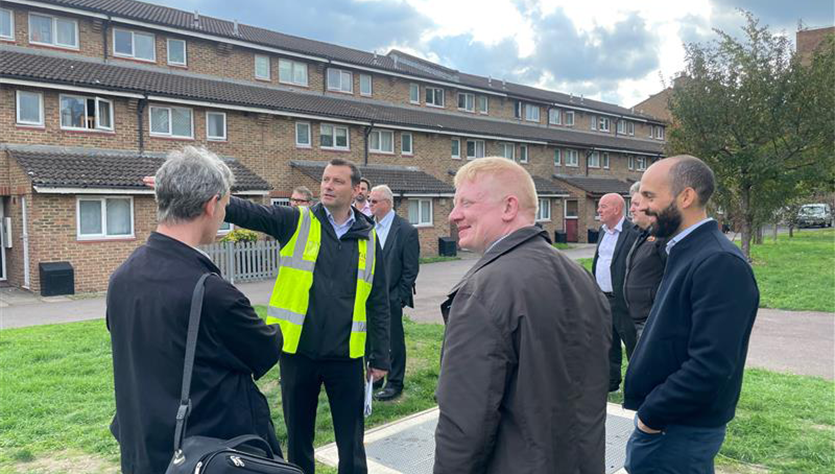
    IMG 0470

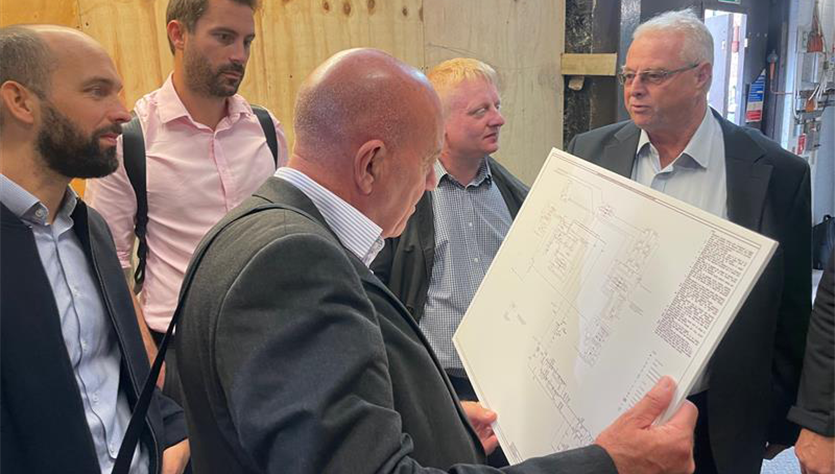
    Gemma is currently working with several of our clients to calculate the embodied carbon on large energy infrastructure projects.

    Solution detail

    Until now, determining the carbon performance of green energy infrastructure has mostly centred on operational carbon reduction, comparing emissions from new systems to previous ones. But this marks an important shift… organisations are increasingly focused on understanding their full Scope 3 emissions, including embodied carbon.

    Gemma Read, Sustainability Graduate – Vital Energi

    I believe there are two key reasons behind the rise of embodied carbon monitoring.  First is the genuine desire by companies to understand Scope 3 emissions to ensure they truly meet their net zero commitments and don’t fall prey to greenwashing.

    The second reason is that carbon assessments and management plans are becoming competitive differentiators. Contractors with this capability are better placed to win business.

    Standards like PAS 2080 now give genuine advantages in the tender process and some organisations, such as National Highways, have made it a requirement for tendering for their contracts.  Some funding schemes such as the Green Heat Network Fund also have Market Transformation Commitments which are the extra measures you’ll commit to if you gain funding.  More and more organisations are using Whole Life Carbon Assessment as one of the tools to meet these requirements.

    Beyond strengthening bids, the real business value lies in improved decision-making. Designers can optimise systems early on, whilst commercial teams better understand the cost-to-carbon savings of materials. A benefit close to my heart is the ability to track materials throughout the project lifecycle, deepening our understanding of the true value of end-of-life treatment and creating the evidence base needed to establish a truly circular economy.

    While embodied carbon monitoring might currently be a small element specified in tenders, its potential to enhance decision-making across design, procurement, construction, and lifecycle management means I expect it to become far more widespread in the near future.

  • How can hospitals switch to renewable energy without disrupting care?

    How can hospitals switch to renewable energy without disrupting care?


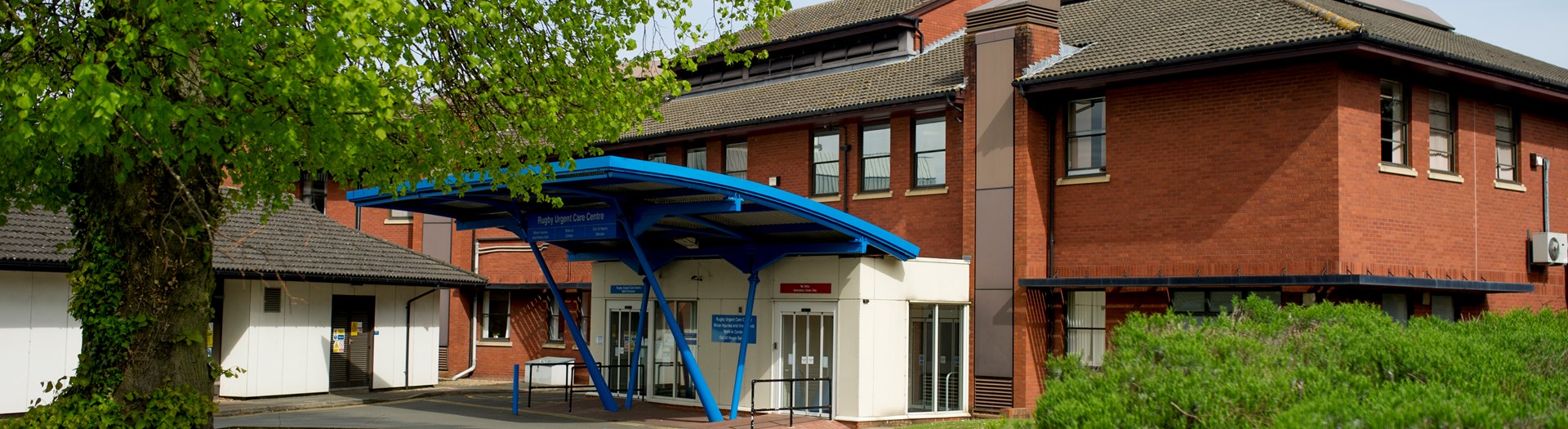
    How can hospitals transition to renewable energy without disrupting care?

    With the NHS striving to achieve their ambitious net zero goals, the challenge is underway to transition hospitals away from a reliance on traditional fossil fuelled heating systems to renewable, energy efficient alternatives.

    To meet their targets of reducing directly controlled carbon emissions by 80% by 2032 and achieving a net-zero NHS by 2040, the development of innovative decarbonisation projects is essential, as is ensuring that patient services are maintained throughout their implementation.

    Project Development Engineer, Jon Williams, has 26 years of experience in delivering complex energy projects within the healthcare sector. He shares insight into how these projects can be delivered while ensuring energy resilience, why early engagement is essential, and how we go above and beyond to ensure minimal disruption to hospital and its patients.

    Balancing decarbonisation with hospital operations

    While the transition away from fossil fuels has its complexities, factor in other energy conservation measures such as building fabric improvements (draught proofing, roof insulation, pipework insulation), solar PV and the replacement of ventilation system fan motors etc., means the challenges in implementing these solutions without disrupting hospital services requires careful consideration, planning and collaboration.

    Heating, cooling, hot water and electrical services can have a direct impact on patient care, so a considered solution is required to enable these services to remain uninterrupted at all times. This can be a challenge, especially when transitioning from legacy systems to renewable alternatives. Developing these projects requires a full understanding of the hospital’s current operations in order to design and establish a resilient solution. This not only includes the physical equipment, but the phasing of the programme to prevent downtime and minimise risk. This could include the provision of additional pumps, so that if one fails the other continues to deliver heat, or planning the change over from legacy steam services to new LTHW in the summer months where the dependence on heating is reduced.

    While it may seem obvious that heating, hot water and electrical services cannot be interrupted, there are many other factors that also need to be addressed when we design and implement our energy solutions, and early engagement with the correct people is essential for success. Factors such as noise, access, traffic management are all considerations that need to be managed, with the mitigating factors being different depending on the environment, department or services being affected.


    Understanding the hospital environment

    When developing our energy projects, it is important for us to collect as much information as we can. This isn’t only limited to the technical aspects on how the Trust’s current heating and energy infrastructure is configured and controlled, but the wider operational nuances of a live hospital environment. These can range from clinical services, staff training, parking arrangements and even kitchen operations.

    A recent example of this was the replacement of catering equipment within a main kitchen, providing hot and cold meals to patients, staff and visitors alike. It was found that some legacy equipment (dishwashers, pressure cookers etc.), still had a reliance on the steam services we were looking to remove as part of our decarbonisation project. Engagement with the catering department enabled us to replace the equipment with suitable electrical alternatives and arranged the works in these areas so that their meal preparations and service periods were uninterrupted.


    Collaboration and communication

    Our early engagement provides us with the opportunity to build in mitigation measures as part of our solutions, so that site-wide services can continue to be provided with as little disruption as possible, enabling the Trusts that we work with to continue to deliver both clinical and non-clinical services in the most efficient and effective way possible, with minimal impact to patient care.

    In the early days of our project programme, we have found it useful to undertake a ‘Prestart Workshop’ with key stakeholders, department leads and the Trust’s technical teams. By collaborating with relevant groups, we have found that we can obtain a good ‘buy-in’ from those in key positions, so they know the reasons we are there and what we, as collective, are trying to achieve. As the project moves into the construction phases it is important that communication in maintained and this is achieved in a number of ways, such as monthly client liaison meetings, and weekly look-ahead reports to highlight upcoming tasks, areas of work and any risks.

    In addition, our construction teams continue to maintain relationships throughout the project term, meeting regularly with heads of department to establish the activities the Trust is undertaking so we can implement our works without impacting operations.

    An example of this would be the development of our ‘Traffic Plan’. We understand that space within many hospital estates is at a premium, and additional personnel on site can impact on staff and patient parking, general access and potentially affect ‘blue light routes’. We work with our Trusts to reduce vehicle traffic as much as possible and recently supported one Trust in promoting their Park and Ride scheme, encouraging off-site parking and vehicle sharing in order to keep site traffic to a minimum. Our site teams also endeavour to arrange equipment and materials deliveries around the requirements of the Trust and the departments it will affect, while also maintaining our programme.

    There are countless examples of considerations we look to implement to limit the disruption to patient care and hospital services, but with careful planning, collaboration, communication and the right technical expertise there are no challenges that we cannot overcome.

  • High standard of design award for Manchester’s Tower of Light

    High standard of design award for Manchester’s Tower of Light


    High standard of design award for Manchester’s Tower of Light

    We’re delighted to announce that the Tower of Light has won the High Standard of Design Award at the Structural Steel Design Awards 2022.

    In their 54th year, the Structural Steel Design Awards celebrate the excellence of steel construction in the UK, particularly demonstrating its potential in terms of efficiency, cost effectiveness, aesthetics, sustainability, and innovation.

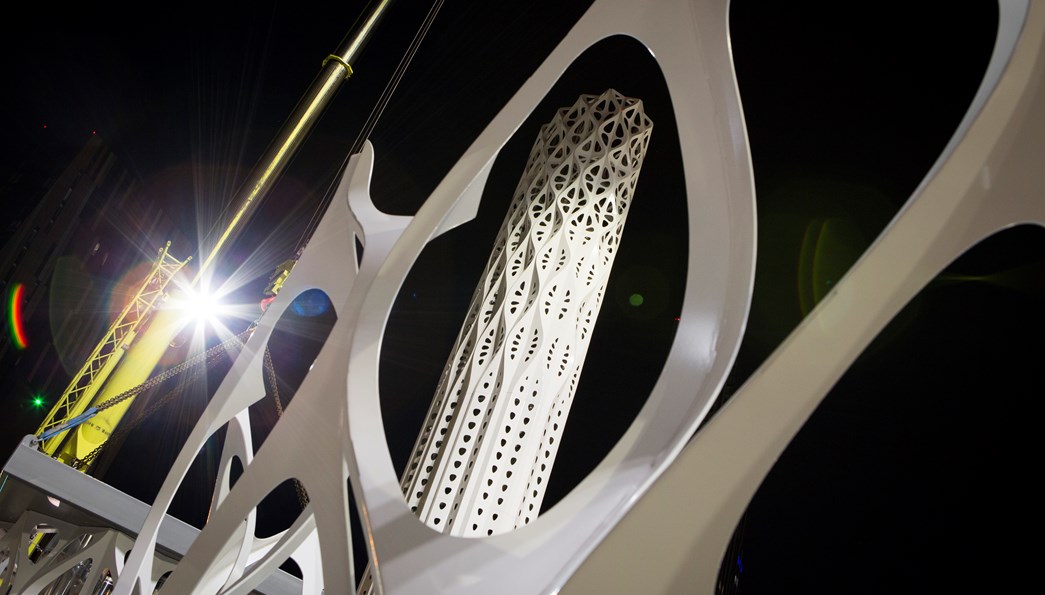
    Owned by Manchester City Council and built by Vital Energi alongside Shawton Engineering, the focal point of the Civic Quarter Heat Network, which provides low-carbon heat and power to some of Manchester city centre’s most iconic buildings, is the 40m Tower of Light.

    The sculptural landmark, which supports and encloses five flues, was designed by architects Tonkin Liu, and developed in collaboration with structural engineers at Arup.

    The unique shell lace tower is built from 6 and 8mm thick flat steel sheets, which were tailored, laser-cut, then welded together to create a curved stiff strong surface. During the day, polished steel reflectors move in a wave-like motion in the wind to reflect sunlight into the tower’s chambers, and during the night, LED lights directed at the polished reflectors create moving light.

    This shell lace structure perfectly exemplifies the synthesis of striking architectural form, advanced engineering, iterative technical analysis (Grasshopper and LS Dyna) and craft-based fabrication. A superb example of how design can transform a utilitarian chimney into a piece of urban art, intelligently conceived and impressively executed.

    The Judges,

    Vital Energi’s Ashley Malin, Managing Director (Solutions), said:

    “The Tower of Light is a striking landmark in the city centre and the most visible manifestation of the Civic Quarter Heat Network, which is reducing carbon emissions and supporting the Manchester’s transition to zero carbon by 2038. We’re really pleased that intricately designed tower has been recognised by the judges and awarded the High Standard of Design Award.”

    Read more about the project here.

  • Hereford Ambulance Hub set to undergo £1.3m green energy transformation

    Hereford Ambulance Hub set to undergo £1.3m green energy transformation


    Hereford Ambulance Hub set to undergo £1.3m green energy transformation

    Vital Energi has partnered with West Midlands Ambulance Service (WMAS) to complete a major £1.3m energy efficiency upgrade at Hereford Ambulance Hub.

    Funded through the Public Sector Decarbonisation Scheme (PSDS), the project will introduce a range of green energy solutions to reduce carbon emissions and lower energy costs.

    Key improvements that will be made as part of this upgrade include the removal of old oil-fired heating system which will be an energy efficient heat-pump based air conditioning system which will provide both low carbon heating and cooling to the ambulance hub.  The generation of heating and cooling will be optimised by way of smart control system which will ensure optimum comfort conditions are maintained at maximum generation efficiencies.

    Windows and doors will be replaced to improve energy performance of the buildings, along with roofing upgrades in order to facilitate the installation of rooftop 106.58kW solar PV system which will allow for independent on-site electricity generation. A 50kW / 128kWh Battery Energy Storage System (BESS) will also be installed to store the energy generated by the solar panels for use at night.

    “We’re excited to be helping Hereford Ambulance Station take this important step toward a greener future. By upgrading end of life oil-fired equipment with renewable energy, we are reducing the site’s carbon footprint and cutting energy costs, and we’ll work hard to ensure minimal disruption so the station can continue to operate as normal.”

    John Runniff, Account Development Director at Vital Energi

    WMAS Head of Fleet and Facilities Management, Tony Page, said:

    “As a Trust, we are committed to reducing our carbon emissions. This important project is bringing much needed modernisation to our Hereford Ambulance Hub, and it will benefit our crews and support staff operating based on the site.

    “All of this is helping us work towards the NHS England targets for carbon emission reduction something we are focussed on and we are very pleased to see this work undergoing.”

  • Helping Plymouth City Council achieve their goal of net zero by 2030

    Helping Plymouth City Council achieve their goal of net zero by 2030


    Helping Plymouth City Council achieve their goal of a net zero city by 2030

    Vital Energi has been busy decarbonising six of Plymouth City Council’s key buildings through the installation of advanced renewable energy technologies, and we’re delighted to have been awarded a second phase 2 contract worth £1.1m, where we’ll reduce the carbon footprint of a further four buildings.

    For phase 2, we’ll be delivering low carbon heat through the installation of a combination of air source and water source heat pumps across the following sites:

    • Pounds House, which was formerly a privately owned manor located on the edge of the city’s Central Park. The area where the ASHP and WSHP are to be installed was extended as part of former war defences with significant steel riveted reinforcement and heavily reinforced bomb blast proof walls.
    • Prince Rock Highways Agency administration centre.
    • Frederick Street Centre, which is a community centre serving as a local education hub with a large ground floor open hall, various classrooms, and offices on two floors.
    • Poole Farm, which has a rich history as one of Plymouth’s last working farms with a focus on community involvement through health and wellbeing, education and conservation.

    Operations Manager, Robin Thorne, who is overseeing the project, said:

    “We’re really pleased to have been awarded a second contract with Plymouth City Council, supporting them on their transition to a low carbon future through the decarbonisation of 10 of their public sector buildings.”

    Read more about phase 1 of the project here.

  • Heat pumps arrive at Royal Shrewsbury Hospital as part of £16.2m project

    Heat pumps arrive at Royal Shrewsbury Hospital as part of £16.2m project


    Heat pumps arrive at Royal Shrewsbury Hospital as part of £16.2m project

    A crane has lifted heat pumps into position on the roof of the Treatment Centre at Royal Shrewsbury Hospital (RSH) in the next phase of a £16.2m decarbonisation project.

    Rooftop solar panel works have also started with the framework put in place and the first delivery of panels due at the end of the month.

    A water source heat pump and an air source heat pump were recently delivered to the hospital site and crane lifted into position.

    The final two air source heat pumps will be delivered next month.

    The Shrewsbury and Telford Hospital NHS Trust, which runs the RSH, has partnered with Vital Energi to do the work.

    “This fantastic project is really taking shape and brings us closer to our vision of achieving our Net Zero goals. It was great to see this intricate operation to place these pumps on the roof of the Treatment Centre. Our aim is to create more modern facilities and sustainable health services, which will benefit our patients, colleagues and visitors.”

    Inese Robotham, Assistant Chief Exec, and Chair of the Trust’s Climate Group

    “The heat pumps being successfully lifted into position marks an exciting milestone in the project. We’re proud to be working alongside the Trust to deliver an energy solution supported by renewable technologies that will significantly cut carbon emissions while supporting a more energy resilient and efficient estate. This phase brings us one step closer to providing the hospital with low carbon heating, hot water and cooling, helping to create a more comfortable environment for patients, staff and visitors.”

    John Runniff, Account Development Director at Vital Energi

    Funding was secured through the Public Sector Decarbonisation Scheme and the project is being delivered through the Carbon and Energy Fund (CEF) Framework, which has been specifically created to fund complex energy infrastructure upgrades for public sector organisations.

    By replacing the old steam boilers and associated gas-fired equipment with a 1.6MW air and water source heat pump system, buildings across the site will receive low carbon heating, hot water and chilled water. It will mean the hospital estate will be fully de-steamed.

    The solar panels will also be installed along with the upgrade and optimisation of the building energy management systems, upgrades of roof and pipework insultation and the replacement of air handling unit fans units with low-energy fan systems, which will all add up to reduce the site’s energy consumption and improve the patient and staff experience.

    When the work is complete, the investment could save the Trust an estimated £1 million a year in energy costs and will support the Trust’s Estates Decarbonisation Strategies, Green Plan and national NHS ambitions of reaching net zero by 2040.

  • Helping Brighton and Hove City Council decarbonise their buildings

    Helping Brighton and Hove City Council decarbonise their buildings


    Helping Brighton and Hove City Council decarbonise their buildings

    Vital Energi are helping Brighton and Hove City Council tackle climate change and work towards their target of net zero by 2030 after undertaking audits across a number of their buildings to identify energy and carbon savings opportunities.

    We have completed energy audits across 19 public sector buildings, including schools, nurseries, libraries and care homes, and identified a number of ways to improve energy efficiency, reduce carbon emissions, and save money.

    Measures include glazing upgrades, LED lighting replacements, BEMS optimisation, and heating and ventilation improvements, along with the installation of solar PV on the roofs, and heat pump technology.

    If all of the identified measures are implemented, the council could reduce emissions associated with the combustion of gas by 95%, and the total annual CO2 reduction would be 72%.

    “It’s great to work with another local authority and help them on their path to decarbonisation. Through the implementation of the energy conservation measures we’ve identified, the council can significantly reduce their carbon footprint and energy expenditure, as well as empowering local communities and businesses to a net zero future, whilst providing a cleaner, greener environment for the occupants of the buildings too.”

    Rob Callaghan, Managing Director of Vital’s London division

  • Heat Pump Apprentice Megan Claims “Trainee of the Year” Award

    Heat Pump Apprentice Megan Claims “Trainee of the Year” Award


    Heat Pump Apprentice Megan Claims “Trainee of the Year” Award

    We’re extremely proud of our apprentices, who achieved some amazing things during 2023, and Meg Bradley, an Apprentice Engineer in our Heat Pump Solutions department has been the latest to distinguish herself by winning a national award.

    Meg was named winner of the Project Engineer category at the ACR & Heat Pumps ‘Trainee of The Year’ award in a ceremony at Emirates Old Trafford cricket ground.

    I know a lot of very talented people applied for this award, so I was extremely proud to have been named on the shortlist with them and to be named as a winner was a fantastic surprise.  I’d like to thank the Heat Pump Solutions team for the opportunities they’ve given me, the trust they’ve shown and the support I’ve had throughout my time at Vital Energi.”

    Meg Bradley , Apprentice Engineer Heat Pump Solutions

    Meg And Liam

    Meg collects her award with Senior Engineer Electrical (Heat Pump Solutions), Liam Grice

    Solution detail

    Liam Grice, Senior Engineer (Heat Pump Solutions) for Vital Energi explains, “Meg has made the most of every opportunity we’ve presented her with and is constantly looking for new ways to bring value to her role.  We are thrilled that she was named as an award winner and we are all excited to see what she achieves in her career going forwards.”

  • Heat Networks Industry Creates Thousands Of Jobs


    Heat Networks Industry Announces Plan To Create Thousands Of ‘Green Collar’ Jobs

    The heat networks industry, which delivers heat to close to 500,000 customers across the country as an alternative to heating from individual gas boilers, has launched the Heat Networks Industry Council (HNIC) today at an online event with Energy and Clean Growth Minister, Kwasi Kwarteng MP.

    The industry has set out its pledge to support £30-50bn of investment and the creation of up to 35,000 new direct jobs by 2050, with the right policy frameworks in place.

    Heat networks will play a vital role in a future net-zero economy by helping to decarbonise how we heat our buildings while creating new green jobs. “The government’s £270m Green Heat Networks Fund underlines our support for the industry, and we back the new Heat Networks Industry Council to deliver on its ambitions for investment and job creation as part of reaching net zero emissions by 2050.

    Kwasi Kwarteng, Minister for Energy and Clean Growth

    Dan McGrail, Chair of The Heat Networks Industry Council said: “The heat networks industry can play a big role in helping the UK reach our net zero carbon targets. The pandemic has caused a difficult economic situation but, today, our industry is setting out our shared ambition to create investment and jobs, accelerate carbon reduction, deliver consistent and excellent customer experiences and ultimately create smarter, more liveable cities across the country”.

    The HNIC offer, detailed directly to government and launched at today’s event, includes the ambition to deliver:

    • Universal zero carbon heat networks by 2035;

    • The capability (investment, skills, supply chain) necessary for 18% of UK heat demand to be met through heat networks by 2050;

    • Up to 35,000 new direct jobs in the sector by 2050;

    • Investment of up to £50bn into the UK market by 2050;

    • City-wide strategic heat network plans for all major cities by 2030;

    • Consistent and excellent customer experience for all heat network users;

    • Efficient and low cost, digitally-enabled heat for all networks;

    The HNIC includes the spectrum of companies involved in the delivery of heat, including heat network providers to tens of thousands of customers. Founding members include Siemens, SSE Heat Networks, Veolia, EDF Energy, Energetik, Switch2, EON-UK, Vattenfall, Pinnacle Power, Vital Energi, Engie, Ramboll, Jeremy Bungey sitting as an Independent and Metropolitan. New HNIC members include Guru Systems, Insite Energy, London & Quadrant, Star Renewables, Uniper, Bristol Council, Enviroenergy and Viridor.

    The HNIC encourages heat network companies in the UK to sign up to the ask and offer of the Council.

    At the launch of HNIC today, moderated by Politico’s Ryan Heath, industry members heard from; Polly Billington, Director of UK100, Doug Parr, Greenpeace Chief Scientist and Policy Director; and Lord Duncan of Springbank, who was Parliamentary Under Secretary of State for the Department of Business, Energy and Industrial Strategy from July 2019 to February 2020.

    Dan McGrail, Chair of The Heat Networks Industry Council said: “We understand the economic challenges ahead of us as a country, which is why we want to do all that we can as the heat network industry to create jobs and investment. Our investment will generate jobs and will contribute to a sustainable economic transition in line with the United Kingdom’s net zero targets.”

    According to research from the House of Commons Science and Technology Committee, the Climate Change Committee and the IPPR Economic Justice Commission, investing in non-gas boiler heating solutions is a top priority for sustainable investment that takes the country along the path to net zero heat.

  • Heat is on for £1bn Flagship Life Science Campus


    Heat is on for £1bn flagship life science campus

    Liverpool’s £1 billion Paddington Village development, the UK’s largest new health and science campus currently under construction, is to utilise an underground heating network that will help cut the city’s carbon footprint.

    The new energy scheme, being delivered by sustainable energy experts Vital Energi, will serve the entire Paddington Village site, which sits within the Knowledge Quarter Liverpool (KQ Liverpool) Mayor Development Zone including the new northern home for the Royal College of Physicians.

    The energy centre will be in the ground floor of the new 14-storey carpark, situated off Elm Grove, and will house a 1,195 kWh combined heat and power engine which will provide both electricity and heat.  The heat generated will be distributed throughout the 30-acre site via a network of buried district heating pipework. Morgan Sindall Construction is the main contractor for both the carpark and the energy centre.

    As part of the innovative underground project, Liverpool City Council’s Fair City initiative will ensure it is also used to deliver a range of social value commitments designed to benefit the people of Liverpool.

    Paddington Village is one of Europe’s major life sciences development sites and its construction is a reflection of our ambition to create something unique – be it RCP’s pioneering Spine scheme to this new energy centre. Liverpool also recently declared a climate change emergency and as a city council we are doing everything in our power to cut our carbon footprint. I’m delighted this energy centre is being built. It sends out a signal the city means business on making a difference both to our economy and our environment

    Joe Anderson, Major of Liverpool

    Construction has started on site for the carpark. The flue for the energy centre will be constructed in January 2020 with it coming online in summer 2020, and the carpark will be completed in January 2021.

    Michael Cooke, Regional Director for Vital Energi, explains: “This is a truly exciting project because, not only do we have the opportunity to create an efficient and robust energy scheme and heat network in the heart of Liverpool’s newest major development, we are also able to work with the city council, Chamber of Commerce, Liverpool in Work and other organisations to deliver some truly valuable social value measures through the Fair City initiative.

    “By working together we have been able to create long-term, permanent jobs, apprenticeships, work placements and training opportunities whilst ensuring that the majority of money spent and the majority of labour hired will come from the immediate Liverpool area.  We are delighted to have been chosen to help deliver this project and look forward to starting on site.”

    Vital Energi have released a range of 3D images designed to show the public how the energy centre section of the development will be delivered.

    Richard Potts, Area Director for Morgan Sindall Construction commented, “Low carbon is the future and progressive cities all over the world are getting to grips with how it’s delivered.  We are excited to be part of the project team ensuring that Paddington Village has superb sustainability credentials and this is another welcome milestone on a scheme we are all immensely proud to be delivering.”