Author: admin

  • New Energy Platform to Revolutionise Metering & Billing of Heat Networks


    New Energy Platform Set to Revolutionise Metering and Billing of Heat Networks

    A new smart energy app and portal that gives heat network customers greater control of their energy consumption and spend has today been launched by Vital Energi, helping service operators at one pilot project to reduce debt by 12.5% in under 6 months.

    Named Glass, the software gives heat network users the visibility and control to better manage their energy and allows users to top-up or pay their bills anytime, anywhere. Additionally, heat network operators can access energy consumption and financial data via a dedicated portal that allows them to better serve customers and optimise network performance.

    Housing associations, local authorities, developers and other service managers can view data across multiple sites as well as individual properties. This can help identify and proactively support residents by providing energy saving and payment advice to reduce debt and ensure bills are paid on time.

    Operators and service managers will be able to send payment reminder alerts and notifications to residents through the app to help aid their financial management, and recent pilot schemes have shown Glass has helped improve revenue collection by up to 44% within weeks of being implemented.

    Since 27th November of this year, the Government’s new Heat Metering & Billing Regulations has ensured that energy customers only pay for what they consume. Glass will give users and operators the ability to view real time consumption data and support operators in achieving compliance.

    Glass has been successfully trialled across four projects being delivered by Vital Energi, and it is currently working with residential rental company UNCLE to support over 200 properties as part of a £100million build-to-rent development at Wembley.

    From early next year, Glass will support 137 homes to manage and reduce their energy use at Peel L&P’s Liverpool Waters as part of a £5 billion regeneration project to transform the city’s northern docks. The project will provide heat both for homes and commercial space connected to Peel L&P’s Mersey Heat district heat network, with the potential for 9,000 homes to benefit from the software over the coming years.

    For more information about Glass, please click here.

    Ian Whitelock, Chief Executive Officer at Vital Energi, said: “Glass integrates our comprehensive district heating expertise and understanding into one user-friendly platform. We’ve already received strong initial feedback from our pilot projects and we’re confident that the app’s functionality is significantly greater than any similar tool in the market. We recognise that, more than ever, people need the ability to manage their energy use effectively, in a manner that is easy to understand and simple to use. For residents who use a pay-as-you-go and credit billing energy supply, the ability to review and pay bills instantly from home using a smart device or online portal is something we’re really proud of. The platform also delivers significant benefits to heat network operators, by providing greater data visibility that improves energy efficiency and reduces debt risk. Glass can be easily retrofitted to properties using our new vPort solution which makes previously difficult data, visible and accessible using modern communication.

    Ian Whitelock, Chief Executive Officer

  • New Heat Network Training Centre Will Support Skills Development


    New Heat Network Training Centre Will Support Skills Development in the Drive to Net Zero

    Vital Energi is set to support heat network skills development with the opening of a £2M training centre at its Blackburn HQ.

    Heat networks will play an increasingly important role in meeting the UK’s net zero objectives, with the Minister for State for Business, Energy and Clean Growth, Kwasi Kwarteng MP, recently calling for up to £1billion of investment in the industry by 2030.

    Gary Fielding, Chairman of Vital Energi, said: “As a company dedicated to providing sustainable, long-term heat and power solutions, we believe it’s our responsibility to help close the skills gap facing our industry and support the workforce that is set to deliver the UK’s low-carbon future.

    “Our new training centre will focus on knowledge sharing and skills development, providing attendees with the necessary tools to support the Government’s heat network expansion plans. We expect the centre will significantly boost the pool of qualified and experienced workers in the industry.

    “As a business, we already enable individuals seeking a change of career through training and support packages. We will continue to build on this approach by offering apprenticeships, graduate jobs and forging partnerships with higher education institutions in the communities in which we work. With the development of new skills and formal training, we believe our new facility will be an invaluable resource as we work towards achieving the country’s net zero ambitions.”

    The centre, which is designed to be both Covid-secure and interactive, utilises a multitude of digital tools to allow heat network training to take place amidst current government restrictions. The new 600m2 facility is home to a 60-seater lecture theatre and seminar-style classrooms. It will provide pioneering demonstrative training resources and collaborative programmes, delivered with industry partners including LOGSTOR, which can be carried out both on and offline.

    As district heating pipes are buried below ground, it can be challenging to train individuals without visiting a live project. With site visits impacted by the pandemic, Vital Energi has purpose-built two demonstration trenches which will be used to educate students and existing employees about techniques such as jointing and welding pipes, insulation processes and moisture control.

    The centre will grow the company’s existing relationship with The City of Liverpool College with additional apprenticeship recruitment, presentations and new product training as well supporting courses at other universities and colleges with practical and theoretical education. The facility will also benefit Vital Energi’s existing employees by supporting engineers and designers with skills development opportunities.

    We are so excited to be working alongside Vital Energi and together we will develop future skills for future jobs. Our partnership is built on the knowledge and skills of Vital Energi’s engineers and the innovative pedagogy of our curriculum leaders at The City of Liverpool College. This new state-of-the-art training centre will play an essential role in developing the science, engineering & digital skills needed to deliver our low-carbon future.

    Sophie Park, Director of Workforce Skills – Liverpool College

  • New Manchester landmark shines a light on low carbon heat network

    New Manchester landmark shines a light on low carbon heat network


    New Manchester landmark shines a light on low carbon heat network

    Manchester’s new Tower of Light structure has been officially switched on, marking a milestone in the development of the city’s new Civic Quarter Heat Network. 

    Owned by the Council and built by Vital Energi, the focal point of the Civic Quarter Heat Network is the 40m Tower of Light, which will be lit up every night. The tower will be a striking new landmark in the city centre and be the most visible manifestation of the network, which will provide heating and electricity to some of Manchester city centre’s most iconic buildings. The network, which will go live early next year, will help them to reduce their carbon emissions and support the city’s transition to zero carbon by 2038.

    Using low carbon power generated in an energy centre located underneath the railway arches by Manchester Central, the network will serve the Bridgewater Hall, Manchester Central Convention Complex, Central Library, Heron House, Manchester Art Gallery and Manchester Town Hall and Town Hall extension buildings via 2km of underground pipes.

    And the network will also have the capacity to connect to other buildings in the vicinity – both existing and future, whether public or private-owned – helping them to reduce their carbon footprints too.

    “We’re delighted to be helping Manchester City Council transition to a low carbon future through the development of the Civic Quarter Heat Network. The installation of future-proof infrastructure will revolutionise how heat and power is distributed through the city. The flue’s innovative lighting scheme paired with the partially transparent ‘Wall of Energy’, which allows the public to catch a glimpse inside the energy centre, ensures the Tower of Light will become an iconic feature to Manchester’s skyline.”

    Mike Cooke, Vital’s Managing Director for the North & Scotland

    Councillor Tracey Rawlins, Executive Member for Environment for Manchester City Council, said:

    “The Civic Quarter Heat Network is a trailblazing system which demonstrates Manchester’s determination to cut our carbon emissions.

    “As a Council we are committed to playing our full part in limiting the impacts of climate change as the city strives to become zero carbon by 2038 – at least 12 years ahead of the national target.

    “It’s a complex challenge but ambitious projects such as this network show that we are taking action to rise to it. As well as looking beautiful, we hope that the Tower of Light will be a beacon for this kind of work.”

    The network has an efficient combined heat and power engine which captures and re-uses heat created as a by-product of producing electricity. Although initially fuelled by natural gas, there are plans to further reduce its carbon footprint as alternative measures and fuel supplies become available including the use of biomethane and the potential introduction of hydrogen into the fuel mix in 2024

    The project received Heat Networks Investment Project (HNIP) funding, which is delivered by Triple Point Networks Investment Management on behalf of the Department of Business, Energy, and Industrial Strategy (BEIS).

    Ken Hunnisett, Project Director for Triple Point Heat Networks, added:

    “The Heat Network Investment Project has awarded more than £250m to projects across England and Wales and while we love them all equally, few if any are as breathtakingly beautiful as Manchester’s magnificent Tower of Light which seems destined be one of the city’s most recognisable landmarks and an icon of its ambitious net zero strategy.

    “Many congratulations to everyone involved with the project on the achievement of this latest milestone.”

  • New private wire connection to Camden’s district heating system

    New private wire connection to Camden’s district heating system


    New private wire connection to Camden’s district heating system

    The Francis Crick Institute in King’s Cross is now connected to a cogeneration plant and district heating network, installed by Vital Energi, which is supplying heating and hot water to over 500 homes across Somers Town in Camden.

    The institute is receiving a low carbon power supply through a private wire network to support the essential research being undertaken at the facility.

    Designed and delivered by Vital Energi, the Somers Town Heat Network, which has been operational since 2015, provides heat and hot water to the residents.  It comprises a combined heat and power (CHP) unit which generates electricity. The CHP’s power supply has been directed through a private wire network to the Crick, allowing the Institute to benefit from their own decentralised electricity supply.

    The Vital Energi team had to ensure there was no vibration during the works to avoid impacting the sensitive scientific equipment and experiments taking place within the building. They made the decision to hand dig a lot of the elements within a confined space over 2 floors deep (4m), which took nine months to complete.

    The project presented a number of issues when the team began digging, as they had to overcome logistical issues working around two live Victorian gas mains, and dismantle a buried steel frame which was used to support the foundation wall during construction in 2010.

    The location of the installation, close to Euston Station and St. Pancras International Station, presented challenges too. The area involved removal and reinstatement of cobbles, working on busy highways and walkways, and dealing with the congested existing utilities in central London.

    “After overcoming numerous challenges on-site, we’re really pleased to have successfully installed the HV private wire, which will provide the Crick with a resilient electricity supply and help accelerate the Camden’s journey to net zero. We’ll manage all aspects of maintenance and compliance to ensure high standards of safety and reliability at all times.”

    David O’Neill, Operations Director at Vital Energi

    Lee Downes, Project Manager at the Francis Crick Institute, said:

    “We are proud to have contributed to the funding of this project as part of our partnership with Camden Council, helping cut borough emissions and transition to a low carbon future. The implementation of this scheme was tricky to coordinate with seven organisations working together in a sensitive environment. We’re very pleased with the outcome.”

  • Net Zero Moves Closer As Electric Boiler Arrives At Simpsons Malt Site

    Net Zero Moves Closer As Electric Boiler Arrives At Simpsons Malt Site


    Net Zero Moves A Step Closer As Electric Boiler Arrives At Simpsons Malt Site

    Simpsons Malt’s net-zero ambitions took another big step forwards today when the 12MW electric boiler completed its 360-mile journey from Norway to their Tweed Valley Maltings site.

    The electric boiler will be coupled with the three 6MW biomass boilers and the combined system will reduce their carbon emission by 25,000 tonnes per year. This accounts for up to an 80% overall reduction on what is the largest malting site in the UK, with the capacity to produce 260,000 tonnes of malt per year.

    With 90% of the site’s malt production destined for distilleries, Simpsons Malt plays a crucial role in the Scotch whisky supply chain and, by decarbonising its operations, the company is not only meeting its own sustainability targets, but also contributing to the net zero ambitions of its customers.

    Microsoftteams Image (36)

    The 12MW electric boiler is a core component of the low-carbon energy solution at Simpson Malt’s Berwick-Upon-Tweed site

    Solution detail

    We’re pleased that our Energy Centre project has taken another big step towards the commissioning stage with the delivery of the 12MW electric boiler. With the Energy Centre delivering up to an 80% reduction in our Scope 1 & 2 emissions at our Tweed Valley Maltings site and around a 55% reduction company-wide, the project will not only have a significant impact on our own carbon footprint, but the Scope 3 emissions of some of the world’s leading whisky brands who we are proud to supply from our Berwick-upon-Tweed headquarters.

    Steven Rowley, Operations Director – Simpsons Malt

    Microsoftteams Image (32)

    The new electric boiler is set to revolutionise the energy-intensive malting process by utilizing excess renewable electricity from North Sea wind farms. During these times the electric boiler will be the primary source of heat for the kilning process and will be replaced by the biomass boilers when North Sea wind farm electricity is not available.

    Solution detail

    Warren Spiers, Preconstruction Director for Vital Energi explains, “This is a huge investment by AMP Clean Energy and Simpsons Malt which demonstrates their commitment to sustainability but also sets a benchmark for the entire food and drink industry. By integrating cutting-edge technologies, with an innovative commercial solution, Simpsons Malt is paving the way for a more sustainable future. Their efforts highlight the importance of reducing carbon footprints in traditionally high-emission sectors, showcasing that environmental responsibility and business success can go hand in hand.

    “The impact of Simpsons Malt’s decarbonisation efforts extends far beyond their own operations. As a key player in the food and drink industry, their commitment to reducing greenhouse gas emissions serves as an inspiring model for others to follow. By prioritising sustainability, they are not only contributing to a healthier planet but also influencing positive change across the industry.”

  • Vital Energi announced as contractor to upgrade Duffryn heating system

    Vital Energi announced as contractor to upgrade Duffryn heating system


    NCH announce Vital Energi as contractor to upgrade Duffryn heating system

    We are delighted to have been appointed to deliver a new project for Newport City Homes which will see us install 7.5km of district heating pipework to replace the original heat network which was installed in the early 1970’s.

    The existing system experienced a series of leaks in early 2023 which saw significant disruption to heating and hot water supplies. The association pledged to carry out a full review of the performance of the district heating system at the time and has now announced a substantial programme of pipe replacement work to improve performance for the local community.

    Sonia Furzland, Executive Director of Operations at Newport City Homes, said: “We’re pleased to announce this substantial investment in the Duffryn district heating system to upgrade the pipework and improve heating and hot water performance to more than 1,000 customers.

    As part of our regular monitoring, we have always replaced aging pipework across the heat network and carried out localised repairs. We have worked closely with specialists over recent months to assess the performance of the network and our surveys have shown that the pipework connecting the system to homes across Duffryn needs replacement.”

    Sonia Furzland, Executive Director Operations, Newport City Homes

    “We’d like to thank our customers for the substantial support and patience during the leaks we experienced earlier this year, and over the last few months as we have carried out this urgent review. We hope this gives the community assurance that we are taking action in response to the issues we have seen.”

    Work to upgrade the Duffryn district heating system is expected to begin in Autumn 2023 and take a number of months.

    The Duffryn heating system is supported by over seven kilometres of pipework which runs underneath the ground. This includes underneath main roads, NCH homes and privately owned homes, and it was originally put in place during the 1970s. Work will take place in planned phases to minimise disruption of supply to the community.

    Ashley Walsh (Managing Director of Heat Networks) at Vital Energi added:

    “For nearly 50 years this scheme has provided heating and hot water to the people of Duffryn and this upgrade will safeguard this essential service for decades to come, making the heat network more reliable and more efficient.  We are delighted to be delivering 7.5km of pipework on the project and also look forwards to working with the local community on some exciting community engagement projects.”


  • Net zero apprentice Mohammad shares his highlights

    Net zero apprentice Mohammad shares his highlights


    Net zero apprentice Mohammad shares his highlights

    Mohammad Basid, one of our Building Services Engineering apprentices based in London has been with Vital for over a year. He tells us about his journey so far; what he has learnt, what he gets upto in his current department, and his goals and aspirations for the future.

    Currently based at our Energetik Heat Network project in Enfield, Mohammad started his apprentice journey in September 2021 and has gained a wealth of knowledge working across our business units.

    “It’s been a great experience so far,” said Mohammad. “I have been with different departments and learned more about what Vital do as a business. I started with metering and billing for the first three and half months, where I learnt about the V-Pro system we use, and how the engineers install meters in people’s houses which taught me a range of things from simple electric works to interacting professionally with customers”.

    Mohammad recently visited our Blackburn office, where he learnt how to build our vTherm°e HIUs.

    “I learnt so much more about HIUs and how to fix common issues as well as how to conduct major works in plant rooms, such as changing valves and bellows. I gained a lot of knowledge as I was always working with an experienced engineer!”

    “I’m currently learning about project management on the Energetik project based in Enfield from Senior Project Manager, Philip Kyriacou, and Project Manager, Colin Miller. I assist them with authorising permits, daily diary arrangements, filling in daily labour sheets and assisting sub-contractors when they need help. So far, it has been a great experience learning about management and the different roles and responsibilities that come with it, as well as providing solutions to keep up with what is required of a main contractor.”

    Mohammad assisted with a site visit too, where investors, employees from Energetik, and councillors from Enfield Council were able to learn about and see the project progress.

    “I had the opportunity, alongside Philip and Colin, to show them around the site, explain what is happening and talk about the progress of the project. It was a great experience because it was good to hear their perspective on the project, especially the people who are going to be using the building when finished.”

    “What I really like about my apprenticeship is that I am learning a broad range of skills which will widen my career opportunities. On top of that, we have a fantastic college in Liverpool, with amazing facilities and teachers, where we get to stay for a week roughly every 5 weeks. I really love that aspect because we get to experience a different city and it is a nice break from working in London. Adding to that, I am a massive Liverpool fan, so it is a bonus for me as I get to go to some games at Anfield when I am there!”

    “My goal is to complete this apprenticeship and achieve the best grade possible. In the future, working my way to management is an aspiration of mine, even though it will come with challenges, it will be very rewarding. I am thankful for having great role models such as Philip and Colin to learn from!”

    If you know anyone who would be interested in joining Vital’s net zero apprenticeship programme, click here and keep an eye out for applications opening later this month.

  • Muntons Set to Decarbonise 100 Million Kilowatt Hours of Heat


    Muntons Set to Decarbonise 100 Million Kilowatt Hours of Heat with New Energy Centre

    Muntons, the UK’s leading malt product manufacturer and distributor, is set to slash its carbon emissions by 15,500 tonnes per year in an exciting new partnership which will see a 14MW biomass boiler installed at its Stowmarket site.

    The project is being led by AMP Clean Energy which will operate the energy and steam supply under an Energy Supply Agreement to Muntons for its manufacturing process.  Vital Energi have been appointed as the principal contractor and are working in partnership with AMP clean energy to deliver the £16.5m project.

    Regional Director for Vital Energi, Mike Cooke, explains: “This project is a fantastic opportunity to demonstrate how decarbonisation can be made feasible. We worked in partnership with Muntons and AMP Clean Energy to develop a scheme which would maximise both carbon reductions and projects economics, with the result being a reduction in emissions of over 470,000 tonnes over the course of the 20-year contract.

    “The food and drink industry is a huge consumer of energy and we believe this partnership is a great example of how manufacturers can decarbonise their processes whilst improving their bottom line.”

    Mark Tyldesley, Group Managing Director at Muntons, said: “Muntons is recognised as a leader in sustainability projects throughout the industry. Through our focus on carbon reduction we have already cut greenhouse gas emissions by a quarter over the past ten years, exceeding our climate change agreement target.”

    He continued: “The headline Science Based Target (SBT) for manufacturing is to reduce carbon emissions by 87% by 2050. Our Director of Technical and Sustainability, Dr Nigel Davies, has led our systematic approach to carbon reduction as part of our sustainability strategy and we have taken early action long before the SBT were introduced.

    “Our emissions reduction journey before 2010 is recognised as contributing to our SBT and our target is to reduce scope 1 and 2 emissions by 45% by 2025 from a 2010 baseline, together with a 30% reduction in scope 3. Crucial to us hitting this target is installing biomass heating at both of our UK malting sites. Working collaboratively with specialists AMP Clean Energy continue to deliver on our mantra of ‘Practical Sustainability’.”

    When complete, the energy solution will provide almost all steam, heat and electricity for Muntons’ Stowmarket site. Work has started on site with commissioning scheduled for mid-2021.

    This is a major low-carbon project that will deliver significant sustainability benefits for Muntons. Muntons is a true sustainability leader in the food and drink sector and the use of biomass heat is central to its ability to hit its science-based target. It is fantastic that such a major project will come on-line next April, and we are proud to work with trailblazers like Muntons which will assist the UK’s net zero transition.

    Richard Burrell, CEO of AMP Clean Energy

  • MP Visits Solihull’s Low Carbon Heat Network

    MP Visits Solihull’s Low Carbon Heat Network


    MP Visits Solihull’s Low Carbon Heat Network

    Dr Neil Shastri-Hurst, Member of Parliament for Solihull West and Shirley, visited the Solihull Energy Network to see how the project is helping to reduce the town’s carbon emission by 1,070 tonnes during Phase 1.

    During the visit, the MP toured the new energy centre, joined a discussion on local energy ambitions and chatted to one of the apprentices supporting the delivery of the scheme.

    Heat networks are becoming one of the UK’s most important low carbon solutions and are estimated to make up 20% of the UK’s heating needs by 2050. It’s important to remember, however, that these projects go beyond environmental benefits. Over £3.2m has been spent with local people and businesses, and 3,000 hours have been invested in green careers and skills, which will create a true, long-lasting legacy for Solihull.

    Andrew Wightman, Vital Energi’s Regional Director

    The visit forms part of a wider programme of engagement events, which showcase how heat networks can help towns and cities deliver more affordable and resilient sources of energy and heat to their buildings.

    The network will supply well-known local landmarks, including, but not limited to:

    • Solihull College
    • Tudor Grange Academy
    • Tudor Grange Leisure Centre
    • The Core

    When complete, the project will feature a low‑carbon energy centre powered by rooftop air‑source heat pumps, which draw warmth from the ambient air and store it in 100,000‑litre thermal vessels.  This heat is then distributed through a 5km underground heat network.

  • Minister visits Morriston Hospital’s high performing solar farm

    Minister visits Morriston Hospital’s high performing solar farm


    Minister visits Morriston Hospital’s high performing solar farm

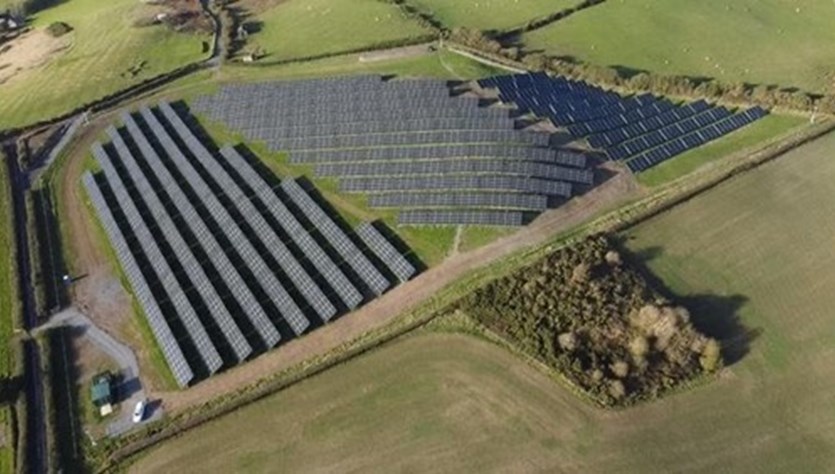
    The energy crisis means the UK’s first direct wired solar farm developed to power a hospital will generate far greater savings than could have been predicted. It went live in October last year and is expected to produce a fifth of Morriston Hospital’s energy consumption every year.

    Even during the winter months there have been days when it has generated enough to power the entire hospital – and on occasions with electricity to spare to export to the National Grid. This is despite only operating during the shortest days of the year.

    The £5.7m solar farm was built thanks to a loan scheme set up by the Welsh Government to decarbonise the public sector by 2030, and is repayable on an invest to save basis. It is estimated that the hospital has already saved an estimated £120,000 in electricity bills since it was switched on in November, and is projected to save 1000 tonnes of carbon and £500,000 per year in bills when fully operational. It has already produced 30,000 kWh surplus energy that’s been sold back to the energy grid at a profit to the hospital.

    Swansea (1)

    Caption: Des Keighan, Swansea Bay UHB Assistant Director, Estate, Swansea Bay UHB Chair, Emma Woollett, Scott Lutton, from Vital Energi and Welsh Government Minister for Climate Change, Julie James, at the Morriston Hospital solar farm.

    Solution detail

    This project demonstrates the commitment and ambition of both Swansea Bay UHB and Welsh Government to meet their net zero targets. Through enhancement of their energy infrastructure, Swansea Bay UHB have been able to maintain the highest levels of resilience, whilst significantly improving efficiency and harnessing renewable technology to create a true 21st century energy solution.

    Scott Lutton – Vital Energi, Operations Director – North & Scotland

    Visiting the 4MW project on Brynwhillach Farm, which is linked to Morriston by a 3km private wire, Minister for Climate Change Julie James said:

    “We want our energy to come from community owned and locally run renewable energy sources in Wales. This will ensure our supply is resilient, reliable and reasonable for both our planet and our pockets.

    “We have bold ambitions to decarbonise the public sector by 2030. Morriston Hospital – which depends not only on the powers of its staff, but also the energy hungry machines to keep their patients alive and well – have blazed the trail in their switch to renewables, which makes sense both financially and to the health of the people of Wales.

    “Our addiction to fossil fuels is proving harmful, volatile and no longer viable. In Wales we will continue to accelerate our investment in renewable energy and energy efficient measures such as those adopted at Morriston hospital, and call on the UK Government to support a socially just transition to Net Zero as we respond to the climate emergency.

    “The IPCC have rung the clarion call for our planet, now we must listen and respond to the science.”

    Chair of Swansea University Health Board, Emma Woollett, said:

    “I am delighted that the solar farm’s performance has already exceeded our initial expectations. The health board’s aim is to reduce its carbon footprint and maximise opportunities to use renewable energy sources.

    “The solar farm will play an important part in achieving that aim, but there is also an additional benefit in terms of cost savings. It is not only lowering our electricity costs every day, but on some days covering 100% of our electricity needs.

    “With the current volatile situation with energy prices, this really shows that the investment and the long-term thinking on behalf of the health board has paid off.”

    Vital Energi Swansea Bay University Health Board Solar Farm South Field Complete 3

    It has estimated that the Solar Farm has saved an estimated £120,000 in electricity bills since going live in November 2021.

    Solution detail

    Since being switched on, the 10,000-panel solar farm has produced enough energy to power 190 three-bedroom houses for a year, or to boil almost 200,000 kettles.

    The four megawatt farm was anticipated to reduce the hospital’s electricity bill by around £500,000 a year. But with world energy prices spiralling, the actual savings could be almost double that figure.

    A few years back, Swansea Bay University Health Board was awarded £13.6 million, on an invest-to-save basis, to bring down its energy costs and reduce its carbon footprint by around 5,000 tonnes a year. The money was awarded through Re:Fit, a national programme, supported by the Welsh Government. Following an extensive selection process, the health board selected Vital Energi as its partner.

    Phase one, a range of energy conservation measures at Morriston and Singleton hospitals and other health board premises, was completed last year at a cost of £7.7 million. The solar farm, developed on a 14-hectare site at a cost of £5.9 million, comprised the second phase.

    Swansea Bay’s Assistant Director of Operations, Des Keighan, said the hospital previously used around 20 gigawatts of electricity a year.

    “The first phase of energy saving measures reduced the hospital energy demand to 16 gigawatts a year,” he said.

    “The solar farm will reduce the need to import energy from the grid by a further four gigawatts over the course of a year.

    “It was expected that over the winter months the solar farm would contribute electricity, but that the hospital would still need to continue to buy power from the grid every day. What has come as a pleasant surprise is that for a total of 50 hours, the hospital has been entirely powered by the solar farm, and nearly 30,000 kilowatts sold back to the National Grid. This is despite the fact that the solar farm hasn’t been operating continually over the winter.

    “It has still been undergoing tests and fine-tuning, and is not due to be completely finished until the end of March. So this additional performance has been even more of a bonus.”

    Since October, the solar farm has produced 598,000 kWh (kilowatts an hour) of energy. That is enough to:

    • Power 190 three-bedroom houses for a year;
    • Boil 196,333 kettles;
    • Power 4,496 55-inch TVs or 196 washing machines for a year;
    • Drive a Tesla Model Y car 2,103,571 miles.

    But it doesn’t end there. Factor in the first phase energy saving measures and the overall drop in electricity demand from October until February at Morriston is nearly 1.5 million kilowatts. That is sufficient to:

    • Power 484 three-bedroom houses for a year;
    • Boil 500,000 kettles, power 11,450 TVs or 500 washing machines for a year;
    • Drive the same Tesla car 5,357,143 miles.

    Mr Keighan said the value of the savings was also expected to be considerably higher than expected because the world situation meant energy prices were increasingly so rapidly.

    “When this started, electrical prices were around 13p per kilowatt hour (kWh) from the Grid,” he said.

    “This morning it was 25p per kWh. That’s not far off doubled, with prices expected to increase over the coming weeks.

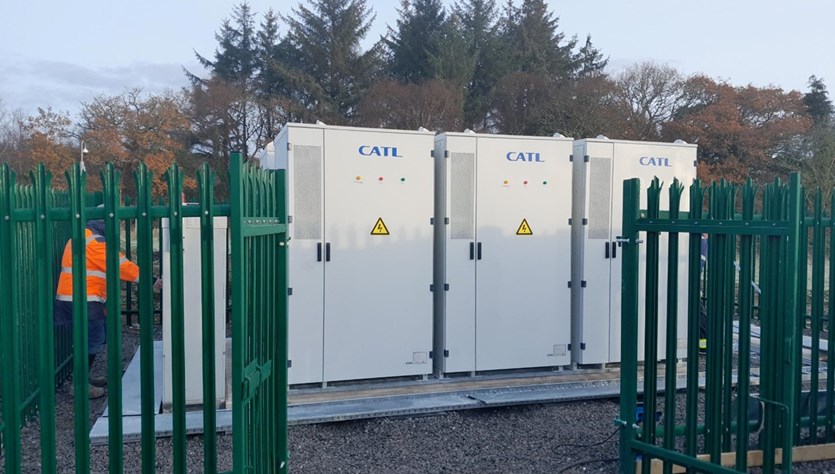
    “We want to extend the solar farm by installing another 1MW of solar panelling and also install 2MWh battery for storage

    “We get two to three pence per kW if we export. And at the moment electricity from the Grid is costing us around 25p a KWh and from April that could be as high as 50p. So using it ourselves makes far more sense and we are trying to secure funding for that, and we hope that will be the next stage.”

    Additionally, the solar farm will save around 1,000 tonnes of carbon a year, on top of the 4,000 tonnes saved by the first phase