Author: admin

  • New Training Academy Raises Standards in District Heating

    New Training Academy Raises Standards in District Heating


    New Training Academy Raises Standards in District Heating

    We opened our training academy to educate and train the green workforce of the future…

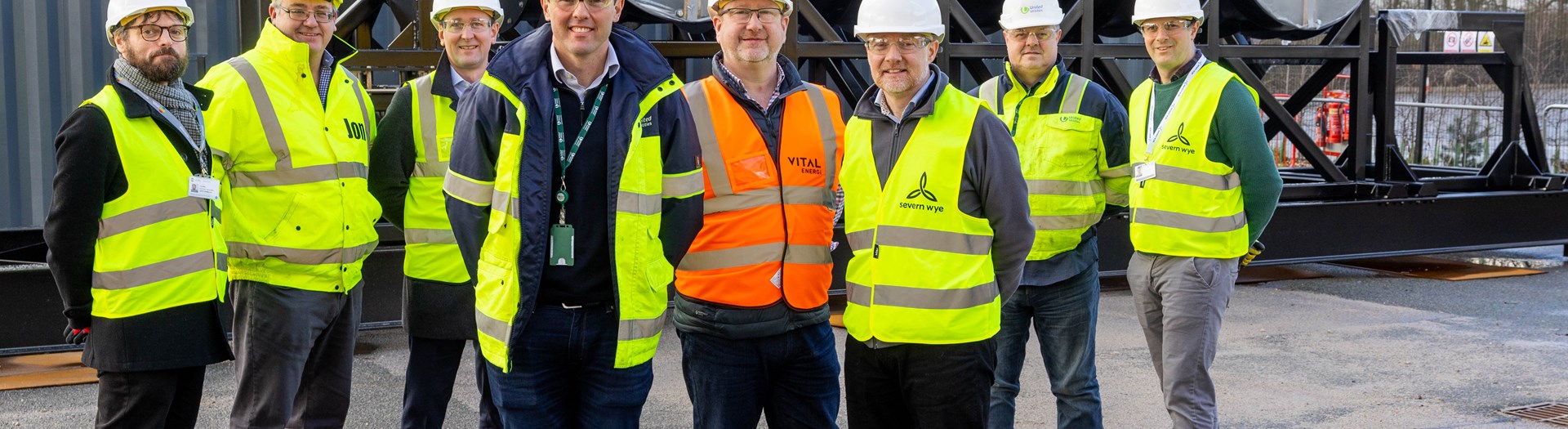
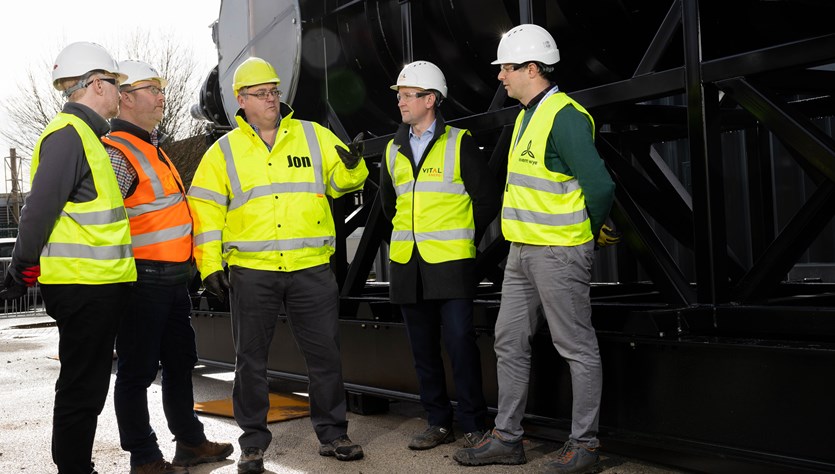
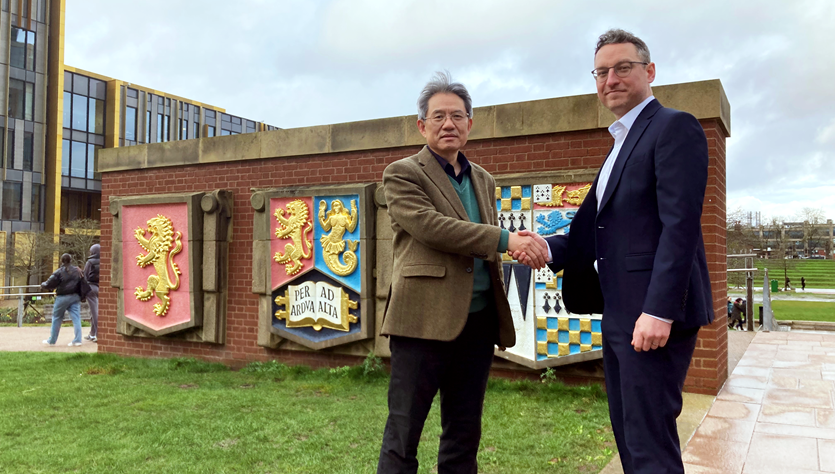
    …so were delighted to welcome staff from the 107-year-old Duncan McInnes Ltd for a four day session designed to give them an introduction to district heating network design and installation.

    The training programme saw them cover essential areas such as materials and equipment used, correct design, handling and storage of materials and correct welding techniques.

    District heating is a very specialised area and it is essential that we work together as an industry to raise the standards of design and installation so that confidence levels remain high. Mistakes during design and installation can be extremely costly for the client, so we are committed to sharing our knowledge and experience to improve the standards in all areas of district heating.

    Ashley Walsh, Vital Energi’s Managing Director – Heat Networks

    “We enjoy working with organisations such as Duncan McInnes Ltd who demonstrate a passion and pride in their work and a commitment to improving their skills. The company has a 100+ year history and it is fantastic to see them still striving to learn the newest skills and techniques. We are pleased that our Training Academy is playing a role in delivering these essential skills.”

    Duncan McInnes, Operations Manager at Duncan McInnes Ltd, said:

    “From initial discussions on District Heating networks, right the way through to undertaking training at Vital Energi’s state of the art training facility, we have been highly impressed by the professionalism and attention to detail shown by all at Vital Energi.”

    “District Heating networks are becoming increasingly important in the drive toward a cleaner, greener future both locally and nationally, and we are delighted to have been asked to undertake training within the new, purpose built training academy at Vital Energi HQ in order to understand the processes behind the design and installation of the network system.”

    The four-day course encompassed classroom and workshop-based training, as well as a day on a live Vital Energi project to give the trainees a well-rounded experience of district heating.

  • Solar panels at Tudor Grange Leisure Centre to power low carbon network

    Solar panels at Tudor Grange Leisure Centre to power low carbon network


    Solar panels at Tudor Grange Leisure Centre to power Solihull’s low-carbon energy network

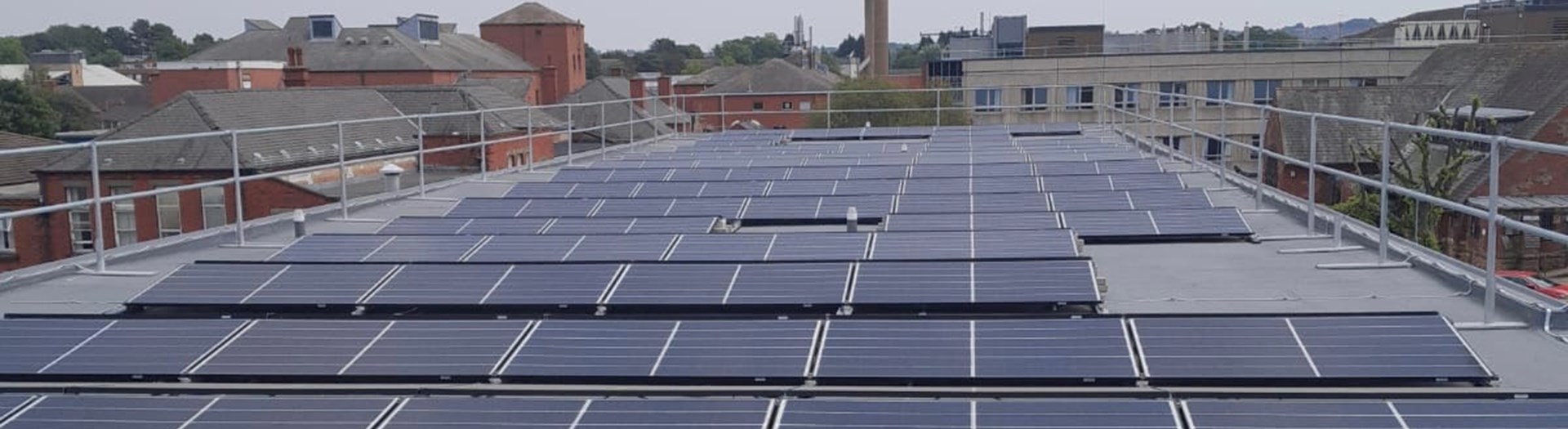
    The Solar PV installation at Tudor Grange Leisure Centre is now complete, marking another major milestone in Solihull’s low-carbon journey. The 388 panels can generate 174.6kWp in clean electricity, while reducing the leisure centre’s electricity costs by approximately £28,000 per year.

    The installation, which was funded by Sport England’s Swimming Pool Support Fund (SPSF) is projected to supply 21% of the leisure centre’s annual electricity needs. Whilst 90% of the zero-carbon electricity generated will be utilised for the leisure centre, any surplus energy generated during peak times will be exported to Solihull’s nearby energy centre, which is currently under construction in Tudor Grange Park. The exported electricity will be used to run powerful air source heat pumps at the energy centre and distributed to other local buildings via the new energy network.

    Solihull’s wider low-carbon energy network project will provide heat and power to public and private sector customers, including Council-owned buildings and education campuses. This innovative new network will help to reduce fuel bills and future-proof against changes in customer energy needs. It is intended that future phases will then connect other buildings in the town centre and link to planned commercial or residential developments in line with the Council’s Town Centre Masterplan.

    “The completion of the Tudor Grange Solar PV marks an exciting milestone in bringing low carbon technologies to Solihull. By supplying cleaner power to the Leisure Centre, we are taking important steps forward in this low-carbon initiative. Our team at Vital Energi is proud to see this phase of the project completed and remains committed to driving progress on the town’s energy network. We look forward to continuing our partnership with Solihull Council as we move into the next stages of the scheme.”

    Simon Jones, Regional Manager at Vital Energi

    “Rooftop solar PV installation is a fantastic way to help decarbonise individual buildings, making efficient use of often underutilised space. The beauty of this installation is that not only can the power generated help reduce the running cost of the leisure centre, while cutting emissions. But where surplus energy is produced, rather than it going to waste, it can be fed into the nearby energy centre and shared across our new network.”

    Councillor Andy Mackiewicz, Portfolio Holder for Climate Change and Planning

    “This upgrade is a crucial step towards a greener future, helping Tudor Grange Leisure Centre and the Council reduce our carbon footprint. The solar panels are already making a real difference to our energy costs”

    Jacob Harley-Beckett, General Manager, Tudor Grange Leisure Centre

    “Swimming pools and leisure centres are vital for promoting physical activity in communities. Sport England is proud to support this project through the Government’s Swimming Pool Support Fund, enhancing energy efficiency and sustainability to ensure these facilities remain accessible for future generations.”

    Lisa Dodd-Mayne, Executive Director – Place at Sport England

    Elsewhere, enabling works for the new energy network are in full swing, with pipework being laid through Tudor Grange Park and along Homer Road. Work is also progressing at pace at the all-important energy centre, where the building’s steel framework is taking shape.

  • New solar farm sparks greener future for council

    New solar farm sparks greener future for council


    New solar farm sparks greener future for council

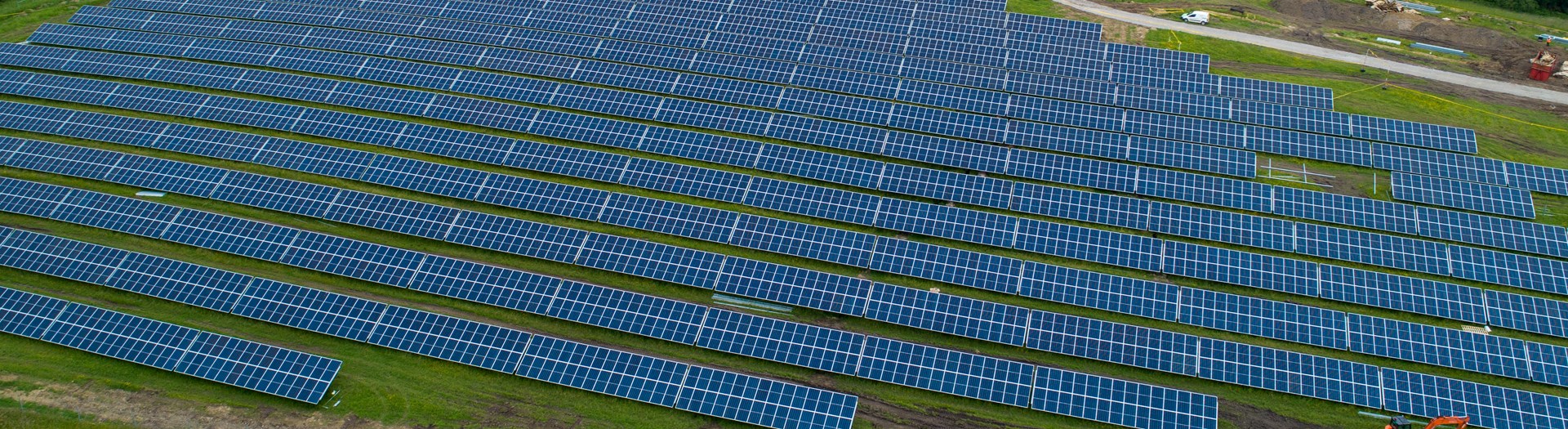
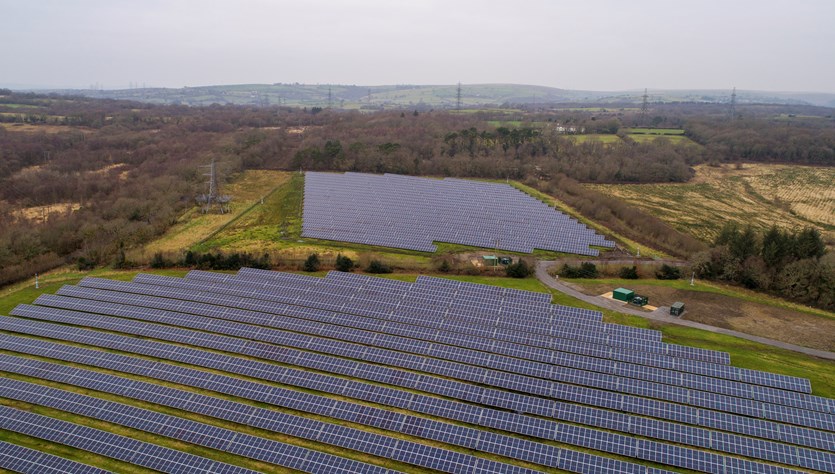
    Officers and Members from Westmorland and Furness Council and Vital Energi gathered at the new 2MW solar farm at Sandscale Park in Barrow to celebrate the project’s official completion.

    The solar farm is a first for the council and the renewable energy project marks a key milestone in their ongoing efforts to combat climate change and meet their Net Zero targets.

    The site, which has been successfully completed in six months, will generate green electricity to offset the council’s carbon emissions, in line with its Carbon Management Strategy and Climate Action Plans. It is the first of more schemes to come as part of the council’s wider decarbonisation programme of work.

    Thanks to almost 3,700 solar panels, the site is expected to generate enough electricity to power the council’s five leisure centres or approximately 730 homes per year, based upon average UK households, also delivering significant carbon savings.

    WFC Sandscale Park Barrow

    The 2MW solar farm is made up of 3,700 solar panels.

    Solution detail

    The completion of the project is a significant step forward in the council’s efforts to reduce its carbon footprint and promote sustainability in response to the growing challenges posed by climate change. In addition to contributing to the council’s income generation, the solar farm will mitigate rising energy costs and enhance the council’s energy sovereignty, independence and security, providing a robust solution for future energy needs.

    The scheme was delivered in collaboration with the council’s strategic partner Electricity North West, main contractor Vital Energi, and specialist advisors Green Cat Renewables. The site is now connected to the national grid and generating electricity.

    Sandscale Park solar farm is an example of us using our assets in an innovative way to meet a serious challenge. The rise in energy costs is affecting us all, and by establishing this site we’re now able to generate our own energy and ensure security for the future, which can only be a positive thing. Huge thanks to the teams and partners involved for their support and expertise in making this vision a reality. Their contribution has been vital to the successful delivery of this ambitious project, and we look forward to seeing the long-term benefits this solar farm will bring to both the environment and Westmorland and Furness.”

    Councillor Peter Thornton , Westmorland and Furness Council

    WFC Sandscale Park Barrow 2Climate change remains one of the greatest challenges to this generation, and for many generations to come. It is one of the greatest threats to biodiversity and humanity globally, with the devastating impacts of it already seen

    Members of the team gathered at the official Sandscale solar farm opening.

    Solution detail

    Climate change remains one of the greatest challenges to this generation, and for many generations to come. It is one of the greatest threats to biodiversity and humanity globally, with the devastating impacts of it already seen and experienced in Westmorland and Furness.

    In recognition of this, the project included plans to enhance biodiversity at the site. A Biodiversity Enhancement Plan ensured a 10% Biodiversity Net Gain, creating opportunities for pollinators and enhancing woodland, hedgerows, and habitats.

    Councillor Giles Archibald, Westmorland and Furness Council’s Cabinet Member for Climate, Biodiversity and Environmental Services, added:

    “This solar farm is a landmark achievement, not just for our council but for Cumbria as a whole. We already have solar panels on several of our buildings but this marks the first time we have harnessed the natural power of the sun at this scale and is a proud step forward in our fight against climate change.

    “It is a project which ensures that the natural environment thrives alongside our efforts to generate green energy and I’m pleased to see biodiversity has been a key consideration. A range of native tree and hedge species have been planted as well as habitats created to support our rich local wildlife including pollinators, bats and a variety of birds such as house sparrows, wagtails, nuthatch and redstarts. I look forward to seeing how else we can make effective and efficient use of our assets on our journey to carbon net zero.”

  • New private wire connection to Camden’s district heating system

    New private wire connection to Camden’s district heating system


    New private wire connection to Camden’s district heating system

    The Francis Crick Institute in King’s Cross is now connected to a cogeneration plant and district heating network, installed by Vital Energi, which is supplying heating and hot water to over 500 homes across Somers Town in Camden.

    The institute is receiving a low carbon power supply through a private wire network to support the essential research being undertaken at the facility.

    Designed and delivered by Vital Energi, the Somers Town Heat Network, which has been operational since 2015, provides heat and hot water to the residents.  It comprises a combined heat and power (CHP) unit which generates electricity. The CHP’s power supply has been directed through a private wire network to the Crick, allowing the Institute to benefit from their own decentralised electricity supply.

    The Vital Energi team had to ensure there was no vibration during the works to avoid impacting the sensitive scientific equipment and experiments taking place within the building. They made the decision to hand dig a lot of the elements within a confined space over 2 floors deep (4m), which took nine months to complete.

    The project presented a number of issues when the team began digging, as they had to overcome logistical issues working around two live Victorian gas mains, and dismantle a buried steel frame which was used to support the foundation wall during construction in 2010.

    The location of the installation, close to Euston Station and St. Pancras International Station, presented challenges too. The area involved removal and reinstatement of cobbles, working on busy highways and walkways, and dealing with the congested existing utilities in central London.

    “After overcoming numerous challenges on-site, we’re really pleased to have successfully installed the HV private wire, which will provide the Crick with a resilient electricity supply and help accelerate the Camden’s journey to net zero. We’ll manage all aspects of maintenance and compliance to ensure high standards of safety and reliability at all times.”

    David O’Neill, Operations Director at Vital Energi

    Lee Downes, Project Manager at the Francis Crick Institute, said:

    “We are proud to have contributed to the funding of this project as part of our partnership with Camden Council, helping cut borough emissions and transition to a low carbon future. The implementation of this scheme was tricky to coordinate with seven organisations working together in a sensitive environment. We’re very pleased with the outcome.”

  • New Manchester landmark shines a light on low carbon heat network

    New Manchester landmark shines a light on low carbon heat network


    New Manchester landmark shines a light on low carbon heat network

    Manchester’s new Tower of Light structure has been officially switched on, marking a milestone in the development of the city’s new Civic Quarter Heat Network. 

    Owned by the Council and built by Vital Energi, the focal point of the Civic Quarter Heat Network is the 40m Tower of Light, which will be lit up every night. The tower will be a striking new landmark in the city centre and be the most visible manifestation of the network, which will provide heating and electricity to some of Manchester city centre’s most iconic buildings. The network, which will go live early next year, will help them to reduce their carbon emissions and support the city’s transition to zero carbon by 2038.

    Using low carbon power generated in an energy centre located underneath the railway arches by Manchester Central, the network will serve the Bridgewater Hall, Manchester Central Convention Complex, Central Library, Heron House, Manchester Art Gallery and Manchester Town Hall and Town Hall extension buildings via 2km of underground pipes.

    And the network will also have the capacity to connect to other buildings in the vicinity – both existing and future, whether public or private-owned – helping them to reduce their carbon footprints too.

    “We’re delighted to be helping Manchester City Council transition to a low carbon future through the development of the Civic Quarter Heat Network. The installation of future-proof infrastructure will revolutionise how heat and power is distributed through the city. The flue’s innovative lighting scheme paired with the partially transparent ‘Wall of Energy’, which allows the public to catch a glimpse inside the energy centre, ensures the Tower of Light will become an iconic feature to Manchester’s skyline.”

    Mike Cooke, Vital’s Managing Director for the North & Scotland

    Councillor Tracey Rawlins, Executive Member for Environment for Manchester City Council, said:

    “The Civic Quarter Heat Network is a trailblazing system which demonstrates Manchester’s determination to cut our carbon emissions.

    “As a Council we are committed to playing our full part in limiting the impacts of climate change as the city strives to become zero carbon by 2038 – at least 12 years ahead of the national target.

    “It’s a complex challenge but ambitious projects such as this network show that we are taking action to rise to it. As well as looking beautiful, we hope that the Tower of Light will be a beacon for this kind of work.”

    The network has an efficient combined heat and power engine which captures and re-uses heat created as a by-product of producing electricity. Although initially fuelled by natural gas, there are plans to further reduce its carbon footprint as alternative measures and fuel supplies become available including the use of biomethane and the potential introduction of hydrogen into the fuel mix in 2024

    The project received Heat Networks Investment Project (HNIP) funding, which is delivered by Triple Point Networks Investment Management on behalf of the Department of Business, Energy, and Industrial Strategy (BEIS).

    Ken Hunnisett, Project Director for Triple Point Heat Networks, added:

    “The Heat Network Investment Project has awarded more than £250m to projects across England and Wales and while we love them all equally, few if any are as breathtakingly beautiful as Manchester’s magnificent Tower of Light which seems destined be one of the city’s most recognisable landmarks and an icon of its ambitious net zero strategy.

    “Many congratulations to everyone involved with the project on the achievement of this latest milestone.”

  • New Heat Network Training Centre Will Support Skills Development


    New Heat Network Training Centre Will Support Skills Development in the Drive to Net Zero

    Vital Energi is set to support heat network skills development with the opening of a £2M training centre at its Blackburn HQ.

    Heat networks will play an increasingly important role in meeting the UK’s net zero objectives, with the Minister for State for Business, Energy and Clean Growth, Kwasi Kwarteng MP, recently calling for up to £1billion of investment in the industry by 2030.

    Gary Fielding, Chairman of Vital Energi, said: “As a company dedicated to providing sustainable, long-term heat and power solutions, we believe it’s our responsibility to help close the skills gap facing our industry and support the workforce that is set to deliver the UK’s low-carbon future.

    “Our new training centre will focus on knowledge sharing and skills development, providing attendees with the necessary tools to support the Government’s heat network expansion plans. We expect the centre will significantly boost the pool of qualified and experienced workers in the industry.

    “As a business, we already enable individuals seeking a change of career through training and support packages. We will continue to build on this approach by offering apprenticeships, graduate jobs and forging partnerships with higher education institutions in the communities in which we work. With the development of new skills and formal training, we believe our new facility will be an invaluable resource as we work towards achieving the country’s net zero ambitions.”

    The centre, which is designed to be both Covid-secure and interactive, utilises a multitude of digital tools to allow heat network training to take place amidst current government restrictions. The new 600m2 facility is home to a 60-seater lecture theatre and seminar-style classrooms. It will provide pioneering demonstrative training resources and collaborative programmes, delivered with industry partners including LOGSTOR, which can be carried out both on and offline.

    As district heating pipes are buried below ground, it can be challenging to train individuals without visiting a live project. With site visits impacted by the pandemic, Vital Energi has purpose-built two demonstration trenches which will be used to educate students and existing employees about techniques such as jointing and welding pipes, insulation processes and moisture control.

    The centre will grow the company’s existing relationship with The City of Liverpool College with additional apprenticeship recruitment, presentations and new product training as well supporting courses at other universities and colleges with practical and theoretical education. The facility will also benefit Vital Energi’s existing employees by supporting engineers and designers with skills development opportunities.

    We are so excited to be working alongside Vital Energi and together we will develop future skills for future jobs. Our partnership is built on the knowledge and skills of Vital Energi’s engineers and the innovative pedagogy of our curriculum leaders at The City of Liverpool College. This new state-of-the-art training centre will play an essential role in developing the science, engineering & digital skills needed to deliver our low-carbon future.

    Sophie Park, Director of Workforce Skills – Liverpool College

  • New Energy Platform to Revolutionise Metering & Billing of Heat Networks


    New Energy Platform Set to Revolutionise Metering and Billing of Heat Networks

    A new smart energy app and portal that gives heat network customers greater control of their energy consumption and spend has today been launched by Vital Energi, helping service operators at one pilot project to reduce debt by 12.5% in under 6 months.

    Named Glass, the software gives heat network users the visibility and control to better manage their energy and allows users to top-up or pay their bills anytime, anywhere. Additionally, heat network operators can access energy consumption and financial data via a dedicated portal that allows them to better serve customers and optimise network performance.

    Housing associations, local authorities, developers and other service managers can view data across multiple sites as well as individual properties. This can help identify and proactively support residents by providing energy saving and payment advice to reduce debt and ensure bills are paid on time.

    Operators and service managers will be able to send payment reminder alerts and notifications to residents through the app to help aid their financial management, and recent pilot schemes have shown Glass has helped improve revenue collection by up to 44% within weeks of being implemented.

    Since 27th November of this year, the Government’s new Heat Metering & Billing Regulations has ensured that energy customers only pay for what they consume. Glass will give users and operators the ability to view real time consumption data and support operators in achieving compliance.

    Glass has been successfully trialled across four projects being delivered by Vital Energi, and it is currently working with residential rental company UNCLE to support over 200 properties as part of a £100million build-to-rent development at Wembley.

    From early next year, Glass will support 137 homes to manage and reduce their energy use at Peel L&P’s Liverpool Waters as part of a £5 billion regeneration project to transform the city’s northern docks. The project will provide heat both for homes and commercial space connected to Peel L&P’s Mersey Heat district heat network, with the potential for 9,000 homes to benefit from the software over the coming years.

    For more information about Glass, please click here.

    Ian Whitelock, Chief Executive Officer at Vital Energi, said: “Glass integrates our comprehensive district heating expertise and understanding into one user-friendly platform. We’ve already received strong initial feedback from our pilot projects and we’re confident that the app’s functionality is significantly greater than any similar tool in the market. We recognise that, more than ever, people need the ability to manage their energy use effectively, in a manner that is easy to understand and simple to use. For residents who use a pay-as-you-go and credit billing energy supply, the ability to review and pay bills instantly from home using a smart device or online portal is something we’re really proud of. The platform also delivers significant benefits to heat network operators, by providing greater data visibility that improves energy efficiency and reduces debt risk. Glass can be easily retrofitted to properties using our new vPort solution which makes previously difficult data, visible and accessible using modern communication.

    Ian Whitelock, Chief Executive Officer

  • £1bn low carbon heating infrastructure project unveiled in Westminster

    £1bn low carbon heating infrastructure project unveiled in Westminster


    Westminster Heat Network – new £1bn project unveiled

    Iconic London buildings in the heart of the capital to be heated by new low carbon heat network, expected to create 500 jobs and save 75,000 tonnes of CO2 every year.

    Just days after the UK Government revealed an Autumn Budget that included significant infrastructure investment plans, a new £1bn low-carbon infrastructure project has been launched in Westminster, signifying a major step towards driving investment and creating well-paid, secure jobs.

    Unveiled today, this large new heat network in Westminster will become one of the UK’s first ‘heat network zones’ – places where heat networks are the cheapest and best way to decarbonise compared to each building having its own air source heat pump. On average, heat networks are 40% cheaper for customers than building level heat pumps.

    The heat network will supply low carbon heating, sourced from within the local area. The heat will need to come from innovative sources such as the London Underground, the Thames, and the sewer network. It might even be brought down the river on barges.

    One of the core benefits of heat networks, is the ability to harness waste heat from within the local area and make use of it. This makes them low carbon, efficient and resilient, not relying on imported fuel.

    Heat will then be distributed via a network of underground, insulated pipes filled with hot water. The zone will stretch from around Victoria Station, up to Temple Underground Station near the Strand, bounded by St James’ Park.

    Over time, this significant new investment is expected to save 75,000 tonnes of CO2 every year, (equivalent to removing 40,000 cars from the road), create 500 jobs, improve local air quality by reducing nitrogen oxides emissions by 99%, and create 100 opportunities for UK businesses.

    The South Westminster Area Network (SWAN) was brought to life by the Department for Energy Security and Net Zero, and Westminster City Council. To deliver the network, they have brought in the SWAN Partnership, a joint venture between Hemiko and Vital Energi, two of the leading heat networks developers in the UK, who were appointed last month. London Heritage Quarter and AECOM have also been key partners, supporting the network’s growth.

    The SWAN Partnership will be funding, building and operating the heat network. They plan to invest £100m within 3 years, £500m within 10 years, and £1bn by 2050 into what will become one of the UK’s biggest heat networks.

    SWAN reflects a currently unparalleled scale of ambition for growth and investment into heat networks, but it is something that the government wants to replicate in zones across the country.

    By 2050, every major town and city is expected to need district heat networks, requiring over £100bn of private investment and 290k new jobs in total.

    It is not yet known who will join up to this heat network, but Project SWAN could serve landmark buildings like the Houses of Parliament and the National Gallery, alongside buildings owned by Westminster City Council and the Government.

    “Taking waste heat from the River Thames and London Underground to heat such iconic places as the Houses of Parliament and the National Gallery is a really exciting example of what lies ahead on our journey to low-cost, low-carbon heating. This project will help support hundreds of jobs and make bold new strides towards boosting our energy security, as one of seven heat network zones we’re backing with over £5million funding.”

    Miatta Fahnbulleh, Minister for Energy Consumers at DESNZ

    “It is fantastic to see that the South Westminster Area Network (SWAN) has taken this critical step forward. The council has been actively supporting the Government through the early stages of this pioneering network and will now take on a principal role to ensure that the project delivers the best outcomes for our residents and businesses. We know that the gas used to heat and power buildings is one of the biggest contributors to both carbon emissions and air pollution in Westminster. However, these new low-carbon district heat networks will tap into local waste heat sources, delivering clean and affordable energy to those who need it most. The SWAN project will be a crucial piece of our net zero carbon journey in Westminster, leading the way for others and showing what a positive clean energy future could look like.”

    Cllr Adam Hug, Leader of Westminster City Council

    “Heat networks are the most cost-effective way to decarbonise our densely populated cities. The Government’s heat network zoning regulations, introduced last year as part of the Energy Act, have now created the right market conditions for private sector investment. By combining Hemiko’s investment capabilities with Vital Energi’s comprehensive expertise in designing, building, operating and owning energy infrastructure, the SWAN Partnership will deliver the first zonal scale heat network and demonstrate a model that other towns and cities will seek to replicate.”

    Nick Gosling, Chief Strategy Officer of Vital Energi

    “Using heat from the iconic River Thames and London Underground to heat some of the capital’s most famous buildings is a true story of pro-growth, circular economy in London. Heat networks are the next big utility in the UK, and we are investing £1bn over the next 6 years into networks that will allow local people and businesses to make use of locally wasted heat. We strive to embed ourselves in the local community, understanding the pressures and opportunities in the area, and figuring out how we can help, such as bringing high-quality green jobs and supply chain opportunities. This network will be the flagship network in the UK, the first new zonal scale network in a market that offers an investment potential the size of the UK offshore wind industry. Steps like this show that the UK heat networks market is open for business.”

    Toby Heysham, CEO of Hemiko

    Businesses are being encouraged to register their interest in joining the network, by emailing [email protected]. First movers are needed to unlock this least cost decarbonisation pathway and the jobs that come with it, for the benefit of everyone in Westminster. The more who join up, the cheaper it is for everyone.

    From start to finish, it took just 4 months from launching the competitive process to signing the contract for SWAN and beginning the development work, five times faster than most procurement exercises run to date.

    This new procurement approach for heat networks is expected to speed up the delivery of heat networks, to decarbonise the UK faster, and create a more investable heat networks market. This model, and variations of it, is expected to be replicated by at least 7 projects across the country within the next year alone, with more thereafter.

    Construction of SWAN is due to start in 2026.

    Swan Map (1)

    For the buildings identified on this map, connecting to SWAN should be the most cost-effective way to decarbonise heating, according to the Energy Department’s National Zoning Model.

    Solution detail

  • Net Zero Moves Closer As Electric Boiler Arrives At Simpsons Malt Site

    Net Zero Moves Closer As Electric Boiler Arrives At Simpsons Malt Site


    Net Zero Moves A Step Closer As Electric Boiler Arrives At Simpsons Malt Site

    Simpsons Malt’s net-zero ambitions took another big step forwards today when the 12MW electric boiler completed its 360-mile journey from Norway to their Tweed Valley Maltings site.

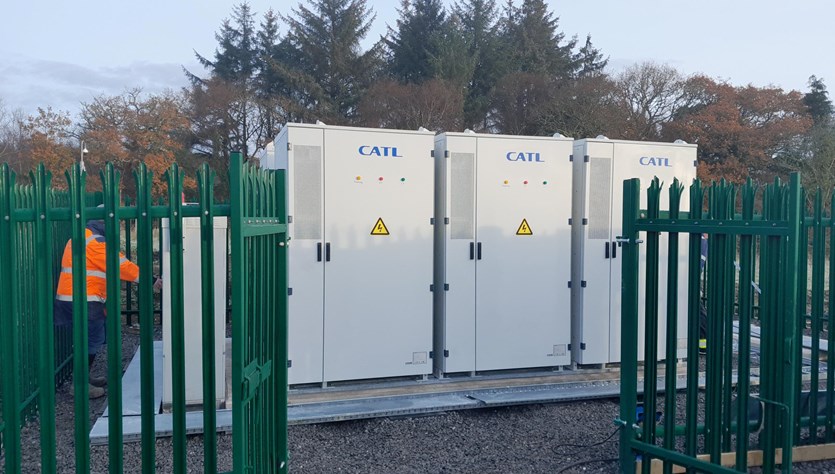
    The electric boiler will be coupled with the three 6MW biomass boilers and the combined system will reduce their carbon emission by 25,000 tonnes per year. This accounts for up to an 80% overall reduction on what is the largest malting site in the UK, with the capacity to produce 260,000 tonnes of malt per year.

    With 90% of the site’s malt production destined for distilleries, Simpsons Malt plays a crucial role in the Scotch whisky supply chain and, by decarbonising its operations, the company is not only meeting its own sustainability targets, but also contributing to the net zero ambitions of its customers.

    Microsoftteams Image (36)

    The 12MW electric boiler is a core component of the low-carbon energy solution at Simpson Malt’s Berwick-Upon-Tweed site

    Solution detail

    We’re pleased that our Energy Centre project has taken another big step towards the commissioning stage with the delivery of the 12MW electric boiler. With the Energy Centre delivering up to an 80% reduction in our Scope 1 & 2 emissions at our Tweed Valley Maltings site and around a 55% reduction company-wide, the project will not only have a significant impact on our own carbon footprint, but the Scope 3 emissions of some of the world’s leading whisky brands who we are proud to supply from our Berwick-upon-Tweed headquarters.

    Steven Rowley, Operations Director – Simpsons Malt

    Microsoftteams Image (32)

    The new electric boiler is set to revolutionise the energy-intensive malting process by utilizing excess renewable electricity from North Sea wind farms. During these times the electric boiler will be the primary source of heat for the kilning process and will be replaced by the biomass boilers when North Sea wind farm electricity is not available.

    Solution detail

    Warren Spiers, Preconstruction Director for Vital Energi explains, “This is a huge investment by AMP Clean Energy and Simpsons Malt which demonstrates their commitment to sustainability but also sets a benchmark for the entire food and drink industry. By integrating cutting-edge technologies, with an innovative commercial solution, Simpsons Malt is paving the way for a more sustainable future. Their efforts highlight the importance of reducing carbon footprints in traditionally high-emission sectors, showcasing that environmental responsibility and business success can go hand in hand.

    “The impact of Simpsons Malt’s decarbonisation efforts extends far beyond their own operations. As a key player in the food and drink industry, their commitment to reducing greenhouse gas emissions serves as an inspiring model for others to follow. By prioritising sustainability, they are not only contributing to a healthier planet but also influencing positive change across the industry.”

  • Net zero apprentice Mohammad shares his highlights

    Net zero apprentice Mohammad shares his highlights


    Net zero apprentice Mohammad shares his highlights

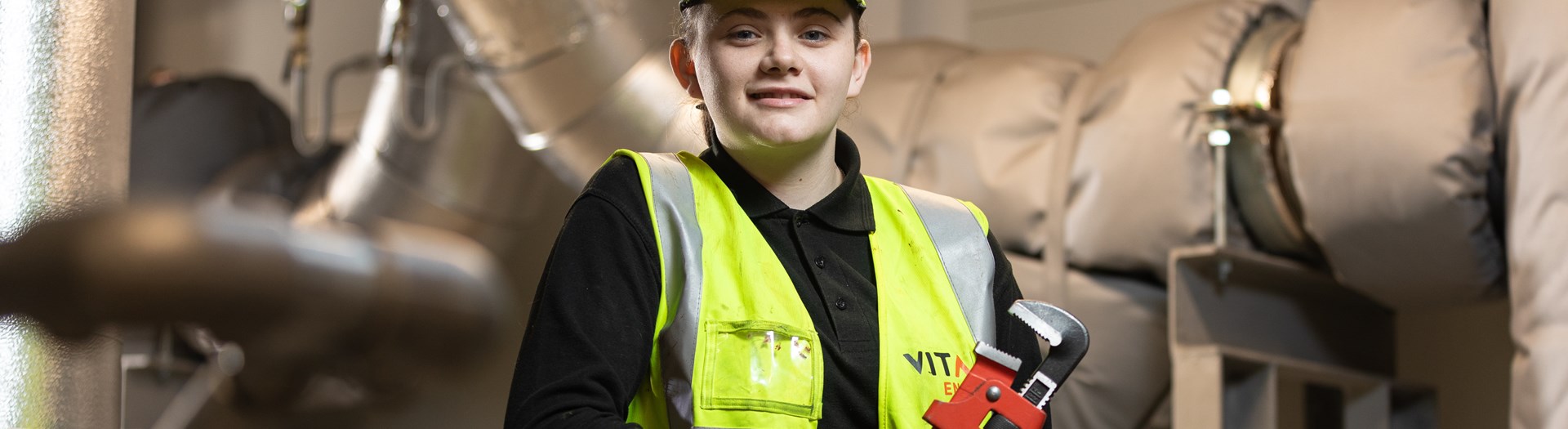
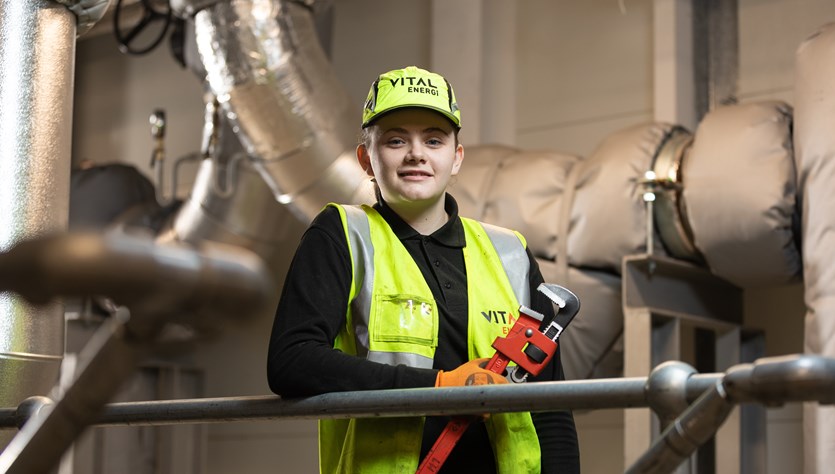
    Mohammad Basid, one of our Building Services Engineering apprentices based in London has been with Vital for over a year. He tells us about his journey so far; what he has learnt, what he gets upto in his current department, and his goals and aspirations for the future.

    Currently based at our Energetik Heat Network project in Enfield, Mohammad started his apprentice journey in September 2021 and has gained a wealth of knowledge working across our business units.

    “It’s been a great experience so far,” said Mohammad. “I have been with different departments and learned more about what Vital do as a business. I started with metering and billing for the first three and half months, where I learnt about the V-Pro system we use, and how the engineers install meters in people’s houses which taught me a range of things from simple electric works to interacting professionally with customers”.

    Mohammad recently visited our Blackburn office, where he learnt how to build our vTherm°e HIUs.

    “I learnt so much more about HIUs and how to fix common issues as well as how to conduct major works in plant rooms, such as changing valves and bellows. I gained a lot of knowledge as I was always working with an experienced engineer!”

    “I’m currently learning about project management on the Energetik project based in Enfield from Senior Project Manager, Philip Kyriacou, and Project Manager, Colin Miller. I assist them with authorising permits, daily diary arrangements, filling in daily labour sheets and assisting sub-contractors when they need help. So far, it has been a great experience learning about management and the different roles and responsibilities that come with it, as well as providing solutions to keep up with what is required of a main contractor.”

    Mohammad assisted with a site visit too, where investors, employees from Energetik, and councillors from Enfield Council were able to learn about and see the project progress.

    “I had the opportunity, alongside Philip and Colin, to show them around the site, explain what is happening and talk about the progress of the project. It was a great experience because it was good to hear their perspective on the project, especially the people who are going to be using the building when finished.”

    “What I really like about my apprenticeship is that I am learning a broad range of skills which will widen my career opportunities. On top of that, we have a fantastic college in Liverpool, with amazing facilities and teachers, where we get to stay for a week roughly every 5 weeks. I really love that aspect because we get to experience a different city and it is a nice break from working in London. Adding to that, I am a massive Liverpool fan, so it is a bonus for me as I get to go to some games at Anfield when I am there!”

    “My goal is to complete this apprenticeship and achieve the best grade possible. In the future, working my way to management is an aspiration of mine, even though it will come with challenges, it will be very rewarding. I am thankful for having great role models such as Philip and Colin to learn from!”

    If you know anyone who would be interested in joining Vital’s net zero apprenticeship programme, click here and keep an eye out for applications opening later this month.