Author: admin

  • Princes Dock buildings to connect to Liverpool’s heat network

    Princes Dock buildings to connect to Liverpool’s heat network


    Leading the way: Princes Dock commercial office buildings first to connect to Liverpool’s low carbon district heat network

    Three Net Zero office buildings at Princes Dock, Liverpool Waters, will become the first commercial office buildings in Liverpool to connect their heating and hot water supply to the new Mersey Heat network.

    The multi-million-pound energy centre, currently under construction and set to complete in the autumn, will have the capacity to provide low carbon heat and hot water, through the Mersey Heat network, to thousands of homes and businesses around the city, reducing energy costs and their carbon footprint.

    Businesses based at No. 8, No. 10, and No. 12 Princes Dock, which sit within Peel Waters’ growing Liverpool Waters district, have already been verified as Net Zero for three years running. The popular waterside office space will now also benefit from locally generated heat, through the district heat network and energy centre. This will make it the largest cluster of offices in Liverpool to provide this opportunity to its tenants.

    The energy centre, which will be home to one of the UK’s largest water source heat pumps, will take heat from the water in the nearby Leeds/Liverpool Canal and use it to heat surrounding homes and businesses via a 6km district heating network.

    Last year, renewable energy company, Vital Energi was appointed by Peel NRE to design and build the energy centre off Great Howard Street, which is expected to be complete by September 2024. Led by Peel NRE’s district heat network specialist, Ener-Vate, the Mersey Heat network is set to become a major part of Liverpool’s low carbon energy infrastructure.

    The Mersey Heat network will reduce Liverpool’s reliance on fossil fuels and save 2,000 tonnes of carbon emissions every year – the equivalent of taking 1,000 cars off the roads. The infrastructure will provide low carbon heat and hot water to thousands of homes and commercial space within Liverpool Waters as well as sustainably futureproofing future developments planned for the growing mixed-use district, as well as wider domestic and commercial buildings across Liverpool.

    This initial phase of the project could supply 20GWh of heat every year with planning permission in place to expand the project to supply around 45GWh (the equivalent of supplying 17,000 new homes with heating and hot water).

    It’s fantastic to have a number of buildings at Princes Dock signed up to connect to the Mersey Heat Network. Securing early adopters to the scheme further fortifies the need for heat networks across cities like Liverpool, where a range of buildings are seeking to contribute to the UK’s wider net zero journey and invest in their own sustainable heat and hot water infrastructure. Vital Energi are delighted to be a part of the Mersey Heat Network, developing and delivering a futureproofed and low carbon heat network.”

    Andrew Wightman , Pre-Construction Director at Vital Energi

    With construction of the new energy centre underway, it’s fantastic that we are now securing connections to the network from offices at Princes Dock. This is a highly desirable location for businesses, with a beautiful waterfront setting and access to range of amenities but, at Liverpool Waters, we are also striving for excellence in sustainability and climate resilience. This is also a big priority for our tenants and our growing community, and so it is vital that we connect to this ambitious project right across the Liverpool Waters site to ensure the sustainable regeneration of Liverpool’s northern docklands.”

    Liza Marco, Senior Asset Manager at Liverpool Waters

    Liverpool Waters is part of Peel Waters, a UK wide portfolio of vibrant and innovative, waterfront developments, delivering large-scale, sustainable regeneration projects, creating jobs, economic growth, new homes and new public realm across the country.


  • Duffryn Heat Network – Improving The Way Residents Heat their Homes

    Duffryn Heat Network – Improving The Way Residents Heat their Homes


    Duffryn Heat Network – Improving The Way Residents Heat their Homes

    Duffryn Heat Network is one of the largest district heating pipework replacement projects being delivered in the UK and will see the original 50-year old network replaced with a brand new district heating scheme which will bring more reliable heating to the 1000+ homes connected to the network.

    The project is a major undertaking which involves replacing 7.5km of ageing pipes  with a modern and highly insulated network. The project received a £3.7m grant from the Heat Network Efficiency Scheme (HNES), and this work will secure the future of the district heating system and deliver a better experience for customers.

    Learn more about the project which is turning an ageing 1970’s heat network into a truly modern renewable energy solution in the video below.

  • Glenrothes Heat Network Named H&V Finalist

    Glenrothes Heat Network Named H&V Finalist


    Glenrothes Heat Network Named H&V Finalist

    We would like to congratulate our clients, Fife Council and RWE on the news that Glenrothes Energy Network has been shortlisted in the District Heating category of this year’s H&V Awards.

    The project is an exciting public/private partnership which takes waste heat from the RWE biomass plant in Markinch and uses it to heat businesses and homes in the town centre via a 6.3km district heating network.

    This is a fantastic project which demonstrates the benefits which can be generated through public/private partnerships. This project will now result in significant carbon emission reductions of approximately 1,800 tonnes per year. but will also be instrumental in tackling local fuel poverty with the scheme expected to save £200,000 in heating bills over the next 10 years. We’re delighted that the project has been shortlisted as we believe it is an important addition to Scotland’s green heating infrastructure

    Scott Lutton, Vital’s Scotland Regional Manager

    This is the 6th year in a row Vital Energi have had a project shortlisted in the district heating category and have claimed a hat-trick of victories so far.  We’d like to say “good luck” to all the finalists across all categories for the work they have done this year to create a cleaner, greener Britain

  • Spring date set for Wolverhampton solar farm

    Spring date set for Wolverhampton solar farm


    Spring date set for Wolverhampton solar farm

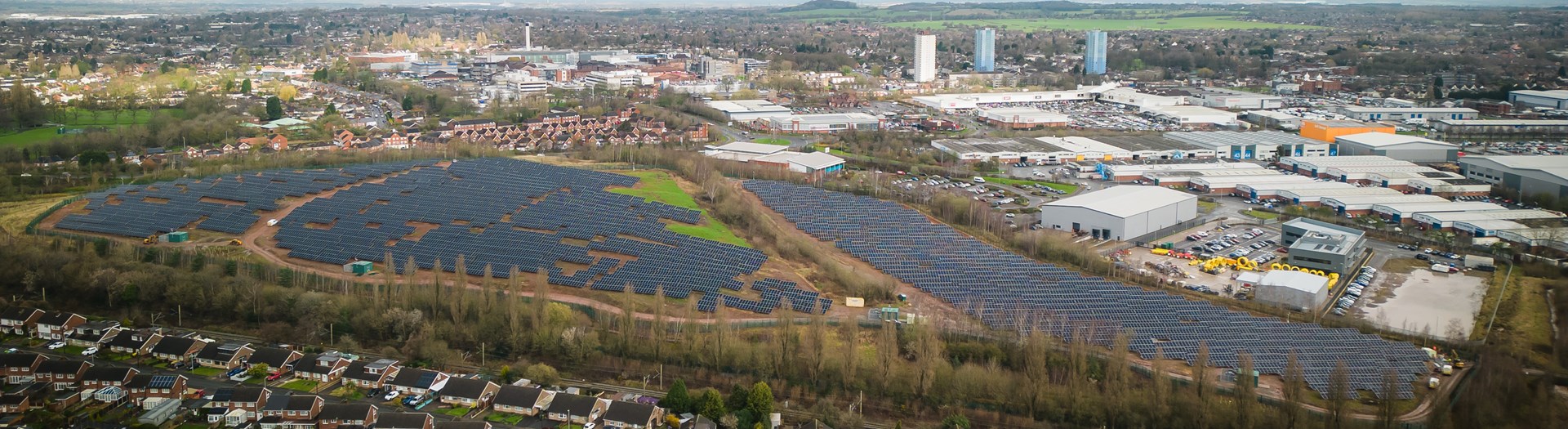
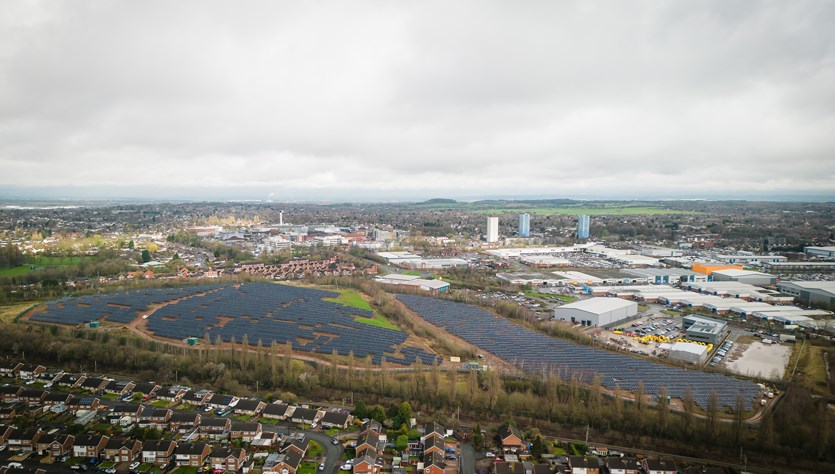
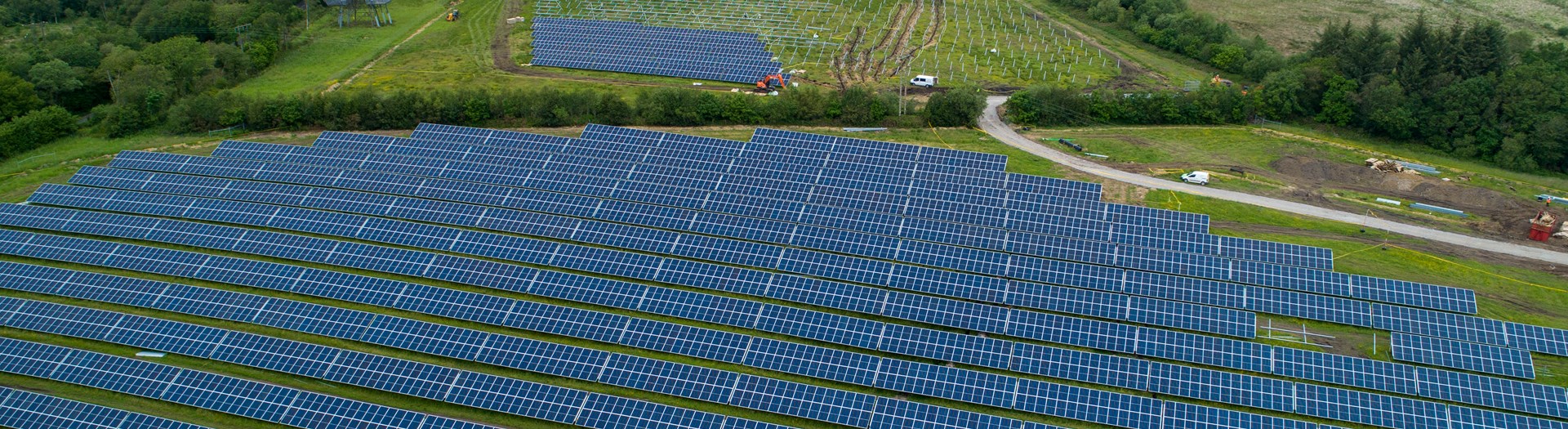
    A solar farm which will power Wolverhampton’s New Cross Hospital for three quarters of the year is set to be up and running this spring.

    The Royal Wolverhampton NHS Trust (RWT), City of Wolverhampton Council, and project partners including Vital Energi, have built the solar farm at a former landfill site the size of 22 football pitches, adjacent to Bentley Way, Wednesfield. It is set to open in April.

    The facility will power the entire hospital site with self-generated renewable energy for around 288 days a year, and save the Trust around £15-20 million over the next 20 years – money which will be put back into frontline healthcare.

    The solar farm will produce 6.9MWp of renewable energy to New Cross Hospital and will generate an estimated carbon saving of 1,583 tonnes of CO2e per annum.

    More than 15,000 electricity generating solar panels have been installed at the site by main contractor Vital Energi.

    Work to secure the 40-plus acre brownfield site included protecting badger setts, and removing methane.

    The project, combined with existing green technologies, allows the Trust to move away from reliance on the national grid and to reduce its exposure to rising electricity costs in the next two decades. It also supports the Trust’s goal of reducing its carbon emissions by 25 per cent by 2025, and of reaching net zero carbon emissions by 2040.

    Stew Watson, Director of Estates Development at RWT, said: “This investment is a huge boost to help us achieve that.

    “Our primary focus is always on the patient and these works ensure the Trust saves money on future energy bills, which we can then subsequently invest across other healthcare services.”

    “As the largest employer in Wolverhampton, we take sustainability very seriously and are committed to continually working to reduce our carbon footprint. We have taken a number of steps to reduce and better manage our energy consumption and operate in a sustainable manner. One of these steps is to look at using renewable energy so we are very pleased the development will be opening soon and delighted at the way the partnerships have worked out.”

    Professor David Loughton CBE, Group Chief Executive at RWT

    Ashley Malin, Managing Director at Vital Energi, added: “We’re delighted to have transformed a former coal mine and landfill site into this impressive solar farm, which is the largest single source of green energy on a hospital site within the UK.

    “The clean energy will power the air source heat pumps within the hospital, and significantly reduce the hospital’s carbon footprint.”

    Work has also been completed on the underground cabling to connect the hospital to the solar farm, which covers a distance of one and a half miles.

    RWT has received around £15m in grant funding for the project. This comprised contributions from the government’s Levelling-Up fund, the NHS and Salix Finance, a government-funded body.

    The Trust also received a further £33m to carry out green energy works as part of the Department of Business, Energy, and Industrial Strategy’s Public Sector Decarbonisation Scheme.

    LP1 8169

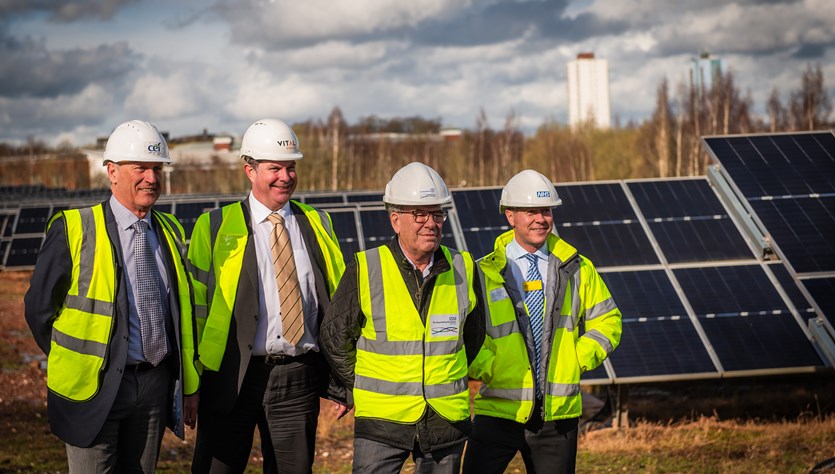
    L-R: Jon Gwynne (CEF), Ashley Malin, Professor David Loughton CBE, Stew Watson

    Solution detail

  • Edinburgh College Take Leap Towards Net Zero

    Edinburgh College Take Leap Towards Net Zero


    Edinburgh College Take Leap Towards Net Zero with Heat Decarbonisation Project

    Edinburgh College has an ambition to be at the cutting edge of environmental sustainability within the further education sector and aims to dramatically reduce its carbon emissions by 2030.

    With over 27,000 students, staff and specialist engineering equipment across the four campuses, the College has similar energy requirements to a small town, so needed a radical approach to accelerate their net zero journey.

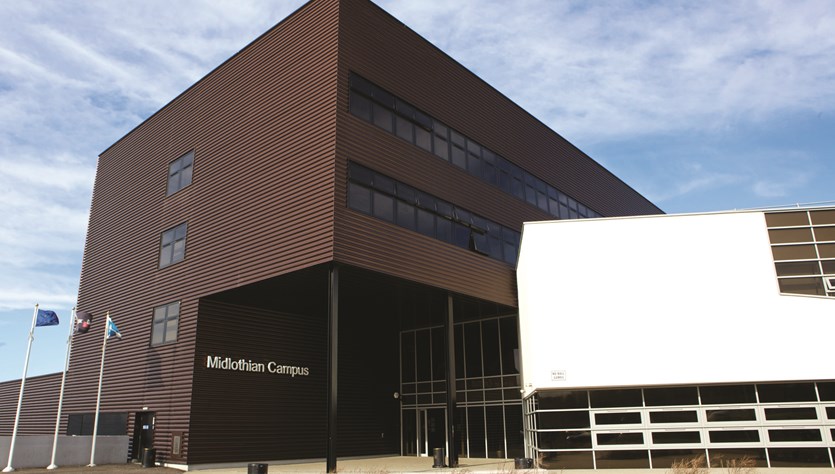
    The College will be working with Vital Energi to decarbonise their entire heating infrastructure within Midlothian Campus, removing the existing fossil fuel system and replacing it with the latest renewable heating technology. When complete, the project will be responsible for 101 tonnes of carbon reduction per year.

    The works, delivered through the Non-Domestic Energy Efficiency Framework (NDEE), will replace the College’s existing gas heating system with a new 640kW air source heat pump. An integral part of this is the existing secondary heating system upgrades which will be implemented alongside the heat pump to provide optimum system operation.

    “This is an ambitious carbon reduction project opting for full heat decarbonisation in a single phase without any reliance on gas. By swapping fossil fuels for renewables, the College will take a considerable step towards their carbon targets and the project exemplifies how electrification of heat can be implemented efficiently with secondary system upgrades. “Edinburgh College has a renowned Engineering, Renewables and Energy Efficiency Training Centre, which will play a key role in addressing the low-carbon sector’s skills gap. We look forward to collaborating with the College to showcase an exemplary heat decarbonisation solution to their students who are the UK’s future engineers.”

    Kieran Walsh, Operations Manager (North & Scotland), VE

    The project is being delivered through the NDEE framework and comes with an energy performance contract, which guarantees certain key performance indicators, such as carbon reduction, will be met, giving the College the certainty that their new heating system will perform as promised.

    Colin Mclaren, Edinburgh College Estates Services Manager, said, “We are excited to be working with Vital Energi to deliver this key project on the College’s journey towards net zero. The funding provided through the Scottish Government’s Energy Efficiency Grant Scheme has allowed us to fully implement decarbonisation at our Midlothian Campus, which is a pathfinder project for the sector.”

    “We are delighted to be working alongside Vital Energi to deliver such an important project for our College. We have a huge responsibility as one of Scotland’s largest colleges to lead from the front and play our part in addressing the climate emergency. This project is vital in reducing our carbon emissions and bringing us closer to our net zero goals.”

    Audrey Cumberford, Edinburgh College Principal

  • Deal signed on Mersey Heat WSHP

    Deal signed on Mersey Heat WSHP


    Deal signed on Mersey Heat WSHP

    Deal signed to deliver water sourced heat pump to Mersey Heat Energy Centre

    A deal has been signed with Star Refrigeration Ltd to provide a £2.5m water source heat pump to the Mersey Heat Energy Centre currently under construction at Peel Water’s Liverpool Waters at Princes Dock in Liverpool.

    Led by Peel NRE’s district heat network specialist Ener-Vate and being built by Vital Energi, the project is set to become a major part of the city’s low carbon energy infrastructure.

    One of the first to be installed in the UK, the pump will use game changing technology to extract heat from the water in the Leeds Liverpool Canal and use it to provide low carbon energy to thousands of homes and businesses around the city via a 6km district heating network.

    Set to be operational by winter 2024, the Mersey Heat Energy Centre will provide an easy, affordable and convenient solution to decarbonise heating with the potential to provide enough low carbon heat for over a fifth of the homes in Liverpool. Local homes and businesses will be able to connect into the existing district heating pipework which has already been installed.

    The government has identified heat networks as a crucial part of how the UK will reach net zero and one of the most cost-effective ways of decarbonising heating in built up areas. Using a water sourced heat pump to heat buildings is three times more efficient than using electricity for heating and has the potential to reduce carbon emissions by up to 90%.

    Jo Longdon, Commercial Director, Ener-Vate, said: “This is another major milestone towards delivering a game changing new approach to the way homes and businesses are heated in Liverpool. There isn’t the option to do nothing, we have to move away from fossil fuels and towards low carbon sources of heat. The Energy Centre will enable buildings to easy connect via an existing pipeline network providing an overnight solution to the challenge of decarbonising our heat sources.”

    “This is a major development which will have a real, positive impact on Liverpool’s future and we are delighted that sustainability is embedded at its core. We have seen, first hand, how effective large-scale water source heat pumps can be in decarbonising communities and are proud to be helping to bring another piece of Liverpool’s future green infrastructure to life which will serve the people of Liverpool for decades to come.”

    Andrew Wightman, Pre-Construction Director, Vital Energi

    David Pearson, Director, Star Refrigeration Ltd, said: David Pearson, Director, Star Renewables said: “Our heat pumps are manufactured in the UK and are an efficient way to cut CO2 emissions and lower the carbon footprint of connected buildings by around 75%, which will reduce further as the grid decarbonises. It will help thousands of homes and businesses move away from fossil fuels.

    “We’re proud to be providing a key component of the Mersey Heat Energy Centre, with the district heat network providing a critical step on the city region’s decarbonisation journey.”

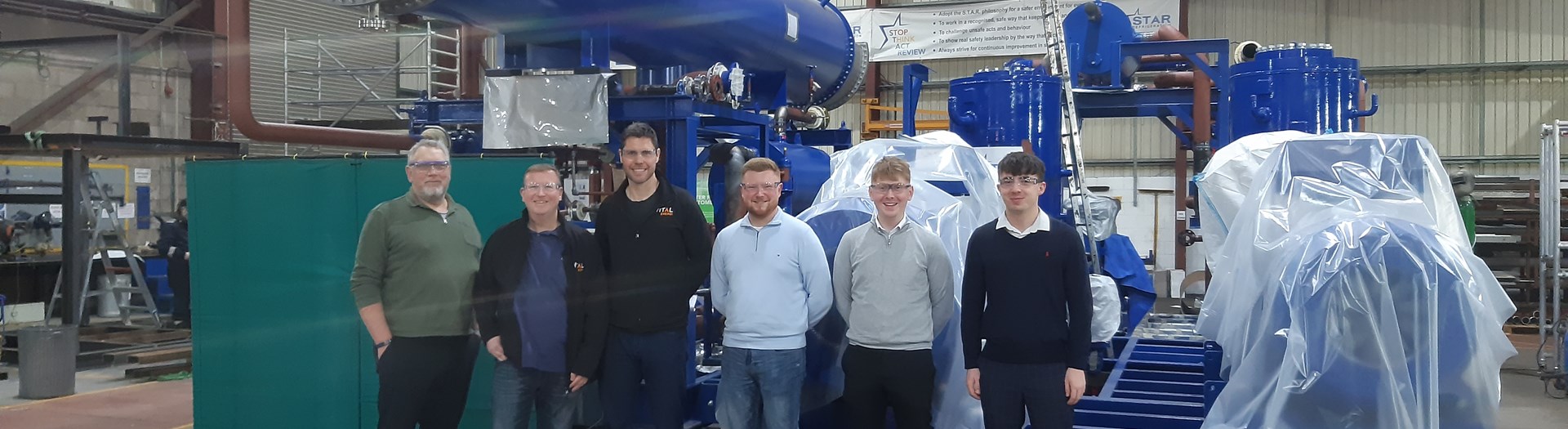
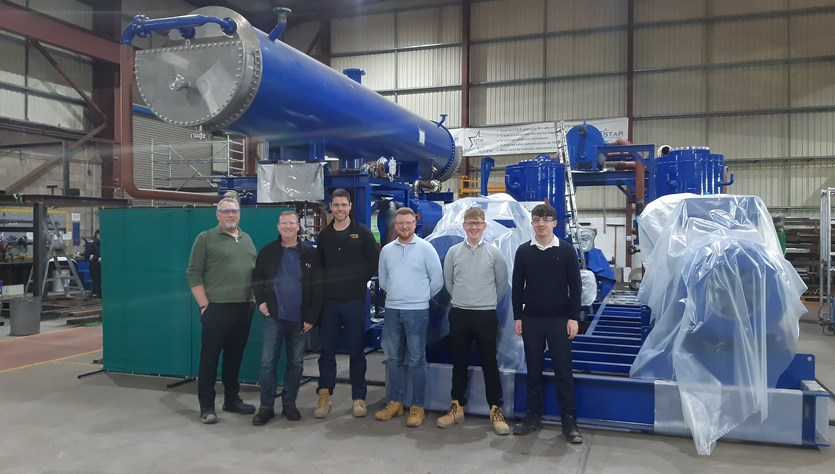
    The 8m x 12m pump, which is currently being manufactured in Glasgow, will be delivered to the Mersey Heat Network Energy Centre in the summer.

    The district heating network will provide low carbon heat and hot water for up to 6,700 homes and 1.3 million square feet of commercial space at the Liverpool Waters development as well as wider domestic and commercial buildings across Liverpool. This initial phase of the project could supply 20GWh of heat every year with planning permission in place to expand the project to supply around 45GWh (the equivalent of supplying 17,000 new homes with heating and hot water).

  • Westminster City Council Carbon Savings Set To Pass 2,000 Tonnes A Year

    Westminster City Council Carbon Savings Set To Pass 2,000 Tonnes A Year


    Westminster City Council Carbon Savings To Pass 2,000 Tonnes Per Year

    Following on from the success of their award-winning £13m energy conservation project, work has begun on Phase 2 of the Westminster City Council Carbon Management Programme, which will deliver a further 579 tonnes of carbon reduction per year.

    Phase 2 represents a further £9.9m investment, which includes grant funding of £3.8m secured through the Public Sector Decarbonisation Scheme (3b).

    During the pre-construction period, Vital Energi’s team assessed 24 buildings to identify which energy improvements would deliver the largest carbon reductions. In addition to this, many buildings from Phase 1 of the programme were revisited to see what further conservation measures could be implemented.

    The result of these surveys is that 38 of these buildings were chosen for improvements, with energy conservation measures including air source heat pumps, rooftop solar PV, fabric improvements and upgrades to the lighting, cooling, and air handling systems.  The team will also upgrade the Building Energy Management Systems which make intelligent decisions about how energy is used.

    Compressor Lift Queensway

    An air source heat pump delivery for Porchester Hall During Phase1 of the project.

    Solution detail

    “The Council is committed to reducing carbon emissions to meet our ambitious Net Zero targets and create a greener city for our residents. We know that a large percentage of carbon emissions in Westminster come from the built environment, and in recent years we have invested heavily in decarbonising council owned properties.”

    Cllr David Boothroyd , Westminster City Council

    Cllr David Boothroyd continued, “In 2022 we delivered 12 solar PV projects, including the installation of a 255-panel solar array at Queen Mother Sports Centre, and a 378-panel array at Moberly Sports Centre. Currently, we are installing solar PV on a further 10 sites, including the Avenues Youth Project in Harrow Road. The initial 12 sites will provide a total peak output of 660 kWp and generate 284,000 kWh per annum. Once the additional 10 sites have been completed, the total peak output will increase to 875 kWp. This will make a huge difference, reducing our carbon emissions by a further 48 tonnes annually.

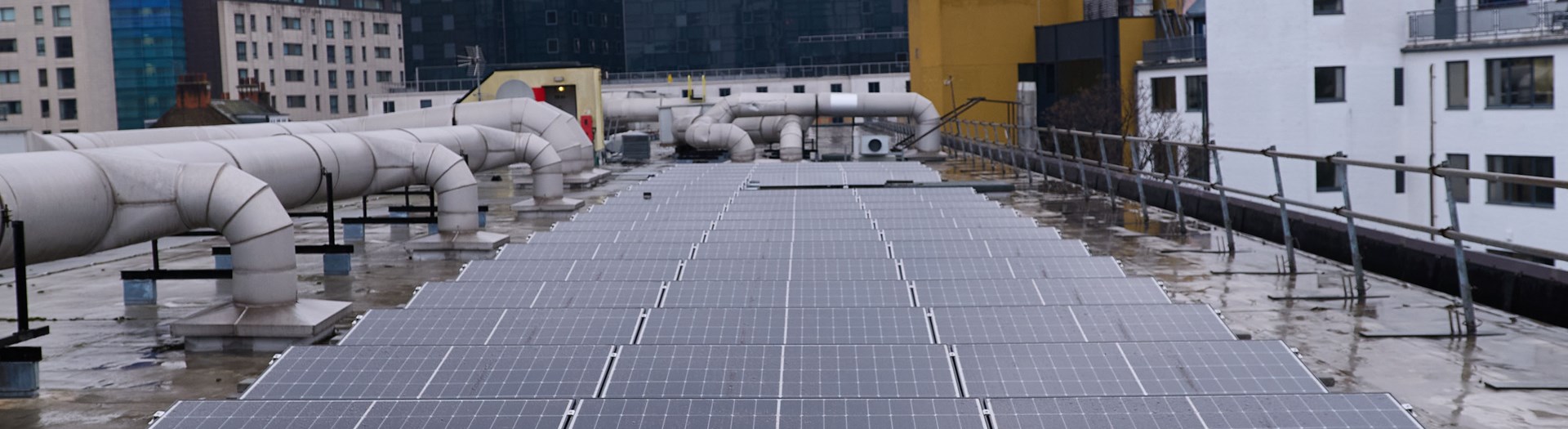
    The project will be transformative for many of Westminster City Council’s premises, with buildings such as the Avenues Youth Project, Dorothy Gardner Nursery School, Mary Patterson Nursery School, Mickey Star Nursery and Paddington Recreation Ground Changing Block now getting 100% of their heat from renewable sources, via air source heat pumps.  The scheme will also see solar panels installed at the Avenues Youth Project, Beachcroft House Care Home and the Central Area Service Centre, which will provide annual electricity savings of 39,936 kWh and decrease the dependency on electricity from the grid.

    “We looked at many of the Council’s premises, analysed their current performance and energy usage and designed a project which will get the most decarbonisation for their budget and build on the 1,600 tonnes of carbon reduction per year achieved during Phase 1. These improvements range from technically complex solutions, such as solar and heat pumps, to simple initiatives such as insulation, draught proofing and upgrading glazing.  The overall effect is that the Council will take another step closer to its net zero targets.

    Gerry Davies – Vital Energi, Regional Director – London

  • 5 things you may not know about battery storage

    5 things you may not know about battery storage


    5 Useful Facts About Battery Energy Storage Systems

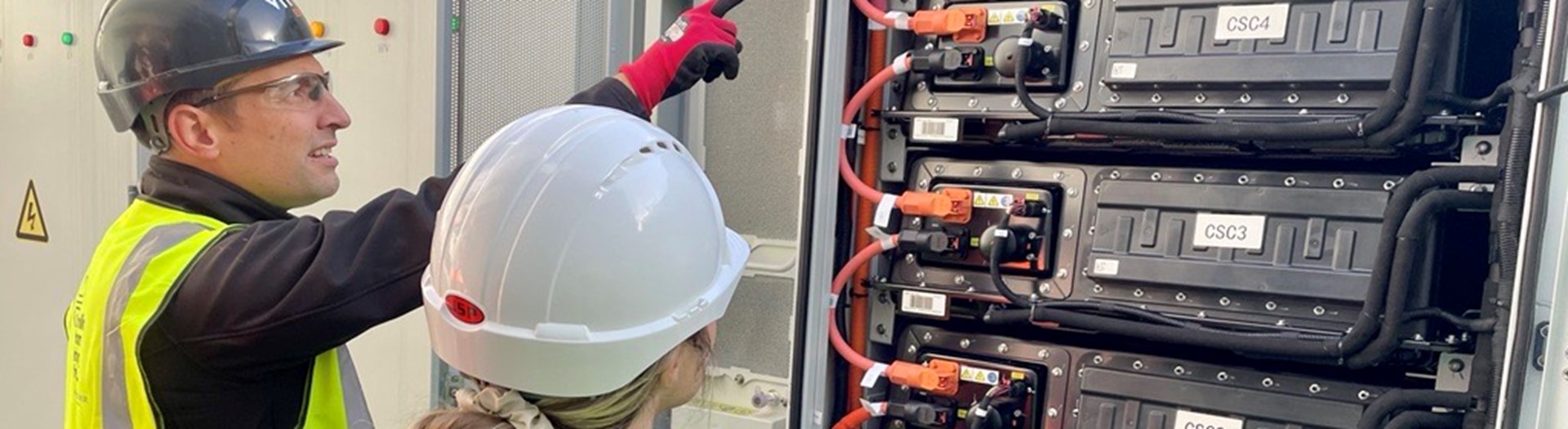
    Battery storage, or battery energy storage systems (BESS), are rechargeable batteries that can store energy from different sources and then release power when customers need it most. It’s an exciting time for Vital as we’ve recently installed four 2MW BESS at acute hospital sites across the UK.

    Commercial Structuring Manager, Stewart Williams, has been involved in the procurement of our batteries and is playing a key role in the research and development of batteries and energy storage. He’s investigating emerging battery technologies for use in future projects too!

    Stewart shares 5 things you may not know about battery storage…

    1. A useful analogy to understand GW vs GWh
      Power Capacity (GW) vs Energy Capacity (GWh) explained. Energy is the ability to cause change; power is the rate energy is moved, or used – think of a bath, the rate the water runs down the plughole is power capacity (maximum power discharged at a given time) and the amount of water the bathtub holds is energy capacity (total amount of energy able to be stored).
    2. How many homes can the current UK battery fleet power?
      At the end of 2023, the total operating power capacity of batteries in Great Britain was 3.5GW, up from 2.1 GW at the end of 2022.Total energy capacity has grown even quicker, up to 4.5GWh at the end 2023 from 2.3GWh in 2022, which means the average duration of battery energy capacity in GB is now 1.27 hours, up from 1.1 hours in 2022. The UK battery fleet is forecasted to reach over 5GWh in energy capacity by the end of 2023, which would be enough to power 600,000 homes for a full day.
    3. UK battery storage pipeline
      With a record 1.5GW and 2.2GWh of battery capacity being added operationally in 2023, the pipeline for battery storage schemes in the UK is now at 71GW/110GWh. This includes 24GW/40GWh with planning approval and 2.8GW/4.9GWh already being constructed. There is still marginal difference in GW/GWh for operational (peak chasing) assets, but now a significant difference for pipeline schemes with the emergence of longer duration storage assets. 
    4. Government investment in battery
      Recent data shows that nearly a fifth of the UK government’s total energy technologies investment must be spent on energy storage between 2025 and 2030 to meet renewables targets. Almost 10% of grid capacity in the UK will be provided by battery storage by 2030, costing an estimated £20 billion.
    5. Europe’s largest battery is in the UK
      The largest live Battery Energy Storage System (BESS) by energy capacity in Europe as at the beginning of 2023 is in the UK, in Yorkshire. This stores up to 196MWh or enough to power around 300,000 homes for 2 hours. For context, each of the four 2MW/2MWh BESS we’ve installed at NHS sites across the UK would store enough power to boil nearly 22,000 kettles…

    Click here to learn more about battery storage.

    Learn more about Vital’s battery projects:

    Stewart Williams (3)

    Commercial Structuring Manager, Stewart Williams

    Solution detail

  • Vital Energi Awarded 3-Year CEM Contract at Marylebone Square

    Vital Energi Awarded 3-Year CEM Contract at Marylebone Square


    Vital Energi Awarded 3-Year CEM Contract at the Prestigious Marylebone Square Development, London

    Vital Energi are delighted to announce we have been awarded a 3-year Contract Energy Management (CEM) contract at Marylebone Square, London. The development is a beautiful mixed-use building, located just behind Marylebone High Street and comprises 79 apartments and 23 commercial properties including boutiques, restaurants, a gym and a versatile community hall.

    The fully packaged CEM contract means Vital are Concord London and Moxon Street Residential’s one point of call for all their operation and maintenance, metering and billing and customer services requirements at the central London development.

    Retouched External Shot 50%

    Marylebone Square exterior. Photograph credit: Concord London

    Solution detail

    Vital’s expert Operation & Maintenace Team will manage the full services of the project, from site mobilisation and set up, asset management through to regular efficiency reporting.  Services include planned preventative maintenance, reactive maintenance works, 24-hour system monitoring and the servicing of the heat interface units to ensure the efficient and uninterrupted supply of heat to the residents of Marylebone Square.

    Furthermore, to deliver accurate metering and billing services, Vital Energi billing systems will interface with a third-party metering system which was already installed on-site. This demonstrates Vital’s ability to adopt and collaborate with other metering systems in the market and allows the clients the flexibility to choose the best metering and billing platform for them, regardless of the installed hardware.

    We are delighted to have partnered with Vital Energi to oversee the operation and maintenance of our latest landmark address, Marylebone Square. With the team’s impressive expertise and experience, we trust the new community at Marylebone Square will thrive under its guidance.

    Gavin de Klerk, Development Director, Concord London

    We are thrilled to have been appointed to deliver services on behalf of Concord London. We are looking forward to growing a successful partnership and exceeding expectations every step of the way. Winning this contract with a visionary developer like Concord London is a testament to our team’s expertise and commitment to delivering exceptional results.

    Katy Lister, Client Relationship Director, Vital Energi

    Concordlondon Marylebone 0315 25%

    The construction phase of Marylebone Square is now complete. We hope the new residents of this elegant development are very happy in their new home.

    Photograph credit: Concord London

    Solution detail

  • 5 things you didn’t know about solar

    5 things you didn’t know about solar


    5 Interesting Insights on Solar Technology

    Principal Engineer, Alex Marshall, has been with Vital Energi for almost four years and plays a key role in bid development for a wide range of projects, many of which include solar.

    We asked him to share 5 interesting facts about solar…

    1. By the end of 2023, the UK is expected to have 15,674 MWp of installed solar capacity; a growth of roughly 20% from 2022. The renewable energy that will be generated by those panels is equivalent to the annual electricity demand of approximately 4 million traditional homes. Vital will have installed almost 50 MWp by 2024!
    2. The largest solar farm in the world is the Golmud Solar Park in Qinghai, China. It has an output capacity of 2.8 GWp, which is equivalent in size to over 10,000 football fields. It contains over 7 million solar panels, which would have required 126,000 tonnes of sand to produce enough silicon to make the panels. The energy produced from this solar farm would equate to the annual demand of over 1.3 million traditional UK homes alone.
    3. Conventional solar panels have a maximum efficiency of 33.7%. By re-engineering the way panels are made, such as using multiple layers and combining different materials, scientists have worked out that this could go up to 86%! But we are a long way off yet…
      Some novel materials that are being used require interesting combinations of elements, such as Gallium, Indium, and Arsenic. Newer materials that are being investigated are Perovskites – which have complex crystal structures for harvesting light and significantly increase the efficiency of panels.
    4. Solar panels are manufactured using silicon, which is highly abundant in its natural ores (the main one being sand). Silicon can be processed into different types of material depending on the intended use:
      ​​​​​​​Traditional solar panels use individual or multiple smaller wafers of silicon (monocrystalline and polycrystalline), which can be expensive to produce, but have high efficiencies and outputs with relatively long lifespans.
      Some solar panels are coated with an amorphous (gel-like) layer, which is less expensive and better suited to harsh environments (dark / cold / hot), but is more susceptible to degradation over time.
      Unfortunately, as has been reported in the press, a lot of the silicon produced for solar panels is produced in an area of China where there have been widespread reports of modern slavery. At Vital, we work closely with our supply chain to ensure that the PV panels we procure are not linked to these specific areas of China, and that everything we use is ethically sourced.
    5. The world’s power usage is approximately 17 Terawatts (TW) on average. If we built a huge solar farm in the desert, we’d need around 43,000 square miles to produce this level of continuous power. Just 1% of the Sahara Desert would be enough area to provide all of this power and would cost a tenth of the equivalent in nuclear power stations.

    ​​​​​

    Learn more about some of Vital’s solar projects: