Author: admin

  • Muntons Set to Decarbonise 100 Million Kilowatt Hours of Heat

    Muntons Set to Decarbonise 100 Million Kilowatt Hours of Heat


    Muntons Set to Decarbonise 100 Million Kilowatt Hours of Heat with New Energy Centre

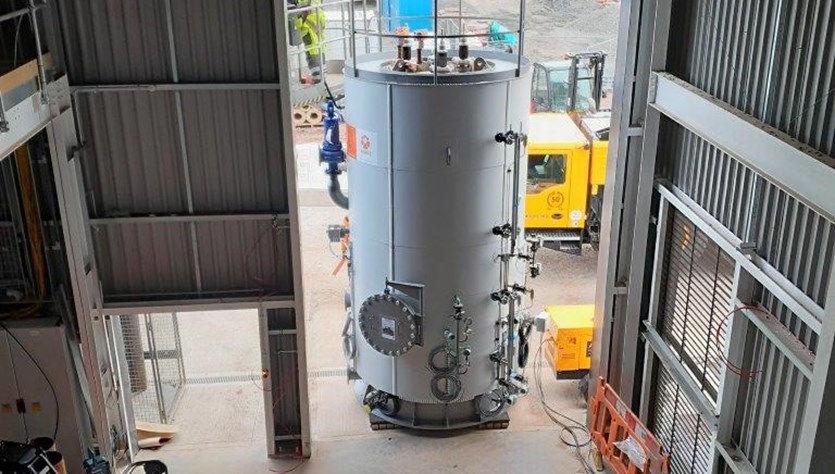
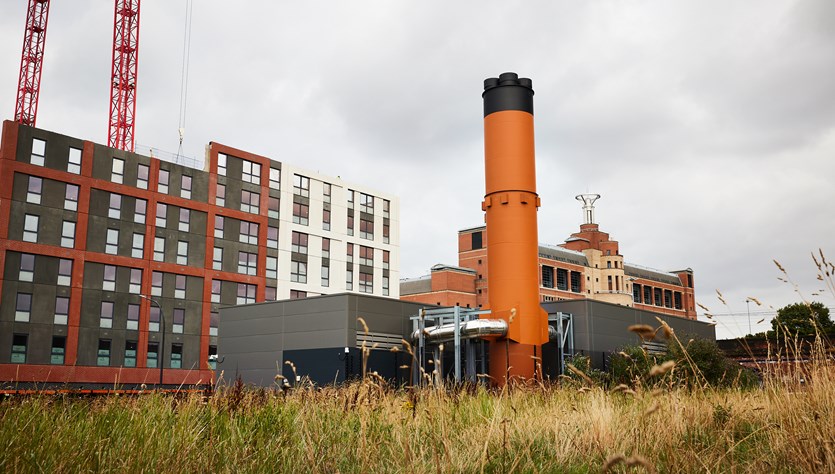
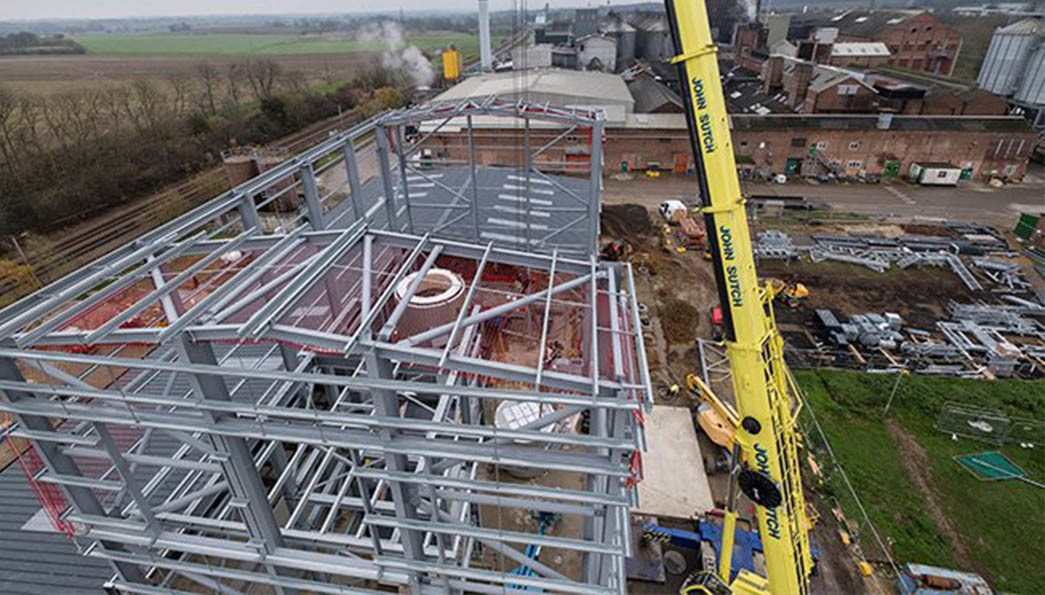
    Muntons, the UK’s leading malt product manufacturer and distributor, is set to slash its carbon emissions by 15,500 tonnes per year in an exciting new partnership which will see a 14MW biomass boiler installed at its Stowmarket site.

    The project is being led by AMP Clean Energy which will operate the energy and steam supply under an Energy Supply Agreement to Muntons for its manufacturing process.  Vital Energi have been appointed as the principal contractor and are working in partnership with AMP clean energy to deliver the £16.5m project.

    Regional Director for Vital Energi, Mike Cooke, explains: “This project is a fantastic opportunity to demonstrate how decarbonisation can be made feasible. We worked in partnership with Muntons and AMP Clean Energy to develop a scheme which would maximise both carbon reductions and projects economics, with the result being a reduction in emissions of over 470,000 tonnes over the course of the 20-year contract.

    “The food and drink industry is a huge consumer of energy and we believe this partnership is a great example of how manufacturers can decarbonise their processes whilst improving their bottom line.”

    Mark Tyldesley, Group Managing Director at Muntons, said: “Muntons is recognised as a leader in sustainability projects throughout the industry. Through our focus on carbon reduction we have already cut greenhouse gas emissions by a quarter over the past ten years, exceeding our climate change agreement target.”

    He continued: “The headline Science Based Target (SBT) for manufacturing is to reduce carbon emissions by 87% by 2050. Our Director of Technical and Sustainability, Dr Nigel Davies, has led our systematic approach to carbon reduction as part of our sustainability strategy and we have taken early action long before the SBT were introduced.

    “Our emissions reduction journey before 2010 is recognised as contributing to our SBT and our target is to reduce scope 1 and 2 emissions by 45% by 2025 from a 2010 baseline, together with a 30% reduction in scope 3. Crucial to us hitting this target is installing biomass heating at both of our UK malting sites. Working collaboratively with specialists AMP Clean Energy continue to deliver on our mantra of ‘Practical Sustainability’.”

    When complete, the energy solution will provide almost all steam, heat and electricity for Muntons’ Stowmarket site. Work has started on site with commissioning scheduled for mid-2021.
    This is a major low-carbon project that will deliver significant sustainability benefits for Muntons. Muntons is a true sustainability leader in the food and drink sector and the use of biomass heat is central to its ability to hit its science-based target. It is fantastic that such a major project will come on-line next April, and we are proud to work with trailblazers like Muntons which will assist the UK’s net zero transition.

    Richard Burrell, CEO of AMP Clean Energy

  • Salix team checks out decarbonisation project at John Radcliffe Hospital

    Salix team checks out decarbonisation project at John Radcliffe Hospital


    Salix team checks out the decarbonisation project at John Radcliffe Hospital

    Oxford University Hospitals NHS Foundation Trust (OUH) has taken a giant step forward to meeting its Green Plan objectives thanks to funding under the Public Sector Decarbonisation Scheme (PSDS).

    Vital Energi have designed and are delivering the net zero works at John Radcliffe Hospital, home to Oxfordshire’s main A&E site and acute hospital services, to make the hospital more energy efficient, as well as providing a better environment for patients.

    Due for completion by the end of 2025, the John Radcliffe Hospital will be ‘de-steamed’, with the existing steam network decommissioned and replaced with new, cleaner, and more efficient pipework. The pipework is heated by substituting gas boilers with low carbon electric heat pumps and additional energy efficiency measures.

    In addition to significantly improving the efficiency through heat pumps, the new system also reduces the carbon footprint of the site, along with water consumption, water treatment costs, operational and maintenance costs and avoids a maintenance backlog.

    Solar panels, more efficient pipework insulation, and draught proofing, have also been installed to improve energy efficiency.

    A total of £24.1m was awarded to the John Radcliffe and £5.7m to Horton General under Phase 3b of PSDS which is run by the Department for Energy Security and Net Zero to support the aim of reducing emissions from public sector buildings.  OUH contributed £8.2m towards the wider scheme, taking the total expenditure to £38m over a three-year period.

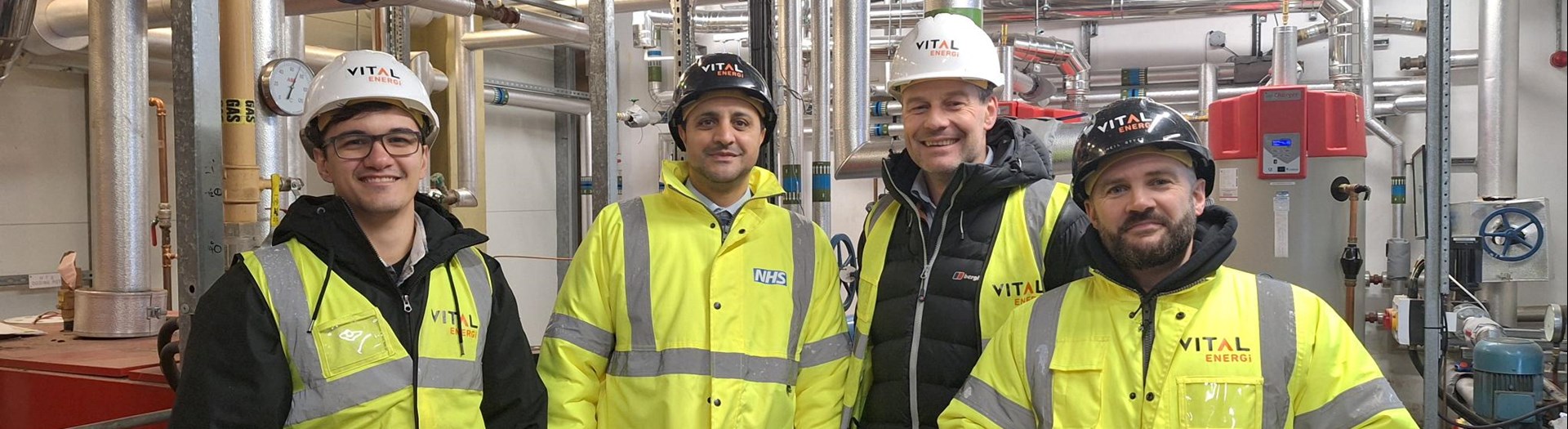
    Salix’s Director of Public Sector Decarbonisation, Ian Rodger, and Programme Coordinator, Justin Morris, joined hospital officials and Vital Energi engineers to see how the John Radcliffe Hospital is finding work one year after celebrating its award of the PSDS grant.

    Justin said: “It’s so important to see for ourselves how the works are progressing and to listen to the hospital team about the impact the technologies are making.

    “The John Radcliffe and Horton hospitals are complex sites and there are many sensitivities that have to be considered and resolved in order to complete the work without interrupting patient care.

    “The project team has both the skills and experience to face these challenges and deliver the project.”

    Vital Energi’s Director of Low Carbon Solutions, Chris Yeo, said: “We were delighted to show Salix the progress of the decarbonisation works at John Radcliffe Hospital. Delivering such a complex project on a live acute hospital site is challenging and has only been possible due to the excellent collaboration between Vital Energi and the Oxford University Hospitals team which is a testament to all involved.

    “As the John Radcliffe is my local hospital it is great to see the improvements to the hospitals energy infrastructure which will deliver significant carbon and cost savings.”

    “The Public Sector Decarbonisation Scheme has been fundamental to improving the John Radcliffe and Horton hospitals for our patients, staff, and visitors. The modernisation of the building’s heating and hot water infrastructure will improve our energy efficiency by adapting a range of low carbon technologies and support our journey towards the national target for a net zero NHS carbon footprint by 2040.”

    Jeenash Mistry, Head of OUH’s Facilities and Estates Operations

    OUH is one of the UK’s largest acute teaching NHS Trusts. It works in close partnership with the University of Oxford, and is a leading centre for cancer, neurosciences, diabetes and genetics – among other fields.

    During the visit, the team from Salix got to tour the site and look at the new energy efficiency technologies including the solar PV panels, air-handling units, building management systems, heat plate exchangers, the new low-temperature-hot-water pipework distribution system and cascading air-to-water heat pumps.

  • Westminster City Council’s £23m Energy Revolution Wins at H&V Awards

    Westminster City Council’s £23m Energy Revolution Wins at H&V Awards


    Westminster City Council’s £23m Energy Revolution Claims Top Prize at H&V Awards

    Westminster City Council have transformed the way they consume energy through a £23m energy conservation project which has lowered their carbon emissions by over 2,000 tonnes per year.  It’s an ambitious, technically challenging project, so we were thrilled to see it claim top spot in the Innovation in Construction and Building Engineering category at this year’s Heating and Ventilation News Awards.

    The project, which was delivered over two phases, is central to the Council’s targets of becoming net zero by 2030.

    Westminster City Council are a great example of an organisation who have done everything right. By focusing on their long-term decarbonisation plan they had a deep understanding of how they used energy, what the opportunities for improvement were, and how to achieve them. They have shown the forward thinking, long-term ambition which is crucial for the UK meeting its net zero targets and we feel this award is great recognition of that.

    Gerry Davies, Regional Director (London) – Vital Energi

    54171009017 0Ff68127fb C

    Members of Westminster City Council and Vital Energi claiming Innovation in Construction and Building Engineering Award

    Solution detail

    About The Project

    Phase 1 was a £13 million project which focused on implementing energy conservation measures across 61 buildings, including the installation of 1,700kW of air source heat pumps, rooftop solar PV, fan upgrades, and extensive lighting improvements. These measures resulted in carbon reduction of 1,600 tonnes of CO2e annually, reducing the emissions from council operational buildings by nearly 20%.

    The H&V Judges wrote of the project, saying “It demonstrates a comprehensive and scalable approach to decarbonisation, incorporating various innovative measures and achieving substantial carbon reductions. Impressive scale and rapid implementation of energy-efficiency measures. It demonstrates innovative approaches to decarbonisation and project management.”

    Congratulations to Westminster City Council on another fantastic achievement.  We’re extremely proud of our partnership, the work we’ve done together and look forward to carrying that success into the exciting third phase of the project.

    We’d also like to congratulate our clients Newport City Homes after the Duffryn Heat Network Replacement Project was shortlisted in the District Heating project of the year and Aberdeen City Council’s Torry Heat Network were shortlisted in the Low Carbon Impact category.   A final “Well done” must go to our very own Ibrahim Qadir who followed up his win at the BESA awards earlier this year with a Highly Commended slot in the Apprentice of the Year awards category.

    Thank you to these, and all our other clients who have worked so hard throughout 2024 to reduce their carbon emissions, combat fuel poverty and make the UK’s energy infrastructure more reliable and secure.

    If you’d like to learn more about the Westminster City Council Project, Click Here.

  • Rooftop renewables plan for Scotland’s oldest (and sunniest) University

    Rooftop renewables plan for Scotland’s oldest (and sunniest) University


    Rooftop renewables plan for Scotland’s oldest (and sunniest) University

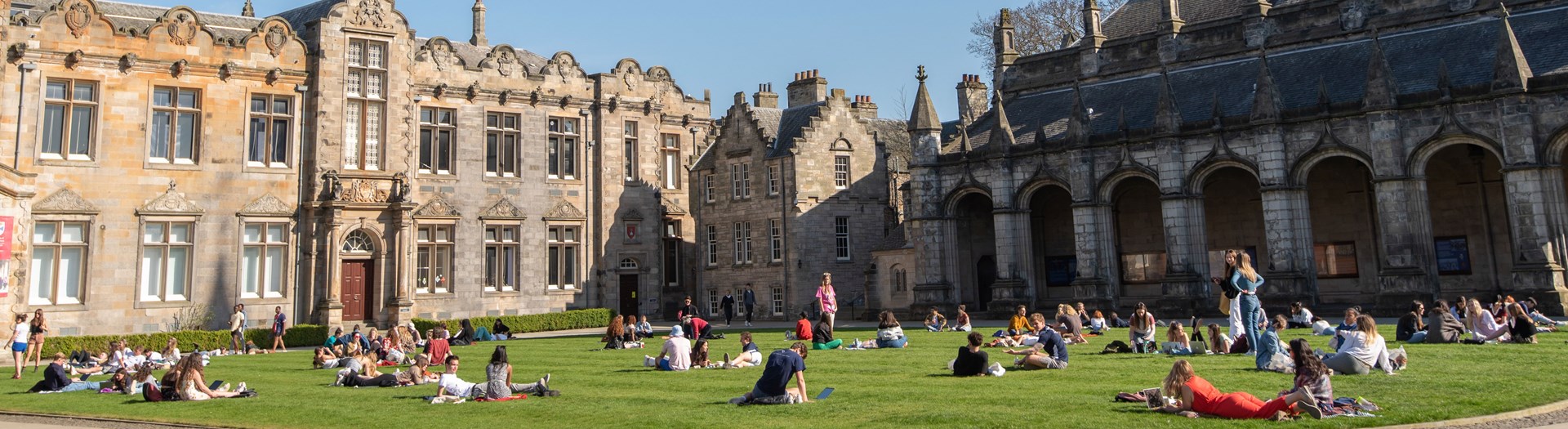
    The sunniest university in Scotland is considering a major project to fit its rooftops with solar panels in a bid to cut carbon and cash and reinvest savings in an ambitious bid to be net zero by 2035.

    We are currently working with The University of St Andrews to assess the suitability of 65 university buildings for solar installations.

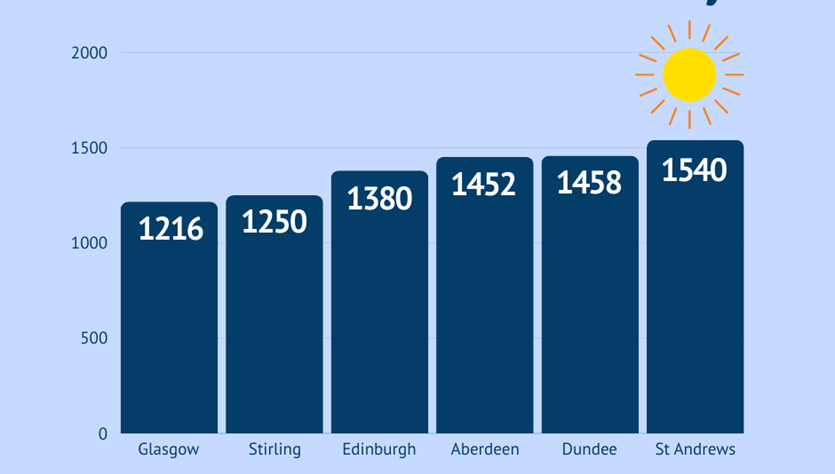
    St Andrews is one of the sunniest spots in Scotland, enjoying an average of 1540 hours of sunshine per year, narrowly ahead of the City of Dundee at 1458 hours per year.* Dundee has long been regarded as the sunniest city in Scotland.

    The University already heats most of its buildings via an award-winning green energy plant, also delivered by Vital Energi, which pumps hot water to St Andrews from 4 miles away at Eden Campus. The solar project is the next stage in a plan to cut all of its potentially harmful emissions to zero over the next 11 years.

    It’s estimated the solar project will save 200 tonnes of carbon per year, while effectively future-proofing the University’s energy security.

    Student residences like David Russell Apartments and Agnes Blackadder Hall could be prime sites for the major solar arrays.

    Copy Of Scotland’S Sunniest Spot 3

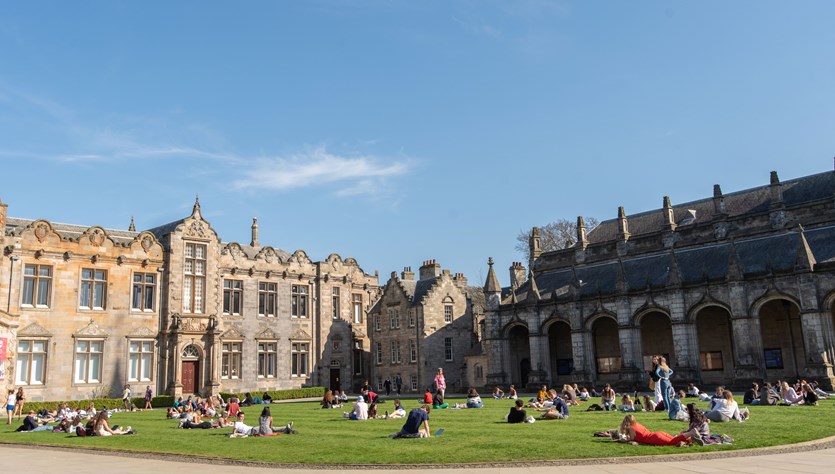
    The sunniest University in Scotland is assessing the viability of rooftop solar across its estate

    Solution detail

    St Andrews is blessed with more hours of sunshine than almost any other town in the UK, it’s a great natural resource, and knowing what we know now about the scale of the climate crisis, it would be irresponsible not to consider how we can use solar power here and now.

    Derek Watson , Chief Operating Officer – University of St Andrews

    The solar project is the next stage in a plan by the University to play an important role in tackling the climate emergency by reducing its carbon emissions and meet Net Zero targets.  

    Welcoming the project, President of the St Andrews Students Association Cam Brown, said: “We may be an ancient University but we aren’t in the shadows – we are embracing the technologies of today to bring our own solar revolution into St Andrews.

    “The University’s ongoing investment in and expansion of renewable energy through the installation of solar panels across campus is a significant and greatly welcomed step toward achieving carbon neutrality. By continuing to adopt and advance renewable technologies, the University of St Andrews is making substantial progress in reducing our dependence on fossil fuels and protecting our environment.

    “This is not just talk, but action! Our solar revolution reinforces our reputation as a well-established and forward-thinking institution, inspiring hope for the future of our students, our community, and our planet.”

    Stephen Traynor from Vital Energi said: “Rooftops are a great resource for any organisation looking to decarbonise, but lots of work has to go into checking if each location is viable.  We now have a list of buildings which are suitable and are pleased to be helping the University with the planning process. This is a project which can have a significant positive impact on the University achieving their ambitious 2035 Net Zero targets.” 

    The University already uses solar energy from the photovoltaic array at Eden Campus, where a battery storage unit harnesses the renewable energy, facilitating the shift from fossil fuels across the institution and cutting the University’s carbon footprint by approximately 5%.

    *Source: Gazetteer for Scotland

  • Powys Teaching Health Board Prescribe £4.2m In Energy Upgrades

    Powys Teaching Health Board Prescribe £4.2m In Energy Upgrades


    Powys Teaching Health Board Prescribe £4.2m In Energy Upgrades Across 12 Healthcare Facilities

    Powys Teaching Health Board (PTHB) are undertaking a £4.2m energy revolution at seven of their hospitals which will see their carbon emissions reduced by an estimated 350 tonnes per year.

    The project is possible due to funding from the Welsh Government.  The project is set to significantly reduce energy consumption, lower carbon emissions, and improve the overall environment for both patients and staff.

    Measures undertaken will include:

    • Installation of roof-mounted solar panels
    • Upgrades to building management systems (BMS) for enhanced remote monitoring and heating control
    • Improvements to roof and pipework insulation
    • Implementation of LED lighting systems
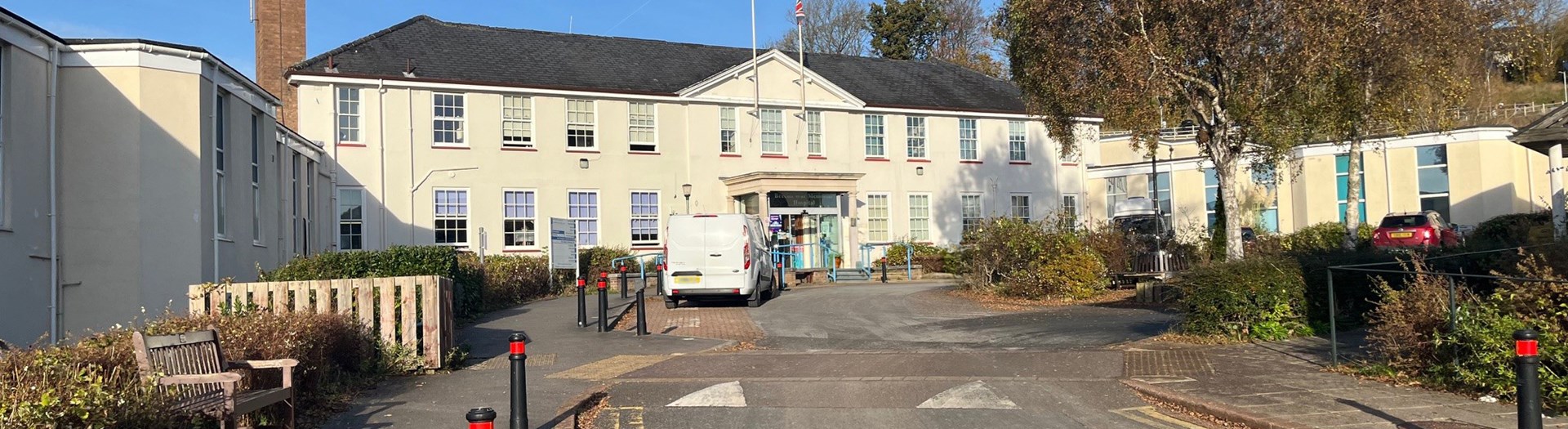
    Brecon War Memorial

    Brecon War Memorial Hospital – One of the Health Board’s facilities which will benefit from the energy upgrades

    Solution detail

    This significant investment from Welsh Government for the Re:fit Cymru framework will act to enable energy efficiencies and deliver decarbonisation benefits across the Health Board estate in Powys. We look forward to working closely with Vital Energi in this exciting programme of activity, which will improve patient and staff environments, make an important contribution towards meeting the organisation’s Decarbonisation Strategic Action Plan objectives and make financial savings.”

    Wayne Tannahill – PTHB, Associate Director of Capital, Estates & Property

    About The Project

    In addition to strong carbon savings, the energy reductions will deliver over £415,000 in savings and Vital Energi are providing an energy performance contract, which guarantees key performance indicators such as carbon and energy savings.

    Mark Williams, Partnerships Director at Vital Energi, expressed enthusiasm for the project: “By partnering with Powys Teaching Health Board through the RE:FIT framework, Vital Energi is implementing guaranteed energy conservation measures that deliver both financial savings and significant carbon emission reductions. Together, we’re paving the way for a more sustainable healthcare system in Wales.”

    The energy efficiency improvements will be implemented across twelve key healthcare facilities in Powys, including:

    • Breconshire War Memorial Hospital
    • Bronllys Hospital
    • Bro Ddyfi Community Hospital
    • Knighton Community Hospital
    • Llanidloes War Memorial Hospital
    • Welshpool Health Clinic
    • Ystradgynlais Community Hospital

    Work is scheduled to commence in December and continue until July 2025, with a phased approach across the specified sites.

    This is an exciting collaboration between Vital Energi, Powys Teaching Health Board, and the Welsh Government which demonstrates a shared commitment to creating energy-efficient, environmentally friendly healthcare facilities that benefit both patients and the planet.

  • New solar farm sparks greener future for council

    New solar farm sparks greener future for council


    New solar farm sparks greener future for council

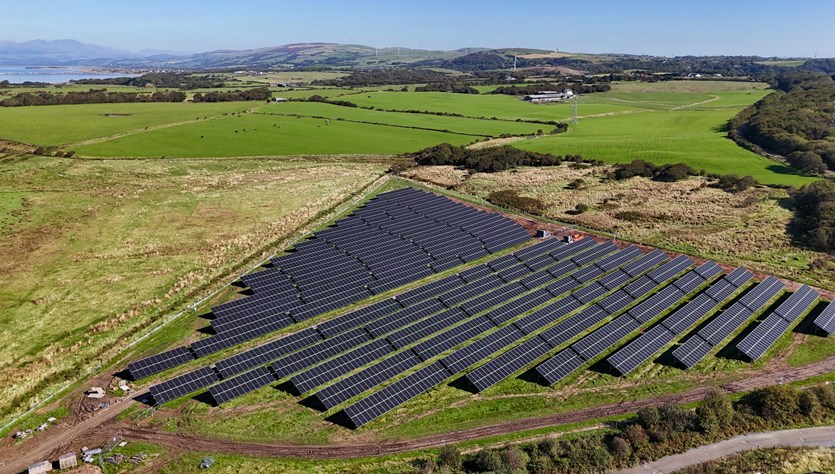
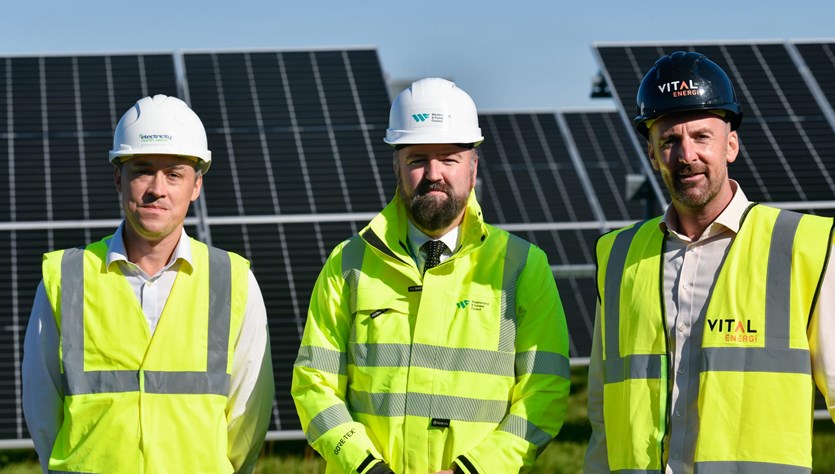
    Officers and Members from Westmorland and Furness Council and Vital Energi gathered at the new 2MW solar farm at Sandscale Park in Barrow to celebrate the project’s official completion.

    The solar farm is a first for the council and the renewable energy project marks a key milestone in their ongoing efforts to combat climate change and meet their Net Zero targets.

    The site, which has been successfully completed in six months, will generate green electricity to offset the council’s carbon emissions, in line with its Carbon Management Strategy and Climate Action Plans. It is the first of more schemes to come as part of the council’s wider decarbonisation programme of work.

    Thanks to almost 3,700 solar panels, the site is expected to generate enough electricity to power the council’s five leisure centres or approximately 730 homes per year, based upon average UK households, also delivering significant carbon savings.

    WFC Sandscale Park Barrow

    The 2MW solar farm is made up of 3,700 solar panels.

    Solution detail

    The completion of the project is a significant step forward in the council’s efforts to reduce its carbon footprint and promote sustainability in response to the growing challenges posed by climate change. In addition to contributing to the council’s income generation, the solar farm will mitigate rising energy costs and enhance the council’s energy sovereignty, independence and security, providing a robust solution for future energy needs.

    The scheme was delivered in collaboration with the council’s strategic partner Electricity North West, main contractor Vital Energi, and specialist advisors Green Cat Renewables. The site is now connected to the national grid and generating electricity.

    Sandscale Park solar farm is an example of us using our assets in an innovative way to meet a serious challenge. The rise in energy costs is affecting us all, and by establishing this site we’re now able to generate our own energy and ensure security for the future, which can only be a positive thing. Huge thanks to the teams and partners involved for their support and expertise in making this vision a reality. Their contribution has been vital to the successful delivery of this ambitious project, and we look forward to seeing the long-term benefits this solar farm will bring to both the environment and Westmorland and Furness.”

    Councillor Peter Thornton , Westmorland and Furness Council

    WFC Sandscale Park Barrow 2Climate change remains one of the greatest challenges to this generation, and for many generations to come. It is one of the greatest threats to biodiversity and humanity globally, with the devastating impacts of it already seen

    Members of the team gathered at the official Sandscale solar farm opening.

    Solution detail

    Climate change remains one of the greatest challenges to this generation, and for many generations to come. It is one of the greatest threats to biodiversity and humanity globally, with the devastating impacts of it already seen and experienced in Westmorland and Furness.

    In recognition of this, the project included plans to enhance biodiversity at the site. A Biodiversity Enhancement Plan ensured a 10% Biodiversity Net Gain, creating opportunities for pollinators and enhancing woodland, hedgerows, and habitats.

    Councillor Giles Archibald, Westmorland and Furness Council’s Cabinet Member for Climate, Biodiversity and Environmental Services, added:

    “This solar farm is a landmark achievement, not just for our council but for Cumbria as a whole. We already have solar panels on several of our buildings but this marks the first time we have harnessed the natural power of the sun at this scale and is a proud step forward in our fight against climate change.

    “It is a project which ensures that the natural environment thrives alongside our efforts to generate green energy and I’m pleased to see biodiversity has been a key consideration. A range of native tree and hedge species have been planted as well as habitats created to support our rich local wildlife including pollinators, bats and a variety of birds such as house sparrows, wagtails, nuthatch and redstarts. I look forward to seeing how else we can make effective and efficient use of our assets on our journey to carbon net zero.”

  • Ribbon Cutting Ceremony Held to Celebrate District Heating Expansion

    Ribbon Cutting Ceremony Held to Celebrate District Heating Expansion


    Ribbon Cutting Ceremony Held to Celebrate District Heating Expansion

    The Co-op Academy Brierley has become the latest building to connect to the Leeds PIPES Heat Network, and is set to feel the benefits of more reliable, affordable, low carbon, heat and hot water from the exemplar scheme.

    The milestone was marked with a ribbon cutting ceremony held at the school and attended by key partners including Leeds City Council, Vital Energi and Ener-Vate.

    The newly opened SEND (special educational needs and disabilities) school is the latest connection marking the continued expansion of the Leeds PIPES network beyond the city centre into Harehills; with key locations such as St. James’ Hospital in Burmantofts already benefitting from cheaper, more sustainable energy provided through the heat network.

    Leeds PIPES recently celebrated having connected over 3,000 dwellings and 55 buildings since it was launched in 2018. It has been responsible for reducing nearly 6,000 tonnes of carbon emissions across the city in 2023 alone.

    Co-op Academy Brierley joins a number of educational establishments that have already connected to Leeds PIPES, including Trinity Academy Leeds, Leeds Beckett University and Leeds Conservatoire.

    Further extending the scheme’s impact into the classroom, partners behind the network, Leeds City Council, Vital Energi and Ener-Vate, have committed to the delivery of climate education sessions in schools across the city, empowering local young people to discover their future role in the wider green transition.

    Andrew Wightman, Regional Director at Vital Energi, said:

    “We’re incredibly proud to see Leeds PIPES continue to grow across the city, connecting buildings like the Co-op Academy Brierley so that staff and pupils can benefit from cheaper, more sustainable heat and hot water.

    Delivering PIPES in partnership with Leeds City Council and Ener-Vate, we’ve seen first-hand the positive impact building connections have had in cost and carbon savings, something we’ll only see more of as we further expand the network.

    We look forward to supporting Co-Op Academy Brierly further in their Climate Change curriculum and giving pupils and staff the chance to learn more about Leeds PIPES and the green industry in which the project is leading the way.”

    Sarah Harridge, Headteacher at the Co-op Academy Brierley, said:

    “I’ve been very impressed by the partnership between, Leeds City Council, Vital Energi and Ener-Vate in rolling out and expanding the Leeds PIPES network to include Co-op Academy Brierley. Co-op schools are leading the way in dramatically reducing our carbon emissions and actively engaging in a climate change curriculum and opportunities.

    The Leeds PIPES heat network was named following a collaboration with year 9 pupils at Co-op Academy Leeds. These pupils created the name ‘Leeds PIPES’ – with PIPES standing for ‘Providing Innovative Pro-Environment Solutions‘.

    At Co-op Brierley, we feel very fortunate to be part of this partnership and look forward to all the learning opportunities it creates for our children and young people, while benefiting from an affordable, reliable, and low carbon heating system.”

    To find out more about the Leeds PIPES District Heat Network, please visit: https://www.leeds-pipes.co.uk/

    I’m pleased to see yet another addition to the expanding Leeds PIPES network. One of seven building connections completed this year, this is the first SEND school to have been set up to receive affordable, low carbon heating. Leeds is working towards becoming the first net zero city in the UK, and connecting more homes and buildings to affordable, low carbon heating like the Leeds PIPES is a step in the right direction.

    Cllr. Mohammed Rafique, Climate, Energy & Green Spaces, Leeds Council

    It is fantastic to see yet another building feeling the positive impacts from connecting to the award winning and ever-expanding Leeds PIPES network. Waste heat from the Recycling and Energy Recovery Facility (RERF) provides c.95% of the heat to the network and can be seen from the Co-op Academy Brierley SEND school grounds – really helping to tell the ‘story’ of PIPES. Ener-Vate are proud to have supported the network’s growth since 2018, working alongside Vital Energi and Leeds City Council as part of the project team who work incredibly hard to make this project a success.

    Andy Kirwan, Head of Network Development (North) at Ener-Vate

  • Net Zero Moves Closer As Electric Boiler Arrives At Simpsons Malt Site

    Net Zero Moves Closer As Electric Boiler Arrives At Simpsons Malt Site


    Net Zero Moves A Step Closer As Electric Boiler Arrives At Simpsons Malt Site

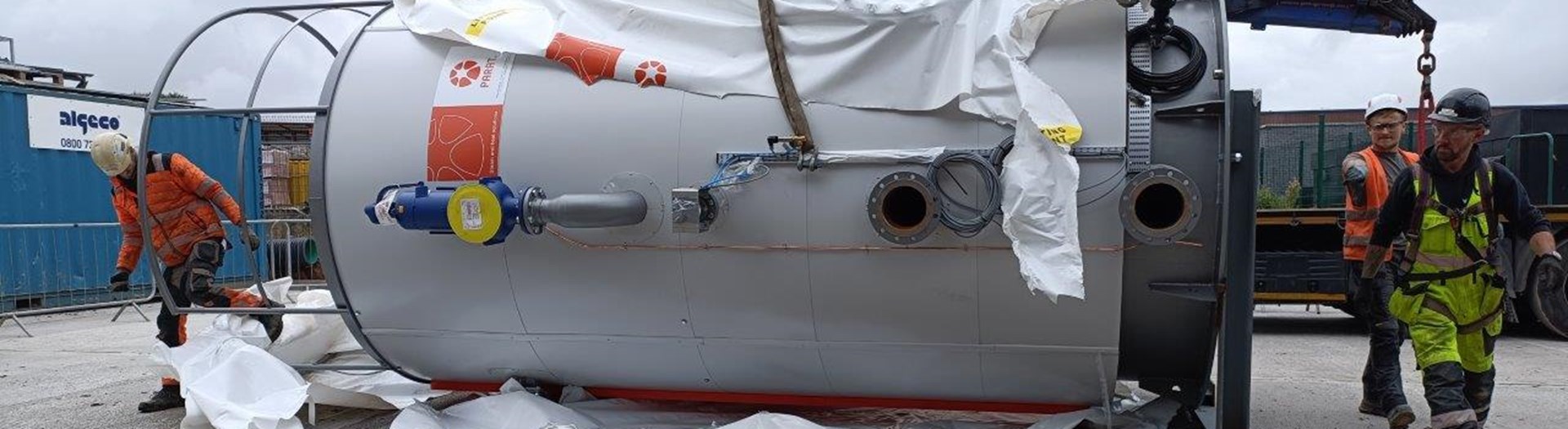
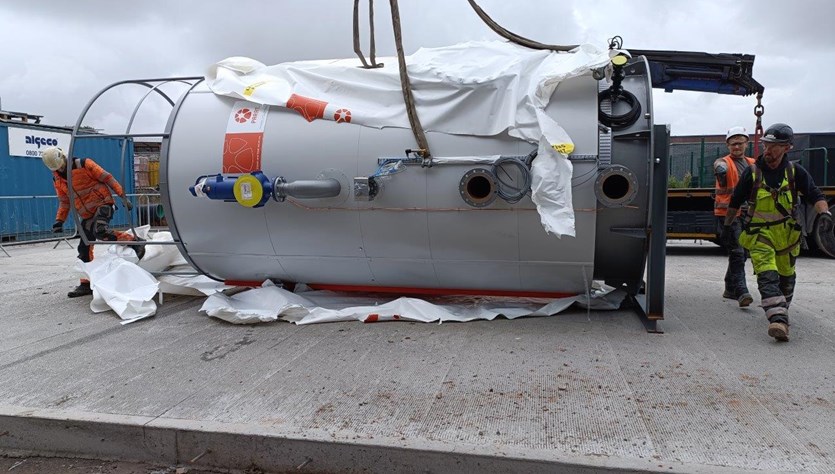
    Simpsons Malt’s net-zero ambitions took another big step forwards today when the 12MW electric boiler completed its 360-mile journey from Norway to their Tweed Valley Maltings site.

    The electric boiler will be coupled with the three 6MW biomass boilers and the combined system will reduce their carbon emission by 25,000 tonnes per year. This accounts for up to an 80% overall reduction on what is the largest malting site in the UK, with the capacity to produce 260,000 tonnes of malt per year.

    With 90% of the site’s malt production destined for distilleries, Simpsons Malt plays a crucial role in the Scotch whisky supply chain and, by decarbonising its operations, the company is not only meeting its own sustainability targets, but also contributing to the net zero ambitions of its customers.

    Microsoftteams Image (36)

    The 12MW electric boiler is a core component of the low-carbon energy solution at Simpson Malt’s Berwick-Upon-Tweed site

    Solution detail

    We’re pleased that our Energy Centre project has taken another big step towards the commissioning stage with the delivery of the 12MW electric boiler. With the Energy Centre delivering up to an 80% reduction in our Scope 1 & 2 emissions at our Tweed Valley Maltings site and around a 55% reduction company-wide, the project will not only have a significant impact on our own carbon footprint, but the Scope 3 emissions of some of the world’s leading whisky brands who we are proud to supply from our Berwick-upon-Tweed headquarters.

    Steven Rowley, Operations Director – Simpsons Malt

    Microsoftteams Image (32)

    The new electric boiler is set to revolutionise the energy-intensive malting process by utilizing excess renewable electricity from North Sea wind farms. During these times the electric boiler will be the primary source of heat for the kilning process and will be replaced by the biomass boilers when North Sea wind farm electricity is not available.

    Solution detail

    Warren Spiers, Preconstruction Director for Vital Energi explains, “This is a huge investment by AMP Clean Energy and Simpsons Malt which demonstrates their commitment to sustainability but also sets a benchmark for the entire food and drink industry. By integrating cutting-edge technologies, with an innovative commercial solution, Simpsons Malt is paving the way for a more sustainable future. Their efforts highlight the importance of reducing carbon footprints in traditionally high-emission sectors, showcasing that environmental responsibility and business success can go hand in hand.

    “The impact of Simpsons Malt’s decarbonisation efforts extends far beyond their own operations. As a key player in the food and drink industry, their commitment to reducing greenhouse gas emissions serves as an inspiring model for others to follow. By prioritising sustainability, they are not only contributing to a healthier planet but also influencing positive change across the industry.”

  • Sustainable energy powers Berkeley Homes’ new Woodberry Down development

    Sustainable energy powers Berkeley Homes’ new Woodberry Down development


    Sustainable energy solutions power Berkeley Homes’ new Woodberry Down development

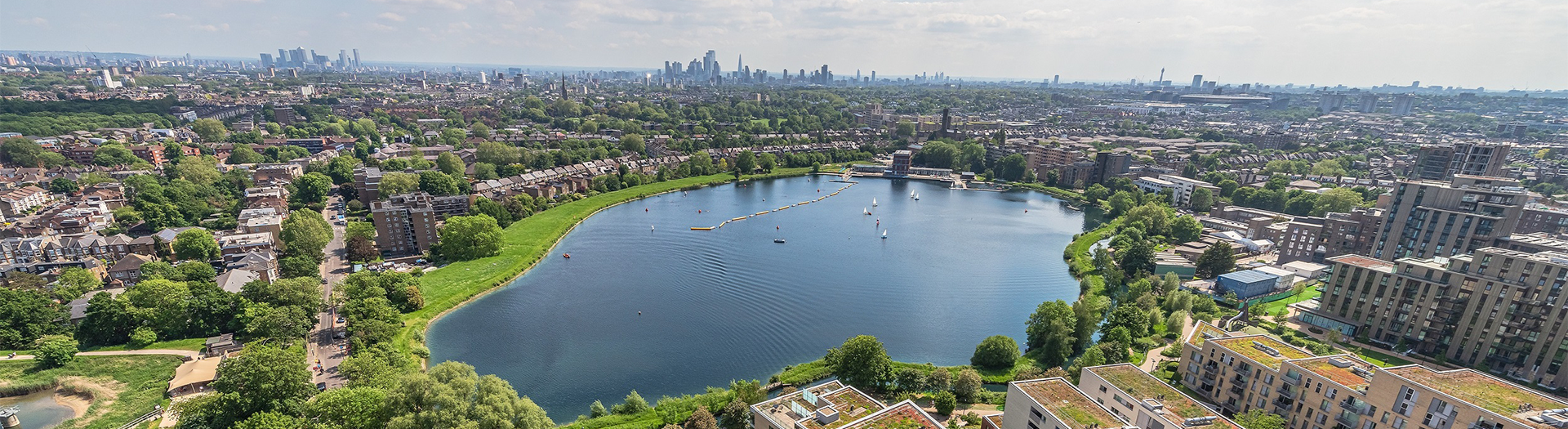
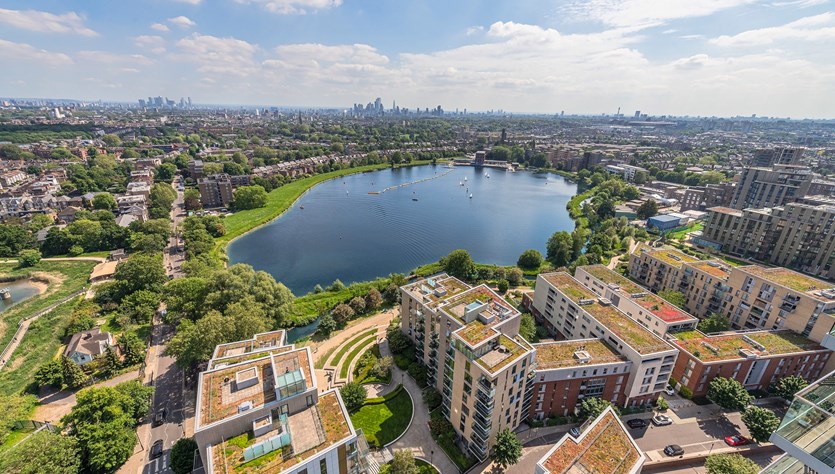
    Vital Energi has helped Berkeley Homes in their mission to create a sustainable neighbourhood, through the installation of air source heat pumps and a brand-new energy centre for phase three of their Woodberry Down development.

    Comprising over 5,500 new homes right next to Finsbury Park, Berkeley is regenerating the area in partnership with Hackney Council, in an innovative 30-year project which will be built over eight phases.
    Vital Energi was awarded the £3.1m contract to design and build the energy centre for phase three of the development.

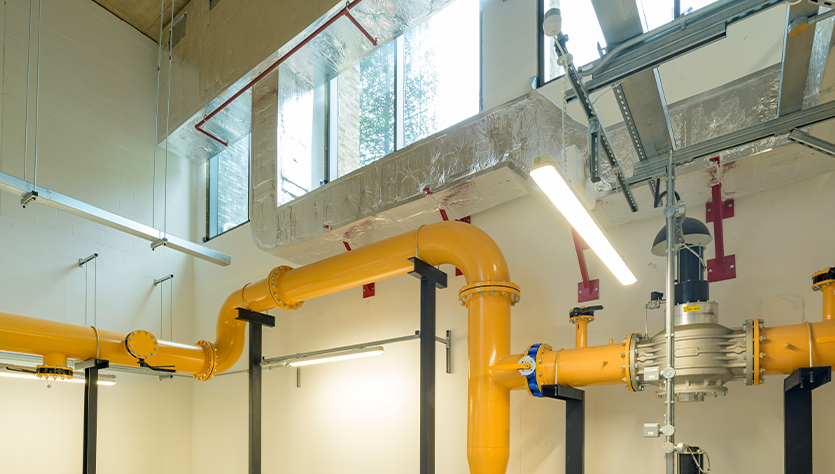
    The project saw the installation of air source heat pumps, a primary low-temperature heating system within the energy centre, along with distribution pipework which runs from the heat pumps down to the energy centre which will serve all eight phases of the development.
    Three 1.5MW condensing boilers were fitted within the new energy centre, which Vital Energi will operate and maintain for two years, along with a Building Management System, and three 6m high 27,000 litre thermal stores.

    Vital Energi is passionate about leaving a positive impact and a lasting legacy within the communities in which they work, so they installed viewing windows in the Energy Centre, so residents and passers-by can see the technologies which are providing sustainable energy to all the homes at Woodberry Down.

    “We are proud to continue to advance our 16-year partnership with Berkeley Homes. We have worked hard to ensure the project’s positive impact on the climate, and continue to help Berkeley in their mission to reach net zero. The installation of the air source heat pumps is a big contributor to low carbon homes, and helps lower the energy costs for residents. This relationship has enabled us to successfully continue towards the government’s net zero goal and ensure we create the best possible plan to reduce carbon emissions,”

    Gerry Davies , Regional Director, Vital Energi’s London Division

  • Over 3,000 dwellings connected: Leeds PIPES celebrates major milestone

    Over 3,000 dwellings connected: Leeds PIPES celebrates major milestone


    Over 3,000 dwellings connected: Leeds PIPES network celebrates major milestone

    The Leeds PIPES district heating network has marked the latest major milestone in its journey, having connected over 3,000 dwellings across the region since the scheme began back in 2018.

    Asserting itself as one of the fastest growing and largest heat networks in the UK, the scheme connects circa 55 individual buildings across multiple sectors, including student living and social housing, as well as public and commercial residencies. The network’s rapid growth enables customers across the city to reap the benefits of the network, which provides them with access to more affordable, reliable, low carbon heat and hot water.

    Delivered by Vital Energi, in partnership with Leeds City Council and Ener-Vate, the network has connected to 29 key buildings such as St James’s Hospital, Leeds Playhouse, Leeds Town Hall and Leeds Beckett University, and has been responsible for the reduction of nearly 6,000 tonnes of carbon in 2023 alone.

    The programme has delivered 430 green jobs across the Leeds City region to date, with significant expansion plans signalling further benefits for local people in the near future.

    We have seen Leeds PIPES go from strength to strength since the project began in 2018, with thousands of customers across the city feeling the benefits of the network in their energy bills, and in support of their personal sustainability goals. Connecting over 3,000 dwellings marks a major achievement for this project, with plans for further expansion signalling the direction of growth that the initiative is heading towards. We are incredibly proud to see the impact generated by Leeds PIPES on local lives as we reach this milestone, which is increased with each connection we make. We look forward to continuing this trend in the years to come.

    Mike Cooke, Managing Director – Vital Energi

    Leeds Conservatoire is committed to continuing its path towards finding more environmentally sustainable ways of offering high quality education environments for all of our community. We are thrilled to be joining organisations across Leeds as part of the district heating network as a substantial part of that commitment. “We continue to work with other music, theatre and arts organisations to achieving Leeds’ carbon-zero ambitions, as we find more sustainable ways to create and tour artistic work.

    Patsy Gilbert, Vice Principal – Leeds Conservatoire

    Some of the network’s most recent customers include Leeds Conservatoire and Tec Campus, in addition to occupants in social housing dwellings at Lovell Park. Further development plans are on the horizon, with installations due to be complete by early on properties across Leonora House and at 24-28 Great George Street.

    To find out more about the Leeds PIPES network, visit: www.leeds-pipes.co.uk