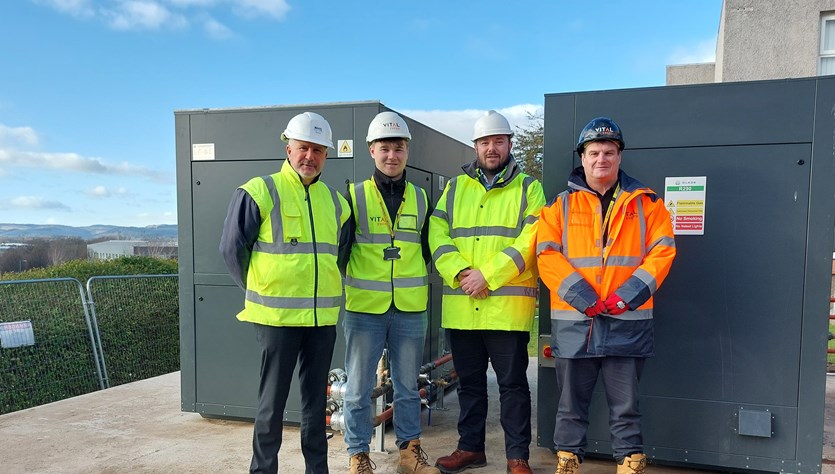
Author: admin

  • Vital Energi joins London Gatwick’s £250m decarbonisation programme

    Vital Energi joins London Gatwick’s £250m decarbonisation programme


    Vital Energi joins London Gatwick’s £250m decarbonisation programme

    London Gatwick has partnered with specialist renewable energy provider Vital Energi to advance its ambitious £250m decarbonisation programme, which will see the airport switch to zero carbon heating and improve energy efficiency.

    The project will work to help London Gatwick achieve net zero for its own emissions by 2030. The airport will eliminate natural gas reliance and generate its own energy, boosting energy resilience.

    Vital Energi will support London Gatwick in a five-year contract that will see heat decarbonised in around 50 airport buildings, including the North and South terminals, engineering facilities and office space.

    Energy specialists Vital Energi, known for delivering innovative decarbonisation solutions at scale, will spearhead the transformation. They will support improving energy efficiency in buildings, deliver zero carbon heat solutions such as heat pumps and heat infrastructure across the airport.

    “The whole aviation sector must work together to decarbonise our industry by 2050. At London Gatwick, we are playing our part by committing to decarbonising greenhouse gas emissions under the airport’s control by 2030. Our vision is to be the airport for everyone, whatever your journey, and as we continue to grow, we must do it sustainably. Our work with Vital Energi will play a critical role in this and will mean we are the first major UK airport to generate heat on site.”

    Cedric Laurier, Chief Technical Officer, London Gatwick

    Mike Cooke, Managing Director, Vital Energi said:

    “Vital Energi is proud to partner with London Gatwick on this landmark decarbonisation programme and we commend its bold approach to decarbonisation and resilience. Our comprehensive expertise in renewable technologies and in-house team of over 100 design engineers will support the airport to achieve its ambitious target of net zero by 2030 by removing gas from across the whole site and installing heat pumps and other decarbonisation measures.

    “In every Vital Energi project, we build in operational resilience, ensuring there is always a backup to maintain functional continuity.”

  • Solar panels at Tudor Grange Leisure Centre to power low carbon network

    Solar panels at Tudor Grange Leisure Centre to power low carbon network


    Solar panels at Tudor Grange Leisure Centre to power Solihull’s low-carbon energy network

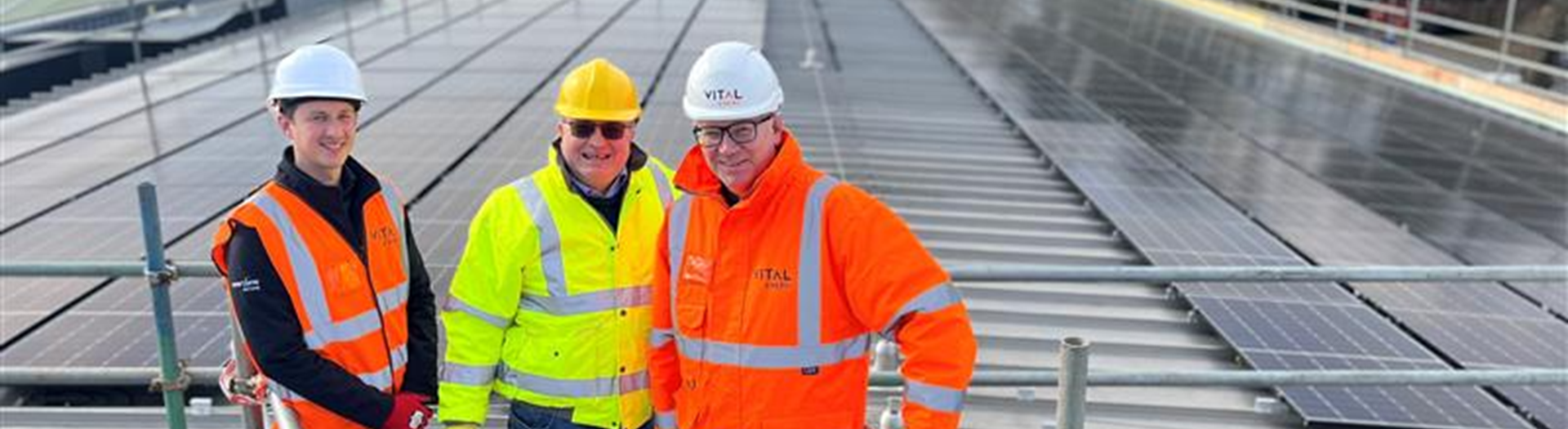
    The Solar PV installation at Tudor Grange Leisure Centre is now complete, marking another major milestone in Solihull’s low-carbon journey. The 388 panels can generate 174.6kWp in clean electricity, while reducing the leisure centre’s electricity costs by approximately £28,000 per year.

    The installation, which was funded by Sport England’s Swimming Pool Support Fund (SPSF) is projected to supply 21% of the leisure centre’s annual electricity needs. Whilst 90% of the zero-carbon electricity generated will be utilised for the leisure centre, any surplus energy generated during peak times will be exported to Solihull’s nearby energy centre, which is currently under construction in Tudor Grange Park. The exported electricity will be used to run powerful air source heat pumps at the energy centre and distributed to other local buildings via the new energy network.

    Solihull’s wider low-carbon energy network project will provide heat and power to public and private sector customers, including Council-owned buildings and education campuses. This innovative new network will help to reduce fuel bills and future-proof against changes in customer energy needs. It is intended that future phases will then connect other buildings in the town centre and link to planned commercial or residential developments in line with the Council’s Town Centre Masterplan.

    “The completion of the Tudor Grange Solar PV marks an exciting milestone in bringing low carbon technologies to Solihull. By supplying cleaner power to the Leisure Centre, we are taking important steps forward in this low-carbon initiative. Our team at Vital Energi is proud to see this phase of the project completed and remains committed to driving progress on the town’s energy network. We look forward to continuing our partnership with Solihull Council as we move into the next stages of the scheme.”

    Simon Jones, Regional Manager at Vital Energi

    “Rooftop solar PV installation is a fantastic way to help decarbonise individual buildings, making efficient use of often underutilised space. The beauty of this installation is that not only can the power generated help reduce the running cost of the leisure centre, while cutting emissions. But where surplus energy is produced, rather than it going to waste, it can be fed into the nearby energy centre and shared across our new network.”

    Councillor Andy Mackiewicz, Portfolio Holder for Climate Change and Planning

    “This upgrade is a crucial step towards a greener future, helping Tudor Grange Leisure Centre and the Council reduce our carbon footprint. The solar panels are already making a real difference to our energy costs”

    Jacob Harley-Beckett, General Manager, Tudor Grange Leisure Centre

    “Swimming pools and leisure centres are vital for promoting physical activity in communities. Sport England is proud to support this project through the Government’s Swimming Pool Support Fund, enhancing energy efficiency and sustainability to ensure these facilities remain accessible for future generations.”

    Lisa Dodd-Mayne, Executive Director – Place at Sport England

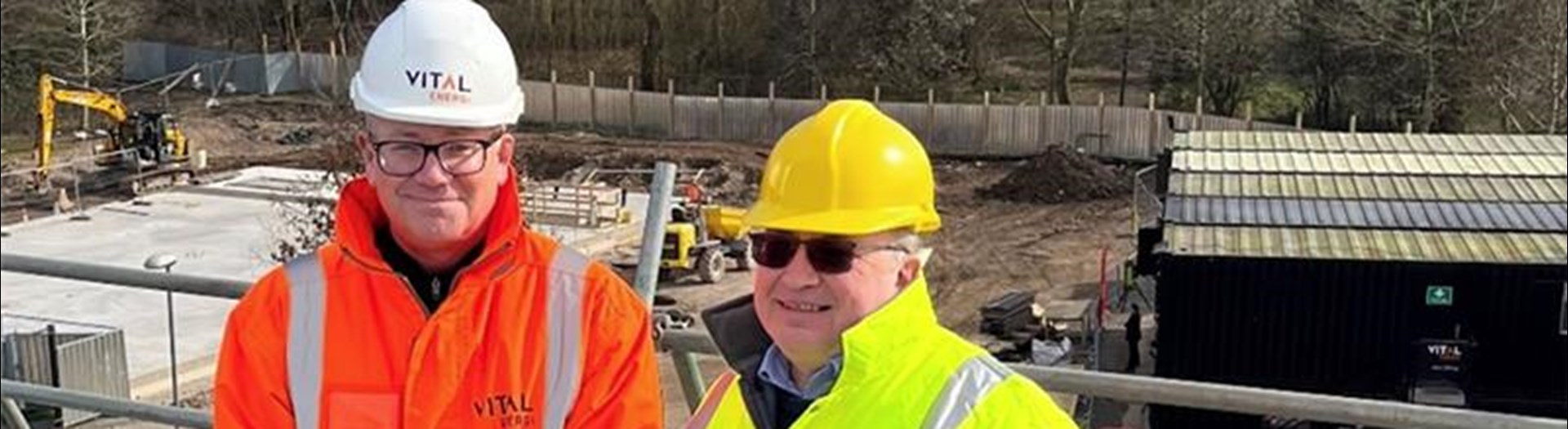
    Elsewhere, enabling works for the new energy network are in full swing, with pipework being laid through Tudor Grange Park and along Homer Road. Work is also progressing at pace at the all-important energy centre, where the building’s steel framework is taking shape.

  • A diverse future for energy, thoughts of a Vital rising star

    A diverse future for energy, thoughts of a Vital rising star


    A diverse future for energy, thoughts of a Vital rising star

    Caitlin Villaneuva was born in Stirling, but she’s proud of her Filipino roots. At 25, she credits her mother’s work ethic for the woman she’s become, a rising star in renewables.

    “My mother has always emphasised the importance of education and pushed me to work hard academically. In the Philippines, access to education is limited without money, so at just 17, my mum made the decision to move abroad in search of better opportunities. Over the years she established two successful takeaway restaurants in Edinburgh. I worked in the business from when I was 16, however realised early on that I wanted to pursue a different path for my future.”

    “It wasn’t like I ever thought of being an architect, it just suited my skill set and I knew I could excel in it. I fell in love with it. It was all about designing and using AutoCAD. I never knew that architectural technology was a career. You always hear about architects and visual design but not about that bridge between design and structural practicality.”

    A career in renewable energy hadn’t been high on Caitlin’s list but then fate intervened.

    “I needed a placement as part of my course, so I started looking on LinkedIn and came across an advert for an architectural technologist with Aberdeen City Council. The council was a client of Vital Energi’s, they passed my details on, and Vital asked me to come in for a chat. They were originally looking to hire apprentices but were open to the idea of a pre-graduate, so it was a good thing for me and a good thing for them, and it just blossomed from there.”

    While women remain underrepresented in renewable energy in Scotland and the UK, the sector is making strides toward greater inclusivity. However, according to POWERful Women, an organisation that tracks gender diversity in the UK energy sector, it’s estimated that only around 32% of employees are women.

    Caitlin, who now works in Vital Energi’s Scotland office in Glasgow, thinks she has some ideas why.

    “There is a ‘leaky pipeline’ when it comes to girls getting into engineering roles. Sometimes it’s just simple things like PPE that fits! I’m tired of being swamped in clothing that’s too big and designed to fit men. Things like separate toilets are also important. Companies should consider the work environment and whether it is inclusive and welcoming of women. And job descriptions should be written to appeal to all, not loaded with bias towards men.”

    Caitlin Villanueva,

    “Vital are passionate about their young workforce. I’m a visual learner and fortunate that Vital encourage me to go to a site and see what I’ve been doing on paper in real life. You get to meet a lot of different people, and they will always talk to you about what they are doing and how things work.

    “I’ve never felt like a minority, even though I will go on a call with 20 people, and I am the only female. Nobody makes you feel like you’re small or invalid, everybody knows it doesn’t matter who you are. But the wider industry is still lagging behind.”

    Caitlin also feels companies could do more to engage with academia, not just universities but high schools as well, and not only in the big cities. This is something Vital Energi is already doing through its climate education programme, vital education, which aims to inspire the next generation and empower them to make small changes that will have a big impact on the UK’s journey to net zero.

    “I went to Bannockburn High School before we moved to Glenrothes when I was 15. Not a lot of companies came to Auchmuty high, even though we are a short commute from Edinburgh and Dundee. I just don’t think they see it as an opportunity to try and grasp people at a young age. I honestly don’t understand it.”

    “There needs to be more collaboration between industry, universities, and secondary schools. Companies need to explain the diversity of roles available. You don’t need to be an engineer to work in green energy, there are hidden job roles in the green industry like mine where I didn’t know they needed us.”

    Caitlin Villanueva,

    Caitlin is Gen-Z. She loves to travel, touring Argentina and Brazil last year, she’s just back from a trip to Italy and she’s off to Jordan this summer. She also loves a good music festival and has a gym membership where pole fitness classes are her thing.

    Although sometimes dismissed as a workshy generation, Caitlin says she and her friends are highly motivated and expect prospective employers to have a positive, modern vision.

    “Young people want to know the real world impact of the work and value a company which trusts its employees and embraces flexible working. We need industry role models and there aren’t many of them. We also need mentors. And young people value a sense of community at work, colleagues they can socialise with and who understand what they do.”

    For that reason, and like several of her Vital Energi colleagues, Caitlin has joined the District Heating Divas, an organisation designed to support women in renewables.

    “It’s a networking thing but it’s also just about making friends, and having that environment where people understand you. It’s good to see things from the perspective of others as well”.

    Caitlin is just starting out in her career but she’s making a tangible impact in the industry already. Her feet are firmly on the ground, but they are certainly taking her places.

  • Solar Panel Installation Nears Completion at 6MW Coed Ely Solar Farm

    Solar Panel Installation Nears Completion at 6MW Coed Ely Solar Farm


    Solar Panel Installation Nears Completion at 6MW Coed Ely Solar Farm

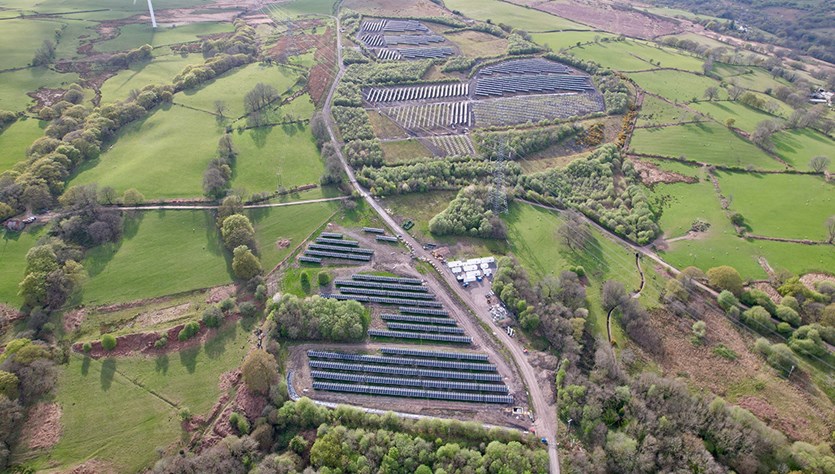
    Less than five months after construction officially began at the Coed Ely Solar Farm, Rhondda Cynon Taf Council, Cwm Taf Morgannwg University Health Board, and Vital Energi are celebrating a significant milestone as the last of the 9,400 solar panels are set to be installed.

    The farm plays a significant part in the council’s decarbonisation as it will export 5MW of clean electricity to the grid, but it will also help lower Royal Glamorgan Hospital’s emissions as they will receive 1MW of low-carbon power through an innovative power purchase agreement.

    The solar farm is situated on a former colliery site and is being delivered by Rhondda Cynon Taf County Borough Council in partnership with Vital Energi, Hydrock, and Rhomco. It is a core initiative in helping the council meet its carbon-neutral targets by 2030.

    Solar 1 (4)

    Installation of the 9,400 solar PV panels nears completion just 5 months after the initial ground breaking.

    Solution detail

    This year’s Earth Day theme, ‘Our Power, Our Planet,’ seeks to unite us in the pursuit of renewable energy. With the solar panel installation nearing completion, it’s the perfect time to celebrate this achievement. It’s inspiring to witness similar initiatives worldwide, driving us towards a cleaner, healthier planet while prioritising the wellbeing of future generations. We’re proud to be part of this movement.

    Councillor Tina Leyshon, Cabinet Member – Rhondda Cynon Taf Council

    Councilor Leyshon continues, “By providing the Royal Glamorgan Hospital with low-carbon electricity, we’re helping to reduce its carbon footprint, and directly supplying our local NHS.

    “Additionally, repurposing the site’s reclaimed colliery tip, which is unsuitable for agriculture, demonstrates how land can be used for clean energy while supporting local biodiversity. Grazing rights for animals will continue, showing that solar energy projects can coexist with farming and enhance biodiversity.”

    So far, the project has created ten local jobs and generated over £600,000 in spending with local businesses and suppliers. The team are also working hard to improve biodiversity by planting hedgerows and installing bee posts, bird boxes, and bat boxes.

    Adam Roche, Head of Pre-Construction for Vital Energi commented: “While there’s still work to do before the solar farm is energised, this milestone represents a transformative project that will significantly reduce carbon emissions for both the council and the health board. One of our key successes has been collaborating with local organisations to maximise job creation, local spending, and training opportunities—ensuring that this project delivers substantial social and economic benefits for the surrounding community.”

    The Coed Ely Solar Farm will provide enough energy to power approximately 8,000 homes annually while supplying low-carbon electricity directly to the Royal Glamorgan Hospital via a private wire network spanning three kilometres. This innovative approach ensures that up to 15% of the hospital’s annual electricity demand is met sustainably rising to 100% on peak summer days.

    We are delighted that on peak summer days the whole hospital will be powered by solar energy. This will have a significant positive impact on our decarbonisation and ‘Green CTM’ commitments and how we can deliver healthcare in a sustainable way for future generations. However, this scheme is not the end of the story at the Royal Glamorgan Hospital and we will be delivering more renewables and low carbon technologies in future to further decarbonise the hospital’s energy demands. Additionally we are proud to work with our partners at RCTCBC and believe that this scheme is a great example of positive collaboration and partnership working between Health Board and Local Authority.”

    Linda Prosser , Cwm Taf Morgannwg University Health Board

  • Empowering families at Relationships Scotland Tayside & Fife

    Empowering families at Relationships Scotland Tayside & Fife


    Empowering families through our work at Relationships Scotland Tayside and Fife

    A new garden for Relationships Scotland Tayside & Fife

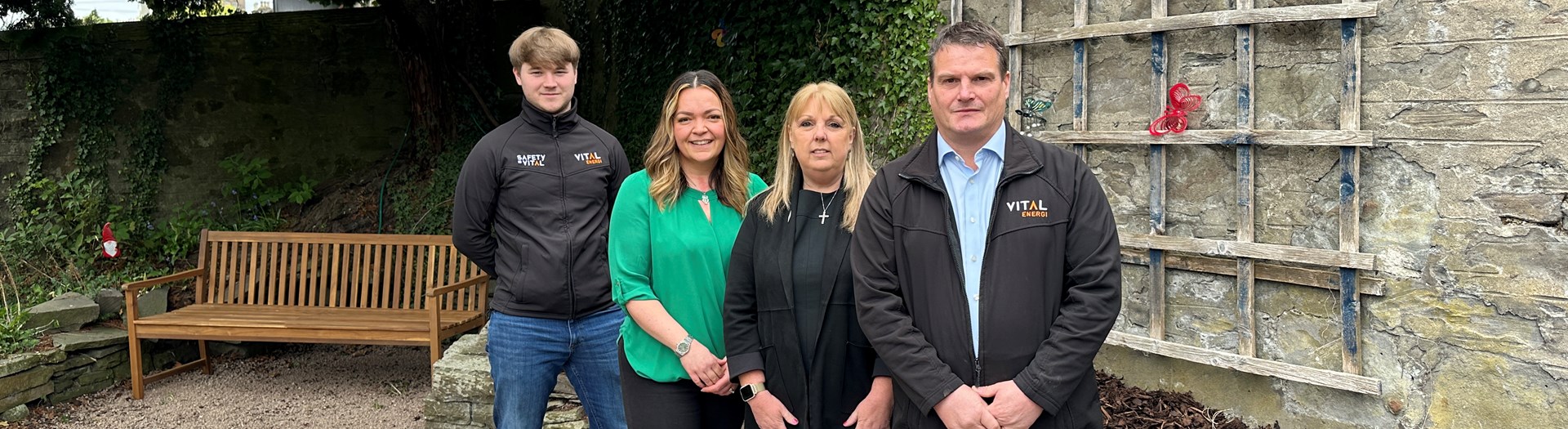
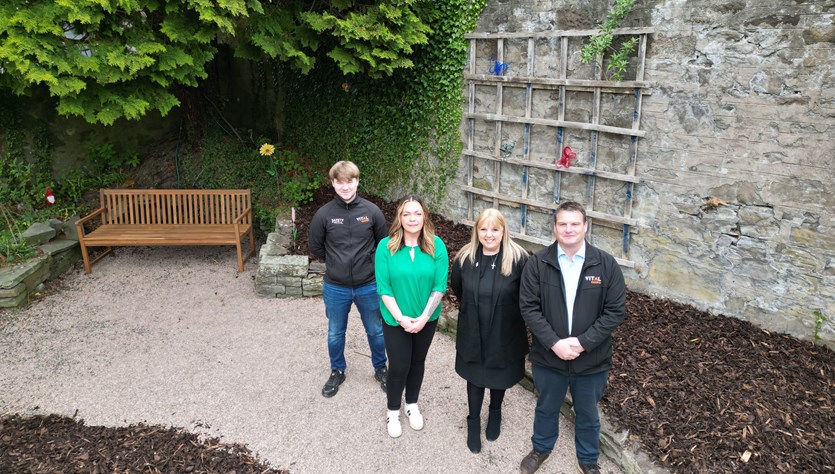
    As with all our projects, we’re committed to delivering benefits to the communities we work in, and our latest project saw us working with CalForth Construction to renovate a garden for the fantastic Relationships Scotland Tayside and Fife, who support 1,500 people annually with their services.

    Relationships Scotland, based in Dundee, provides crucial support services to families across Tayside and Fife, including counselling, therapeutic support, family mediation, and children’s contact, and in the past 12 months alone, beneficiaries have received over 8,000 support sessions.

    Creating a key space for families in need of support

    The newly upgraded garden will have huge benefits for the families and individuals who seek the services at Relationships Scotland Tayside and Fife. The now complete project has created a key space with a welcoming, calming environment that supports mental wellbeing and fosters positive experiences for both children and adults in need.

    For the last 40 years, the service has provided relationship support to people in circumstances where high family conflict, relationship breakdown or separation threaten their well-being, resilience and prospects, and specifically those of any children involved. The physical environment has always been a key tool to engage children, and adults, to create positive experiences for them and to strengthen the potential benefit of the support we offer. The in-kind help from Vital Energi and its local contractors, CalForth Construction, has enabled us to have the garden space of “our dreams” as a staff team, one that will maximise the impact of our work with families

    Marta M Henderson, CEO – Relationships Scotland Tayside and Fife

  • Hereford Ambulance Hub set to undergo £1.3m green energy transformation

    Hereford Ambulance Hub set to undergo £1.3m green energy transformation


    Hereford Ambulance Hub set to undergo £1.3m green energy transformation

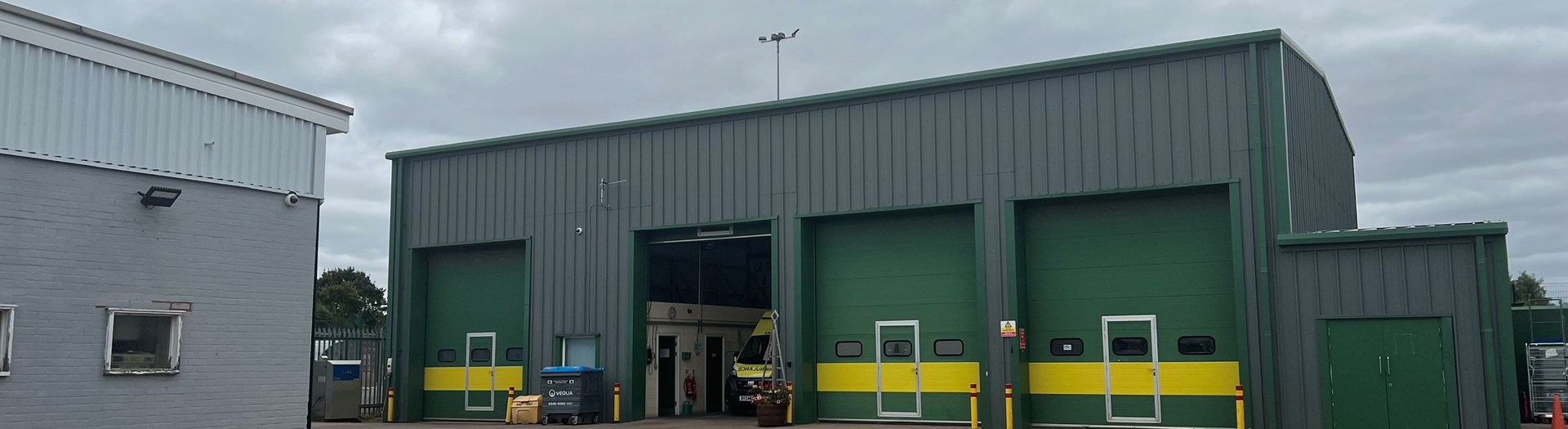
    Vital Energi has partnered with West Midlands Ambulance Service (WMAS) to complete a major £1.3m energy efficiency upgrade at Hereford Ambulance Hub.

    Funded through the Public Sector Decarbonisation Scheme (PSDS), the project will introduce a range of green energy solutions to reduce carbon emissions and lower energy costs.

    Key improvements that will be made as part of this upgrade include the removal of old oil-fired heating system which will be an energy efficient heat-pump based air conditioning system which will provide both low carbon heating and cooling to the ambulance hub.  The generation of heating and cooling will be optimised by way of smart control system which will ensure optimum comfort conditions are maintained at maximum generation efficiencies.

    Windows and doors will be replaced to improve energy performance of the buildings, along with roofing upgrades in order to facilitate the installation of rooftop 106.58kW solar PV system which will allow for independent on-site electricity generation. A 50kW / 128kWh Battery Energy Storage System (BESS) will also be installed to store the energy generated by the solar panels for use at night.

    “We’re excited to be helping Hereford Ambulance Station take this important step toward a greener future. By upgrading end of life oil-fired equipment with renewable energy, we are reducing the site’s carbon footprint and cutting energy costs, and we’ll work hard to ensure minimal disruption so the station can continue to operate as normal.”

    John Runniff, Account Development Director at Vital Energi

    WMAS Head of Fleet and Facilities Management, Tony Page, said:

    “As a Trust, we are committed to reducing our carbon emissions. This important project is bringing much needed modernisation to our Hereford Ambulance Hub, and it will benefit our crews and support staff operating based on the site.

    “All of this is helping us work towards the NHS England targets for carbon emission reduction something we are focussed on and we are very pleased to see this work undergoing.”

  • My reflections on another successful Vital Energi event.

    My reflections on another successful Vital Energi event.


    Pixar’s philosophy, sexy pipes, and making friends and keeping them friendly – my reflections on another successful Vital event.

    Pixar’s philosophy, sexy pipes, and making friends and keeping them friendly – my reflections on another successful Vital Energi event.

    By Abby Whitelock, Marketing & Communications Director

    Now that the dust has settled, the pop-up banners stored away and the superb food we were served fully digested, it’s time to reflect on an enormously successful ‘Future of Energy’ event in Glasgow.

    Feedback about the event has been glowing, with attendees describing the event as “illuminating”, “relevant”, and “engaging”. None of this would have been possible without our “impressive” line-up of speakers who truly brought the day to life, and the incredible delegates who engaged with the event so brilliantly.

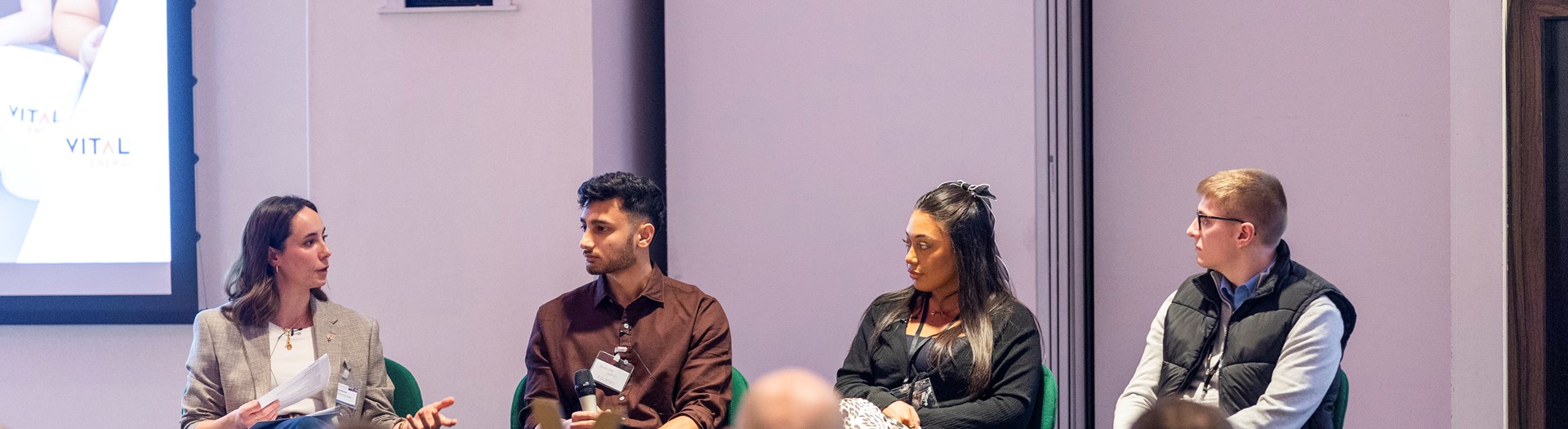
    Session one was all about the future of our industry, a Q&A hosted by the University of Strathclyde’s Amy Ritchie who interviewed three future energy champions: Vital Energi’s own Caitlin Villanueva, Jack Ord from STAR Refrigeration, and Ricardo’s Aniruddha Chhatre.

    Hearing how the next generation views the energy industry through its unique lens was fascinating and informative. Young people clearly want to know the real world impact of the work they’re doing and value a company which embraces flexible working. A lack of role models in the industry stood out as a key message for me, as well as the need for big business to work more closely with secondary and higher education bodies to ‘sell’ a career in green energy. Caitlin who, like me, is a member of the District Heating Divas, talked eloquently about the need for companies to consider the physical work environment for women in particular (e.g. providing PPE that actually fits!) and the danger of unconscious bias in job adverts.

    Next up, my colleagues Nick Gosling and Scott Lutton hosted a session on the minefield that is unlocking funding and commercial support for heat networks. The discussion centred around potential solutions to overcome the barriers, such as the need for increased regulation to build customer confidence, enhanced statutory powers, and greater public awareness of the benefits the sector offers.

    Of particular interest were the comments made by Colin Hudson of the National Wealth Fund (NWF). Colin provided key insights into the NWF’s core sectors to target, which include digital & technologies, advanced manufacturing, and transport. With a £5.8 billion budget set to be deployed across carbon capture, port infrastructure, green steel, green hydrogen, and gigafactories over the course of this Parliament.

    Vital Energi has first-hand experience of the benefits an institution such as the NWF bring to communities. Recently, the NWF issued funding to its first heat network project in Solihull, which Vital Energi will be designing and building. Knowing support like this exists is essential to businesses like ours, impatient to drive change in a market which is quite risk adverse.

    In session three, I was intrigued by Ross Ramsay from the Scottish Futures Trust who said more companies could benefit from the philosophy of animation giant Pixar. It believes that “you get great creative people, you bet big on them, you give them enormous leeway and support, and you provide them with an environment in which they can get honest feedback from everyone”. The point really is you empower people to take risks, to push barriers, and you don’t crush them if they get it wrong. Ross also emphasised the importance of “making friends and keeping them friendly”, stressing that strong relationships are crucial for overcoming challenges in a project. It was great to hear from Vital’s friend, Ener-vate’s Steve Hunt, and I did chuckle when Sarah-Jane McArthur from Brodies described lawyers as “the project prevention unit”.

    Next, Polly Cook from Leeds City Council and Rhea Marsden from the SWAN Heat Network talked us through the Leeds PIPES project and the large new heat network in Westminster. SWAN will see heat captured from innovative sources such as the London Underground, the Thames, and the sewer network, becoming one of the UK’s first heat network zones. The Leeds PIPES heat network is an innovative and reliable district heating solution that brings heat and hot water into taps, radiators, and heating systems to over 2,500 buildings and residences. It currently uses heat created as a by-product of burning Leeds’s non-recyclable waste. Both are Vital projects, of course, and both show the sort of innovative thinking we’re famous for.

    Finally, it was my turn. Together with Tanita Addario from Aberdeen City Council, we started by asking what ‘Social Value’ and ‘Community Benefits’ meant to the audience. It’s clear those phrases mean different things to different people, but the two words that came up more than any others were education and engagement.

    For me, the Torry Heat Network project in Aberdeen, on which we were the main contractor, is an exemplar of best practice here. What we learnt from it was to engage early and consult, take people on the journey with you. To achieve this, your messaging must be tailored to the specific people you are speaking to. All our promotional material, published long before spades went in the ground, was produced in three languages to speak to the diverse Torry community and included a direct point of contact for enquiries. And we listened, understanding that in an area of high poverty, heating costs were a key concern. The crucial task of stakeholder mapping helped us to understand the community’s worries, allowing us to address them in our communications and alleviate any concerns.

    We also went into local schools with our STEM-approved ‘Climate Education Programme’ to try and inspire and educate young people about, yes you guessed it, the future of energy.

    Jessica Cooke, Senior Planner at AECOM wrote on LinkedIn that it was “a pleasure to attend” the conference and added “The renewable energy sector is indeed at an exciting juncture!”

    Rhea Marsden, Head of Connections at SWAN Heat Network, wrote, “events like this are a great reminder that the industry is heading in the right direction”. And Dr Roddy Yarr, Director of Sustainability at the University of Glasgow and Associate Director of the Centre for Sustainable Energy, was very complimentary, writing “Vital’s can-do and approachable attitude continues to deliver positive impact.”

    If you want to join us at one of our future events, email [email protected] to be placed on a waitlist.

  • Solihull’s Energy Network gets backing from the National Wealth Fund

    Solihull’s Energy Network gets backing from the National Wealth Fund


    Solihull’s new low carbon Energy Network gets backing from the National Wealth Fund

    Solihull Council has secured financing from the National Wealth Fund (NWF) to help deliver its ambitious town centre energy network. The innovative new network will provide low carbon heating, hot water and power (electricity) to a range of town centre buildings, helping to reduce fuel bills and future-proof against changes in customer energy needs.

    The project will be the first heat network to receive funding from the NWF via a £9.6m loan provided through its Local Authority function. This low-cost long-term financing option will enable the Council and its delivery partners to complete installation of the pipework for the first phase of the project.

    The project aligns with the NFW’s clean energy mandate and supports Government ambitions to increase the use of low carbon heat networks to 20% by 2050, up from 3% today. This drive is intended to help decarbonise the UK’s building stock, which is currently the second largest contributor to carbon emissions after transport.

    The first phase of the network in Solihull will provide heat and power to public and private sector customers, including Council-owned buildings and education campuses. It is intended that future phases will then connect other buildings in the town centre and link to planned commercial or residential developments in line with the Council’s Town Centre Masterplan.

    The project is being delivered by Vital Energi who will design, build, operate and maintain the new network. Vital Energi is a leading national player in the heat network and low carbon energy sector and has successfully delivered a range of exemplar, high-profile networks including Leeds PIPES and Mersey Heat.

    The initial funding required to get this carbon saving scheme off the ground was provided by the Government’s Heat Networks Investment Project (HNIP) and West Midlands Combined Authority.

    Heat networks like this one, which will provide buildings in the heart of Solihull with low-carbon, affordable heat and electricity, will play an essential role in the clean power transition. By helping homes and businesses in Solihull to stay warm in a cheaper and more efficient way, this investment will help more people feel the benefits of our drive towards clean power as part of the Plan for Change.”

    Miatta Fahnbulleh, Minister for Energy Consumers

    Councillor Andy Mackiewicz, Portfolio Holder for Climate Change and Planning said:

    “For individual buildings, decarbonising heat is expensive and often disruptive to occupants. A town centre energy network enables existing buildings and new developments to benefit from centrally based low carbon heat generation with minimal disruption and in a cost-effective manner benefitting from economies of scale. It also provides opportunities to instal rooftop solar panels that can supply the energy network customers, utilising roof space and ultimately protecting the green belt.

    “The real beauty of this scheme is that it can expand through subsequent phases to meet growing demand and link into new buildings and developments. As we progress with the scheme, we anticipate signing up many more customers who will be able to see the obvious benefit it can provide.

    Before embarking on this exciting scheme, we undertook detailed financial modelling as part of the business case, the favourable loan we have been able to secure from the NWF improves the financial case for the scheme which will recover all of its capital investment costs over its lifetime.”

    Lorna Pimlott, National Wealth Fund Managing Director, Local Authority Advisory & Lending, said:

    “Heat networks have a key role to play in the nation’s transition to net zero and we’re pleased to support Solihull Council in this important project. The NWF’s lower cost of finance will enable the council and Vital Energi to deliver the first phase of the heat network on time and within budget, enabling consumers to cost-effectively decarbonise their buildings while providing greater energy price resilience in the future.”

    Gemma Dyson, Pre Construction Director for Vital Energi, said:

    “The Solihull Low Carbon Energy Network is making significant progress on site, and this funding from NWF is more positive news.  We are all working hard to get the network up and running quickly, so that the end users can benefit from low carbon heat, hot water, and power, which will be a key step in decarbonising their buildings. We’ve also been making great strides with our social value commitments on the project, ensuring that we are making a difference in the community as well as helping the borough decarbonise.” 

  • 6 steps to a successful Energy Services Company (ESCo) partnership

    6 steps to a successful Energy Services Company (ESCo) partnership


    6 steps to a successful Energy Services Company (ESCo) partnership

    As the UK’s heat network market moves towards regulation, the importance of developing sustainable and customer-focused energy solutions is becoming more critical than ever. For housing developers and providers, partnering with an Energy Services Company (ESCo) can enable them to benefit from reduced operational and financial risks, data-driven insights to support regulatory compliance, affordable tariff structures, and effective customer engagement strategies.

    Here are six key steps to building a successful ESCo partnership:

    1. Evaluate potential ESCo partners to ensure your long-term goals are met

    The first step of developing an Energy Services Company (ESCo) is to evaluate whether your intended partner’s ESCo service model aligns with your long-term goals. Focus on ESCo providers with a proven track record of delivering efficiency gains, carbon footprint reduction, consumer protection, proactive customer communication, and operational cost savings specifically within the heat network sector. Consider how their proposed solutions could meet your required performance metrics, sustainability targets, and customer experience values.

    2. Minimise your risk by negotiating the right contractual framework

    Next, negotiate a transparent and risk-aligned contract that clearly defines performance guarantees, service levels, and financial liability. This will ensure customers benefit from fair tariffs, a great customer experience, and optimal system performance. Take the time to understand any proposed ESCo revenue-sharing model and ensure it motivates both parties to achieve optimal network performance, providing a revenue stream that could be utilised to offset capital costs or further reduce consumer tariffs. Thoroughly evaluate the proposed operational and financial risk mitigation strategies, ensuring comprehensive liability insurance is in place for any potential system malfunctions or performance shortfalls.

    3. Treating customers fairly and providing a great experience is critical to success

    It’s crucial to select a partner which at its core, emphasises treating customers fairly, and engages with the community at every level of service delivery. This approach, as demonstrated by Vital Community Energi, is designed to ensure that the energy solutions provided are not only efficient, but also consider the consumer experience, and ultimately enhance customer satisfaction.

    You will need to be able to fully rely on your ESCo partner to support your customers and ensure they are equipped to answer questions and requests. There is a responsibility in providing heating and hot water and by building an ESCo partnership built on customer service values, you can contribute positively to community welfare and sustainability.

    4. Taking control of regulatory compliance with technical expertise and innovation

    Your ESCo partner should take full control over your compliance with heat network regulation therefore it is important to evaluate their technical capabilities and experience in design, constructing, and optimising heat network infrastructure and assets. To support Heat Network Technical Assurance Scheme (HNTAS) compliance, look for partners who can demonstrate their expertise in energy audits, equipment upgrades, data analytics platforms, and advanced control systems. Prioritise ESCos actively researching and implementing cutting-edge technologies for improved network efficiency and resilience.

    5. Explore funding options from full ownership to shared investment models

    Each ESCo is unique, so review the proposed financial model and ensure it meets your strategic objectives and fits within your financial expectations. If not, you can explore various funding options ranging from full ESCo ownership and operation to shared investment models. Consider the implications of upfront capital outlays versus performance-based contracts and look for competitive terms for ongoing maintenance and service fees, to enable you to interrogate the long-term costs of the ESCo.

    6. Develop a collaborative approach and clear communication channels

    Finally, choose an ESCo partner with a collaborative approach, that values your operational expertise and integrates seamlessly into your existing team. It is important to have clear communication channels for regular data sharing, performance reporting, and joint decision-making on energy optimisation strategies. A relationship built on open communication and transparency will ensure a successful and mutually beneficial partnership.

    Developing a successful ESCo partnership involves carefully evaluating potential partners, negotiating risk-aligned agreements, and prioritising the fair treatment of customers. Collaboration is key and by working with an established company like Vital Energi, you gain access to proven expertise in the development of sustainable energy processes, tailored funding models, and an enhanced customer experience. Choosing the right ESCo partner is not just about meeting today’s needs—it’s an investment in a sustainable, resilient, and community-focused energy solution.

    If you are interested in developing an ESCo partnership and would like to learn more, please get in touch.

    You can also read the full Housebuilder & Developer article here.

    Read about our latest ESCo agreement here:

    Hepworth Place – Energy Services Company (ESCo)

    Hepworth Place – Energy Services Company (ESCo)

  • NHS Tayside Set for Carbon Savings On Net Zero Journey with Vital Energi

    NHS Tayside Set for Carbon Savings On Net Zero Journey with Vital Energi


    NHS Tayside Set for Carbon Savings as it Continues Net Zero Journey with Vital Energi

    NHS Tayside are continuing their ambitious decarbonisation works with a major energy efficiency scheme which will revolutionise how they generate and use energy across three of their sites whilst saving an estimated 3,427 tonnes of carbon emissions over the project’s life expectancy.

    The project, which is scheduled for completion by Spring 2025, will see a range of energy conservation measures installed, each designed to deliver maximum carbon savings:

    • 269 rooftop solar PV panels across three sites, generating a total of139kWp.
    • 5 heat pumps installed across three buildings, with a total output of 300kW.  These will also include 20,000l of combined thermal storage.
    • Improved insulation to reduce heat loss.
    • Upgraded heating controls for optimised energy use.
    • Replacement of 9 doors and 124 windows across two of the buildings.
    • Upgrading 382 light fittings to modern LED fittings and installing intelligent controls.

    Works will be carried out at Abbey Health Centre in Arbroath, Westgate Health Centre in Dundee and St. Margaret’s Hospital in Auchterader, Perthshire.  Crucially, Vital Energi will deliver an energy performance contract which guarantees key performance indicators such as financial and carbon savings.  All savings will be independently verified by a third party as part of the contract.

    The works are aligned with the Scottish Government’s target for public sector organisations reaching net zero by 2040 and eliminating fossil fuelled heating by 2038.  The project has received £3.2m in funding from the Green Public Sector Estate Decarbonisation Scheme (GPSEDS).

    We worked with NHS Tayside to gain a full understanding of what was installed in each of their buildings and how it was performing.  Once we had built our model, we were able to identify the measures which would deliver the maximum carbon savings.  We’re excited to be back partnering with NHS Tayside again and this project will be another strong step on their road to net zero.”

    Kieran Walsh – Vital Energi, Regional Manager (North & Scotland),

    31 01 25 More Than 3000 Tonnes Of Carbon Savings Set For NHS Tayside Photo

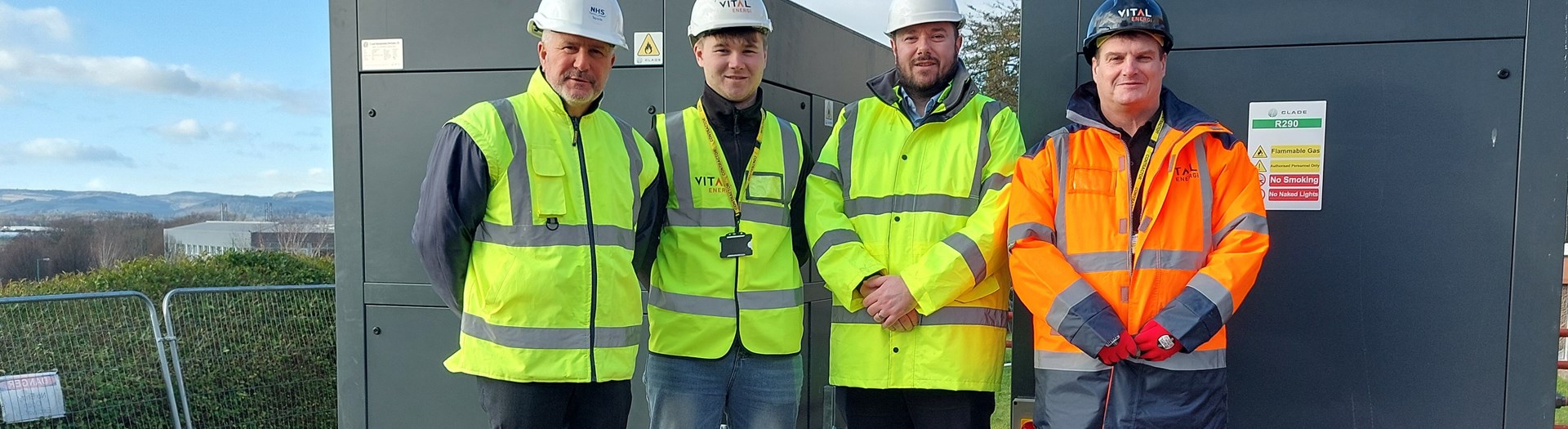
    Mark Anderson Associate Director of Facilities – Property at NHS Tayside, Evan Reilly Construction Degree Apprentice at Vital Energi, David Gibson Head of New Works at NHS Tayside and Scott Roe, Project Manager at Vital Energi at the Westgate Health Centre in Dundee.

    Solution detail

    This new project follows a major 18-month scheme delivered by Vital Energi in 2015 where we delivered energy upgrades across several of NHS Tayside’s sites including a major energy centre upgrade at Ninewells Hospital and energy conservation measures at Perth Royal Infirmary and Stracathro Hospital.