Blog

  • UK’s First Large-Scale Water Source Heat Pump Project Officially Opens

    UK’s First Large-Scale Water Source Heat Pump Project Officially Opens


    UK’s First Large-Scale Water Source Heat Pump Project Officially Opens

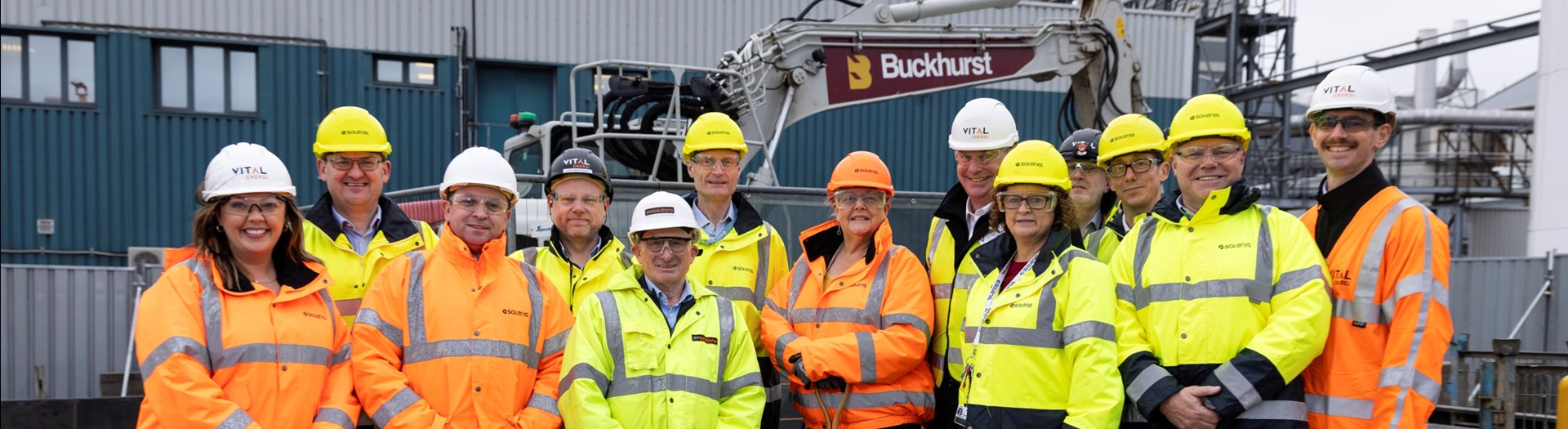
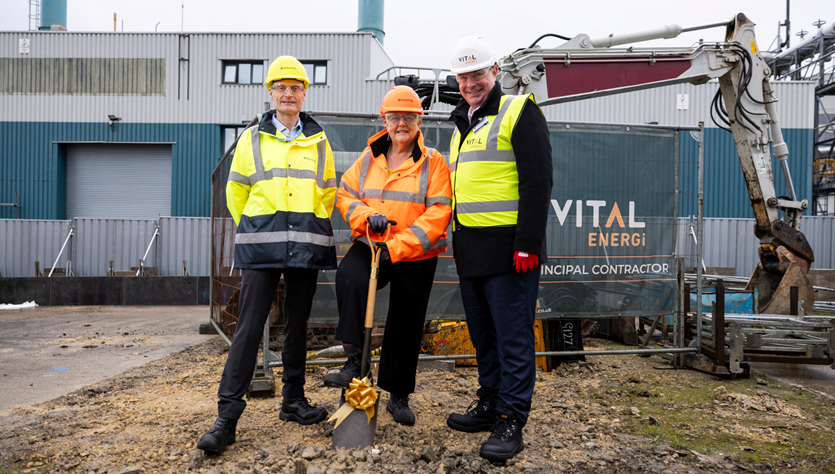
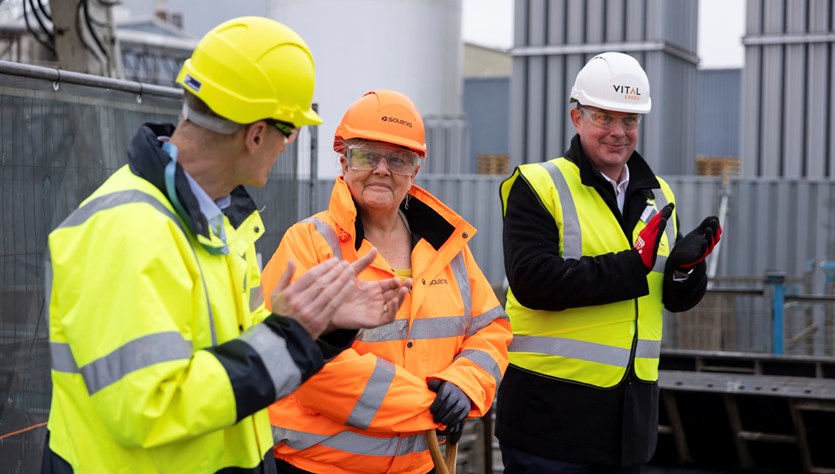
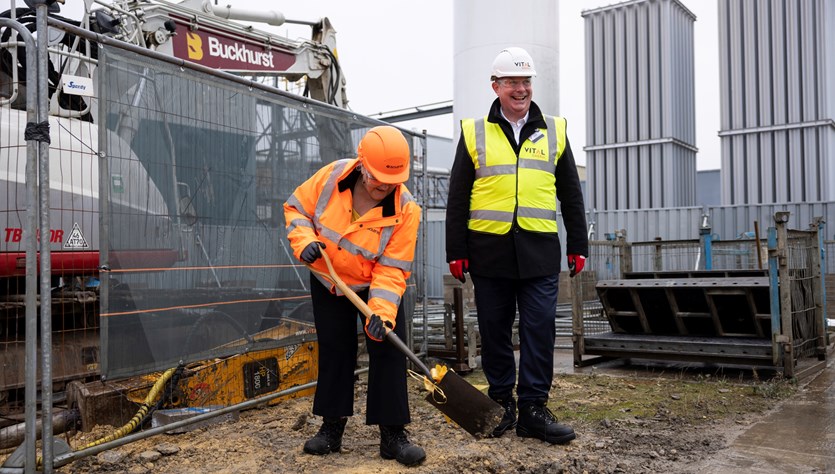
    The award-winning Queens Quay Heat Pump Energy Centre is providing low-carbon heating to the first phases of the £250m Clydebank-based development and members of West Dunbartonshire Council, Vital Energi and Star Renewables gathered to celebrate the achievement in an official opening on Friday 1st of October.

    The opening is a particularly timely showcase of Scottish innovation as world leaders are set to gather in Glasgow for the COP26 United Nations Conference.

    The £20m project, which was delivered by Vital Energi on behalf of West Dunbartonshire Council will provide heating and hot water to the 23-hectare Queens Quay development which includes plans for 1,200 homes, businesses and public buildings. The initial phase connects Aurora House, the Titan Enterprise Centre, Clydebank Leisure Centre and care home, Queens Quay House.

    At full build out the project will deliver circa 5,705 tonnes of CO2 reduction per year due to grid decarbonization.

    Scott Lutton, Vital Energi’s Operations Director – North & Scotland said, “With COP26 fast approaching it is timely that we showcase the local authorities who have successfully delivered initiatives to meet their carbon targets and are an inspiration to others. West Dunbartonshire Council have shown that it is possible to, not only deliver large carbon reduction by harnessing renewable technology, but that this heat can be delivered at a more affordable price.

    “One of the truly exciting things about this development is that it will continue to grow over multiple phases, increasing in scale, becoming more efficient and allowing more people, businesses and organisations to access low-carbon heat.”

    The energy centre houses two 2.65MW water source heat pumps which extract water from the River Clyde at a rate of 125 litres per second and use the latent heat to produce heating and hot water for the development via a 5km district heating network.

    Councillor Iain McLaren, Convener of Infrastructure, Regeneration and Economic Development, said: “I am extremely proud to officially open the West Dunbartonshire Energy Centre. This ambitious project has been many years in the making and it’s a pleasure to see the system up and running, providing low-carbon heat energy to so many buildings already, and with the capability of expansion throughout Clydebank.

    “As the world turns its eyes to the West of Scotland for COP26, and we work to agree action to try and halt the climate emergency, we are determined to do our part. This system, alongside a number of other steps taken by the Council, will help us achieve our goal to be net zero by 2045 and lead the way in tackling the climate emergency.”

    Enegy Centre Opening SR 11

    The network was designed to accommodate further growth, with the potential to expand beyond Queens Quay over several phases. The network has been future-proofed, and pipework has been installed to supply the forthcoming Health Centre, West College Scotland, the first 140 flats and retail units currently on site, all other homes planned for the site as well as Clydebank Library and Clydebank Town Hall.

    Future plans also include connections to the Golden Jubilee Hospital, Clyde Shopping Centre Dalmuir Flats, and into the town centre.

    Councillor Daniel Lennie, West Dunbartonshire Energy LLP Board member, said: “This fantastic system is already heating so many public buildings from the leisure centre to the care home, with the potential to expand to the Golden Jubilee and beyond.

    “It makes me so proud that as a Council we are showing our commitment to our net zero mission, especially because we are using our shipbuilding heritage and the Clyde – our most famous resource – to do so.

    “As well as taking these steps to tackle the climate emergency, we are also addressing fuel poverty for our communities and I’m sure Clydebank will see the benefits of the system for years to come.”

    Solution detail

  • UK’s First Large Scale Water Source Heat Pump Claims Finalist Spots

    UK’s First Large Scale Water Source Heat Pump Claims Finalist Spots


    UK’s First Large Scale Water Source Heat Pump Project Claims Hat Trick of Finalist Spots

    It’s been quite a few months for the Queens Quay Energy Centre on Clydebank.  After winning the European Heat Pump City of the Year award, being shortlisted for the H&V Heat Pump Project, and holding an official opening, the project has been shortlisted in 3 categories of the Scottish Green Energy Awards 2021.

    The project was one of over 100 entered into the awards this year and it has been shortlisted in the following categories:

    • Sustainable Development Award
    • Carbon Reduction Award
    • Outstanding Project Award

    Scott Lutton, Operations Director (North) for Vital Energi explains, “For over a hundred years Clydebank has been synonymous with Scottish engineering excellence and we are delighted that this continues into the 21st Century with the project being named as a finalist in three categories.

    “This project is a fantastic showcase of how the UK can transform its energy infrastructure to achieve net zero and is a fantastic example to others, especially as the world’s leaders gather in Glasgow for COP26.  We are proud to have worked in partnership with West Dunbartonshire Council, Star Renewables and a host of talented subcontractors and suppliers to deliver this important project.”

    The Queens Quay Energy centre houses two 2.65MW water source heat pumps which takes water from the River Clyde, extracts the latent heat, and distributes heat throughout the 23-hectare site via a 5km underground district heating network.  When completed, the scheme will serve over 1,200 homes, businesses and organisations and, at full build out the project will deliver circa 5,705 tonnes of CO2 reduction per year due to grid decarbonisation.

    The network was “futureproofed” to accommodate further growth and there is potential to expand beyond Queens Quay over a number of phases with future planned connections including Golden Jubilee Hospital, Clyde Shopping Centre and Dalmuir Flats.

    Ian Spencer, Vital Energi’s Technical Director of Product Development explains, “This project is at the cutting edge of technology for several reasons and one of the most exciting is the installation of vTherm°e HIU and the Glass App which together collects and analyses data from the heat network to identify opportunities for improvement and deliver increased efficiencies.

    “As the project grows in size, that increases the number of connections and continues to benefit from smart data collection and analysis, it will continue to further decarbonise and help West Dunbartonshire Council on their net zero journey.”

    The Queens Quay project has already won the European Heat Pump Association’s Heat Pump City of the Year award and is currently shortlisted for the upcoming H&V Awards Heat Pump Project of the Year.

  • University Hospitals Bristol & Weston NHS Foundation Trust Win Top Award

    University Hospitals Bristol & Weston NHS Foundation Trust Win Top Award


    UHB&W Wins Top Energy Award

    We’d like to congratulate University Hospitals Bristol and Weston NHS Foundation Trust for winning the Decarbonisation Project of the Year award at the The Energy Management Association for the work they have been doing towards meeting their net zero targets.

    Vital have worked with the Trust on a two-phase decarbonisation project which saw the refurbishment of the existing energy centre, replacement of the steam boilers and an extension of the district heating network to connect an additional 10 plantrooms.  As this de-steamed the hospital, the project also involved replacing and modifying essential pieces of infrastructure, such as the sterilisers and washers, with more energy efficient models.

    Bristol Heat Network

    University Hospitals Bristol and Weston NHS Foundation Trust were one of the first NHS organisation to declare a climate emergency and set a target to become carbon neutral by 2030.   This project is an important part of meeting these targets and the Trust have delivered significant upgrades to their energy infrastructure which will deliver carbon reduction for years to come.

    We’re delighted their hard work, commitment, and vision to achieving net zero has been recognised at such a prestigious awards ceremony.

    Solution detail

    Bristol Hospital Energy Saving Energy Centre

    The Energy Management Association was created to establish best-practice and put energy management at the heart of British business and the awards are designed to shine a spotlight on the very best instances of energy management in the UK.

    Solution detail

  • Turning up the heat with Energy UK membership

    Turning up the heat with Energy UK membership


    Turning up the heat with Energy UK membership

    Vital Energi is becoming a member of Energy UK alongside five other heat network companies, as it increases its focus on heating more of our homes and buildings with clean, sustainable energy sources.

    Heat from buildings is the UK’s second highest source of emissions, accounting for around one fifth of the total, so converting to alternative, cleaner forms of heating is crucial to meeting the UK’s climate change targets.

    With the Government’s Warm Homes Plan and Future Home Standard expected over the coming months, it is also an important time which will shape the role heat networks can play in heating and cooling buildings more efficiently.

    A heat network is a broad term that applies to any system that distributes heat, and sometimes cooling, from centralised sources to more than one connected customer. A residential scheme may just serve the residents in a single building, whereas a district heating scheme could service a variety of different customers such as homes, public buildings, shops, offices, hospitals and universities.

    Whether supplying a few neighbourhood buildings or entire cities, heat networks can remove the need for individual boilers or heaters in each home, which can be particularly useful in densely populated areas such as blocks of flats. They can also make use of existing heat sources that would otherwise be wasted such as industry, energy-from-waste plants or naturally occurring sources like geothermal.

    The companies joining Energy UK include 1Energy, Bring Energy, Gren, Hemiko, Switch2 and Vital Energi. These companies will join Energy UK’s existing membership of 140 companies, around a quarter of which provide products and services in the clean heat space.

    Under the Energy Act 2023, heat networks zoning aims to accelerate their growth from the current 3% share to 20% eventually, which will see them fulfil the prominent role they have in some other European countries. The sector has ambitions to invest tens of billions in the UK by 2050, supplying 95TWh of power and saving 15 Mtonnes of carbon dioxide. This will lead to the creation of hundreds of thousands of direct and indirect jobs across the UK, primarily in construction and heat network operation.

    “We have seen that heat networks can sit at the heart of communities and improve air quality, reduce emissions and deliver more reliable, affordable heat. We believe that by uniting with other UK energy leaders we can raise the profile of heat networks, which are essential to the UK’s green energy transition. In the UK we are at a critical point in the widescale deployment of heat networks with the introduction of regulation and zoning on the horizon. We look forward to working with Energy UK to ensure new policy and legislation creates protection for customers, improves quality standards and supports the growth of heat networks. Together we can shape a more resilient, equitable and greener future for all.”

    Gary Fielding, Chairman of Vital Energi

    Dhara Vyas, Energy UK’s chief executive said:

    “Heat is a vital part of the clean energy jigsaw and moving to cleaner alternatives will benefit households and businesses through more efficient energy use, and less volatile energy prices by not being reliant on gas. Heat networks have enormous potential to play a big role in this drive, particularly in urban and industrial areas, and help meet the overall goals of clean, sustainable sources, reduced air pollution and more stable bills, while also boosting the economy with investment, jobs and regeneration.

    “So it’s a great time to welcome these new members. We look forward to promoting their work and the contribution they can make to the energy transition as well as supporting them with our policy expertise and close relationships with government, regulators and other stakeholders.”

  • Trust invests in energy-efficient and decarbonisation schemes

    Trust invests in energy-efficient and decarbonisation schemes


    Trust invests in energy-efficient and decarbonisation schemes | PSDS Funding

    Leeds Teaching Hospitals NHS Trust (LTHT) has been awarded over £20m from a government fund to install low carbon heating and energy efficiency measures across the Trust estate which are being delivered by Vital Energi.

    Funded through the Public Sector Decarbonisation Scheme (PSDS), the scheme provides grants for public sector bodies to fund heat decarbonisation and energy efficiency measures. With energy costs rising and the Trust committing to achieving net zero carbon emissions by 2040, the decarbonisation of heat within the Trust’s buildings poses a significant challenge.

    Phil Mottershead, Vital Energi’s Project Development Director commented, “The Trust have made a commitment to achieve net zero by 2040 and this project is an example of them putting that commitment into action.  They have a wide-ranging approach to carbon reduction which has seen them focus on the highest C02 reduction measures to deliver the most effective project.  This, combined with connection to the Leeds PIPES network, represents a step change for them in the way they generate and use heat and we’re delighted to be helping them on their net zero journey.

    The initial programme of works has seen the installation of air source heat pumps, which will reduce the consumption of natural gas, installing photovoltaics for electrical generation, switching to energy efficient LED lighting and replacing single glazed windows with low U value double glazing to reduce building fabric heat loss.

    The next phase of work will focus on reducing energy demand by installing draft proofing and roof insulation and expanding the number of buildings connected to the local district heating network. In April, Beckett Wing at St James’s University Hospital became the first Trust building to connect to Leeds PIPES. The heating network provides affordable, reliable and sustainable heat to connected buildings. It uses recovered heat to serve the households and businesses across the city, including the Trust, to provide a low-carbon alternative to the traditional burning of fossil fuels for hot water heating.

    Reducing carbon emissions and achieving net zero is a top priority for the Trust. The funding will enable us to deliver schemes and initiatives that will reduce our carbon footprint and decarbonise our estate. As an anchor institution, it’s important that we make a positive contribution to our local community, converting our waste into energy, not only benefits the Trust, it helps provide affordable low-carbon heating for households across Leeds”

    Craige Richardson – LTHT, Director of Estates and Facilities

    By fully integrating our road map for decarbonising the Trust estate, we aim to achieve a targeted reduction in the Trust’s greenhouse gas emissions and meet the NHS 2040 net zero ambitions. This includes planned and strategic investments in energy and building infrastructure, focusing on reducing operational energy use, increasing renewable technology and low-carbon energy supply integration whilst maintaining resilience.”

    Chris Kelly – TLHT, Associate Director for Estate Risk and Compliance

    Leeds Hospital heat pump

    It is estimated that the projects will reduce carbon emissions by 5,500 tonnes per annum, which is equivalent to flying one way from Leeds Bradford Airport to New York 6,875 times, and the amount absorbed by 275,000 trees.

    Solution detail

  • Triumph for former graduate who designs new £2m Training Academy

    Triumph for former graduate who designs new £2m Training Academy


    Triumph for former Vital Energi graduate who designs new £2m Training Academy

    Over the last five years, former graduate Reece Roberts has climbed the career ladder, and has put his wealth of knowledge into practice with the design and development of our £2m Training Academy where new recruits will begin their journey.

    Impressed by Vital’s sustainability vision and position at the forefront of the industry using renewable technologies, Reece met with a representative at a UCLAN careers fair to find out more about the company, and then joined the graduate scheme in 2015.

    Thanks to all the support he’s received, Reece has progressed from a graduate to a Senior Architectural Technologist in a remarkably short time.

    From the day he started, Reece has been heavily involved in a number of our big projects, from liaising with the local authorities, designing and developing the proposal, and co-ordinating external contractors on one of the UK’s largest Heat Networks, the £35m Leeds PIPES  project, to the detailed design of The University of Strathclyde’s £20m energy centre overhaul and new district heating network installation.

    “I’m lucky enough to have enjoyed all of the projects I’ve worked on so far at Vital. In my current role, I create drawing details, specifications and technical support for construction projects, starting at the design concept stage and working through to operational commencement. I prepare drawings for Building Regulations and planning documentation whilst liaising with the Local Authorities, which allows me to put the theory I learnt at University into practice, and I also collaborate with the M&E disciplines, external contractors, and the key construction requirements of any project, to produce the architectural and structural designs.”

    Reece Roberts, Senior Architectural Technologist

    Thanks to continued career support he’s received, Reece obtained his Chartership in February 2020, and become a member of the Chartered Institution of Architectural Technologists.

    After amassing a wealth of knowledge over the last few years, Reece has reached a point in his career where he’s influencing large scale projects from start to finish, and so he became heavily involved with the design and development of the £2m 600m2 Heat Network Training Academy, a facility which will allow apprentices and existing staff to develop their skills and progress within their own careers.

    “This was such an exciting project to be involved in, and it was great to see it through from concept to completion. I feel really proud of the work I’ve put in, and it’s like coming full circle, benefitting those who are in the same position I was when I first started,” said Reece.

    “I developed the scheme to a workable Stage 3 design for planning submission, which was later developed to Stage 5 ready for construction, whilst assisting the project team with co-ordination and control of progress on site.

    “To meet the conditions for construction, I co-ordinated the design of both mechanical and structural packages throughout the stages of development, working closely with the Planning and Building Control Authorities. I also developed enquiry packages and appraised potential supplier proposals, whilst liaising with the commercial team. This was something I hadn’t done before, but it was great to be involved in this part of the process to broaden my understanding.”

    We are committed to helping the UK achieve their net zero ambitions, and after identifying a shortage of skilled specialists within the district heating sector, we developed a state-of-the-art Training Academy to help close the skills gap facing the industry and support the workforce that is set to deliver the UK’s low-carbon future.

    The Training Academy aims to be a centre of excellence, and is home to a 60-seater lecture theatre and seminar-style classrooms, providing pioneering demonstrative training resources and collaborative programmes. The Academy also features two purpose-built demonstration trenches, one internal and one external, which will be used to educate students and employees about techniques such as jointing and welding pipes, insulation processes and moisture control.

    Take a virtual tour of our Training Academy

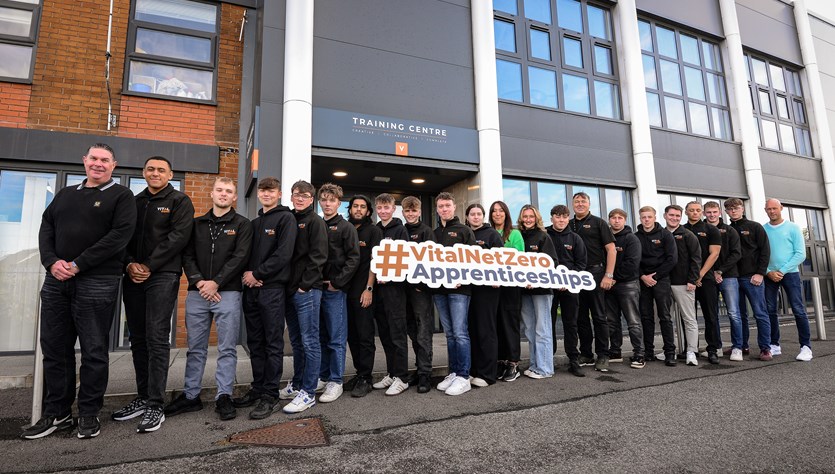
    We plan to recruit 20 new apprentices in 2021 across all areas of the business, site and office based, from design engineers through to project delivery engineers and operational engineers as well as support service opportunities.

    To learn more about apprenticeships and wider opportunities at Vital, please contact [email protected].

  • Tree Planting Marks Barking District Heating Milestone

    Tree Planting Marks Barking District Heating Milestone


    Tree Planting Marks Barking District Heating Milestone

    The Barking Town Centre District Energy Network is a key part of the London Borough of Barking & Dagenham’s plans to become London’s Green Capital and to celebrate the completion of the district heating mains Vital Energi held a tree planting ceremony.

    The event saw eight trees planted in Barking Park, with two trees representing every kilometre of district heating pipework installed.

    As a council we have declared a climate emergency and set the target to become carbon neutral by 2030 and it is projects like the Barking Town Centre District Energy Scheme which are moving us towards meeting these targets. This is an exciting project which has the scope to grow and expand and will make a strong contribution to creating a lower-carbon London which will benefit everyone.

    Cllr Dominic Twomey , Deputy Leader of the Council and Cabinet Member

    We have worked with Vital Energi and the Council to deliver critical network which will help the London Borough of Barking and Dagenham to reduce its impact on the environment as its residents heat their homes. This project will allow over 10,000 homes to connect by 2030 and has the scope to expand to include many more customers in the future, making it an important addition to London’s low-carbon energy infrastructure.”

    Paul Newton (B&D Energy) explains, , General Manager – B&D Energy

    20220322 JMP8554

    Vital were joined by Cllr Dominic Twomey – Deputy Leader of the Council and Cabinet Member for Finance, Performance & Core Services – LBBD Council and members from WSP and B&D Energy.

    Solution detail

    This is a great opportunity to celebrate the heat network, which will be a big contributor to LBBD meeting their net zero commitments and helping to create a cleaner, greener London. Whilst the environmental benefits cannot be overstated, one of the exciting things about this project is the opportunity we’ve had to work with the community, from hiring local youngster Daniel Shabani as an apprentice, to working with local primary schools to highlight climate change.”

    Ashley Walsh, Vital Energi’s Managing Director – Heat Networks

  • Transforming waste into sustainable heating solutions with the GHNF

    Transforming waste into sustainable heating solutions with the GHNF


    Transforming waste into sustainable heating solutions with the help of GHNF

    Vital Energi has been awarded over £22 million from the Green Heat Network Fund for the commercialisation and construction of the Hull East District Heat Network. The heat network presents another innovative use of waste heat from industry, with Phase 1 utilising heat from the Saltend Chemicals Park.

    The heat network will provide low carbon heating to 14 public sector council buildings and a mixture of industrial customers, helping to decarbonise one of the UK’s industrial hotspots. As part of the network, Hull East are also hoping to secure green solar energy to help power the network whilst feeding energy into other customers across Yorkshire Energy Park, a next generation energy and technology business park currently in development.

    Construction of the heat network is expected to begin later in 2024, with the heat network capable of expanding to supply further connections and use using other renewable heat sources across the energy park once completed.

    We’re delighted with the award of the Green Heat Network Funding which will allow us to deliver the Hull East Heat Network. Taking waste heat from Saltend Chemicals Park situated on the Yorkshire Energy Park, we aim to decarbonise commercial and residential buildings across Hull, bringing them closer to a net zero future with low carbon heat and hot water.”

    Mike Cooke , Managing Director,Vital Energi

    The Green Heat Network Fund (GHNF), delivered by Triple Point Heat Networks Investment Management on behalf of the Government, delivers an additional £80.6 million to heat networks in the North of England, London and the South West. Funding is being awarded to projects, like Hull East Heat Network, harnessing waste heat energy from industry.

    An abundance of waste energy is generated in various industrial processes as well as in our daily activities. Manufacturing and human waste disposal processes produce waste heat as a byproduct which can be harnessed to produce low-cost, low carbon heating. Today, funding from the Green Heat Network Fund (GHNF) continues to enable innovative solutions like these to be deployed.

    Projects across England aim to utilise waste heat from sewage works and industry processes, including Bolton Metropolitan Borough Council who will use heat pump technology to extract waste heat from the combined sewer running into the town centre.

    Other projects funded today will use heat pump technology to decarbonise existing developments, new build homes and one of London’s flagship new hubs for creativity – the Greenwich Peninsula development. In Exeter, funding from GHNF will support the installation of the UK’s largest high-temperature water source heat pump to distribute low carbon heat to buildings across the city.

    This latest cohort of successful GHNF applicants are proving that the potential for our homes and workplaces to be heated sustainably and affordably by renewable sources or from waste heat from existing infrastructure such as our sewerage works and industry is being realised today. The use of excess heat from local sewage plants is another exemplary heat network model that builds on and utilises existing infrastructure to deliver low carbon heating to local areas. These projects are expected to move quickly into construction, delivering significant immediate benefits to the communities they will serve while providing a blueprint for others to learn from and develop.”

    Ken Hunnisett, Programme Director, Triple Point HNIM

    These innovative projects will help drive down energy costs while also demonstrating why the UK has led the way in cutting carbon emissions. The funding we’ve announced today will help homes and business across the country – from Exeter to Hull – benefit from greener heating and lower energy bills.”

    Lord Callanan, Minister for Energy Efficiency and Green Finance

  • Torry Heat Network Wins District Heating Project of the Year

    Torry Heat Network Wins District Heating Project of the Year


    Torry Heat Network Wins District Heating Project of the Year

    Vital Energi and Aberdeen City Council are celebrating a landmark achievement after the Torry Heat Network was named District Heating Project of the Year at the prestigious H&V Awards.

    This recognition marks a significant milestone in Scotland’s transition to a low-carbon future. Delivered over two phases, the Torry Heat Network has delivered 11.6km of district heating pipework installed by Vital Energi, in partnership with Aberdeen City Council and Aberdeen Heat & Power.

    The scheme connects hundreds of lower income households with a low-carbon, affordable heat source. It also supplies heat to several public buildings, including schools and council offices, through a network powered by energy recovered from a nearby Energy from Waste (EfW) facility.

    Keiran Walsh, Vital Energi’s Regional Manager (North & Scotland), said: “We believe the Torry Heat Network is the first major, modern city heat network of its kind in Scotland and is a great case study for future projects aiming to decarbonise at town or city scale.

    “Heating our homes is a basic human need, and this project is a fantastic example of how councils can improve energy resilience to existing communities, providing for affordability and reduced carbon emissions through large-scale heat networks. We’re proud the judges have recognised its impact, and we hope it inspires other councils to transform the way they heat their towns and cities.”

    A large-scale collaborative project with clear environmental benefits and strong innovation in design and delivery. Demonstrated solid community impact and technical achievement.

    Judges’ Comments, H&V Magazine Awards

    The network sources low-carbon heat from the nearby Energy from Waste (EfW) plant, reducing reliance on gas boilers and cutting carbon emissions significantly. In addition to homes, it serves important community facilities including:

    • Provost Hogg Care Home
    • Balnagask Care Home
    • Deeside Family Centre
    • Tullos Primary School
    • Balnagask Social Work Office

    This is the second national award the Torry Heat Network has claimed after it won the Retrofit Accelerator at last year’s BE-ST awards.

  • Things are heating up for Solihull Town Centre Low Carbon Energy Network

    Things are heating up for Solihull Town Centre Low Carbon Energy Network


    Things are heating up for Solihull Town Centre’s Low Carbon Energy Network

    Plans to bring an affordable new source of low carbon heating to the town centre are gathering momentum as Solihull Council partners with Vital Energi to deliver its exciting Low Carbon Energy Network.

    Emissions from heat are the single biggest contributor to UK carbon emissions, accounting for around a third of the nation’s carbon footprint, however addressing this issue building by building can be difficult and often very expensive.

    The new energy network will generate low carbon heat and power (electricity) from a single energy centre and distribute it directly into town centre buildings via a system of underground pipes and cables. The Energy Centre will be built on land next to Tudor Grange Leisure Centre and will house a range of renewable and low carbon energy solutions including Air Source Heat Pumps (ASHP).

    This scheme forms part of a wider strategic approach Solihull Council is developing to decarbonise the borough over the next 20 years.

    Following a competitive tendering process, Vital Energi Ltd have been selected as the contractor who will take this exciting project forward – building, operating and maintaining the new network. Vital Energi is a leading national player in the heat network and low carbon energy sector and has successfully delivered a range of exemplar, high-profile networks including Leeds PIPES and Mersey Heat.

    Since its inception, the project has been supported by expert technical advisers from Sustainable Energy Ltd. They will continue to play a crucial role as the primary client engineer throughout the construction phase.

    “I’m really excited to have Vital on board. They bring a wealth of experience operating complex commercial schemes like this and have a proven track record of delivery. A huge amount of hard work has already gone in to developing this project and with Vital’s help we can finally get it over the line and bring the benefit of affordable, reliable low carbon energy to Solihull town centre customers, while contributing to an overall reduction in the borough’s carbon emissions. The town centre energy network will be the first of its kind in Solihull and will hopefully pave the way for similar projects around the borough, both in the city of Leeds, and in our sector.”

    Councillor Andy Mackiewicz, Portfolio Holder for Climate Change and Planning

    “We’re delighted to be partnering with Solihull Council to deliver this Low Carbon Energy Network. We’ve worked closely with the Council throughout the initial project stages, and now we’re really looking forward to continuing with our collaborative approach to deliver an energy network that makes significant strides in reducing the borough’s carbon emissions.”

    Gemma Dyson, Pre-Construction Director – Vital Energi

    “We are thrilled to bring our district energy technical expertise to the next phase of this exciting project and to continue collaborating with the exceptional team at Solihull Council. This project represents a significant step forward in the Council’s decarbonisation plans for the Borough, and we are proud to be part of it.”

    Chrissy Woodman, Director of Sustainable Energy

    The first phase of the network will provide heat and power to public and private sector customers, including Council-owned buildings and education campuses. It is intended that future phases will then connect other buildings in the town centre and link to planned commercial or residential developments in line with the Council’s Town Centre Masterplan.

    The funding required to get this carbon saving scheme off the ground was provided by the government’s Heat Networks Investment Programme (HNIP) and West Midlands Combined Authority alongside the Council’s own investment in the project. Underpinned by detailed financial modelling, the scheme is projected to repay this investment over time.

    Early works have already taken place with a series of site investigations and ecological surveys in March. With contracts now signed and planning permission for the all-important energy centre in place work is expected to get started later this summer and first phase customers could be hooked up and start benefitting from the network as early as next year.

    Click here to find out more about the Solihull Energy Network