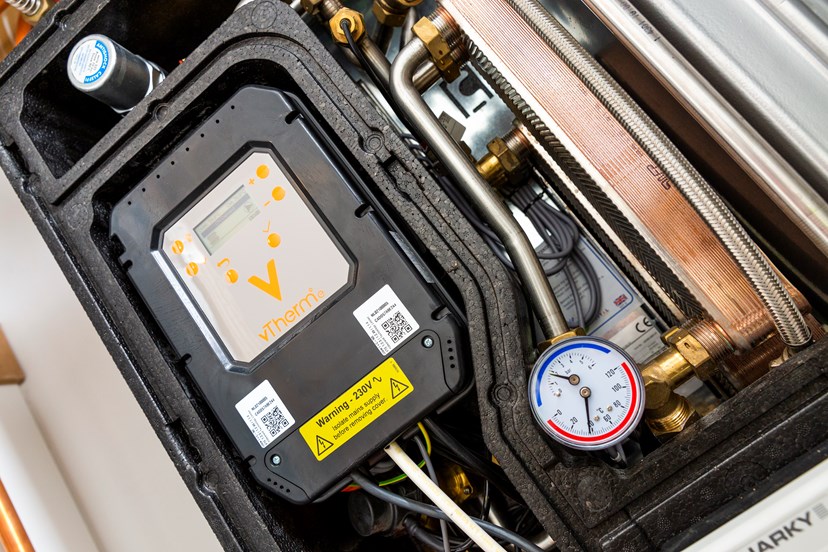
Why is your choice of HIU the key to low-carbon living?

Heat Interface Units (HIUs) are integral to ensuring optimal energy efficiency across heat networks. Your choice of HIU can directly impact your operating costs, overall system efficiency, and end-user bills. One way to differentiate HIUs in the market, and a topic that is often not discussed, is to consider how much water a HIU uses across a system.
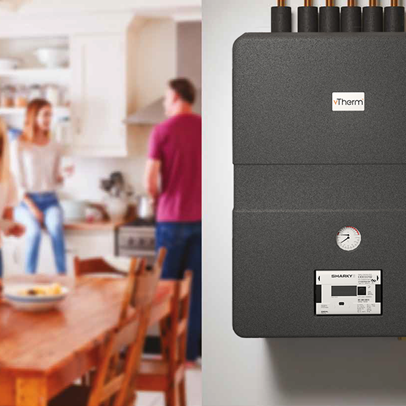
Think of your heating system like a delivery service.
Keeping excess water warm and circulating it unnecessarily is like paying to heat rooms no one ever enters. Multiply that across multiple sites and years, and the costs, both financial and carbon, add up fast.
Inevitably, this leads to the excess costs being passed onto the end-user by way of higher bills.
As confirmed by the BESA 2023 test regime, the vTherm˚e Heat Interface Unit annual water volumes are lower than the nearest competitor unit, topping the table in using significantly less water, even at high temperatures.
The vTherm˚e HIU ‘keep warm’ standby volume results at 70˚ C: 15.6m3/a (closest competitor unit based on the VWART result is at 20.6m3/a)
Although a difference of 5m3/a may not seem a huge amount, when this is multiplied by the number of heat interface units on a project, over a year and product lifetime, the water volumes and costs soon increase to huge proportions.
Breaking down the numbers:
The vTherm˚e is like filling a bath with just the right amount of water. The nearest competitor? Like overfilling it every time, wasting water, energy, and money.
With proven performance on low-temperature networks and heat pump compatibility, the vTherm˚e helps reduce project operating costs and improves the experience for residents by cutting bills and carbon.
Click here to talk to our team